
Chef Takumi
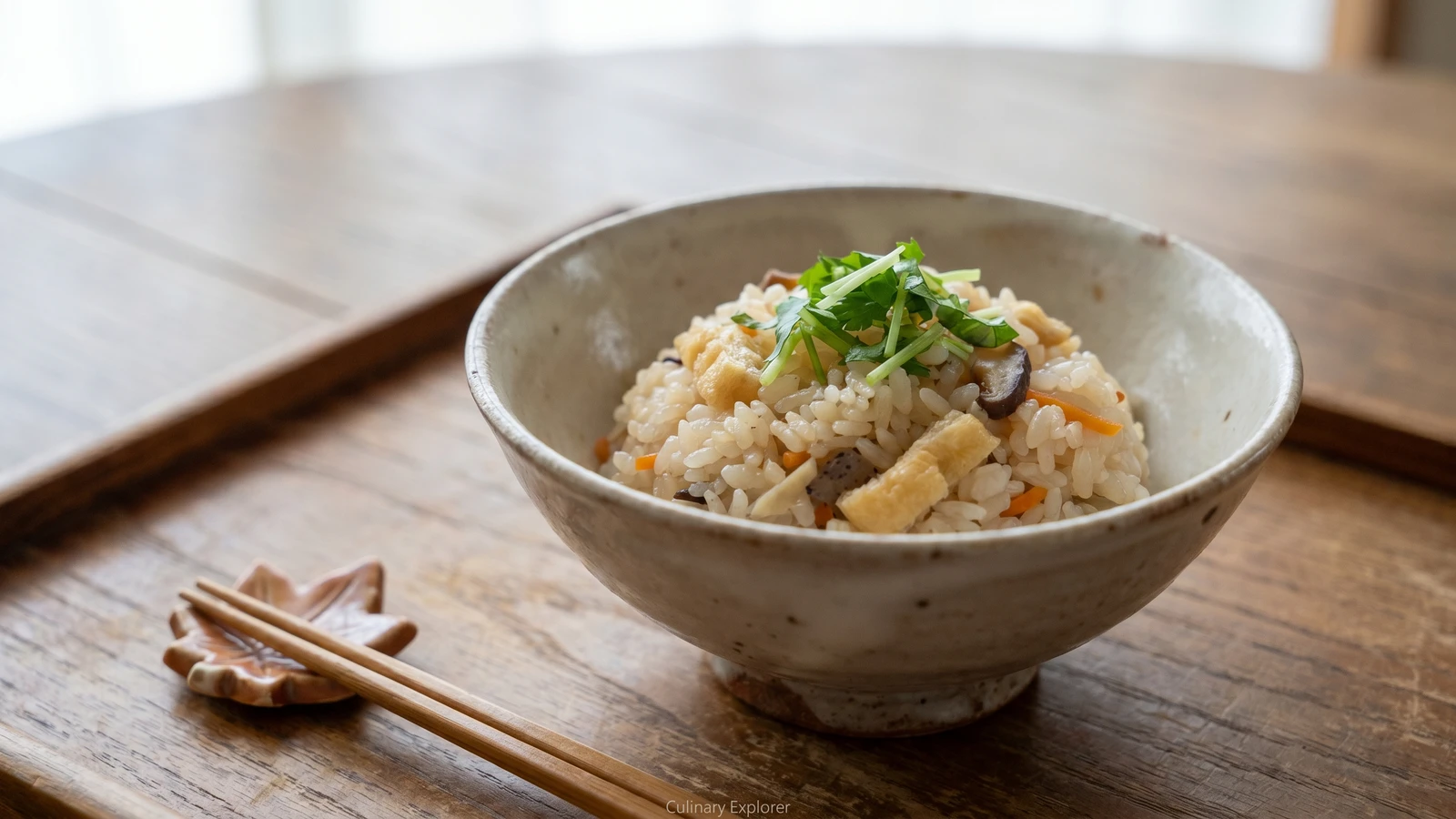
Autumn Mushroom Rice (きのこの炊き込みご飯, Kinoko Takikomi Gohan)
Autumn mushrooms do most of the work here. Rinse the rice well, season the liquid before cooking, and let the pot rest so every grain comes out separate and fragrant.
A cooking platform built around craft, culture, and the stories behind what we eat.
Created by
Kayakumeshi is Osaka's plain genius: rice cooked in dashi with small, honest additions, each cut fine enough to season the whole pot without weighing it down.
The word kayaku sounds larger than the dish. It only means the little things added in, and that is exactly the point. A few shreds of burdock, carrot, shiitake, konnyaku, and aburaage go into the rice cooker or pot with dashi, and the rice comes out tasting as if it did more work than it did. This is weeknight food, and a good one at that.
The detail that decides it is the size of the cut. Cut the additions small and even, and they season the rice instead of interrupting it. Leave them chunky and you have a pot of vegetables with rice in between, which is a different mood entirely. Here we want the method, not the menu: rice absorbing dashi as it cooks, each grain carrying the quiet flavor of what was cut into it.
Osaka likes this lighter than the soy-dark mixed rice you may know from the east. Use usukuchi shōyu, light soy sauce, not because it is weaker, but because it seasons without muddying the color. The dashi should still speak first. Nothing hidden, nothing heavy, just rice made generous by small ingredients and good stock. If that sounds too simple to be special, you are already standing at the right door.
Kayakumeshi is the Kansai name for mixed rice cooked with added ingredients, a dish called takikomi gohan more broadly in many parts of Japan. In Osaka usage, kayaku means the small additions, a word also seen in kayaku udon and in the seasoning packets of instant noodles. The local style is usually lighter in color than many Kanto versions, relying on dashi and usukuchi shōyu, a seasoning long associated with Kansai cooking.
Quantity
2 rice-cooker cups (about 360ml)
Quantity
2 cups, plus more as needed
Quantity
1 piece (about 8g)
for dashi
Quantity
15g
for dashi
Quantity
2 1/4 cups
for dashi
Quantity
1/2 small root (about 60g)
scrubbed and cut into thin matchsticks
Quantity
1/3 small carrot (about 50g)
cut into thin matchsticks
Quantity
2
soaked until soft, stems removed, caps thinly sliced
Quantity
1/3 block (about 80g)
cut into short thin strips
Quantity
1 sheet
rinsed with hot water and sliced thinly
Quantity
1 tablespoon
Quantity
1 tablespoon
Quantity
1 tablespoon
Quantity
1/2 teaspoon
Quantity
2 tablespoons
finely sliced
| Ingredient | Quantity |
|---|---|
| Japanese short-grain rice | 2 rice-cooker cups (about 360ml) |
| dashi | 2 cups, plus more as needed |
| konbu (dried kelp)for dashi | 1 piece (about 8g) |
| katsuobushi (bonito flakes)for dashi | 15g |
| cold waterfor dashi | 2 1/4 cups |
| burdock root (gobō)scrubbed and cut into thin matchsticks | 1/2 small root (about 60g) |
| carrotcut into thin matchsticks | 1/3 small carrot (about 50g) |
| dried shiitake mushroomssoaked until soft, stems removed, caps thinly sliced | 2 |
| konnyakucut into short thin strips | 1/3 block (about 80g) |
| aburaage (fried tofu pouch)rinsed with hot water and sliced thinly | 1 sheet |
| usukuchi shōyu (light soy sauce) | 1 tablespoon |
| sake | 1 tablespoon |
| mirin | 1 tablespoon |
| sea salt | 1/2 teaspoon |
| mitsuba or scallion (optional)finely sliced | 2 tablespoons |
Wipe the konbu with a damp cloth, but don't wash it. That pale bloom on the surface is flavor, not dirt. Put the konbu in the cold water and bring it up slowly over low heat. When the water trembles and small bubbles climb the sides, lift the konbu out. Bring the water just to a gentle boil, add the katsuobushi all at once, take the pot off the heat, and let the flakes sink for two or three minutes. Strain through a cloth or fine strainer and let it drip without pressing.
Put the rice in a bowl, cover with cold water, and stir with your hand. Pour off the cloudy water and repeat until the water is much clearer, usually three or four rinses. Drain the rice in a sieve for ten minutes. Washing removes loose surface starch so the grains cook distinct and glossy, not gummy.
Scrub the burdock, cut it into thin matchsticks, and soak it in cold water for five minutes, then drain. Cut the carrot to the same size. Squeeze the soaked shiitake dry and slice the caps thinly. Cut the konnyaku into short strips, then blanch it for two minutes and drain. Pour hot water over the aburaage, press it dry, and slice it thinly. These small preparations keep the flavors clean: burdock loses harshness, konnyaku loses its raw smell, and aburaage gives up excess oil.
In the rice cooker bowl or cooking pot, combine the drained rice with the usukuchi shōyu, sake, mirin, and salt. Add enough dashi to reach the normal 2-cup rice line, or use about 2 cups total liquid for stovetop cooking. Stir the rice once to distribute the seasoning, then level it. Seasoning goes into the liquid because the rice drinks it as it cooks; sprinkling flavor later only coats the outside.
Scatter the burdock, carrot, shiitake, konnyaku, and aburaage evenly over the rice. Do not stir them in now. Ingredients on top cook gently while the rice below takes in the liquid evenly. Stirring before cooking can make the rice cook unevenly, with hard spots where the grains are crowded by vegetables.
Cook on the regular white-rice setting, or bring the covered pot to a simmer over medium heat, then lower the heat and cook for 12 minutes. Turn off the heat and let it rest, still covered, for 10 minutes. That rest is not politeness. It lets the moisture settle back through the pot so the top grains and bottom grains finish together.
Open the lid and fold the rice gently from the bottom with a rice paddle, cutting through the grains rather than mashing them. The additions should be evenly spread, and the rice should look lightly tinted, not soy-dark. Serve in small bowls with mitsuba or scallion if you like. Leave a little height in the bowl and don't pack it down; rice needs air too.
1 serving (about 240g)
Culinary guides, cultural storytelling, and the editorial depth that makes cooking meaningful.
Discover Culinary ExplorerChef Takumi
Autumn mushrooms do most of the work here. Rinse the rice well, season the liquid before cooking, and let the pot rest so every grain comes out separate and fragrant.

Chef Takumi
A whole salmon fillet laid on seasoned rice does nearly all the work. Cook it gently, flake it back through, and autumn has found its bowl.

Chef Takumi
Daigakuimo is simple student comfort: sweet potato cut stout, fried until the corners take color, then turned in a soy-sugar syrup that sets shiny instead of sticky.

Chef Takumi
Chawanmushi looks delicate, but the secret is plain: good dashi, strained egg, and quiet heat. Keep the steam soft and the custard sets smooth, tender, and calm.