
Chef Lupita
Huasteca Stuffed Corn Cakes (Bocoles Huastecos Rellenos)
Veracruz's Huasteca bocoles are thick corn masa cakes enriched with manteca, cooked on a dark comal, then split and filled with black beans, queso fresco, or chicharron prensado.
A cooking platform built around craft, culture, and the stories behind what we eat.
Created by
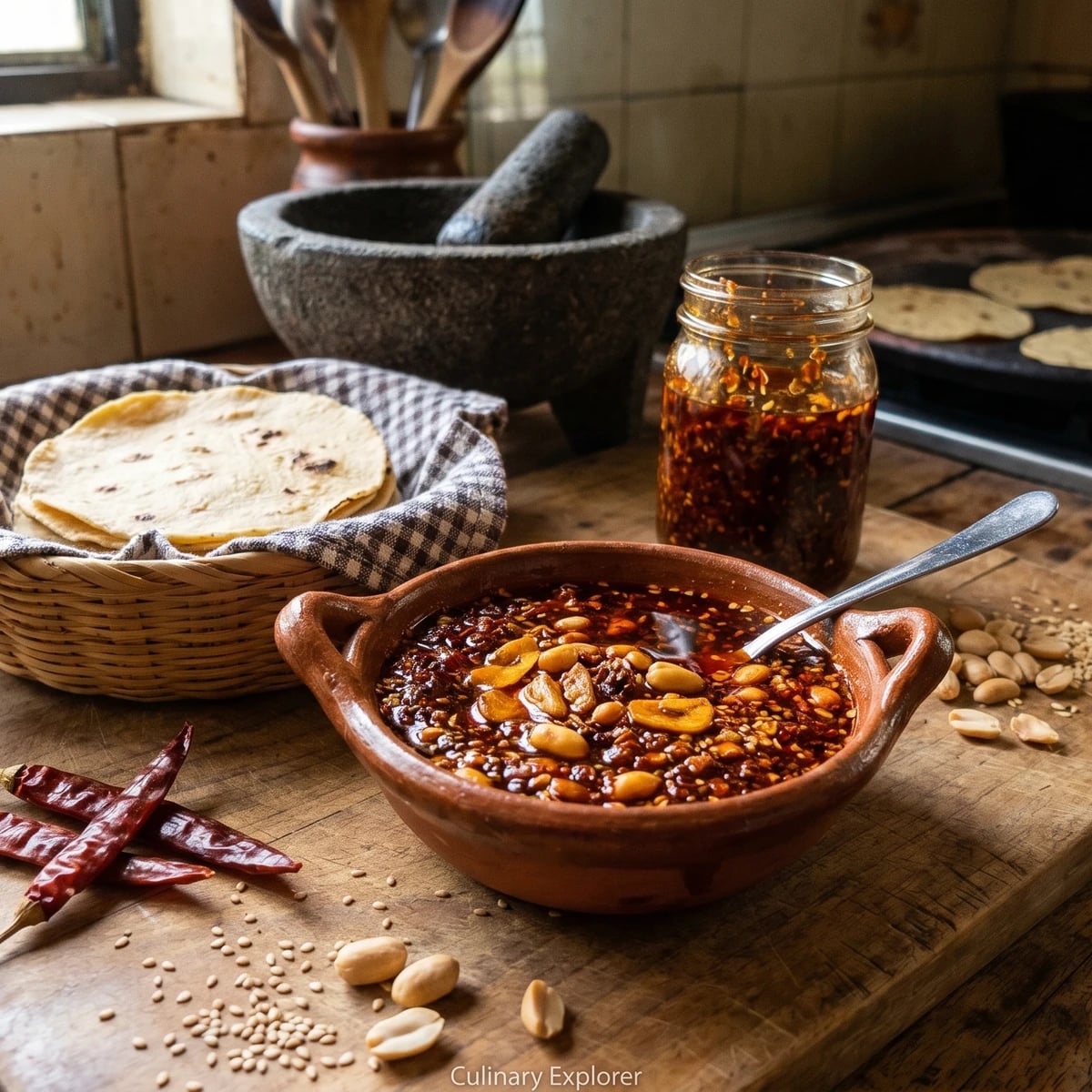
Central Veracruz's jarred chile oil, sharp with fried chile de arbol, garlic, peanuts, and ajonjoli, made in batches because one spoonful turns eggs, beans, and tortillas into a meal.
Veracruz, the central mountain corridor around Orizaba and Cordoba, is where this salsa lives. Not in a squeeze bottle. In a glass jar on the table, red oil shining over crushed chile, peanuts, garlic, and sesame seeds.
The chile de arbol gives the bite. The peanuts give body. The ajonjoli, sesame seed, gives that toasted edge Veracruz cooks know well because the state has always cooked through movement: mountain markets, port trade, Totonac memory, Spanish ingredients, Afro-Caribbean routes. Esto no es comida de un solo Mexico.
I learned a version like this from a woman near Mercado Melchor Ocampo in Orizaba who fried the garlic until pale gold, then took the pan off the fire before adding the chiles. That is the trick. Chile de arbol burns fast. If you blacken it, you get bitterness in every spoonful and no amount of peanut will save you.
This is a salsa for people who plan ahead. Make one jar and you have power in the refrigerator for weeks: over frijoles de olla, scrambled eggs, quesadillas, fish from the Gulf, even a plain tortilla with salt. Saber cocinar es saber vivir.
Salsa macha is strongly associated with Veracruz, especially the Orizaba and Cordoba region, where dried chiles, oil, nuts, and seeds became a practical preserved table salsa. Its roots are often linked to older Totonac chile pastes from the Gulf region, while the modern oil-rich version reflects later ingredients and trade routes, including sesame brought through colonial commerce. Unlike fresh salsas, salsa macha belongs to the family of pantry condiments: fried, ground, covered in oil, and made to last.
Quantity
2 ounces
stems removed
Quantity
4
stems removed
Quantity
1 cup
Quantity
8
thinly sliced
Quantity
1/2 cup
Quantity
3 tablespoons
Quantity
1 tablespoon
Quantity
1 teaspoon
Quantity
1 1/2 teaspoons, plus more to taste
| Ingredient | Quantity |
|---|---|
| dried chile de arbolstems removed | 2 ounces |
| dried chile moritastems removed | 4 |
| neutral oil, such as avocado oil or sunflower oil | 1 cup |
| large garlic clovesthinly sliced | 8 |
| raw unsalted peanuts | 1/2 cup |
| sesame seeds (ajonjoli) | 3 tablespoons |
| apple cider vinegar | 1 tablespoon |
| piloncillo or dark brown sugar | 1 teaspoon |
| kosher salt | 1 1/2 teaspoons, plus more to taste |
Pull the stems from the chile de arbol and chile morita. Shake out some seeds if you want a cleaner texture, but do not remove all of them. Salsa macha is supposed to have grit and bite. Wipe dusty chiles with a dry cloth. Do not rinse them or they will spit badly in the oil.
Pour the oil into a small heavy skillet or clay cazuela and set it over medium-low heat. Add the sliced garlic and cook, stirring often, until the slices turn pale gold at the edges, 3 to 4 minutes. Do not let them brown deeply. Garlic goes from sweet to bitter quickly, and bitter garlic will take over the whole jar.
Add the peanuts and cook for 2 minutes, stirring so they toast evenly in the garlic oil. Add the sesame seeds and cook 30 to 45 seconds more, just until they turn golden and smell nutty. Keep your eyes on the pan. Ajonjoli burns faster than a distracted cook admits.
Turn off the heat and move the pan off the burner. Add the chile de arbol and chile morita to the hot oil, pressing them down with a spoon so they darken evenly. They should turn glossy brick red and smell deep, not scorched. This takes about 45 seconds. No me vengas con atajos: burned chile makes burned salsa.
Let the mixture cool in the pan for 10 minutes. This rest finishes softening the chiles without scorching them. The oil should be red-orange, the peanuts golden, and the garlic no darker than honey.
Transfer everything to a blender or food processor. Add the vinegar, piloncillo, and salt. Pulse in short bursts until the chiles and peanuts are broken into coarse flakes suspended in the oil. Do not blend it smooth. Salsa macha should be spoonable, crunchy, and uneven. That texture is the point.
Scrape the salsa into a clean glass jar. Taste for salt once it has cooled completely, then adjust if needed. Let it rest at least 2 hours before serving so the chile settles into the oil. It is better the next day. Recetas probadas y garantizadas.
1 serving (about 14g)
Culinary guides, cultural storytelling, and the editorial depth that makes cooking meaningful.
Discover Culinary Explorer
Chef Lupita
Veracruz's Huasteca bocoles are thick corn masa cakes enriched with manteca, cooked on a dark comal, then split and filled with black beans, queso fresco, or chicharron prensado.

Chef Lupita
Veracruz's Gulf coast empanadas fold corn masa around shrimp guisado stained red with guajillo and jitomate, then fry in lard until the edges turn crisp and golden.

Chef Lupita
Veracruz Huasteca corn masa empanadas filled with shredded cazon cooked in jitomate, chile serrano, onion, and epazote, fried until crisp at the edges and served with lime and salsa.

Chef Lupita
Veracruz's Xalapa garnachas are small corn tortillas semi-fried in manteca, dragged through chile jalapeño seco salsa, then covered with shredded beef, diced potato, and sharp pickled red onion.