Culinary Explorer

A cooking platform built around craft, culture, and the stories behind what we eat.
Discover Culinary Explorer
Empanadas de Cazón de Tamiahua

Empanadas de Cazón de Tamiahua

Created by

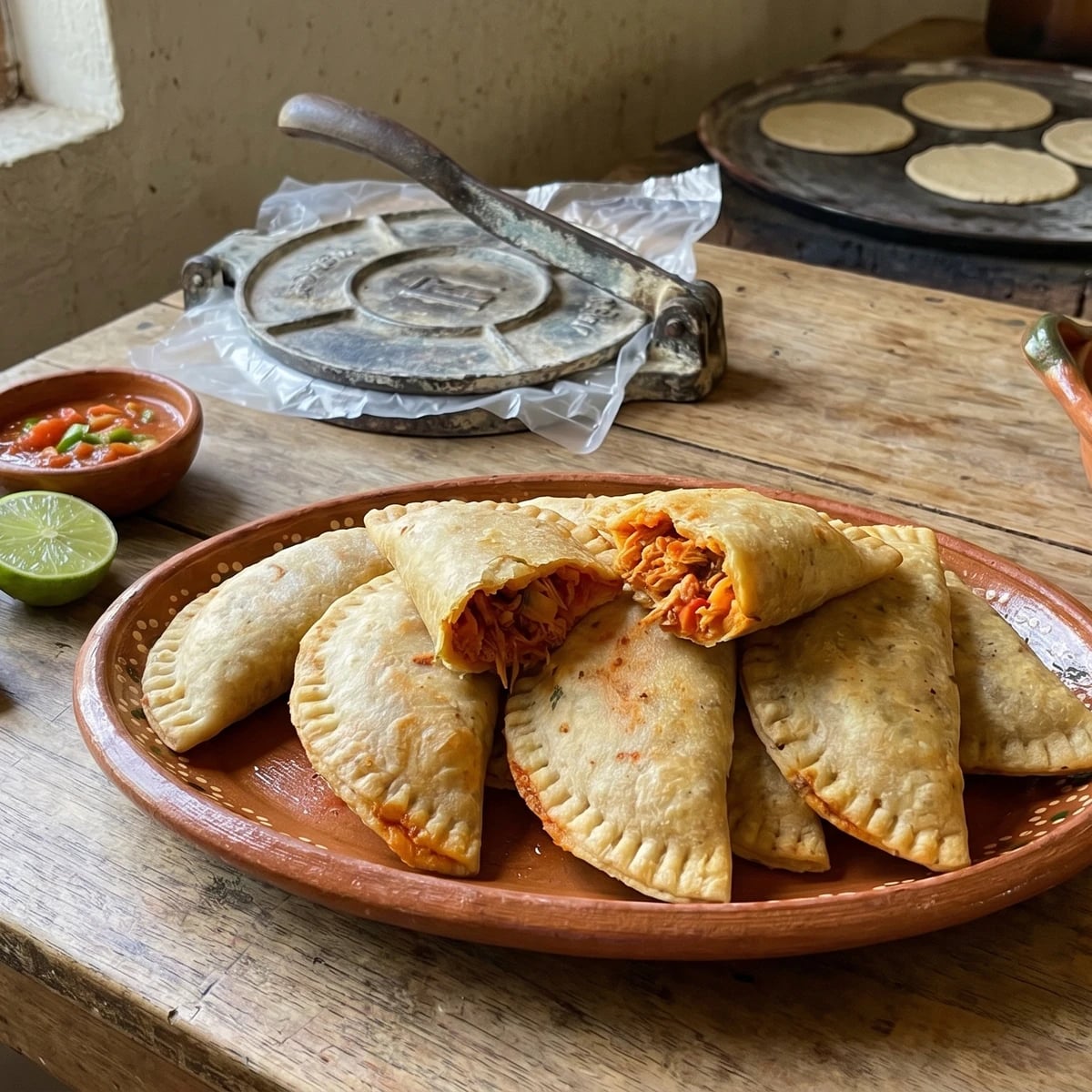
Veracruz Huasteca corn masa empanadas filled with shredded cazon cooked in jitomate, chile serrano, onion, and epazote, fried until crisp at the edges and served with lime and salsa.

Appetizers & Snacks
Mexican
Comfort Food
Make Ahead
Dinner Party
45 min
Active Time
50 min cook1 hr 35 min total
Yield12 empanadas

Veracruz, the Huasteca coast, Tamiahua. That is where these empanadas live: near the lagoon, near the Gulf, where the seafood is not decoration on a menu but daily work at the market.

Cazón means small shark, usually dogfish, and in Tamiahua it is cooked first, shredded by hand, then folded into a jitomate guisado with white onion, garlic, chile serrano, and epazote. The epazote matters. It cuts through the richness of the fried masa and tells you this is coastal Veracruz, not some generic fish turnover. Cada estado, su propia cocina.

Do not confuse this with Campeche pan de cazón. That is a layered tortilla dish with beans and tomato sauce. This is different. Here the corn masa is pressed, filled, sealed, and fried in manteca de cerdo or clean oil until the edges turn firm and golden. The women who sell these near the market do not overfill them, because they know the masa has to close cleanly or the fish escapes into the fat. La cocina no es decoración, es trabajo.

If you cannot find cazón, ask a real fishmonger for dogfish, smoothhound, or another firm small shark from a responsible source. If shark is not available or not appropriate where you live, firm white fish is a compromise, not the same dish. I will tell you the truth before I give you the substitution. Así se hace y punto.

Tamiahua sits on the northern Veracruz coast, where lagoon fishing and Gulf trade shaped a seafood kitchen distinct from the inland Huasteca of beans, corn, and dried beef. Empanadas de cazón belong to a wider Gulf tradition of cooking small shark into economical fillings, but Veracruz versions often use epazote and fresh chile serrano while Campeche made pan de cazón famous as a layered tortilla dish with black beans and tomato sauce. The use of corn masa for frying connects the dish to pre-Columbian nixtamal technique, while the jitomate, onion, and garlic guisado reflects the colonial coastal pantry that Veracruz absorbed through its port.

The technique, the tradition, and the story behind every dish.

Discover Culinary Explorer

Ingredients

cazon (dogfish or small shark) steaks

Quantity

1 pound

skin removed if needed

white onion

Quantity

1/2 medium

for simmering

garlic cloves

Quantity

2

for simmering

bay leaf

Quantity

1

kosher salt

Quantity

1 teaspoon, plus more to taste

manteca de cerdo or neutral oil

Quantity

2 tablespoons

for the guisado

white onion

Quantity

1/2 medium

finely chopped

garlic cloves

Quantity

2

finely chopped

ripe Roma tomatoes

Quantity

3

finely chopped

fresh chile serrano

Quantity

1

finely chopped

fresh epazote leaves

Quantity

2 tablespoons

chopped

dried Mexican oregano

Quantity

1/2 teaspoon

crumbled

fresh lime juice

Quantity

1 tablespoon

fresh corn masa for tortillas

Quantity

2 pounds

fine sea salt

Quantity

1/2 teaspoon

for the masa

warm water

Quantity

2 to 4 tablespoons

only if the masa feels dry

manteca de cerdo or neutral oil

Quantity

2 cups

for frying

lime halves (optional)

Quantity

for serving

salsa de chile serrano and jitomate (optional)

Quantity

for serving

Equipment Needed

  • Tortilla press lined with clean plastic
  • Wide skillet or clay cazuela for the cazon guisado
  • Deep heavy skillet for frying
  • Wire rack set over a tray
  • Slotted spoon or kitchen spider

Instructions

  1. 1

    Simmer the cazon

    Place the cazon in a saucepan with the onion, garlic, bay leaf, salt, and enough water to cover by one inch. Bring to a gentle simmer over medium heat and cook for 12 to 15 minutes, until the fish is opaque and flakes when pressed. Do not boil it hard. Cazon is firm, but rough boiling makes it dry and stringy.

  2. 2

    Shred the fish

    Lift the cazon from the broth and let it cool just enough to handle. Remove any cartilage, dark skin, or tough bits. Shred the meat with your fingers into fine flakes. Hands are better than forks here because you feel what does not belong. Strain and save 1/2 cup of the cooking broth.

  3. 3

    Cook the guisado

    Heat the 2 tablespoons manteca de cerdo in a wide skillet over medium. Add the chopped onion and cook until translucent, about 4 minutes. Add the garlic and cook for 30 seconds, just until it smells alive. Stir in the jitomate, chile serrano, epazote, and Mexican oregano. Cook until the tomato collapses and the mixture thickens, 8 to 10 minutes. This is not a watery filling. The masa will punish you for that.

  4. 4

    Finish the filling

    Add the shredded cazon and 1/4 cup of the reserved broth to the skillet. Cook, stirring often, until the fish absorbs the tomato and the pan looks almost dry, 6 to 8 minutes. Add more broth only if the filling sticks before the flavor comes together. Finish with the lime juice and taste for salt. Let the filling cool completely before shaping. Hot filling breaks masa. No me vengas con atajos.

    The filling should hold together on a spoon without dripping. If you see liquid running across the skillet, keep cooking.
  5. 5

    Prepare the masa

    Knead the fresh corn masa with the fine sea salt for 2 minutes. It should feel soft, smooth, and barely tacky, like a tortilla masa ready for the press. If the edges crack when you flatten a test piece, knead in warm water one tablespoon at a time. Dry masa makes broken empanadas. Broken empanadas leak.

  6. 6

    Press the rounds

    Divide the masa into 12 balls, about 2 1/2 ounces each. Line a tortilla press with two pieces of plastic cut from a clean bag. Press each ball into a round about 5 inches across. Do not press it paper-thin. These are empanadas, not tortillas, and they need enough body to hold the cazón.

  7. 7

    Fill and seal

    Place 2 tablespoons cooled cazon filling on one half of each masa round, leaving a clean border. Fold the plastic over to bring the masa into a half-moon, then press the edges firmly through the plastic. Peel it back and pinch the seam with your fingers. A good seal is the difference between an empanada and a skillet full of fish.

  8. 8

    Fry the empanadas

    Heat the 2 cups manteca de cerdo or oil in a deep skillet to 350F. Fry 2 or 3 empanadas at a time, turning once, until the masa is golden with deeper brown freckles at the edges, 3 to 4 minutes per side. Do not crowd the pan or the fat cools and the masa drinks it. The empanadas should sound firm when tapped with tongs.

  9. 9

    Drain and serve

    Transfer the empanadas to a rack set over a tray, not a pile of paper towels where the bottoms soften. Serve warm with lime halves and salsa de chile serrano and jitomate. They should crack gently at the edge, then give way to the soft fish guisado inside. Recetas probadas y garantizadas.

Chef Tips

  • Ask the fishmonger for cazon, dogfish, or small shark from a responsible local source. If they look confused, ask for a firm white fish that can be shredded, but understand what you are losing: cazon has a firm grain that holds the guisado without turning mushy.
  • Use fresh masa from a tortilleria if you can. Masa harina works in emergencies, but fresh nixtamalized masa gives the empanada its proper corn aroma and flexible edge. Si no conoces el mercado, no conoces la cocina.
  • The epazote is not decoration. It belongs with fish in this Veracruz filling because it cuts the heaviness and gives the guisado its market-stall smell. Cilantro is not the same thing.
  • If your tomatoes are pale and hard, use good canned whole tomatoes and crush them by hand. The market decides the recipe. If the jitomate is bad, pretending does not improve it.
  • Fry in manteca de cerdo when you want the old flavor. Neutral oil is common now on the coast because it is cheaper and easier, but la manteca es el sabor.

Advance Preparation

  • The cazon filling can be made one day ahead and refrigerated. It is easier to fill empanadas when the guisado is cold and firm.
  • The masa balls can be portioned 2 hours ahead and kept covered with a damp cloth so they do not dry at the edges.
  • Fry the empanadas close to serving. If needed, reheat on a comal or in a 375F oven for 8 to 10 minutes. Do not microwave them unless you enjoy ruining crisp masa.

Frequently Asked Questions

Nutrition Information

1 serving (about 130g)

Calories
330 calories
Total Fat
15 g
Saturated Fat
5 g
Trans Fat
0 g
Unsaturated Fat
9 g
Cholesterol
30 mg
Sodium
350 mg
Total Carbohydrates
37 g
Dietary Fiber
5 g
Sugars
2 g
Protein
12 g

Note: Chef personas and recipes are created with AI assistance. Cook with care: follow safe food-handling practices, check doneness with a thermometer when needed, and adapt for allergies and your kitchen.

Where cooking meets culture.

Culinary guides, cultural storytelling, and the editorial depth that makes cooking meaningful.

Discover Culinary Explorer

More from Veracruz Appetizers & Snacks

Browse the full collection