
Chef Jeong-sun
Aehobak-guk (애호박국, Korean Zucchini Soup)
A clean summer soup of Korean zucchini and salted shrimp, built on quick anchovy-kelp broth and finished before the half-moons lose their shape on a weeknight table.
A cooking platform built around craft, culture, and the stories behind what we eat.
Created by
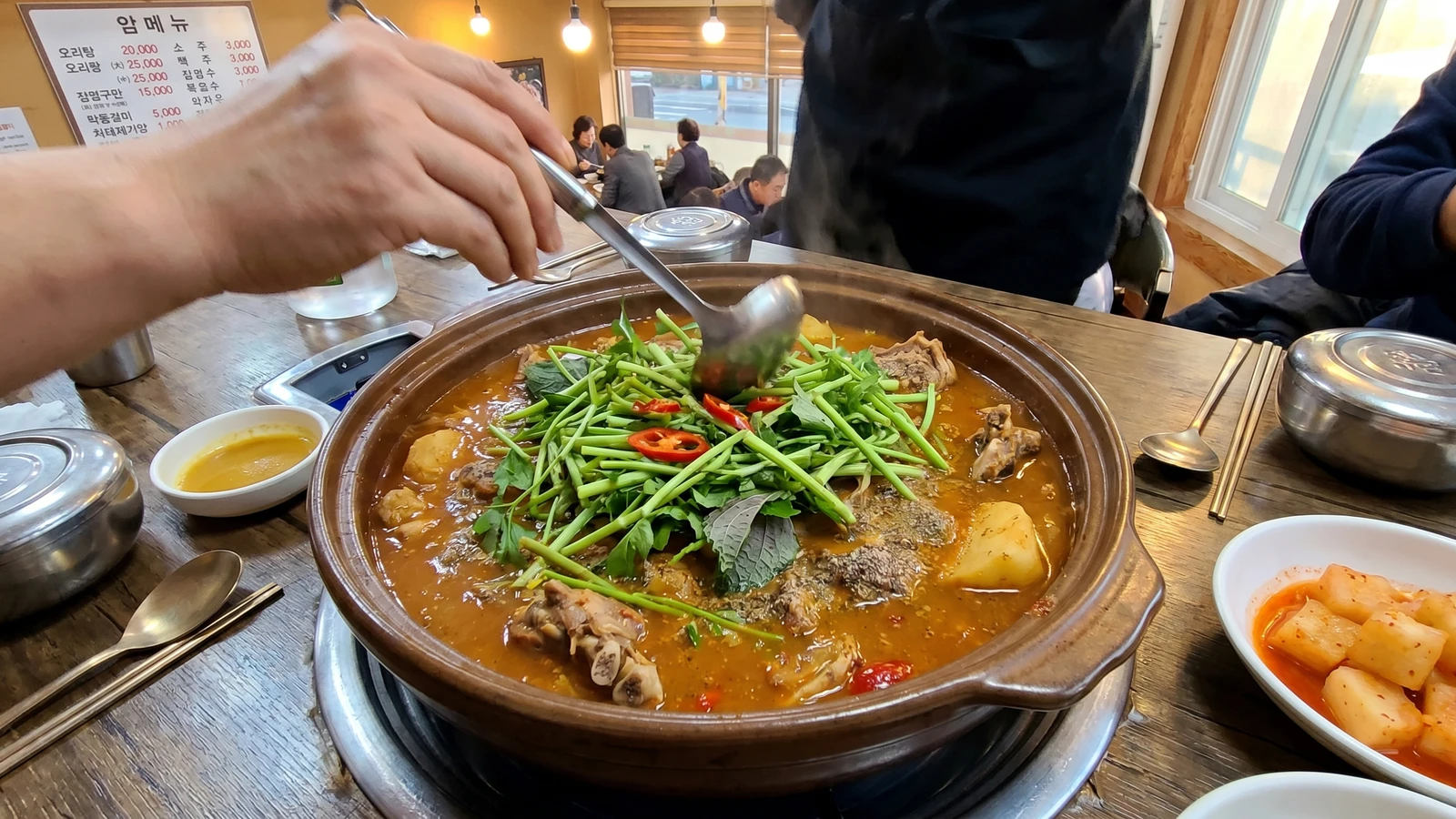
A Gwangju stew of bone-in duck simmered until the meat loosens, sharpened with gochugaru and doenjang, thickened with ground perilla, then covered with fresh minari at the table.
At a Gwangju market in the cold months, I look for minari before I look for the duck. The bundle should stand upright, hollow stems snapping clean, leaves not tired at the edges. Oritang is a Jeolla pot, generous and a little stubborn: bone-in duck simmered until its richness softens, red pepper for warmth, ground perilla for body, and minari laid on top at the end like the green part of the season.
People mistake the thickness for heaviness. It isn't. The duck must be blanched and simmered gently so the broth tastes clean; the perilla goes in late so it thickens without turning muddy; the minari barely cooks, because its sharp green bite is what keeps the bowl awake. If you boil everything together from the start, you get a pot with no edges. The meat, the perilla, the greens, all of them should still be readable.
Notebook 58 says 1 cup of deulkkae-garu for 8 cups of finished broth. That sounds fussy until you've eaten a pot where someone added powder by the fistful and buried the duck. Tonight this asks for time, not cleverness: trim the fat, skim the pot, season in stages, and put the minari in only when everyone is already sitting down. 손맛 is real; I measure it anyway, so it can be handed on.
Oritang is tied most strongly to Gwangju and the surrounding Jeolla table, where duck is simmered with gochugaru, doenjang, minari, and deulkkae-garu, ground perilla seed, to make a rich communal stew. In Yu-dong, Buk-gu, restaurants specializing in duck stew gathered into Gwangju's Oritang Street in the late twentieth century, and the city now treats the dish as one of its representative local foods. It has no palace story to claim; its strength is market cooking and restaurant tables, a whole bird stretched into a pot made for several spoons.
Quantity
1 (1.8 to 2kg)
cut through the bone into 10 to 12 pieces, excess fat trimmed
Quantity
as needed
for blanching
Quantity
10 cups
for broth
Quantity
1 medium
halved
Quantity
300g
cut into 2 large chunks
Quantity
8 cloves
4 smashed, 4 minced
Quantity
20g
half sliced, half grated
Quantity
4
2 halved for broth, 2 cut into 2-inch lengths
Quantity
4 tablespoons
Quantity
2 tablespoons
Quantity
1 tablespoon
Quantity
3 tablespoons
Quantity
1 tablespoon
Quantity
1 teaspoon
Quantity
1/2 teaspoon
freshly ground
Quantity
400g
peeled and cut into 2-inch chunks
Quantity
150g
squeezed dry and cut into 3-inch lengths
Quantity
120g
cut into 3-inch lengths
Quantity
1 cup
unsalted, sifted
Quantity
1 bunch (about 180g)
trimmed and cut into 3-inch lengths
Quantity
10
torn in half
Quantity
1
sliced on the diagonal
Quantity
1
sliced on the diagonal
Quantity
1/2 teaspoon, plus more as needed
Quantity
2 tablespoons
for optional dipping sauce
Quantity
1 tablespoon
for optional dipping sauce
Quantity
1 teaspoon
for optional dipping sauce
Quantity
1 tablespoon
for optional dipping sauce
Quantity
1 tablespoon
finely chopped, for optional dipping sauce
| Ingredient | Quantity |
|---|---|
| whole duckcut through the bone into 10 to 12 pieces, excess fat trimmed | 1 (1.8 to 2kg) |
| waterfor blanching | as needed |
| waterfor broth | 10 cups |
| onionhalved | 1 medium |
| Korean radishcut into 2 large chunks | 300g |
| garlic4 smashed, 4 minced | 8 cloves |
| fresh gingerhalf sliced, half grated | 20g |
| scallions2 halved for broth, 2 cut into 2-inch lengths | 4 |
| gochugaru (Korean chili flakes) | 4 tablespoons |
| doenjang (fermented soybean paste) | 2 tablespoons |
| gochujang (Korean chili paste) | 1 tablespoon |
| guk-ganjang (Korean soup soy sauce) | 3 tablespoons |
| anchovy sauce or fish sauce | 1 tablespoon |
| sugar | 1 teaspoon |
| black pepperfreshly ground | 1/2 teaspoon |
| waxy potatoespeeled and cut into 2-inch chunks | 400g |
| parboiled radish greens or napa cabbage leavessqueezed dry and cut into 3-inch lengths | 150g |
| prepared taro stems (torandae) (optional)cut into 3-inch lengths | 120g |
| ground perilla seed powder (deulkkae-garu)unsalted, sifted | 1 cup |
| minari (Korean water celery)trimmed and cut into 3-inch lengths | 1 bunch (about 180g) |
| perilla leaves (kkaennip) (optional)torn in half | 10 |
| green chilisliced on the diagonal | 1 |
| red chili (optional)sliced on the diagonal | 1 |
| fine sea salt | 1/2 teaspoon, plus more as needed |
| soy sauce (optional)for optional dipping sauce | 2 tablespoons |
| rice vinegar (optional)for optional dipping sauce | 1 tablespoon |
| Korean mustard (yeongyja) (optional)for optional dipping sauce | 1 teaspoon |
| hot broth (optional)for optional dipping sauce | 1 tablespoon |
| minari stems (optional)finely chopped, for optional dipping sauce | 1 tablespoon |
Ask the butcher to cut the duck through the bone into 10 to 12 pieces. Pull away the thick knobs of fat around the cavity and tail, but leave the skin on the meat; it carries flavor. Put the duck in a large pot, cover with cold water by 2 inches, bring to a boil, and boil 5 minutes. Drain, rinse the pieces under low running water to remove clinging scum, and wash the pot. This first water is not broth. It carries blood, excess fat, and the smell people wrongly think duck must have.
Return the blanched duck to the clean pot with 10 cups water, the onion, radish, 4 smashed garlic cloves, sliced ginger, and 2 halved scallions. Bring to a boil, then lower to a gentle simmer and cook 1 hour 10 minutes to 1 hour 20 minutes, skimming foam and excess fat from the surface. Do not boil it hard. Duck tightens when bullied, and the broth turns greasy instead of deep.
While the duck simmers, mix the gochugaru, doenjang, gochujang, guk-ganjang, anchovy sauce, minced garlic, grated ginger, sugar, black pepper, and 1/2 cup hot broth in a bowl. Let it sit at least 10 minutes. That rest wakes up the chili and loosens the soybean paste, so the seasoning enters the broth evenly instead of floating in red clumps.
Lift the duck pieces into a bowl. Strain the broth, discard the onion, radish, ginger, garlic, and scallions, then skim off the fat floating on top. Measure 8 cups broth back into the pot; add water if you are short, or simmer a little longer if you have much more. This measure matters because the perilla powder thickens by the cup, not by hope. Return the duck to the pot.
Stir the seasoning paste into the measured broth. Add the potatoes, parboiled radish greens or napa cabbage, and torandae if using. Simmer 22 to 28 minutes, until the potatoes are tender and a chopstick slides into the thickest duck piece without resistance. Keep the pot moving gently. The greens need time to give their flavor to the broth, but the meat should not be knocked apart.
Whisk the ground perilla seed powder with 1 cup hot broth from the pot until smooth, then stir the slurry back into the stew. Simmer 6 to 8 minutes, stirring along the bottom so the perilla does not catch. The broth should turn tawny and lightly thick, coating the spoon but still flowing. Taste before salting. Add the 1/2 teaspoon salt only if the broth needs it, then adjust in pinches.
If you want the sharp dipping sauce often set beside rich duck, stir together 2 tablespoons soy sauce, 1 tablespoon rice vinegar, 1 teaspoon Korean mustard, 1 tablespoon hot broth, and 1 tablespoon chopped minari stems. This is for the meat, not the pot. Keep the stew itself balanced.
Add the remaining scallion lengths, perilla leaves if using, and the sliced chilies. Lay the minari across the top in a thick green raft and cook 30 to 60 seconds, just until the stems bend and the leaves brighten. Turn off the heat. Carry the pot to the table with rice, kimchi, and the dipping sauce. The minari goes in fresh at the end because it is not decoration; it is the clean edge that makes the rich broth possible to keep eating.
1 serving (about 680g)
Culinary guides, cultural storytelling, and the editorial depth that makes cooking meaningful.
Discover Culinary ExplorerChef Jeong-sun
A clean summer soup of Korean zucchini and salted shrimp, built on quick anchovy-kelp broth and finished before the half-moons lose their shape on a weeknight table.
Chef Jeong-sun
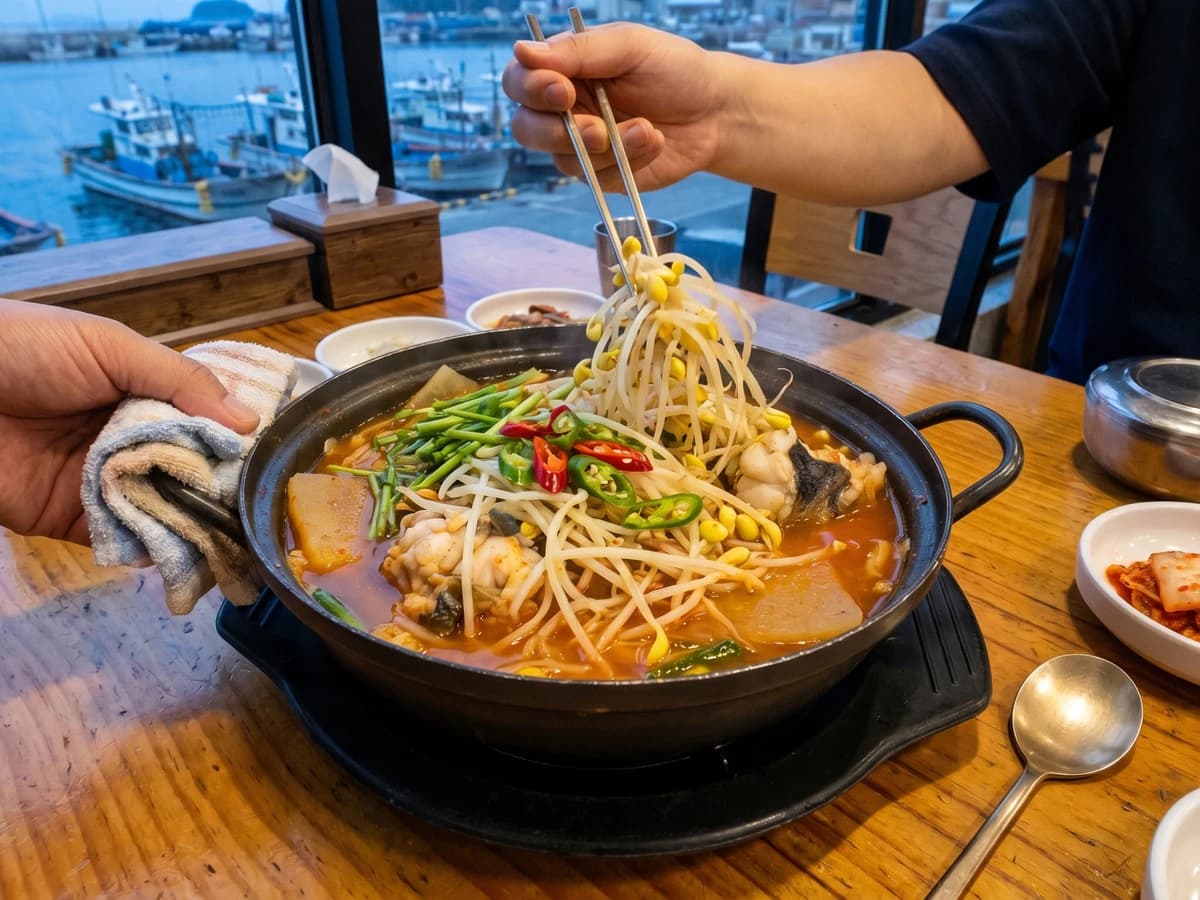
A Masan coast monkfish stew with firm white meat, gelatin at the bones, soybean sprouts for crunch, and a red broth seasoned to carry the fish, not bury it.

Chef Jeong-sun
A weeknight fish roe stew with radish and crown daisy in a clean spicy broth, where the whole success depends on adding the roe late enough that it sets tender, not chalky.

Chef Jeong-sun
Late-summer mallow leaves rubbed with salt until the bitter green water runs off, then simmered in a clean doenjang broth with dried shrimp, the quiet soup a Korean weeknight deserves.