
Chef Jeong-sun
Aehobak-guk (애호박국, Korean Zucchini Soup)
A clean summer soup of Korean zucchini and salted shrimp, built on quick anchovy-kelp broth and finished before the half-moons lose their shape on a weeknight table.
A cooking platform built around craft, culture, and the stories behind what we eat.

Created by
Freshwater loach simmered until the bones soften, pressed into its own broth, then carried with doenjang, greens, perilla seed, and sancho pepper the way Namwon autumn tables know it.
At the autumn market, loaches are not pretty fish. They coil in the basin, dark and stubborn, fat from the rice paddies before cold weather sends them down into the mud. That is when chueotang is at its best. Cook the month you're standing in: if you find only tired fish in high summer or winter, buy frozen farmed loach from a Korean market or cook a different soup until the market is honest again.
This soup lives or dies by one plain step: simmer the loach until the bones soften, then press it through a sieve. My teacher, Master Seong-nyeo, would not let me stop when my wrist got tired. A blender can save time now, because 시대가 바뀌면 음식도 바뀌어야 해요 (when times change, food must change too), but the sieve still has to finish the work. Skip it and you get grit where the soup should be thick and clean.
Jeolla's chueotang is not a clear fish soup. It is dark with loach, doenjang (fermented soybean paste), siraegi (dried radish greens), perilla seed, and sancho pepper added at the table. I won't tell you this is easy. Tonight it asks you to clean the fish carefully, cook it longer than seems necessary, season the greens before they meet the pot, and taste before you add more salt. Do those things and the bowl gives back what autumn food is supposed to give: strength, rice by the spoonful, and a table that gets quiet for a few minutes.
Chueotang takes its name from chueo (loach), a fish associated with autumn because it fattened in rice paddies before winter; the hanja 鰍 itself combines fish with autumn. Joseon seasonal writings, including Hong Seok-mo's Dongguk Sesigi (1849), record loach soup as an autumn food rather than a palace dish. Namwon in North Jeolla became the best-known regional center, with a style that simmers the loach soft, strains or grinds it into the broth, and serves sancho or chopi powder at the table; Seoul versions often leave small loaches whole.
Quantity
900g
live and purged or thawed from frozen
Quantity
3 tablespoons
divided, for cleaning
Quantity
9 cups
Quantity
1 piece, about 4 inches square
Quantity
10 large
heads and guts removed
Quantity
1 tablespoon sliced, plus 1 teaspoon grated
Quantity
1 small
halved
Quantity
250g
squeezed dry and cut into 2-inch lengths
Quantity
150g
rinsed
Quantity
3 tablespoons
Quantity
1 tablespoon
Quantity
1 teaspoon
Quantity
1 tablespoon
Quantity
5 cloves
minced
Quantity
1/4 teaspoon
Quantity
1/4 cup
Quantity
2
cut into 2-inch lengths
Quantity
1 cup
cut into 2-inch lengths
Quantity
1
thinly sliced
Quantity
1/2 teaspoon, plus more only if needed
Quantity
1/2 teaspoon
for serving
Quantity
to serve
| Ingredient | Quantity |
|---|---|
| freshwater loaches (mikkuraji)live and purged or thawed from frozen | 900g |
| coarse saltdivided, for cleaning | 3 tablespoons |
| water | 9 cups |
| dried kelp (dasima) | 1 piece, about 4 inches square |
| dried anchovies (myeolchi)heads and guts removed | 10 large |
| fresh ginger | 1 tablespoon sliced, plus 1 teaspoon grated |
| onionhalved | 1 small |
| prepared siraegi or blanched napa outer leavessqueezed dry and cut into 2-inch lengths | 250g |
| mung bean sproutsrinsed | 150g |
| doenjang (fermented soybean paste) | 3 tablespoons |
| gochugaru (Korean chili flakes) | 1 tablespoon |
| gochujang (Korean chili paste) (optional) | 1 teaspoon |
| guk-ganjang (Korean soup soy sauce) | 1 tablespoon |
| garlicminced | 5 cloves |
| ground black pepper | 1/4 teaspoon |
| fine perilla seed powder (deulkkae-garu) | 1/4 cup |
| scallionscut into 2-inch lengths | 2 |
| garlic chives (buchu)cut into 2-inch lengths | 1 cup |
| green chili (optional)thinly sliced | 1 |
| kosher salt | 1/2 teaspoon, plus more only if needed |
| sancho or chopi pepper powderfor serving | 1/2 teaspoon |
| cooked short-grain rice and kimchi (optional) | to serve |
If using prepared siraegi, rinse it, squeeze it firmly, strip away any tough outer fibers, and cut it into 2-inch lengths. If using fresh napa outer leaves, blanch them in boiling water for 2 to 3 minutes, rinse cold, squeeze dry, and cut the same way. The greens must be tender before they meet the soup; tough stems will not soften politely just because the broth is good.
For live loaches, put them in a deep pot or bowl, sprinkle over 2 tablespoons coarse salt, cover tightly at once, and wait 5 minutes. Rinse under cold running water, rubbing with the remaining 1 tablespoon salt until the heavy slime is gone and the water runs mostly clear. For thawed frozen loaches, rinse with 1 tablespoon salt, then rinse clean. Freshwater fish must be cooked through, so keep the cleaned fish cold until it goes into the pot.
Put the 9 cups water, kelp, anchovies, sliced ginger, and onion in a 5- to 6-quart heavy pot. Bring it to a gentle simmer over medium heat. Pull the kelp out as soon as the water begins to simmer, because kelp left too long turns the broth slick and bitter. Simmer the anchovies, ginger, and onion for 10 minutes more, then lift them out.
Add the cleaned loaches to the broth. Bring to a boil, skim the gray foam from the surface, then lower the heat and simmer steadily for 40 to 45 minutes, partially covered. The fish should break apart when pressed with a spoon, and the small bones should bend rather than snap. This long simmer is the price of a smooth chueotang.
Set a food mill or fine-mesh sieve over a large bowl. Scoop in the loaches with a little broth and press hard with a ladle or wooden spoon, adding more hot broth by the ladleful to rinse the flesh through. Discard the dry bones and coarse bits left behind. Return the pressed loach and broth to the pot. You should have about 7 cups; add water if you are short. A blender may help first, but the sieve must finish the work.
In a bowl, mix the prepared greens with the doenjang, gochugaru, optional gochujang, guk-ganjang, minced garlic, grated ginger, and black pepper. Rub the seasoning into the greens with your hand for 1 minute. This puts flavor inside the stems instead of leaving all the seasoning floating in the pot. 손맛 is real; I measure it anyway, so the next cook can make the same bowl.
Add the seasoned greens to the loach broth and simmer 20 minutes, stirring now and then so the thick soup does not catch on the bottom. Add the mung bean sprouts and simmer 5 minutes more. Stir the perilla seed powder with 1/2 cup hot broth in a small bowl until smooth, then pour it back into the pot and simmer 3 to 5 minutes. The soup should coat a spoon but still pour like soup, not porridge.
Add the scallions, garlic chives, and green chili, then simmer 1 to 2 minutes, just until the greens bend and stay bright. Taste before adding salt; start with 1/2 teaspoon only if the soup tastes flat. Ladle into bowls or ttukbaegi and serve with rice, kimchi, and sancho or chopi powder at the table. Start with 1/8 teaspoon sancho per bowl. It belongs at the end, where its sharp fragrance stays alive.
1 serving (about 540g)
Culinary guides, cultural storytelling, and the editorial depth that makes cooking meaningful.
Discover Culinary ExplorerChef Jeong-sun
A clean summer soup of Korean zucchini and salted shrimp, built on quick anchovy-kelp broth and finished before the half-moons lose their shape on a weeknight table.
Chef Jeong-sun
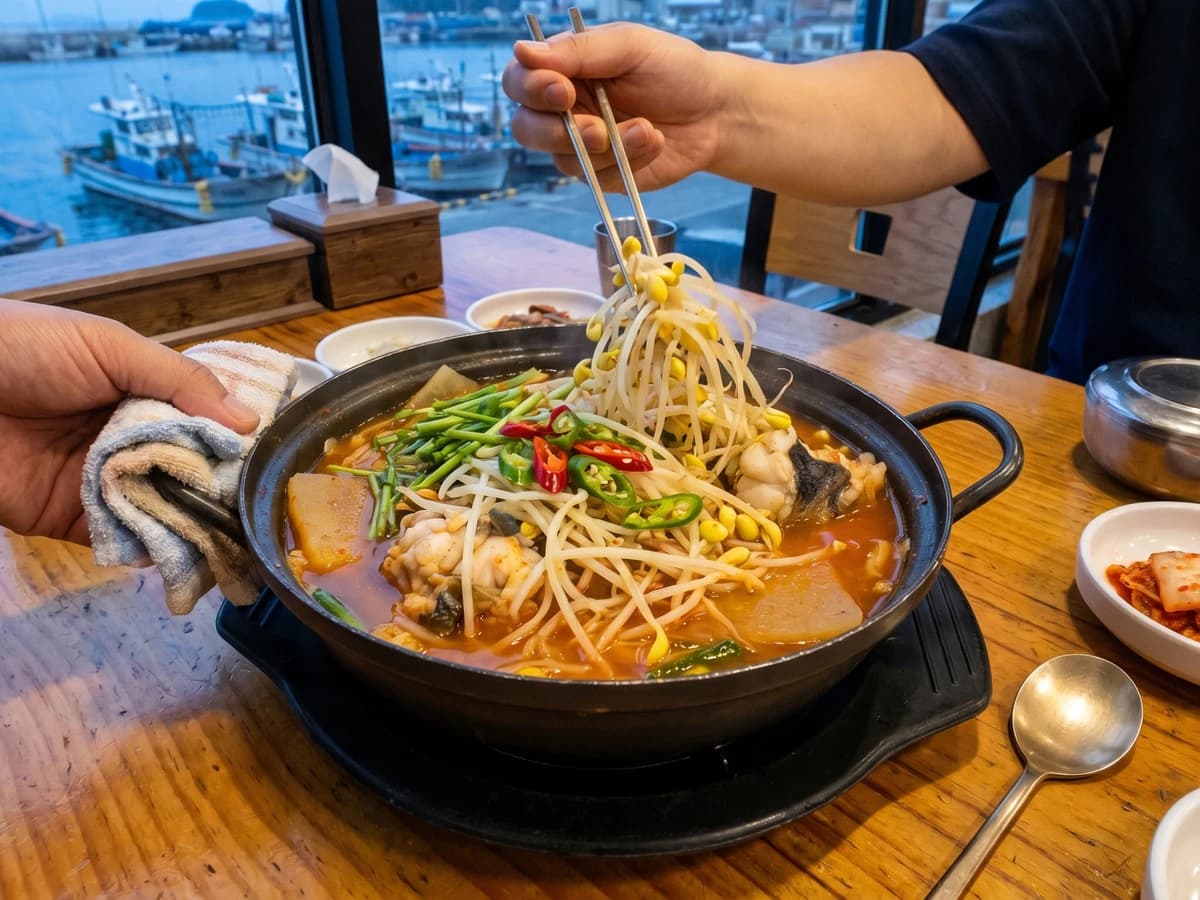
A Masan coast monkfish stew with firm white meat, gelatin at the bones, soybean sprouts for crunch, and a red broth seasoned to carry the fish, not bury it.

Chef Jeong-sun
A weeknight fish roe stew with radish and crown daisy in a clean spicy broth, where the whole success depends on adding the roe late enough that it sets tender, not chalky.

Chef Jeong-sun
Late-summer mallow leaves rubbed with salt until the bitter green water runs off, then simmered in a clean doenjang broth with dried shrimp, the quiet soup a Korean weeknight deserves.