
Chef Joost
Advocaat (Dutch Egg Liqueur)
Advocaat is the Dutch liqueur you eat with a spoon: brandewijn, yolks and sugar turned into a glossy Easter glass, with a hat of slagroom and no apology.
A cooking platform built around craft, culture, and the stories behind what we eat.
Created by
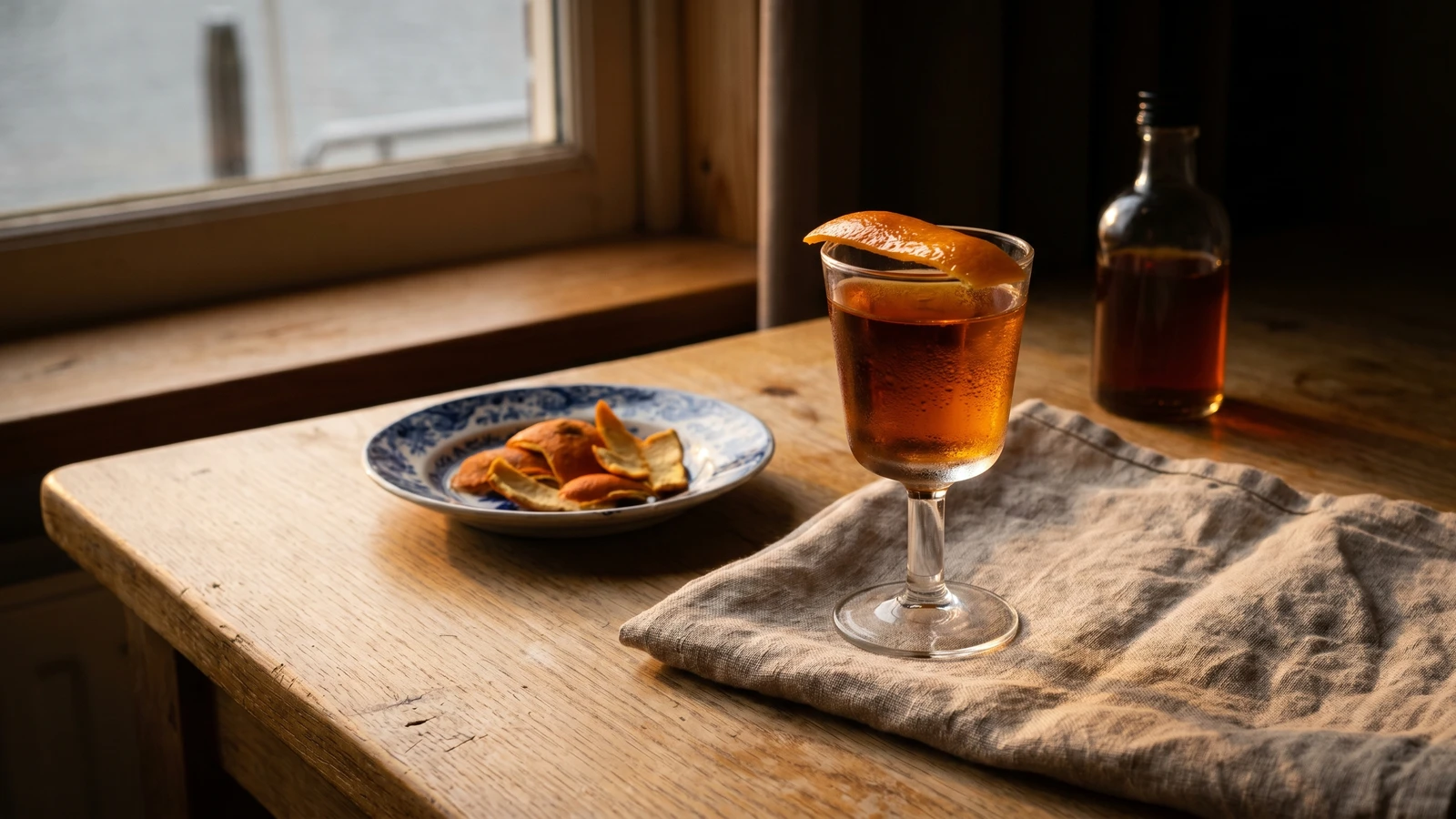
A bright orange glass for Koningsdag and every Oranje victory, where bitter peel, jenever, and spice turn the House of Orange into something you can pour.
Some drinks are recipes, and some are banners. Oranjebitter is the second sort, though the Dutch, being Dutch, managed to make the banner drinkable, bitter, and best prepared weeks before anyone waves it. The name already tells you the joke and the loyalty at once: oranje, orange, for the House of Orange, and bitter, because celebration in the Low Countries is allowed to keep a straight face.
But let me tell you a secret. This is not a sweet orange liqueur wearing a little national colour for Koningsdag, King's Day. It belongs to the old Dutch habit of steeping peels, roots, seeds, and spices in strong drink until the bottle carries a memory of the apothecary as much as the tavern. Bitter orange peel gives the backbone, fresh orange peel gives brightness, and jenever, our juniper spirit, gives it the proper Dutch spine. Vodka will obey the recipe. Jenever will tell the story.
Hou het altijd simpel, always keep it simple. You are not distilling, only infusing. Peel carefully so the white pith stays behind, shake the jar when you remember, taste before the bitterness grows bossy, then sweeten just enough to make the drink pourable without turning it into syrup. Serve it cold in small glasses. A flag in a glass does not need a long speech.
Oranjebitter appears in the Dutch distilling tradition by the seventeenth century, when orange-flavoured bitters were linked to the House of Orange and the political fortunes of the Dutch Republic. Distillers revived and marketed it strongly for royal occasions in the nineteenth century, especially around Queen Wilhelmina's inauguration in 1898, and it remains tied to Koningsdag, royal births, and national sporting victories. Its flavour belongs to the same Dutch bittersweet family as jenever-based kruidenbitters, with citrus peel and spice used as both celebration and medicine.
Quantity
700ml
Quantity
4
peeled in wide strips, white pith removed
Quantity
15g
Quantity
1 small
Quantity
4
Quantity
1 blade
Quantity
1/2 teaspoon
Quantity
150g
Quantity
150ml
| Ingredient | Quantity |
|---|---|
| jonge jenever | 700ml |
| organic orangespeeled in wide strips, white pith removed | 4 |
| dried bitter orange peel | 15g |
| cinnamon stick | 1 small |
| whole cloves | 4 |
| mace | 1 blade |
| coriander seeds | 1/2 teaspoon |
| sugar | 150g |
| water | 150ml |
Wash the oranges well, then peel them in broad strips, taking only the orange skin and as little white pith as possible. The peel is perfume; the pith is a scolding. If a strip carries too much white, scrape it away with the back of a small knife.
Put the fresh orange peel, dried bitter orange peel, cinnamon, cloves, mace, and coriander seeds into a clean 1-liter jar. Pour over the jenever, close the jar, and shake once. Set it somewhere cool and dark for 10 to 14 days, shaking it gently every day or two.
Combine the sugar and water in a small pan and warm gently, stirring until the sugar has dissolved completely. Let the syrup cool. Do not boil it down; you want sweetness, not a sticky punishment.
Strain the infused jenever through a fine sieve, then through a coffee filter or a clean cloth if you want it clear. Stir in about two-thirds of the cooled syrup, taste, and add more only if the bitterness is too stern. Oranjebitter should smile without becoming orange candy.
Pour into a clean bottle, seal, and let it rest for at least 3 days before serving. A week is better. The peel, spice, and sugar need a little time to stop speaking over one another.
Chill the bottle well and pour small measures into borrelglazen, Dutch little drinking glasses. Serve neat for Koningsdag, King's Day, or lengthen with a splash of cold sparkling water if the afternoon is long and the flag is already doing enough work.
1 serving (about 29g)
Culinary guides, cultural storytelling, and the editorial depth that makes cooking meaningful.
Discover Culinary ExplorerChef Joost
Advocaat is the Dutch liqueur you eat with a spoon: brandewijn, yolks and sugar turned into a glossy Easter glass, with a hat of slagroom and no apology.

Chef Joost
Anijsmelk is the Dutch night drink of cold hands and quiet kitchens: milk, anise, a little butter, and the sweet medicinal smell every child remembers.

Chef Joost
Beerenburg is Friesland in a small glass: bitter herbs, old jenever, cold quays, and a name that belongs not to bears but to an Amsterdam spice merchant.

Chef Joost
The bishop's red wine, scented with orange and clove, belongs to Pakjesavond as surely as pepernoten: a small pot of spice-route history passed between cold hands.