Chef Makoa
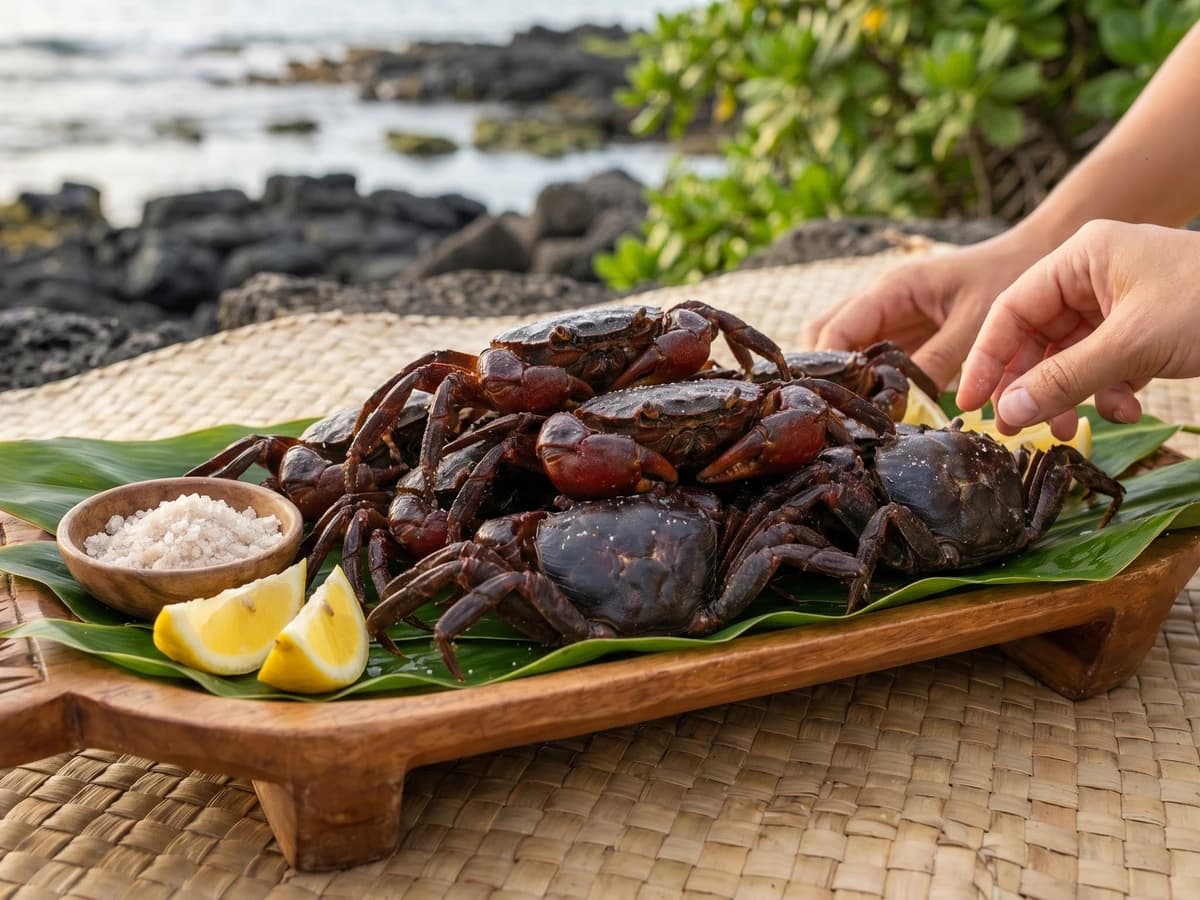
ʻAʻama (Hawaiian Black Rock Crab with Paʻakai)
Hawaiʻi's reef-gathered ʻaʻama, the small black rock crab from the shoreline stones, boiled quick in salty water and picked whole at the lūʻau table beside ʻopihi.
A cooking platform built around craft, culture, and the stories behind what we eat.

Created by
Raw Hawaiian ʻopihi, served cold in the shell with paʻakai, limu, and a little ʻinamona if you like, the lūʻau delicacy that means somebody loved the table enough to risk the rocks.
The reef is family too, yeah, not only the kalo patch. I learned that on the windward rocks of Oʻahu, watching older hands wait on the swell before they ever touched the pōhaku, the rock. This is Hawaiian ʻopihi, limpets from Hawaiʻi's surf-pounded edge, and the old warning comes with it: He iʻa make ka ʻopihi, the ʻopihi is the fish of death.
That warning isn't drama. It's kuleana, responsibility. Nobody in my family spoke about ʻopihi without speaking about the person who went out for it, the tide, the rock, and what got left behind to grow. A host who puts ʻopihi on a lūʻau, a Hawaiian feast, is saying somebody took real risk and real care for you. No need make it fancy. Paʻakai, sea salt. Limu, seaweed. ʻInamona, roasted kukui nut relish, if that's the table you're setting. That's enough.
Across the Triangle, every island has reef food by its own hand: Māori pāua, abalone from Aotearoa, Tahitian reef shellfish, Sāmoan and Tongan shore gatherings, each one taught by its own elders and its own water. Same shore work, different shell. We name this one Hawaiian, then we bring it into a kitchen today with legal, trusted ʻopihi, a cold bowl, clean hands, and the salt going on close to the table so the meat stays sweet and bright.
Mary Kawena Pukui recorded the ʻōlelo noʻeau, Hawaiian proverb, 'He iʻa make ka ʻopihi,' 'the ʻopihi is the fish of death,' because gatherers can be swept from the pōhaku by surf. Before contact, coastal gathering sat inside the same Hawaiian food system as kalo, ʻulu, fishponds, and reef kapu: what you took from the sea was bound to season, place, chiefly order, and family need. At a modern lūʻau, ʻopihi still signals deep hospitality, not because it is fancy, but because the source, the risk, and the restraint are all visible in one small shell.
Quantity
24 to 36
live in shell or freshly shucked, legal and kept cold
Quantity
1 to 1 1/2 teaspoons
or coarse sea salt, lightly crushed
Quantity
1/4 cup
rinsed, squeezed dry, and finely chopped
Quantity
1 tablespoon
commercially prepared or properly roasted
Quantity
1 to 2 tablespoons
for passing at the table
Quantity
1 to 2
rinsed, for lining the platter
Quantity
for serving
| Ingredient | Quantity |
|---|---|
| fresh Hawaiian ʻopihi (limpets)live in shell or freshly shucked, legal and kept cold | 24 to 36 |
| paʻakai (Hawaiian sea salt)or coarse sea salt, lightly crushed | 1 to 1 1/2 teaspoons |
| limu kohu or ogo (optional)rinsed, squeezed dry, and finely chopped | 1/4 cup |
| ʻinamona (roasted kukui nut relish) (optional)commercially prepared or properly roasted | 1 tablespoon |
| Hawaiian chili pepper water (optional)for passing at the table | 1 to 2 tablespoons |
| ti leaves (lāʻī) or banana leaves (optional)rinsed, for lining the platter | 1 to 2 |
| poi, paʻiʻai, or hot rice (optional) | for serving |
The first step is not a knife. It's the person who brought the shellfish in. Use only legal Hawaiian ʻopihi from an experienced gatherer or licensed seafood source, kept cold from the shore to your kitchen. Do not go after ʻopihi on surf rocks unless you were taught by people who know that place, the tide, and the law. He iʻa make ka ʻopihi, and the proverb is not playing.
Set a metal bowl over ice. Rinse each ʻopihi briefly in cold salted water, just enough to loosen grit, and discard any with an off smell, broken shell bits in the meat, or flesh that looks dull, gray, or dry. Fresh ʻopihi should smell like clean reef and almost nothing else.
If the ʻopihi are still in the shell, hold each one in a folded towel or cut-resistant glove and slip a small oyster knife or sturdy spoon under the muscle. Lift the meat free in one piece, keeping the shell liquor where you can. Pick away grit or shell chips, but don't rinse it until it forgets what it is. The sweet reef taste is the whole reason you're here.
Five to ten minutes before serving, fold the ʻopihi gently with the paʻakai, limu, and ʻinamona if you're using them. The salt should wake the meat up, not pickle it. Watch for the surface to turn glossy and briny, with the limu clinging dark green against the shellfish.
Nest the ʻopihi back into their shells or spoon them into a ti-leaf-lined wooden ʻumeke, a carved Hawaiian bowl. Serve cold, right away, with poi, paʻiʻai, or hot rice nearby if this is the seafood main on the table. Eat it the same hour you season it. If anything is left, cook it the next day, don't serve it raw again.
1 serving (about 65g)
Culinary guides, cultural storytelling, and the editorial depth that makes cooking meaningful.
Discover Culinary ExplorerChef Makoa
Hawaiʻi's reef-gathered ʻaʻama, the small black rock crab from the shoreline stones, boiled quick in salty water and picked whole at the lūʻau table beside ʻopihi.

Chef Makoa
Hawaiʻi Local chicken hekka, the plantation-camp cousin of Japanese sukiyaki, with tender chicken, long rice, shiitake, bamboo shoots, and sweet shoyu gravy for rice.
Chef Makoa
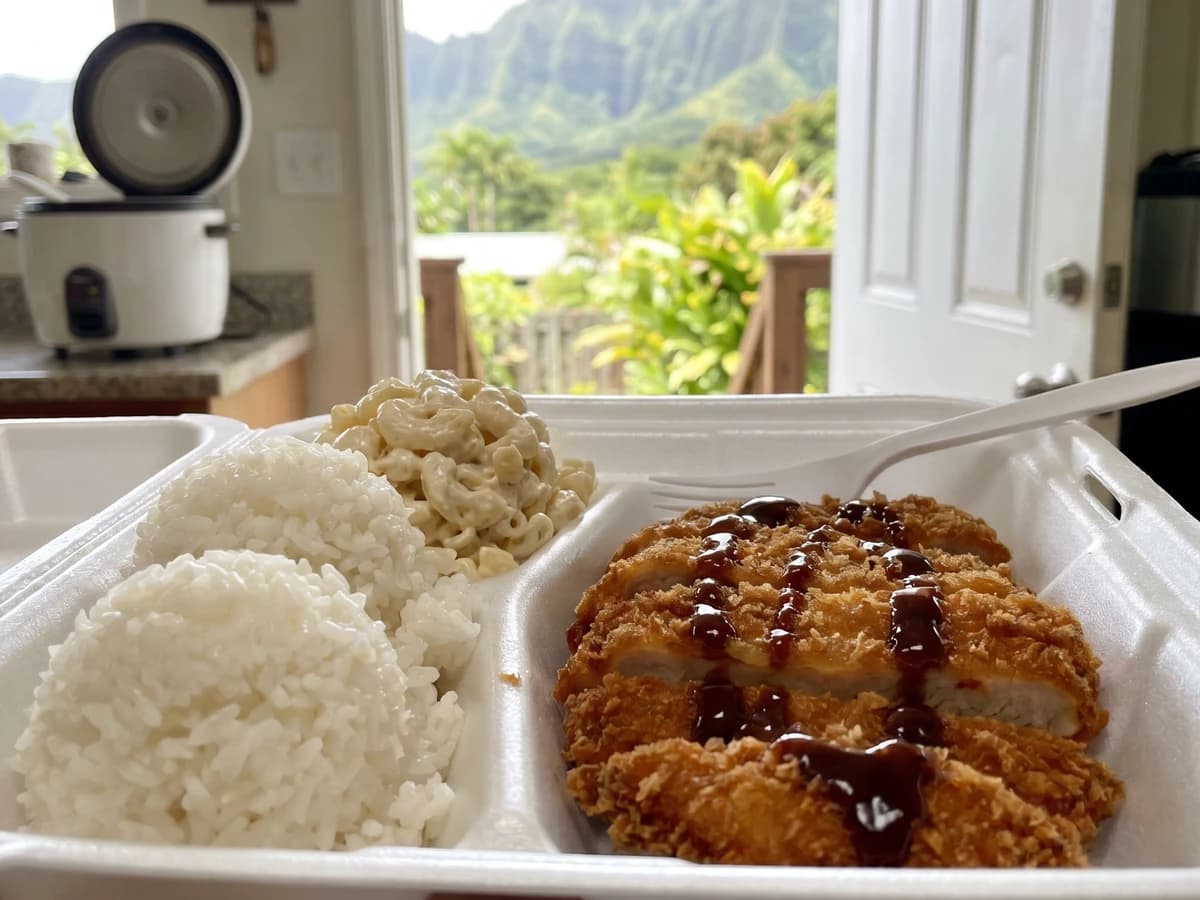
Hawaiʻi's Local plate-lunch comfort: juicy chicken thigh in panko, fried crisp, sliced over white rice with mac salad and katsu sauce, the sugar-camp stove brought home.
Chef Makoa
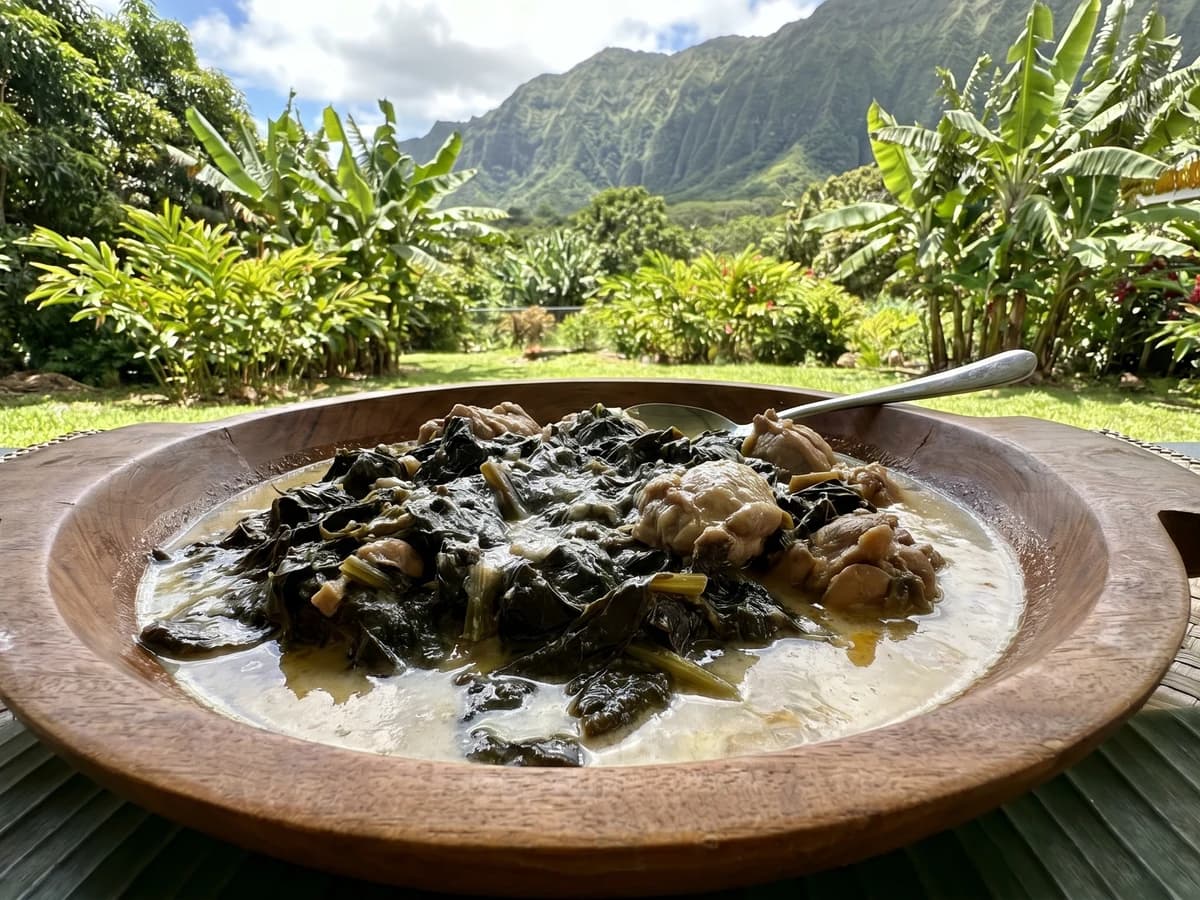
Hawaiian chicken lūʻau is kalo leaf cooked past its bite with tender chicken and coconut milk, a windward Oʻahu comfort pot with cousins in Sāmoa's palusami, Tonga's lū, and Cook Islands rukau.