
Chef Dimitra
Athenian Freddo Espresso (Φρέντο Εσπρέσο)
Athens made espresso Greek by serving it cold: a double shot shaken with ice until the crema turns thick, then poured over cubes for the cafe standard.
A cooking platform built around craft, culture, and the stories behind what we eat.
Created by
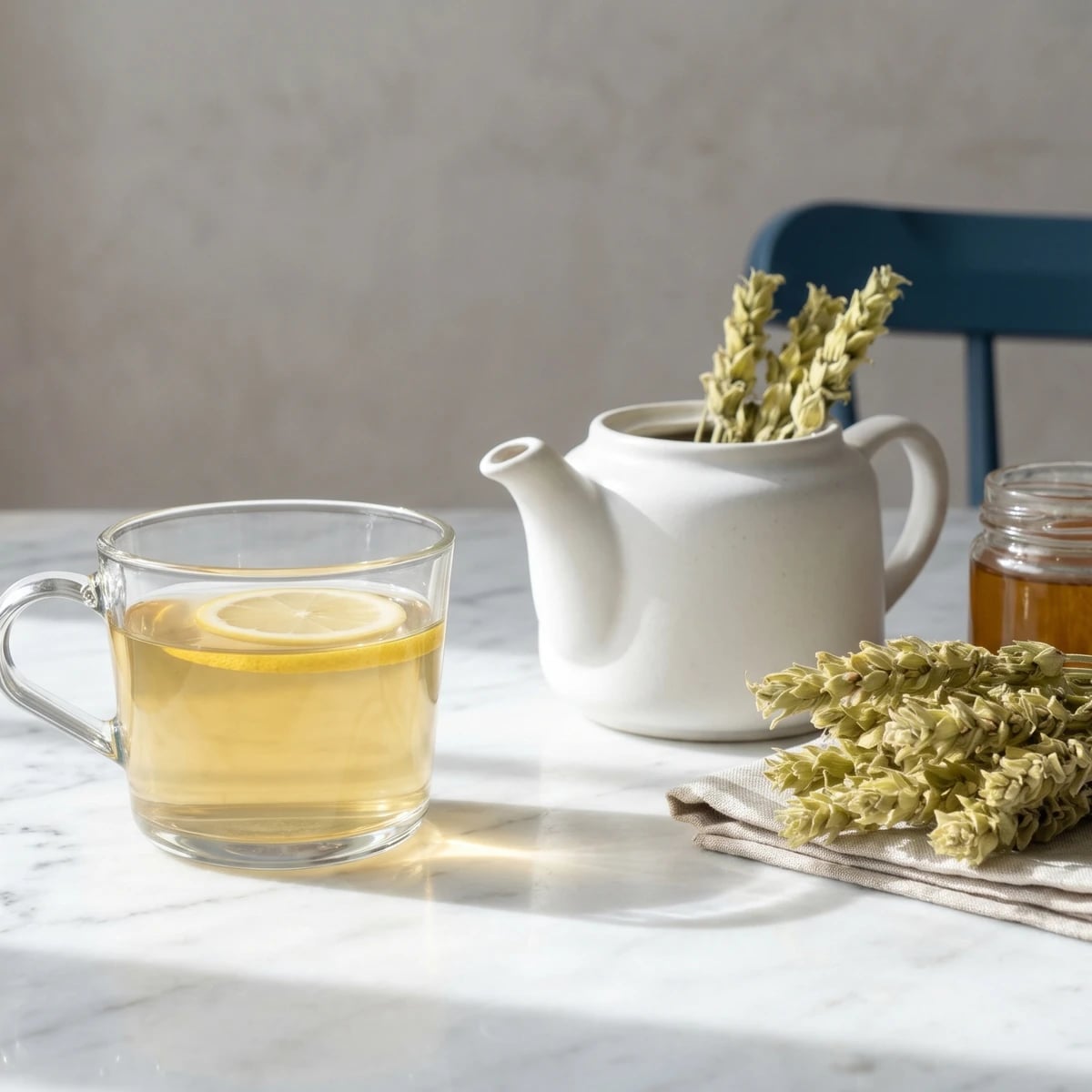
On Olympus, tsai tou vounou is whole Sideritis scardica steeped gently, not boiled flat, then sweetened with thyme honey and lemon when the mountain cold reaches the bones.
Olympus tsai tou vounou is not tea from leaves, and it isn't black tea made gentle. It is whole dried flowering stalks of Sideritis scardica, gathered from the high slopes around Olympus, pale green and silver, with a scent of thyme, hay, and clean stone. In winter it sits beside the bed, beside the homework, beside the person who has caught a chill.
The method is almost nothing, which is why it has to be right. Bring the water to a boil, pull it off the heat, tuck in the whole stalks, cover the pot, and leave it alone for ten minutes. Boil it hard and the fragrance thins out, like a good voice shouted hoarse. Covered and quiet, it gives a golden infusion without bitterness.
Sweeten it after straining, if you like, with Greek thyme honey, and squeeze lemon in only at the cup. My mother kept Sideritis in a paper bag in Thessaloniki, and every house I knew had its own mountain in the cupboard: Olympus, Parnassos, Taygetos, Crete. The region is the dish's surname, even for a cup of tea.
Sideritis has been named in Greek medical writing since antiquity; Dioscorides, in the first century CE, described sideritis as an herb associated with wounds from iron, sideros in Greek. Today's tsai tou vounou is not one plant but a regional family: Sideritis scardica around Olympus and northern Greece, Sideritis raeseri on Parnassos, Sideritis clandestina on Taygetos, and malotira in Crete. Because wild stands were thinned by heavy gathering in the twentieth century, cultivated Greek Sideritis is now the better choice for a household pot.
Quantity
1 litre
Quantity
8g
whole flowering stalks, lightly bent to fit the pot
Quantity
40g
Quantity
1
cut into wedges or thin slices
| Ingredient | Quantity |
|---|---|
| fresh water | 1 litre |
| dried Sideritis scardica (tsai tou vounou)whole flowering stalks, lightly bent to fit the pot | 8g |
| Greek thyme honey (optional) | 40g |
| lemon (optional)cut into wedges or thin slices | 1 |
Put 1 litre of fresh water in a small saucepan or kettle. Bend the dried Sideritis stalks gently so they fit the pot, but don't crush them into dust. The flowers, leaves, and thin stems all go in.
Bring the water just to a full boil, then take it off the heat. Wait half a minute so the violence leaves the water. This tea wants hot water, not punishment.
Add the Sideritis, press the stalks under the water with a spoon, and cover the pot at once. Leave it for 10 minutes. The lid is the whole trick here: covered and off the boil, the mountain scent stays in the cup instead of disappearing into the kitchen.
Strain into cups or a warmed teapot. Stir in honey while the tea is hot, if you're using it, and add lemon at the cup so each person can choose. It should be pale gold, herbal, and clean, with no harshness at the back of the tongue.
1 serving (about 260g)
Culinary guides, cultural storytelling, and the editorial depth that makes cooking meaningful.
Discover Culinary Explorer
Chef Dimitra
Athens made espresso Greek by serving it cold: a double shot shaken with ice until the crema turns thick, then poured over cubes for the cafe standard.

Chef Dimitra
Athens cafe freddo cappuccino is iced double espresso crowned with cold afrogala, the dense milk foam that makes the drink clean, bitter, and properly Greek.

Chef Dimitra
Attiki lemonada is the kafeneio summer glass: fresh lemon juice, a light syrup, and a little zest steeped just long enough to smell like the peel.

Chef Dimitra
Chamomili from Greek Macedonia is a cup of dried spring flowers, steeped covered until pale gold and apple-sweet. The rule is plain: hot water, patient steeping, no boiling.