
Chef Freja
Andelår med Rødkål
Slow-roasted duck legs with crisp, deeply golden skin, served with braised red cabbage and caramelized potatoes. The weeknight Danish duck that proves the best part of the bird is the one that takes its time.
A cooking platform built around craft, culture, and the stories behind what we eat.

Created by Chef Freja
Beef in the mild Danish curry sauce, slow-cooked until it falls apart, served with rice and the condiment plate of banana, chutney, peanuts, and coconut. Honest weeknight cooking from the 1960s Danish kitchen.
November in Copenhagen, and the kitchen windows have gone dark by four o'clock. The streetlights come on and the city turns inward. This is when you want a pot of something on the stove, something that fills the house with warmth and gives you a reason to sit down properly.
Oksekod i karry is that pot. Beef in a mild, golden curry sauce, slow-cooked until the meat falls apart and the sauce has thickened into something rich and gentle. This is not the curry you know from other traditions. Danish curry is its own creature: mild, creamy, built on onions and apple and a dusting of curry powder that perfumes the kitchen without setting anything on fire. It became a weeknight staple in the 1960s, when Danish home cooks began reaching for the spice rack with quiet curiosity, and it has never left. The beef version is the heartier sibling of kylling i karry, the chicken curry that every Dane alive has eaten a hundred times. Same sauce, different weight. Where chicken is quick and light, beef asks for time. Time to brown. Time to simmer. Time to become something tender.
What I want you to pay attention to is the condiment plate. In Denmark, curry is never served alone. You set out small bowls of sliced banana, mango chutney, roasted peanuts, raisins, and desiccated coconut, and everyone builds their own plate. This is the ritual that makes the meal. The curry is the center, but the condiments are where it becomes yours. I'll walk you through everything, and by the end you'll know this dish well enough to make it without looking.
Curry powder reached Denmark through the colonial spice trade in the 18th century, but it didn't enter the home kitchen in earnest until the 1950s and 1960s, when Danish families began experimenting with milder global flavors adapted to local taste. Kylling i karry became one of the country's most popular weeknight dinners within a decade, and the beef version followed as a heartier alternative suited to colder months and tighter budgets. The condiment plate, tilbehorstallerken, with its small bowls of banana, chutney, peanuts, and coconut, was borrowed from the Anglo-Indian curry table and became so thoroughly Danish that most Danes today consider it their own invention.
Quantity
800g
cut into 3cm cubes
Quantity
2 large
diced
Quantity
1
peeled and diced
Quantity
2 tablespoons
Quantity
2 tablespoons
Quantity
40g
divided
Quantity
1 tablespoon
Quantity
500ml
Quantity
150ml
Quantity
1
Quantity
to taste
Quantity
freshly ground, to taste
Quantity
400g
Quantity
2
sliced
Quantity
to taste
Quantity
50g
Quantity
50g
Quantity
30g
| Ingredient | Quantity |
|---|---|
| beef chuckcut into 3cm cubes | 800g |
| onionsdiced | 2 large |
| tart applepeeled and diced | 1 |
| mild curry powder | 2 tablespoons |
| plain flour | 2 tablespoons |
| unsalted butterdivided | 40g |
| neutral oil | 1 tablespoon |
| beef stock | 500ml |
| double cream | 150ml |
| bay leaf | 1 |
| fine sea salt | to taste |
| black pepper | freshly ground, to taste |
| jasmine rice | 400g |
| bananassliced | 2 |
| mango chutney | to taste |
| roasted peanuts | 50g |
| raisins | 50g |
| desiccated coconut | 30g |
Pat the beef cubes dry with kitchen paper. This matters: wet meat steams instead of browning, and you need that crust. Season generously with salt and pepper. Heat half the butter and the oil in a heavy pot over high heat. When the butter is foaming, add the beef in a single layer, leaving space between the pieces. Don't crowd the pot or the temperature drops and the meat turns grey instead of golden. Brown the cubes on all sides, about three minutes per batch. Remove to a plate and repeat with the remaining beef.
Turn the heat down to medium. Add the remaining butter to the same pot. It will pick up the browned bits from the beef, and that's flavor you want in the sauce. Add the diced onions and cook them gently for eight to ten minutes until they're soft and translucent. Don't rush this. The onions are the foundation of the sauce, and they need time to sweeten. Add the diced apple and cook for another two minutes. The apple will break down as the curry simmers, thickening the sauce and giving it a gentle sweetness that balances the spice.
Add the curry powder to the pot and stir it through the onions and apple for one minute. You'll smell it change: the raw, dusty scent opens up into something warm and fragrant. Toasting the spice in fat wakes up the essential oils, and if you skip this step the curry tastes flat and powdery. Sprinkle in the flour and stir for another minute. The flour coats everything and will thicken the sauce as it simmers.
Pour in the stock a little at a time, stirring as you go to prevent lumps from the flour. Add the bay leaf and return the browned beef along with any juices that have collected on the plate. Those juices are concentrated flavor. Bring everything to a gentle simmer, then turn the heat as low as it will go. Cover the pot with the lid slightly ajar and let it cook for one and a half to two hours. Check it every thirty minutes and give it a stir. The beef is done when it yields to a fork with almost no resistance. Low heat and patience are the only technique here.
Remove the bay leaf. Stir in the cream and let the sauce warm through for two or three minutes. Taste it. Adjust the salt. The sauce should be golden, rich, and gently spiced, coating the back of a spoon with a smooth, glossy finish. If it's too thick, add a splash of stock. If it's too thin, let it simmer uncovered for a few minutes. You'll know when it's right.
While the curry finishes, cook the rice and set out the condiment plate. This is the ritual that makes the meal. Small bowls of sliced banana, mango chutney, roasted peanuts, raisins, and desiccated coconut, arranged so everyone can reach them. Ladle the curry generously over steamed rice and let people build their own plate from the condiments. Each person finds their combination, and that personal assembly is what turns a pot of curry into something worth sitting down for together. Tak for mad.
1 serving (about 740g)
Culinary guides, cultural storytelling, and the editorial depth that makes cooking meaningful.
Discover Culinary ExplorerChef Freja
Slow-roasted duck legs with crisp, deeply golden skin, served with braised red cabbage and caramelized potatoes. The weeknight Danish duck that proves the best part of the bird is the one that takes its time.

Chef Freja
The whole roasted duck of juleaften, stuffed with tart apples and dark prunes, slow-roasted for four patient hours until the skin crackles like something earned and the meat underneath gives way without resistance.
Chef Freja
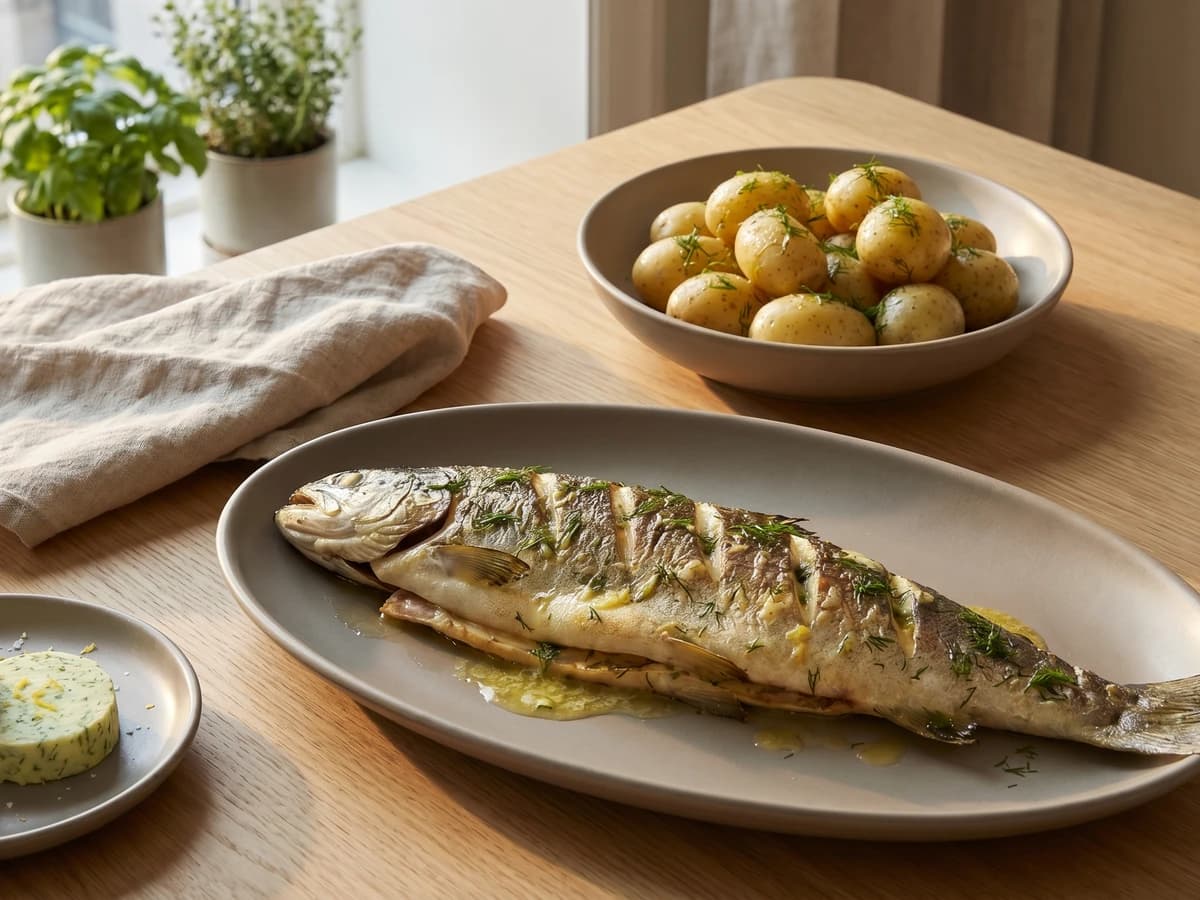
Whole sea trout baked with butter, lemon, and armfuls of dill, served beside the first nye kartofler of the season and a melting slab of dildsmor. The Danish summer table at its most generous.
Chef Freja
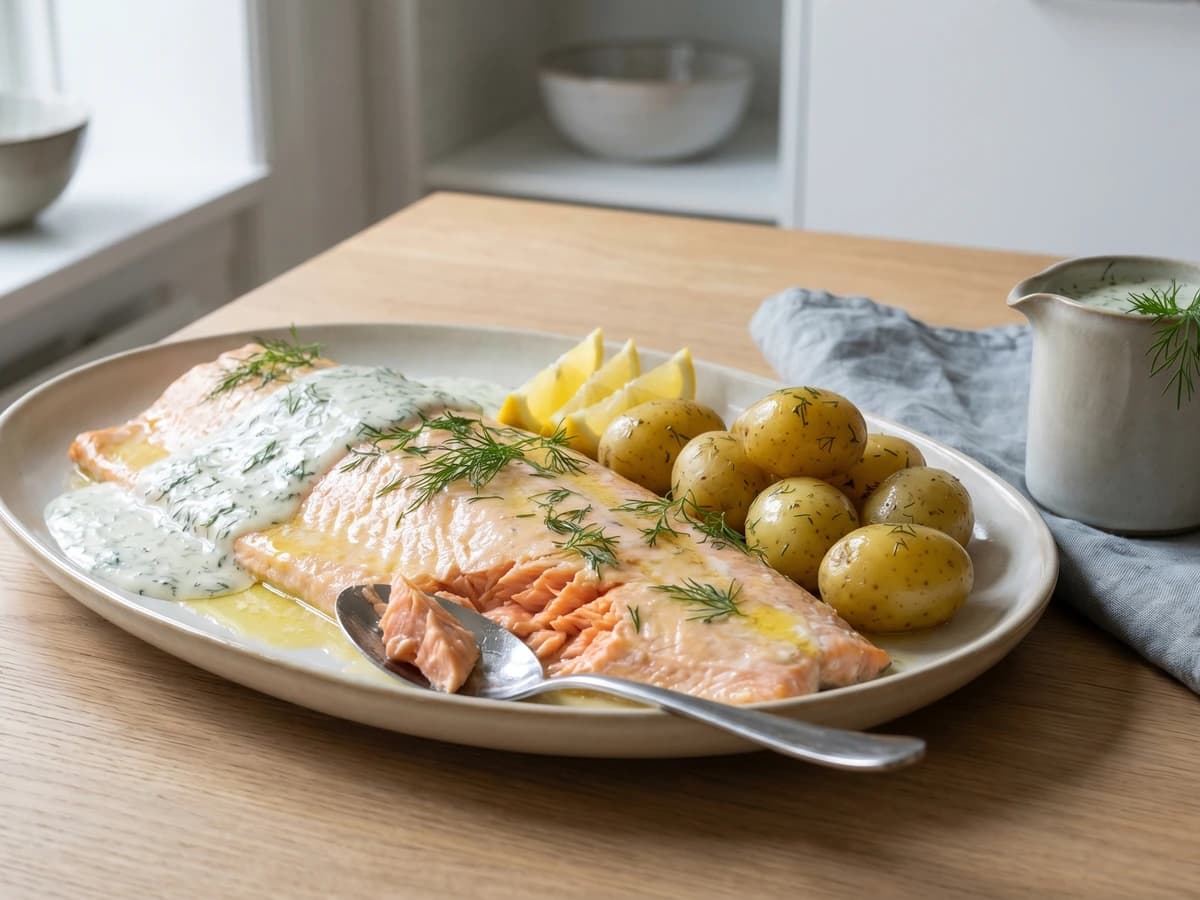
A side of salmon baked gently in butter and white wine, served warm with a bright dill cream sauce and the season's first nye kartofler. Late spring on a Danish table, cooked with love.