
Chef Freja
Andelår med Rødkål
Slow-roasted duck legs with crisp, deeply golden skin, served with braised red cabbage and caramelized potatoes. The weeknight Danish duck that proves the best part of the bird is the one that takes its time.
A cooking platform built around craft, culture, and the stories behind what we eat.
Created by Chef Freja
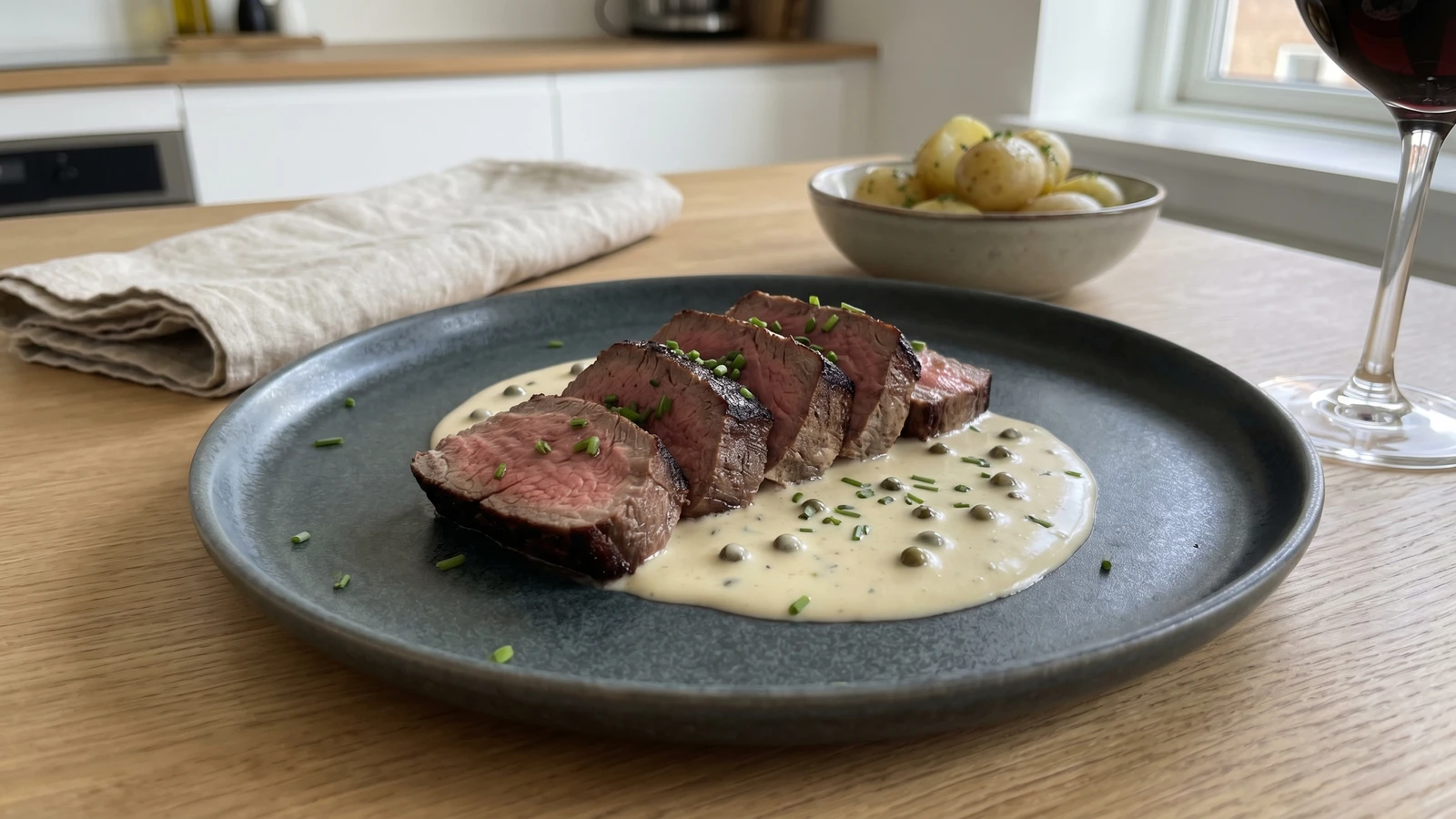
Pan-seared beef filet with a pepper cream sauce built from what the meat leaves behind. The Danish Friday night dinner that proves you never needed a restaurant, just a good pan and conviction.
The dark comes early in a Danish winter. By four o'clock the windows are black and the kitchen is the warmest room in the house. This is when you light the candles, open a good bottle of wine, and decide that tonight the cooking will take a little more care than usual. Oksefilet med peberflodesovs is that decision made real.
This is the dish that sits at the border between restaurant and home table. Beef filet, seared hard in a hot pan, rested while you build a cream sauce with green peppercorns and cognac in the same skillet. The French gave us the technique. The Danes gave it a Friday evening and a table full of people who aren't leaving until the bottle is empty. In Danish homes, this is selskabsmad: food made for the nights that matter.
The whole dish takes less than an hour, and the only moment that requires your real attention is the sear. The pan must be hot enough that the butter is foaming and just starting to color before the beef goes in. After that, the meat rests, the sauce builds itself from the fond in the pan, and everything comes together. I'll walk you through each step so you understand not just what to do, but why. That's what makes the difference between following a recipe and knowing a dish. You'll know when it's right.
Pepper cream sauce arrived in Danish kitchens through the long French influence on Scandinavian fine dining, a tradition that shaped Copenhagen's restaurant culture from the nineteenth century onward. By the 1960s, oksefilet med peberflodesovs had become the centrepiece of the Danish selskabsmiddage, the formal dinner parties that marked birthdays, anniversaries, and promotions in homes across the country. The shift from cracked black pepper to soft green peppercorns in brine, an adaptation that gives the sauce its gentler, more aromatic heat, is the detail that made the dish distinctly Danish rather than French.
Quantity
4, about 180g each
cut 3cm thick
Quantity
to taste
Quantity
freshly ground, to taste
Quantity
30g
Quantity
1 tablespoon
Quantity
2
finely chopped
Quantity
2 tablespoons
drained, lightly crushed
Quantity
50ml
Quantity
150ml
Quantity
200ml
Quantity
1 teaspoon
Quantity
15g
for finishing the sauce
Quantity
a few
snipped
| Ingredient | Quantity |
|---|---|
| beef filet steakscut 3cm thick | 4, about 180g each |
| fine sea salt | to taste |
| black pepper | freshly ground, to taste |
| unsalted butter | 30g |
| neutral oil | 1 tablespoon |
| shallotsfinely chopped | 2 |
| green peppercorns in brinedrained, lightly crushed | 2 tablespoons |
| cognac or good brandy | 50ml |
| beef stock | 150ml |
| heavy cream | 200ml |
| Dijon mustard | 1 teaspoon |
| cold unsalted butterfor finishing the sauce | 15g |
| chives (optional)snipped | a few |
Take the steaks out of the fridge thirty minutes before you cook. Cold meat seizes when it hits a hot pan, the outside burns while the centre stays raw. You want the beef at room temperature so it cooks evenly from edge to centre. Pat each steak thoroughly dry with kitchen paper. Moisture on the surface creates steam, and steam prevents browning. Season generously with fine sea salt and freshly ground black pepper on all sides. Don't be timid. A thick steak needs more salt than you think.
Set a heavy frying pan over high heat. Add the oil and butter together. The oil raises the smoke point so the butter can brown without burning. When the butter is foaming vigorously and the foam is just beginning to turn golden, lay the steaks in the pan. Do not crowd them. If your pan won't hold four steaks with space between them, work in two batches. Sear without moving for three minutes. You want a deep, dark crust, not pale gold. Flip once with tongs, never a fork, and sear the other side for two to three minutes more for medium-rare. The surface should be the color of dark mahogany. That crust is flavor, and everything that follows depends on it.
Transfer the steaks to a warm plate and let them rest for eight to ten minutes. Do not skip this. When meat cooks, the juices are driven toward the centre by the heat. Resting lets them redistribute through the whole steak, so when you slice, the juices stay in the meat instead of flooding the plate. Tent the steaks loosely with foil. Tightly wrapped, they steam and the crust goes soft. Keep every drop of juice that collects on the resting plate. That goes into the sauce.
Return the pan to medium heat. The bottom will be covered in dark, sticky fond, the caramelized proteins left behind by the beef. That is concentrated flavor. Add the chopped shallots and cook for two minutes, stirring them through the residual fat until they soften and turn translucent. Add the crushed green peppercorns and stir for thirty seconds until they become fragrant. Now pour in the cognac. It will bubble and may flame. Let it. The alcohol burns off in seconds and leaves behind a deep warmth that cream alone cannot give you. Let the cognac reduce until the pan is nearly dry.
Pour in the beef stock and let it simmer until reduced by half. This concentrates the flavor and gives the sauce its backbone. Add the cream and stir gently. Let the sauce simmer for four to five minutes until it thickens enough to coat the back of a spoon. Stir in the Dijon mustard. It won't taste of mustard in the finished sauce. What it does is add a quiet depth and a slight sharpness that keeps the cream from feeling flat. Take the pan off the heat and swirl in the cold butter. The cold butter emulsifies into the hot sauce and gives it a glossy, silky finish that hot butter cannot. Now pour in any resting juices from the plate. Taste the sauce. Adjust the salt. It should be rich, peppery, and rounded, with enough heat from the green peppercorns to warm the back of your throat without overwhelming the beef.
Place each steak on a warm plate. Spoon the pepper cream generously over and around the meat, making sure each serving gets its share of green peppercorns. Scatter a few snipped chives across the sauce if you like. Serve immediately with buttered new potatoes or a simple green salad alongside. This is a dish that doesn't wait, and neither should the people at your table. Tak for mad.
1 serving (about 220g)
Culinary guides, cultural storytelling, and the editorial depth that makes cooking meaningful.
Discover Culinary ExplorerChef Freja
Slow-roasted duck legs with crisp, deeply golden skin, served with braised red cabbage and caramelized potatoes. The weeknight Danish duck that proves the best part of the bird is the one that takes its time.

Chef Freja
The whole roasted duck of juleaften, stuffed with tart apples and dark prunes, slow-roasted for four patient hours until the skin crackles like something earned and the meat underneath gives way without resistance.
Chef Freja
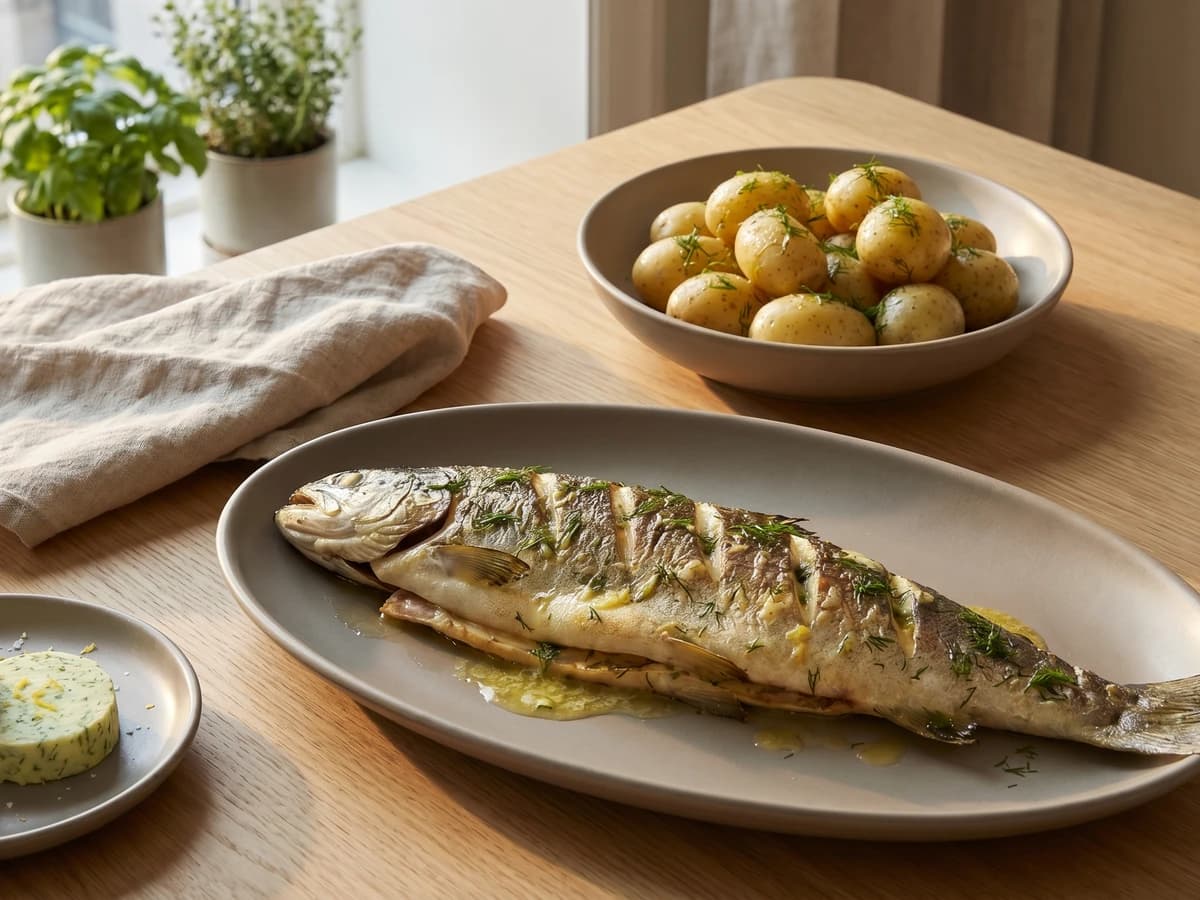
Whole sea trout baked with butter, lemon, and armfuls of dill, served beside the first nye kartofler of the season and a melting slab of dildsmor. The Danish summer table at its most generous.
Chef Freja
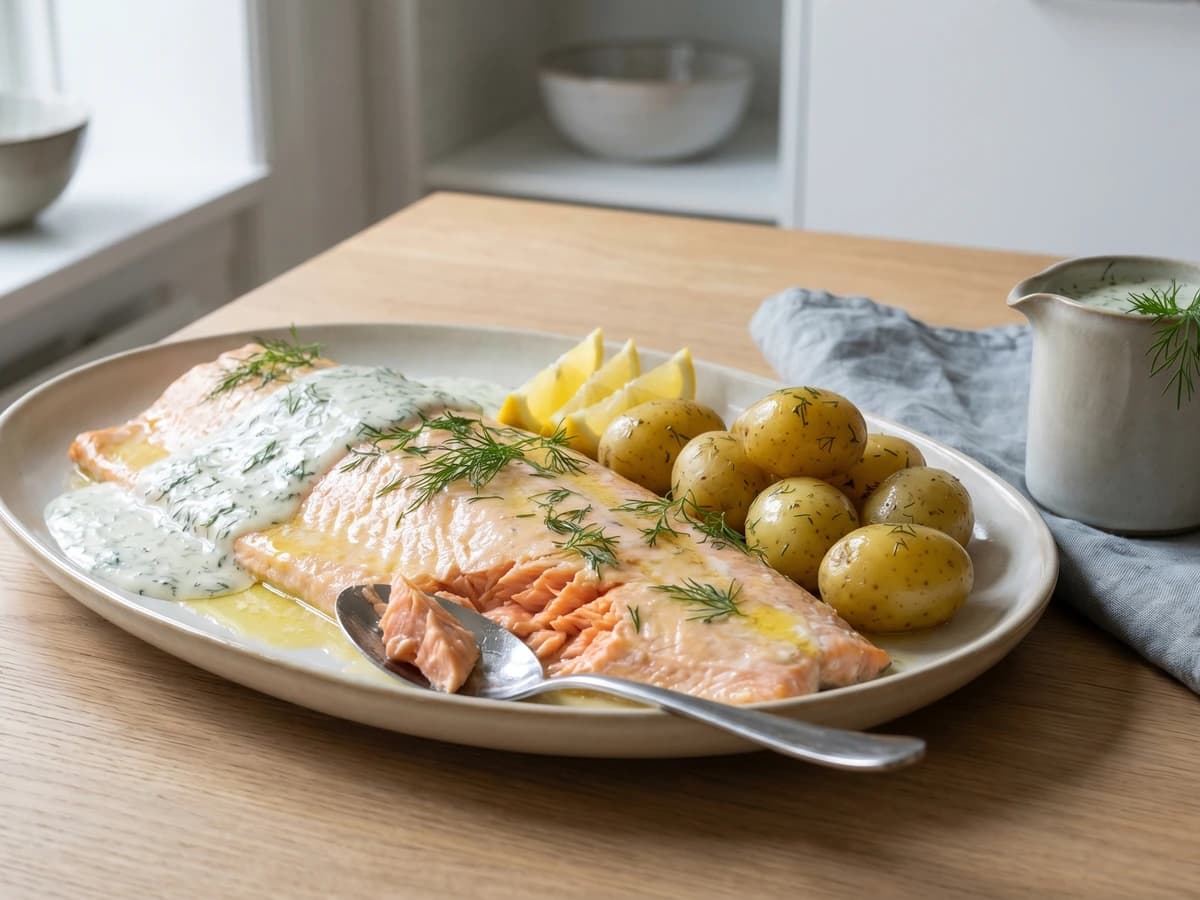
A side of salmon baked gently in butter and white wine, served warm with a bright dill cream sauce and the season's first nye kartofler. Late spring on a Danish table, cooked with love.