
Chef Takumi
Abura Soba (油そば, brothless ramen)
Abura soba is ramen without the hiding place of soup: hot noodles, strong shōyu tare, fragrant oil, and the discipline to mix while every strand is still hot.
A cooking platform built around craft, culture, and the stories behind what we eat.
Created by
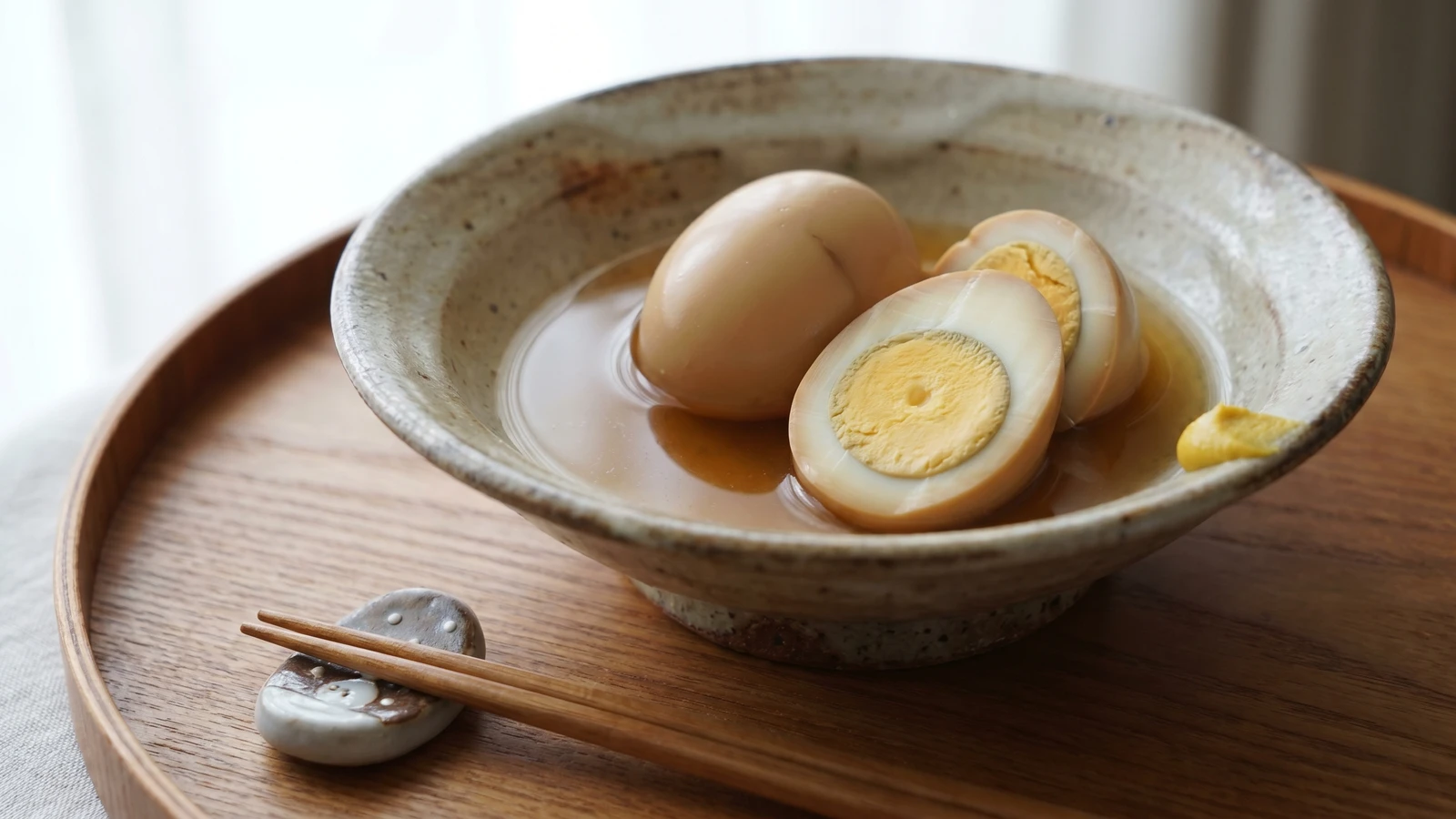
The egg you fish for first: boiled, peeled, then held low in clear dashi until the white turns amber and the yolk takes on broth. Patience does the seasoning.
The egg in oden is the quiet one, which is probably why everyone reaches for it first. It has no clever shape, no knife work to admire, only a white that has gone amber from the broth and a yolk that tastes faintly of dashi. In winter, when a pot of oden can sit low and patient, that plainness is the comfort.
People make oden sound like a market-stall secret. For the egg, the method is almost modest: boil it, peel it, and let it sit in seasoned dashi. The one detail is temperature. Boil the peeled egg hard and the white tightens before the broth can enter. Keep the liquid just trembling, then let the egg rest in it, and time does what force cannot.
We build the broth from konbu and katsuobushi, then season it with shōyu, mirin, sake, a little salt and sugar. Nothing heavy. Oden tamago belongs with other oden tane, the pieces in the pot, but it can stand alone on a weeknight beside rice and pickles. Honmono doesn't mean difficult here. It means clear dashi, clean peeling, and enough patience for the white to stain honestly.
Oden began as dengaku, skewered tofu or konnyaku dressed with miso, a street food well established by the Edo period. The soy-seasoned simmered style associated with Edo spread in the late Edo and Meiji periods; in Kansai it was long called Kantō-daki, literally 'Kantō cooking,' to mark that eastern origin. Eggs became one of the standard tane, or pieces in the pot, because their mild whites take on the broth slowly and show its quality without disguise.
Quantity
6
a few days old if available
Quantity
1 piece (about 10g)
Quantity
5 cups
Quantity
20g
Quantity
3 tablespoons
Quantity
2 tablespoons
Quantity
1 tablespoon
Quantity
1 teaspoon
Quantity
1/2 teaspoon
plus more to taste
Quantity
as needed
for cooling the eggs
Quantity
for serving
| Ingredient | Quantity |
|---|---|
| large eggsa few days old if available | 6 |
| konbu (dried kelp) | 1 piece (about 10g) |
| cold water | 5 cups |
| katsuobushi (bonito flakes) | 20g |
| usukuchi shōyu (light soy sauce) | 3 tablespoons |
| mirin | 2 tablespoons |
| sake | 1 tablespoon |
| sugar | 1 teaspoon |
| sea saltplus more to taste | 1/2 teaspoon |
| ice waterfor cooling the eggs | as needed |
| Japanese karashi mustard (optional) | for serving |
Wipe the konbu with a damp cloth, but don't wash it. Put it in 5 cups cold water and warm it slowly over low heat, 10 to 12 minutes. Pull the konbu when the water trembles and small bubbles climb the sides of the pot, before it reaches a full boil. Boiled konbu gives the stock a faint bitterness and a slick feel, and this egg needs clear broth more than it needs drama.
Bring the konbu water to a gentle boil, add the katsuobushi all at once, and take the pot off the heat. Leave the flakes alone until they sink, 2 to 3 minutes; stirring muddies the flavor. Strain through a cloth or fine-mesh strainer and let it drip. Don't squeeze, because squeezing presses strong, oily flavors into the clear gold dashi.
While the dashi stands, bring a saucepan of water to a gentle boil. Lower in the eggs with a spoon and cook 9 minutes for large eggs, keeping the water lively but not violent. They need to be set, but not chalky, because the broth will cook them again. Move them straight into ice water and let them cool 10 minutes; the cold sets the white and helps the shell let go.
Crack each egg all over and peel under cool running water or in the ice bath. Start at the wider end, where the air pocket gives your thumb a little help. Keep the whites as smooth as you can. A torn white still tastes fine, but a smooth one stains evenly and looks like someone was paying attention.
Measure the strained dashi; you want about 4 1/2 cups, so add a little water if needed. Add the usukuchi shōyu, mirin, sake, sugar, and salt, then bring it just to a simmer for 2 minutes. Taste it. It should be well seasoned but still drinkable, a shade stronger than clear soup, because a whole egg takes flavor slowly.
Nestle the peeled eggs into the broth in one layer. Set a wooden drop-lid (otoshibuta) over them, or use a circle of parchment with a small hole in the center, and keep the broth at the barest simmer for 30 minutes. The lid keeps the tops wet without stirring; hard boiling tightens the whites before the broth can pass through them. Turn any exposed eggs once or twice if your pot is shallow.
Turn off the heat and let the eggs rest in the broth at least 1 hour, or cool them and refrigerate overnight in the broth. This rest is not laziness, though it may look usefully similar. The amber color and the seasoned yolk come from time, not a stronger boil. Rewarm gently and serve each egg with a little broth and a small dab of karashi on the side.
1 serving (about 230g)
Culinary guides, cultural storytelling, and the editorial depth that makes cooking meaningful.
Discover Culinary ExplorerChef Takumi
Abura soba is ramen without the hiding place of soup: hot noodles, strong shōyu tare, fragrant oil, and the discipline to mix while every strand is still hot.
Chef Takumi
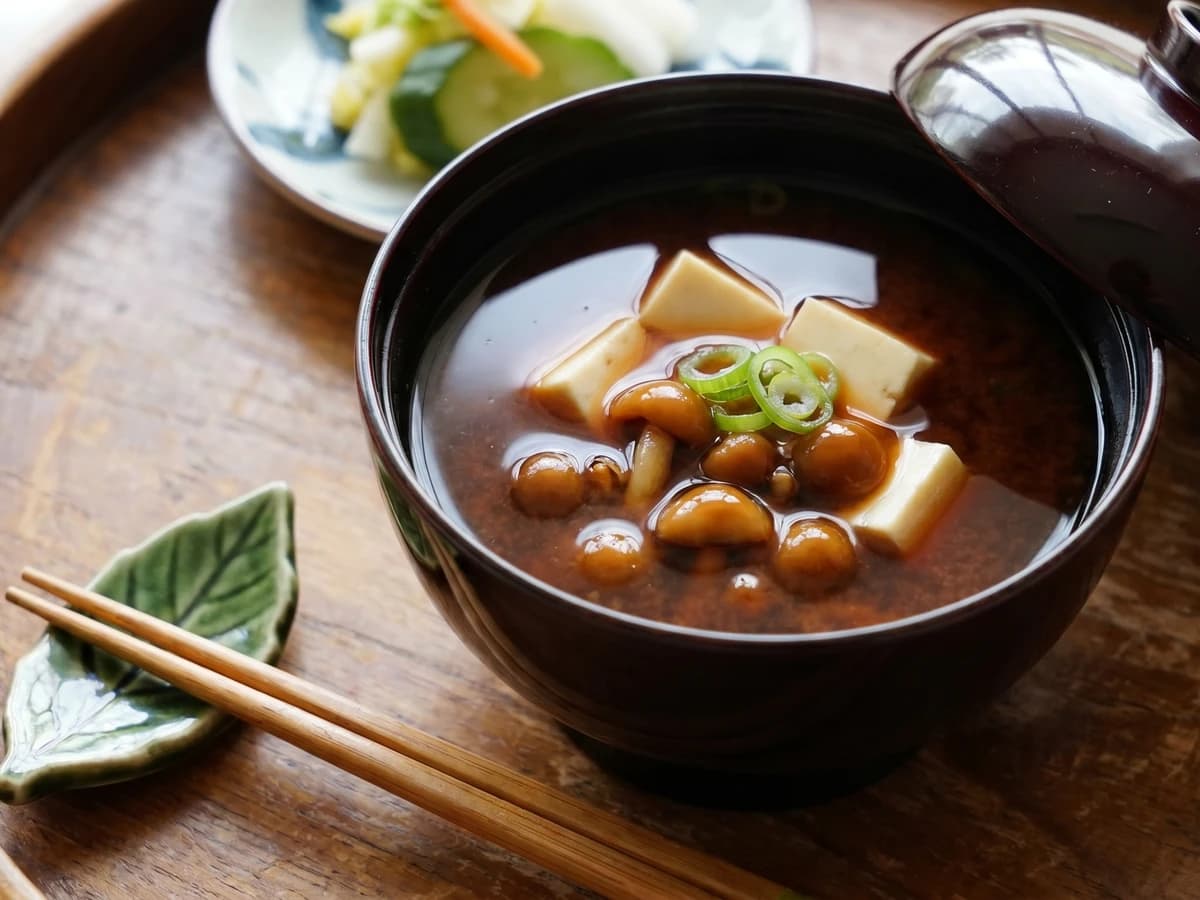
Akadashi asks you to trust the dark miso. Build a clear dashi, loosen the Hatchō mame-miso gently, and the soup turns coffee-dark, savory, and clean.

Chef Takumi
Toast the rice until its skin is firm, then let it meet chicken broth, burdock, maitake, and seri. The pot looks grand, but the work is rice, broth, and patience.
Chef Takumi
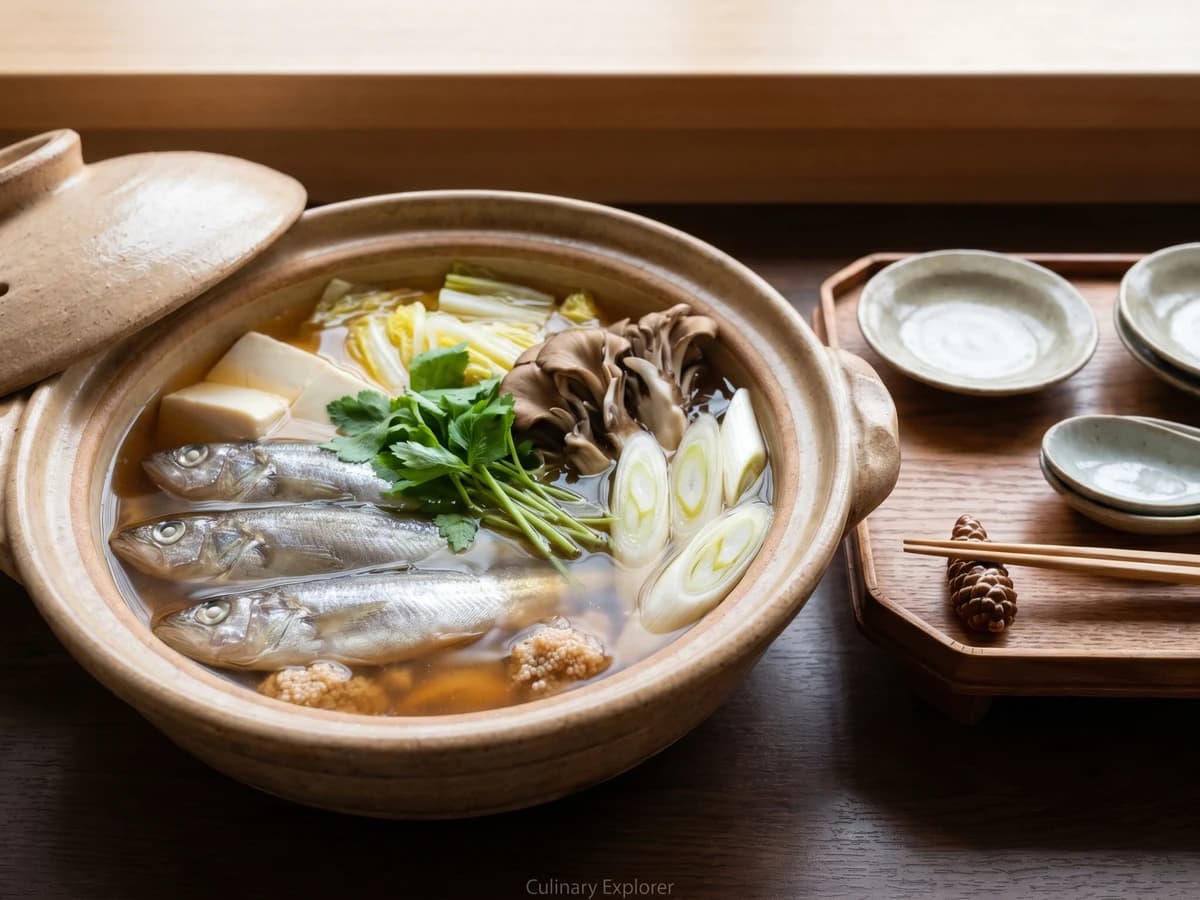
Shottsuru nabe is Akita winter in one pot: clean dashi, hatahata at shun, tofu and napa cabbage carrying a salt-deep broth without anything heavy enough to hide the fish.