
Chef Thomas
Baked Onions with Cream and Thyme
Whole onions surrendered to a low oven with cream and thyme until they collapse into something golden, sweet and yielding, the kind of side dish that quietly upstages everything else on the table.
A cooking platform built around craft, culture, and the stories behind what we eat.
Created by Chef Thomas
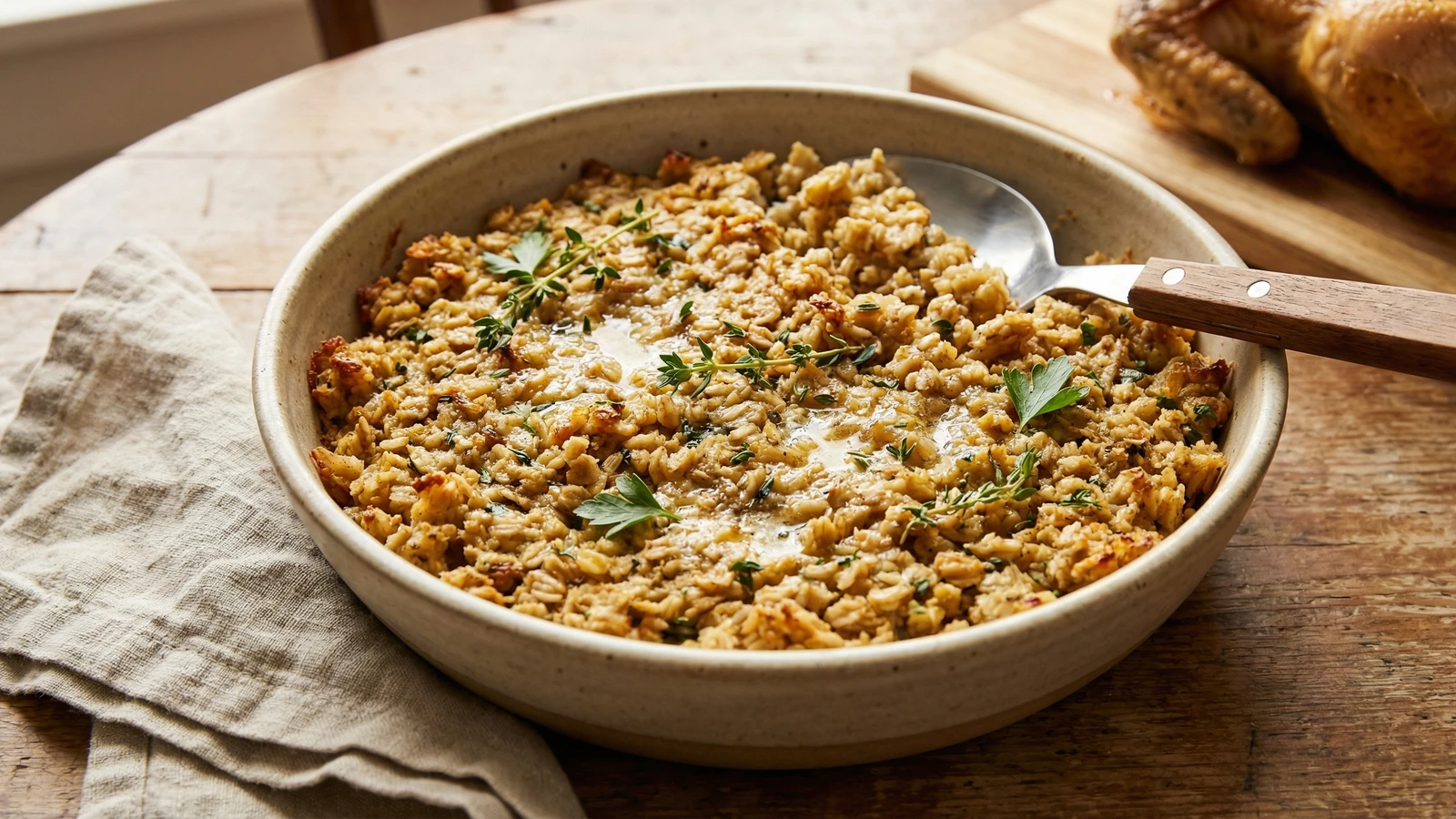
Oatmeal toasted in butter until it smells of warm biscuits, stirred through with soft onion and handfuls of fresh herbs. Lighter and nuttier than any bread stuffing, and a quietly splendid thing beside a roast bird.
The kitchen smells different when you toast oatmeal. Not like porridge, nothing milky or soft about it. More like a biscuit tin left open on a warm afternoon. Dry, sweet, faintly nutty. It catches you off guard the first time. You think: this is just oats in a pan. But the heat changes them into something worth paying attention to.
This stuffing comes from Scotland, where oatmeal does the work that breadcrumbs do further south. It's lighter, nuttier, and has a texture that bread can't match. The oats stay distinct. They don't dissolve into the butter and onion the way bread does. Instead they hold their shape, each grain toasted and coated, with the herbs running through like green threads. I first had it at someone's kitchen table in November, packed inside a roast chicken, and I wrote it down in the notebook that evening. Three lines. That was enough.
The herbs matter. Parsley for freshness, thyme for warmth, a little sage because sage and onion were made for each other and there's no arguing with that. But a recipe is a conversation, not a contract. Use what's growing. Use what you have. A few snipped chives in spring. Some marjoram in summer. Your kitchen, your rules.
It sits happily inside a bird or baked in a dish alongside one. Baked separately, it develops a golden crust on top while staying soft underneath, and that contrast is the thing. We're only making dinner. But this is the sort of dinner worth sitting down for.
Quantity
175g
not porridge oats
Quantity
1 large
finely chopped
Quantity
60g
Quantity
small bunch
roughly chopped
Quantity
a few sprigs
leaves picked
Quantity
2-3
finely shredded
Quantity
to taste
Quantity
to taste
Quantity
100-150ml
warm
| Ingredient | Quantity |
|---|---|
| medium oatmealnot porridge oats | 175g |
| onionfinely chopped | 1 large |
| unsalted butter | 60g |
| flat-leaf parsleyroughly chopped | small bunch |
| thymeleaves picked | a few sprigs |
| sage leavesfinely shredded | 2-3 |
| fine sea salt | to taste |
| black pepper | to taste |
| chicken or vegetable stockwarm | 100-150ml |
Put the oatmeal in a dry, heavy pan over a medium heat. Stir it around for four or five minutes, keeping it moving, until it starts to smell warm and biscuity and turns a shade or two darker. The moment the kitchen smells like a good oat biscuit, tip it out onto a plate. Don't leave it in the hot pan. It will carry on toasting and go from nutty to bitter before you notice.
Melt the butter in the same pan over a gentle heat. Add the chopped onion and a good pinch of salt. Let it cook slowly, stirring now and then, until it's soft and translucent and sweet. This takes ten minutes, maybe a little longer. There's no rushing it. If the onion catches colour too quickly, turn the heat down. You want sweetness, not caramelisation. Not yet.
Return the toasted oatmeal to the pan with the softened onion. Stir it through the butter and onion so every grain is coated and glistening. Add the parsley, thyme, and sage. Stir again. The herbs should be generous, more than you think. Season well with salt and pepper, then taste a pinch. Adjust. Season and taste. Then taste again.
Pour in the warm stock a little at a time, stirring as you go. You may not need it all. What you're after is a stuffing that holds together when pressed gently in your hand but isn't wet or claggy. It should feel like damp sand at the beach, something with enough moisture to bind but not so much that it loses its texture. If you're stuffing a bird, pack it loosely into the cavity. If you're baking it alongside, spread it into a buttered dish and give it twenty minutes in a hot oven until the top goes golden and crisp at the edges.
1 serving (about 75g)
Culinary guides, cultural storytelling, and the editorial depth that makes cooking meaningful.
Discover Culinary ExplorerChef Thomas
Whole onions surrendered to a low oven with cream and thyme until they collapse into something golden, sweet and yielding, the kind of side dish that quietly upstages everything else on the table.

Chef Thomas
Celery braised long and slow in butter and good stock until it turns soft, silky, and almost sweet, the kind of quiet side dish that makes people ask what you did to it.

Chef Thomas
Leeks surrendered to butter and cream until they turn silky, sweet and yielding, the kind of side dish that quietly becomes the reason you sat down to dinner in the first place.

Chef Thomas
Peas braised in butter with wilted lettuce and spring onions, a dish that is entirely French in spirit and entirely at home on an English table in late May when the garden finally delivers.