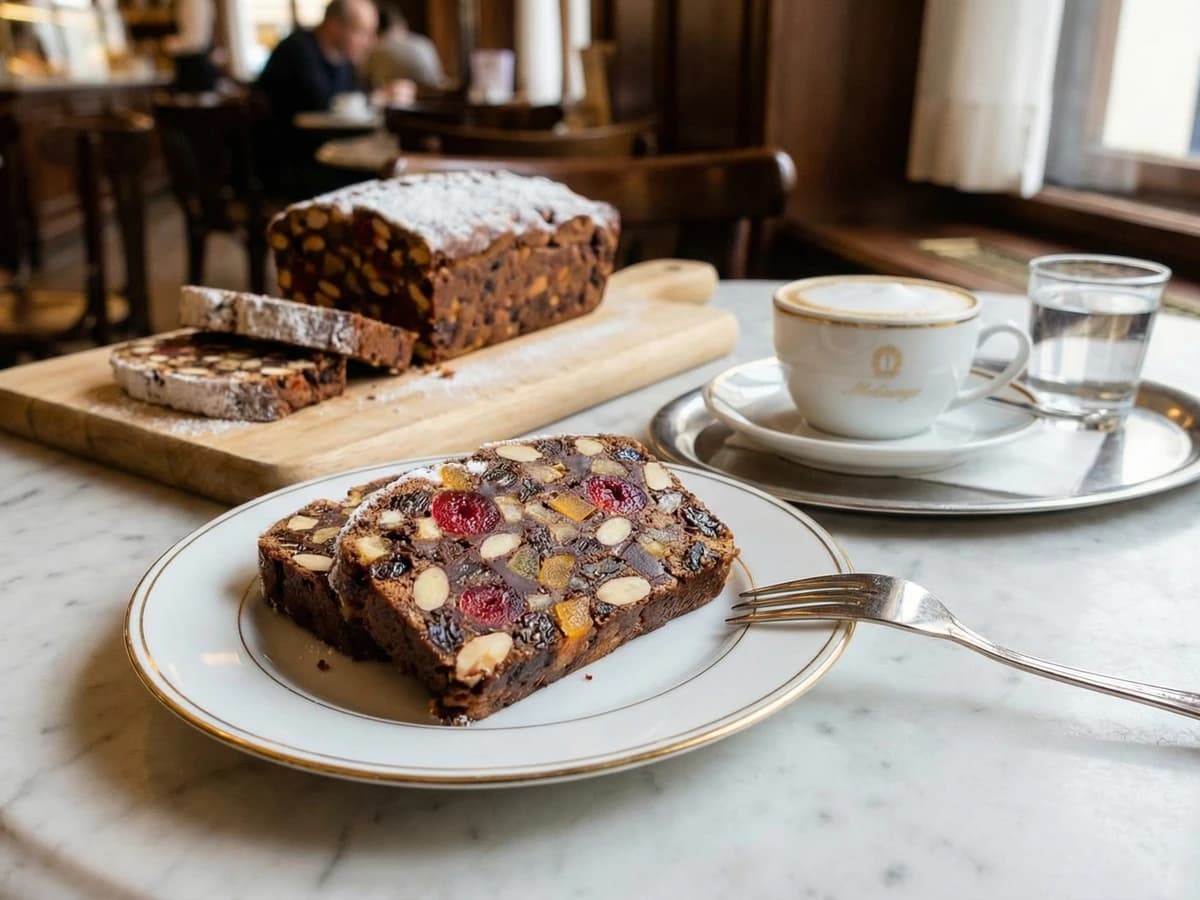
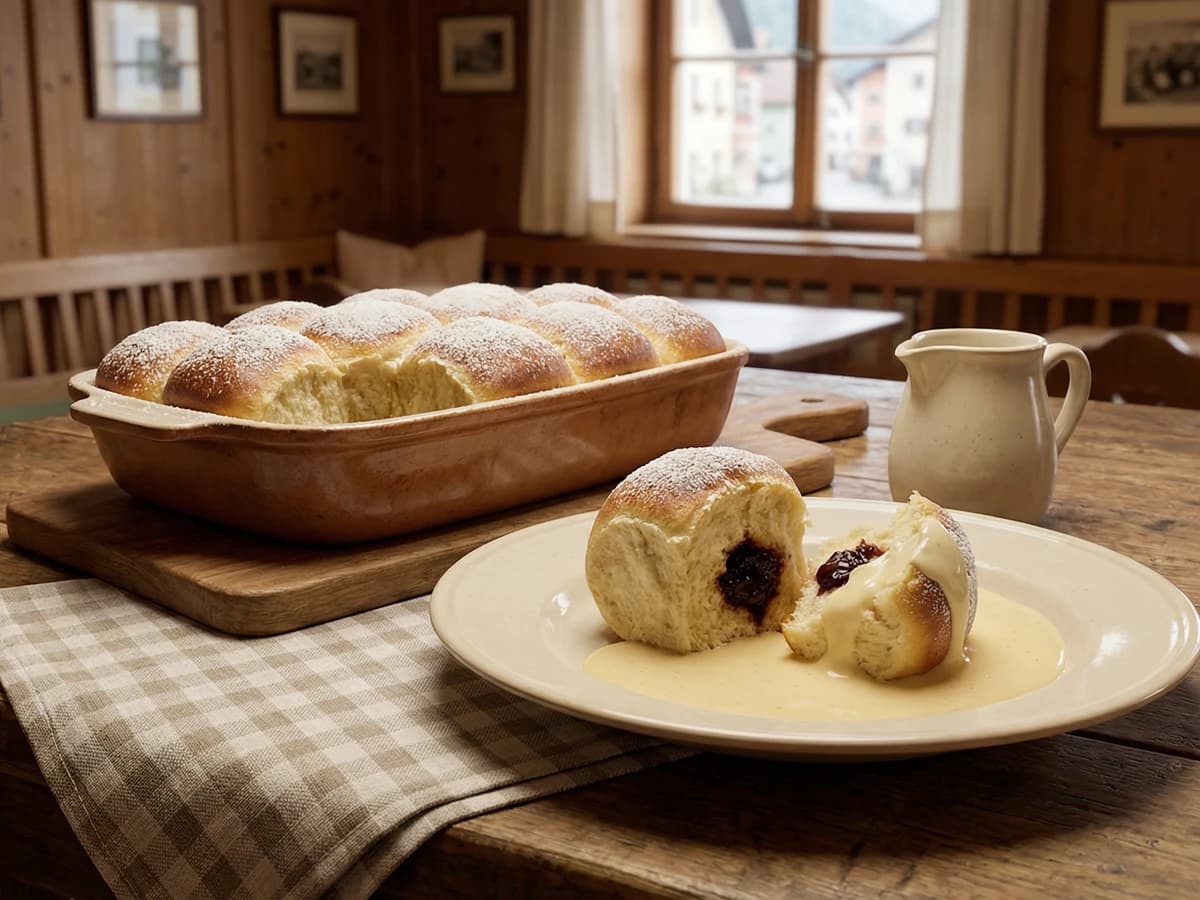
Thin, tender Palatschinken rolled around a warm ground walnut filling, then finished with dark chocolate sauce and a generous spoonful of Schlagobers, the kind of Kaffeehaus dessert that makes you cancel your plans for the evening.
Desserts
Austrian
Dinner Party
Date Night
25 min
Active Time
25 min cook•50 min total
Yield4 servings (8 Palatschinken)
In my grandmother Eva's kitchen in Kent, Gretel Beer made Palatschinken the way other people made toast: constantly, casually, without thinking twice. She'd pour the batter into the pan with one hand and flip it with a flick of the wrist that took me years to copy. The stack would grow on a plate by the stove while she mixed the filling, and the whole kitchen smelled like butter and toasted walnuts and rum.
Nusspalatschinken is the dressed-up version of what is really very simple food. You make thin pancakes. You fill them with a warm, spiced walnut mixture that's somewhere between a paste and a crumble, sweet and fragrant with cinnamon and rum. You roll them, lay them on a plate, and pour warm chocolate sauce over the top. Then Schlagobers, because this is Austria and whipped cream is not optional.
What I love about this dish is the texture. The Palatschinken themselves should be thin enough to see through, tender and a little eggy. The walnut filling gives you something to bite into. The chocolate sauce ties everything together, and the cold cream against the warm filling is the sort of contrast that makes you close your eyes for a second. Gretel always said Mehlspeisen are the heart of Austrian cooking, not an afterthought. This is exactly what she meant.
Don't let the assembly intimidate you. The Palatschinken batter takes two minutes. The filling takes five. The chocolate sauce takes three. You can have the whole thing on the table in under an hour, and your guests will think you spent all day.
Palatschinken arrived in Austrian cuisine through Hungary, where palacsinta had been a staple for centuries, the word itself tracing back through Romanian plăcintă to the Latin placenta, meaning flat cake. The Habsburg empire's culinary cross-pollination brought the thin pancakes to Viennese kitchens, where they were adopted into the Mehlspeisen tradition and filled with everything from Topfen to jam to ground nuts. Nusspalatschinken became a Kaffeehaus and restaurant standard by the late 19th century, when elaborate filled and sauced Palatschinken were served as a main dessert course alongside Strudel and Torten.
The technique, the tradition, and the story behind every dish.
Whisk the eggs, milk, flour, salt, sugar, and melted butter together in a bowl until smooth and lump-free. The batter should be thin, like heavy cream, and coat the back of a spoon without clinging. If it feels too thick, add a splash more milk. Let it rest for fifteen minutes. Resting lets the flour hydrate fully and the gluten relax, which is why your first Palatschinke always turns out tougher than the rest if you skip this step.
Gretel always said the batter should pour like a conversation: smooth, easy, no hesitation. If it plops, it's too thick. If it runs like water, you've added too much milk.
2
Prepare the walnut filling
While the batter rests, combine the ground walnuts, sugar, Vanillezucker, and cinnamon in a small saucepan. Pour in the milk and set it over low heat, stirring constantly. The mixture will thicken as the walnuts absorb the milk, about three to four minutes. You want a soft, spreadable paste, not a dry crumble and not a runny porridge. Pull it off the heat and stir in the rum and lemon zest. The rum hits you first, then the lemon brightens everything behind it. Let the filling cool slightly while you fry the Palatschinken.
Buy whole walnuts and grind them yourself in a food processor. Pre-ground walnuts from a packet taste stale within days of opening. You want the oils fresh and fragrant.
3
Fry the Palatschinken
Heat a non-stick pan (about 24cm) over medium heat and add a small knob of butter. Swirl it around, then pour in just enough batter to thinly coat the bottom. Tilt the pan in a circle as you pour so the batter spreads before it sets. The layer should be almost translucent. Cook until the edges lift and the underside is lightly golden, about forty-five seconds. Flip it with a quick shake of the pan or use a spatula if your nerve fails you. Cook another twenty seconds on the other side. Stack the finished Palatschinken on a plate. You should get eight from this batter.
Wipe the pan with butter between each Palatschinke using a folded piece of kitchen paper. Too much butter and they fry instead of set. Too little and they stick. You want the thinnest possible film.
4
Make the chocolate sauce
Break the chocolate into small pieces and put it in a saucepan with the cream, butter, and sugar. Set it over the lowest heat your stove can manage and stir steadily until everything melts together into a glossy, dark sauce. Don't rush this with high heat or the chocolate will seize and go grainy on you. The sauce should coat a spoon in a clean, shining layer. Keep it warm.
5
Fill and roll
Lay a Palatschinke flat on your work surface, prettier side down. Spread a generous tablespoon of the walnut filling across the lower third, leaving a small border at the edges. Roll it up snugly but not tight. The filling should stay inside without squeezing out the ends. Repeat with the remaining Palatschinken. Place two rolls seam-side down on each plate.
6
Sauce, cream, and serve
Spoon the warm chocolate sauce generously over the rolled Palatschinken, letting it pool on the plate around them. Add a large spoonful of cold, unsweetened Schlagobers on top or alongside. The cold cream against the warm sauce and filling is the whole point of this dish. Dust lightly with powdered sugar. Serve immediately. Mahlzeit!
Chef Tips
•The filling should be warm when you roll it, not hot and not cold. Hot filling tears the Palatschinken. Cold filling sits in a stiff lump instead of melting into the pancake. Aim for the temperature where you can comfortably touch it with your finger.
•Austrian Vanillezucker is not the same as vanilla extract. It gives a rounder, more delicate flavor to the filling. Make your own by burying two split vanilla pods in a jar of caster sugar. After a week, you'll never go back to extract for baking.
•If your Palatschinken tear when you try to roll them, the batter was too thin or you cooked them too long. They should be pliable like fabric, not crisp like a Frittate. Reduce the heat slightly and add a teaspoon more flour to the remaining batter.
•Serve the Schlagobers unsweetened. The filling has sugar, the chocolate sauce has sugar. The cream is there for cool, rich contrast. Sweeten it and you lose the balance.
Advance Preparation
•The Palatschinken can be made a day ahead and stacked between sheets of baking paper. Refrigerate and bring to room temperature before filling. Cold Palatschinken are stiff and crack.
•The walnut filling can be prepared up to two days ahead and refrigerated. Reheat gently with a splash of milk to loosen it before using.
•The chocolate sauce can be made several hours ahead and reheated over low heat with a tablespoon of cream stirred in to restore its shine.
•Do not assemble until you're ready to serve. Filled Palatschinken sitting in chocolate sauce turn soggy within fifteen minutes.
Frequently Asked Questions
Nutrition Information
1 serving (about 310g)
Calories
1110 calories
Total Fat
82 g
Saturated Fat
32 g
Trans Fat
0 g
Unsaturated Fat
50 g
Cholesterol
245 mg
Sodium
155 mg
Total Carbohydrates
76 g
Dietary Fiber
7 g
Sugars
49 g
Protein
20 g
Where cooking meets culture.
Culinary guides, cultural storytelling, and the editorial depth that makes cooking meaningful.