
Chef Dimitra
Aegean Island Chtapodi me Kritharaki (Χταπόδι με Κριθαράκι)
Aegean island octopus, tomato, red wine, and toasted kritharaki share one pot, so the pasta drinks the briny sauce and stays glossy instead of turning heavy.
A cooking platform built around craft, culture, and the stories behind what we eat.
Created by
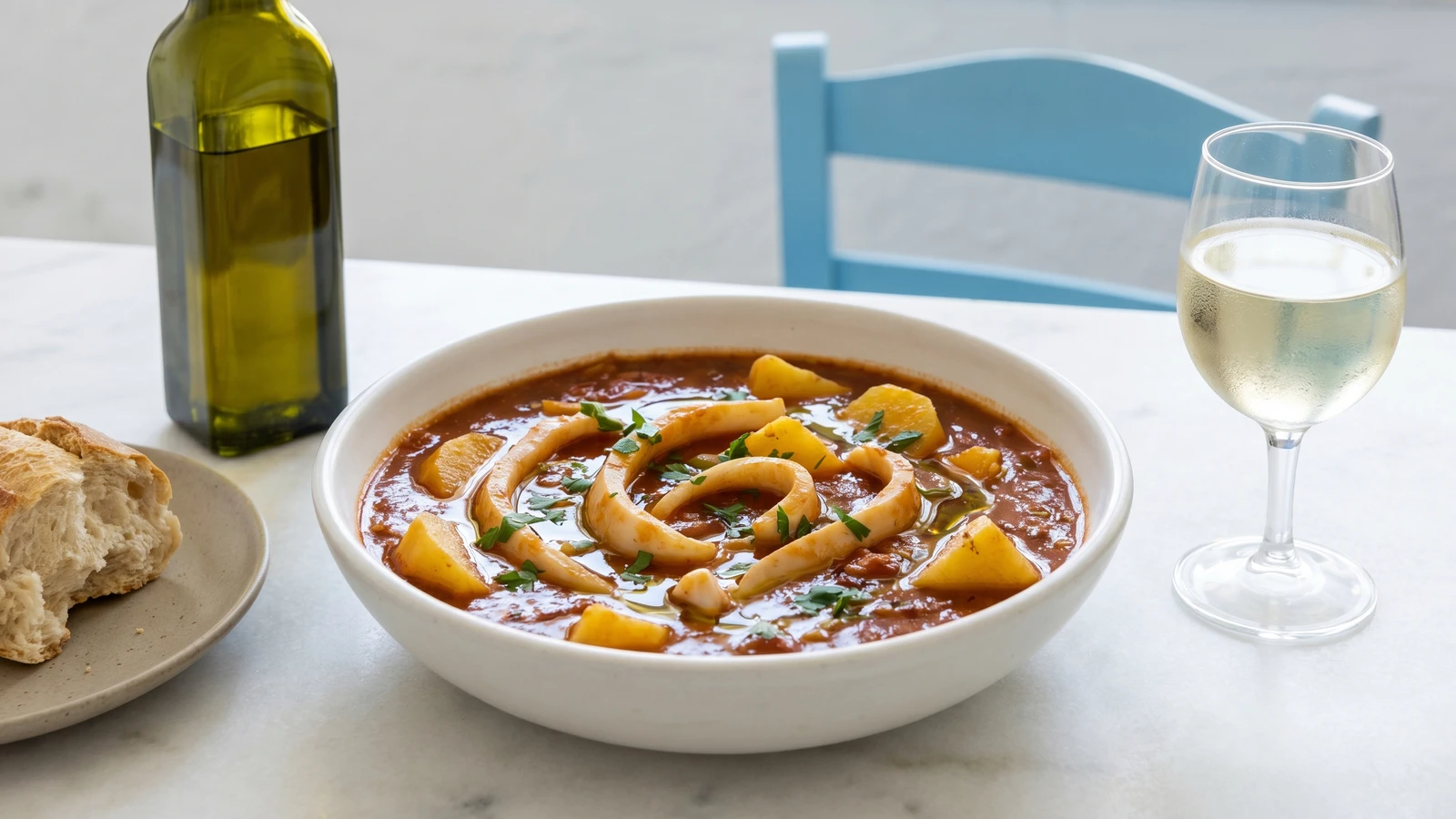
Cuttlefish, potatoes, sweet peppers, and olive oil make the Northern Aegean fast-day pot, rich enough for supper and plain enough to stay honest.
Soupies me Patates belong to the Northern Aegean fasting table: cuttlefish stewed with potatoes, onion, sweet peppers, tomato, and good olive oil until the sea taste settles into the sauce. It is a weeknight dish if the fishmonger has cleaned the cuttlefish for you, and a comfort dish because the potatoes drink everything.
The method that decides it is the first simmer. Cuttlefish goes tough, then tender. If you rush it with the potatoes from the beginning, the potatoes collapse before the bodies soften. Let the cuttlefish cook low in its own juices and tomato first, then add the potatoes for the last stretch. Good olive oil, and patience.
This is not fish for the fasting calendar, and that matters. On strict fast days, fish was often forbidden, but shellfish and cephalopods were allowed, so dishes like this kept coastal kitchens fed without breaking the rule. My notebook has versions from Kavala, Thassos, and Lesvos, and they all agree on the important thing: don't make the pot watery.
Cuttlefish stews with potatoes are part of the Lenten and island cooking of the northern and eastern Aegean, where cephalopods filled the protein gap on fast days when fish was not eaten. The tomato-and-pepper version reflects the later spread of tomato cookery through Greek kitchens in the nineteenth and twentieth centuries, while the fasting logic is older. In coastal Macedonia and the islands opposite, the dish remained a household pot, not a taverna showpiece.
Quantity
900g
bodies sliced into wide strips and tentacles separated
Quantity
700g
peeled and cut into 4cm chunks
Quantity
80ml
Quantity
1 large
finely chopped
Quantity
2
thinly sliced
Quantity
1
cut into strips
Quantity
1
cut into strips
Quantity
250g
grated, or use 200g canned crushed tomatoes
Quantity
120ml
Quantity
1
Quantity
1/2 teaspoon
Quantity
1/4 teaspoon
Quantity
8g
plus more to finish
Quantity
250ml
as needed
Quantity
20g
chopped
Quantity
1 tablespoon
| Ingredient | Quantity |
|---|---|
| cleaned cuttlefish (soupies)bodies sliced into wide strips and tentacles separated | 900g |
| waxy potatoespeeled and cut into 4cm chunks | 700g |
| extra virgin Koroneiki olive oil | 80ml |
| yellow onionfinely chopped | 1 large |
| garlic clovesthinly sliced | 2 |
| red sweet peppercut into strips | 1 |
| green sweet peppercut into strips | 1 |
| ripe tomatoesgrated, or use 200g canned crushed tomatoes | 250g |
| dry white wine | 120ml |
| bay leaf | 1 |
| sweet paprika | 1/2 teaspoon |
| freshly ground black pepper | 1/4 teaspoon |
| fine sea saltplus more to finish | 8g |
| hot wateras needed | 250ml |
| flat-leaf parsleychopped | 20g |
| lemon juice (optional) | 1 tablespoon |
Pat the cleaned cuttlefish dry. Slice the bodies into wide strips, about two fingers across, and leave the tentacles in pieces that will sit nicely on a spoon. If your fishmonger saved the ink, keep a teaspoon of it for the pot only if you like a darker, deeper sauce.
Warm the olive oil in a wide heavy pot over medium heat. Add the onion with a pinch of the measured salt and cook for 8 minutes, until soft and pale gold. Add the garlic and both peppers, and cook another 5 minutes, just until the peppers begin to slump.
Add the cuttlefish and turn it through the oily vegetables for 3 minutes. It will release liquid quickly. Pour in the wine and let it bubble for 2 minutes, then add the grated tomato, bay leaf, paprika, black pepper, and the remaining salt. Cover, lower the heat, and simmer gently for 35 to 40 minutes, until a strip of cuttlefish bends easily but is not fully soft yet.
Add the potatoes and just enough hot water to come halfway up the contents of the pot, usually 150 to 250ml. Stir once, cover again, and simmer for 25 to 30 minutes. Shake the pot now and then instead of stirring hard, so the potatoes keep their edges while thickening the sauce.
Uncover the pot for the last 5 to 10 minutes if the sauce looks loose. It should be glossy, red-brown, and thick enough to coat the potatoes, not soupy. Taste for salt. Stir in the parsley and the lemon juice, if using, then let the stew rest off the heat for 10 minutes before serving.
1 serving (about 455g)
Culinary guides, cultural storytelling, and the editorial depth that makes cooking meaningful.
Discover Culinary ExplorerChef Dimitra
Aegean island octopus, tomato, red wine, and toasted kritharaki share one pot, so the pasta drinks the briny sauce and stays glossy instead of turning heavy.

Chef Dimitra
Aegean coast psari plaki is the quiet whole-fish bake: onions and tomato softened first, fish laid on top, and olive oil doing its slow work until the bones release cleanly.

Chef Dimitra
Astakomakaronada is the Aegean islands' celebration pasta: spiny lobster, tomato, olive oil, and long noodles cooked in the shell broth, never drowned in cream or cheese.

Chef Dimitra
Aegean Easter goat on the spit, lean and full-flavored, turned slowly over charcoal and basted with lemon, oregano, garlic, and good olive oil.