
Chef Dimitra
Aegean Island Chtapodi me Kritharaki (Χταπόδι με Κριθαράκι)
Aegean island octopus, tomato, red wine, and toasted kritharaki share one pot, so the pasta drinks the briny sauce and stays glossy instead of turning heavy.
A cooking platform built around craft, culture, and the stories behind what we eat.
Created by
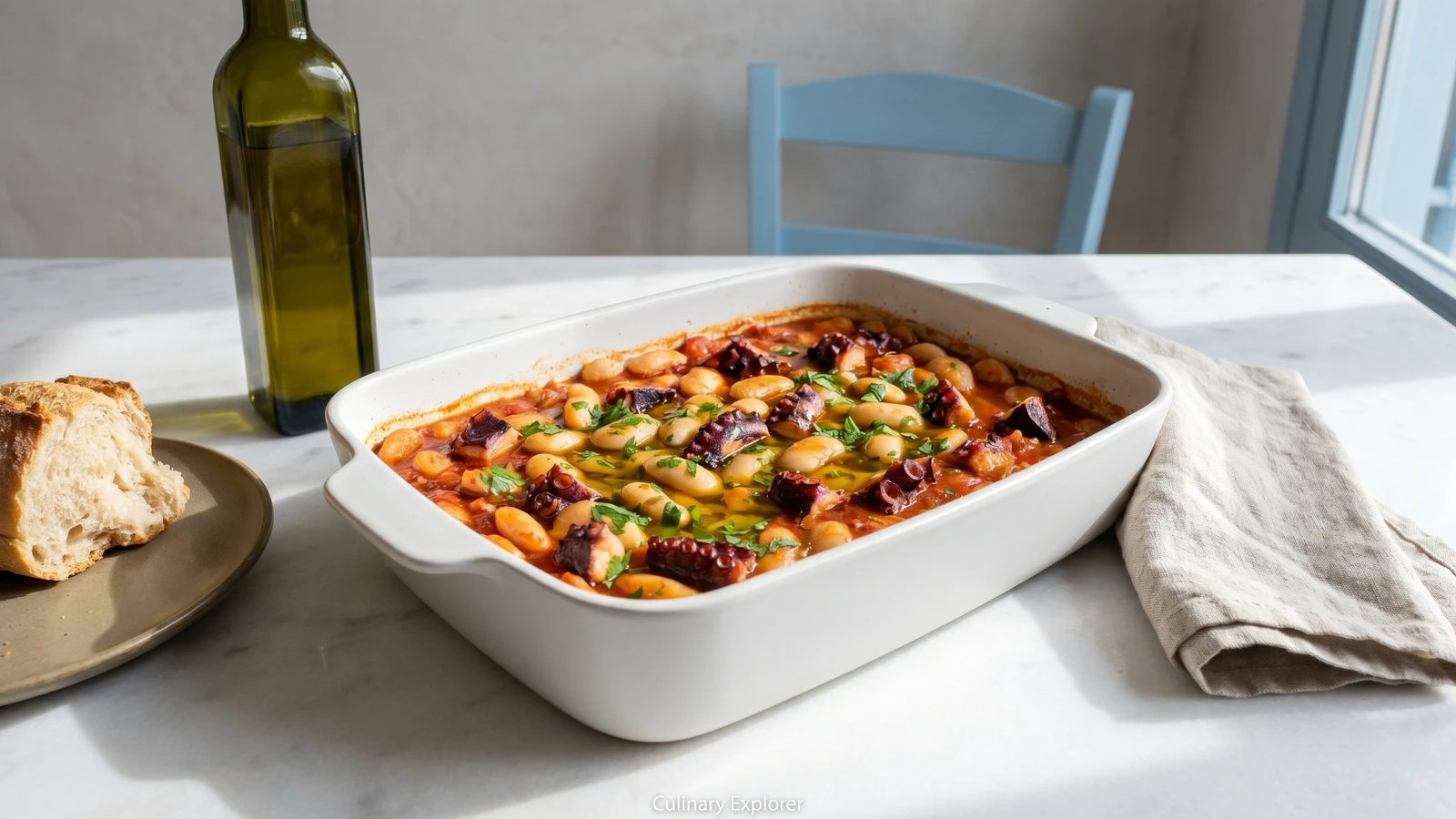
Macedonia's fasting dish of Prespes gigantes and octopus is baked slowly in tomato until the beans turn creamy, the sauce darkens, and the octopus gives the pot its sea-salt depth.
Greek Macedonia's Gigantes me Chtapodi is a fasting dish with backbone, though the fast allows no backbone at all: giant white beans baked with octopus in tomato, olive oil, and a little sweet red pepper. The beans should be Prespes if you can find them, big enough to hold their shape and tender enough to drink the sauce.
The method that decides the dish is not the octopus. It is the beans. Soak them overnight, then simmer them until they are nearly tender before they meet the tomato. If they go into the oven hard, the sauce will finish before the beans do, and you'll have a beautiful tapsi full of regret. Good olive oil, and patience.
This is special-occasion food in a fasting kitchen, the sort of dish that proves restraint does not mean poverty. Octopus brings depth without meat, and the beans make it a meal. I write it down this way because the region is the dish's surname, and because a cook should be able to make it right the first time, not guess what someone meant by a handful.
The pairing belongs to the fasting kitchens of Greek Macedonia, where Prespes giant beans from Florina met octopus sold through the fish markets of Thessaloniki and Kavala. Orthodox fasting excludes meat, dairy, eggs, and most fish on many days, but octopus, squid, and shellfish remain permitted, so dishes like this made a feast without breaking the fast. The Prespes beans themselves are protected in the EU as PGI under the name Fasolia Gigantes Elefantes Prespon Florinas, a reminder that a bean can carry a region as clearly as a cheese or wine.
Quantity
500g
picked over and soaked overnight
Quantity
1.2kg
thawed if frozen
Quantity
120ml
Quantity
2
Quantity
160ml
divided
Quantity
300g
finely chopped
Quantity
120g
finely chopped
Quantity
100g
finely diced
Quantity
16g
finely chopped
Quantity
40g
Quantity
500g
grated if fresh
Quantity
4g
Quantity
2g
Quantity
2g
Quantity
6g
plus more only after tasting
Quantity
20g
chopped
| Ingredient | Quantity |
|---|---|
| dried gigantes beans, ideally Prespespicked over and soaked overnight | 500g |
| cleaned octopus (chtapodi)thawed if frozen | 1.2kg |
| dry red wine, or water on a strict no-wine fasting day | 120ml |
| bay leaves | 2 |
| extra virgin Koroneiki olive oildivided | 160ml |
| yellow onionsfinely chopped | 300g |
| celery stalksfinely chopped | 120g |
| carrotfinely diced | 100g |
| garlic clovesfinely chopped | 16g |
| tomato paste | 40g |
| ripe tomatoes or canned crushed tomatoesgrated if fresh | 500g |
| sweet paprika or mild boukovo | 4g |
| dried oregano | 2g |
| freshly ground black pepper | 2g |
| fine sea saltplus more only after tasting | 6g |
| flat-leaf parsleychopped | 20g |
Put the gigantes in a large bowl and cover them with cold water by at least 8cm. Leave them 12 hours, then drain and rinse. If a few beans float and look hollow, throw those away. This is the step that keeps the middle from staying chalky while the outside softens.
Put the soaked beans in a 5 litre pot with fresh cold water to cover by 5cm and add 1 bay leaf. Bring to a boil, skim the foam, then lower to a gentle simmer for 45 to 70 minutes, until a bean presses easily between your fingers but still keeps its shape. Reserve 500ml of the cooking liquid and drain the beans. Do not add tomato yet. Tomato's acidity slows the skins from softening, so the beans must be nearly tender before they meet the sauce.
While the beans cook, put the octopus in a wide heavy pot with the wine or water and the second bay leaf. Cover and cook over low heat for 45 to 60 minutes, turning once or twice, until a small knife slips into the thickest part of a tentacle with only a little resistance. Do not salt it. The octopus gives its own briny liquid. Lift it out, strain and reserve 300ml of the cooking liquid, then cut the octopus into generous 4cm pieces.
Heat 110ml of the olive oil in a wide pan over medium heat. Add the onions, celery, carrot, and 4g of the salt, then cook for about 12 minutes until the vegetables soften and smell sweet. Stir in the garlic, tomato paste, paprika or boukovo, oregano, and black pepper for 1 minute. Add the tomatoes and 250ml of the reserved octopus liquid. Simmer 10 minutes, until the sauce looks glossy and no longer raw.
Heat the oven to 180C. Put the drained beans and cut octopus into a 32cm tapsi or deep baking dish and pour the tomato sauce over them. Add enough reserved bean cooking liquid to come almost level with the beans, usually 250 to 350ml. Taste the liquid before adding the last 2g of salt, because the octopus may have done the work already. Drizzle over the remaining 50ml olive oil.
Bake uncovered for 60 to 75 minutes, shaking the dish gently once halfway through, until the beans are creamy, the octopus is tender, and the tomato sauce clings instead of running. The top should be burnished in places, with little green-gold beads of oil at the edges. If the dish dries before the beans finish, add a ladle of hot bean liquid, not cold water.
Rest the dish for 20 to 30 minutes before serving. Scatter with parsley and bring it to the table warm, not boiling hot, with country bread and bitter greens if you have them. It is even better the next day, when the beans have drunk the octopus and tomato properly.
1 serving (about 500g)
Culinary guides, cultural storytelling, and the editorial depth that makes cooking meaningful.
Discover Culinary ExplorerChef Dimitra
Aegean island octopus, tomato, red wine, and toasted kritharaki share one pot, so the pasta drinks the briny sauce and stays glossy instead of turning heavy.

Chef Dimitra
Aegean coast psari plaki is the quiet whole-fish bake: onions and tomato softened first, fish laid on top, and olive oil doing its slow work until the bones release cleanly.

Chef Dimitra
Astakomakaronada is the Aegean islands' celebration pasta: spiny lobster, tomato, olive oil, and long noodles cooked in the shell broth, never drowned in cream or cheese.

Chef Dimitra
Aegean Easter goat on the spit, lean and full-flavored, turned slowly over charcoal and basted with lemon, oregano, garlic, and good olive oil.