
Chef Lupita
Arroz a la Oaxaqueña
Oaxaca's red rice, stained with tomato and fried in lard, steamed with carrots, ejotes, black beans, and epazote. The side that anchors a Oaxacan family meal and earns its place beside the main.
A cooking platform built around craft, culture, and the stories behind what we eat.

Created by
Northern Mexico's grilled cactus paddles, charred over mesquite until tender and chopped with white onion, lime, and crushed chiltepin. A Sonoran ranch side dish that has fed cowboys and families for generations.
This is a Noroeste dish. Sonora, Chihuahua, Coahuila, the high desert states where mesquite grows wild and cattle have shaped the table for two centuries. Nopales asados are not the boiled, slimy nopales of central Mexico. These are paddles thrown directly on a parrilla over mesquite coals, charred until the green deepens and the baba cooks off in the smoke instead of pooling in a pot. The texture is firm, the edges are blistered, and the flavor is clean.
The chile here is chiltepin, not jalapeño, not serrano. Chiltepin is the wild bird's-eye chile that grows on shrubs across the Sonoran desert, harvested by hand from October through December by the women of the sierra. It is small, round, and ferocious. You crush a few between your fingers and they go in raw. That is the heat of the north, sharp and direct, not stewed into the dish.
My mother did not make this. She was from Jalisco and her nopales went into a pot with epazote and onion. The first time I ate nopales asados was at a backyard carne asada in Hermosillo, sometime in the late nineties. The host was a woman named doña Chela who had grilled the paddles whole alongside the arrachera and chopped them on a wood board with one knife and one hand. She handed me a sobaquera, a flour tortilla the size of a dinner plate that they make in Sonora, with a spoonful of nopales inside and a squeeze of lime. I understood the dish in one bite. Cada estado, su propia cocina, and this one belongs to the desert. Saber cocinar es saber vivir.
Nopales have been a staple of the Mexican diet since the Mesoamerican Preclassic period, with archaeological evidence of cultivated and wild Opuntia consumption dating back at least 9,000 years in the Tehuacán Valley. The image of the eagle on the nopal devouring a serpent appears on the Mexican flag precisely because the cactus represented sustenance and homeland to the Mexica. The northern grilled preparation, however, is a comparatively modern adaptation born of the cattle ranching culture that took hold in Sonora and Chihuahua after the 17th-century Jesuit and Franciscan missions introduced large-scale beef production; the parrilla and mesquite-fueled carne asada became the social meal of the region, and nopales asados earned their place on the grill alongside the meat. The chiltepín, recognized in 1999 by the Mexican government as a protected wild crop in the Sierra Madre Occidental, remains one of the few commercially viable wild chiles in Mexico and is considered the genetic ancestor of all domesticated Capsicum annuum varieties.
Quantity
8 medium
spines and eyes removed
Quantity
3 tablespoons
melted, or good olive oil
Quantity
1 large
half left whole and peeled, half finely diced
Quantity
6
trimmed
Quantity
1 tablespoon, plus more to taste
Quantity
1 teaspoon
preferably orégano del campo from Sonora
Quantity
8 to 12
crushed between the fingers
Quantity
4
halved
Quantity
1/2 cup
crumbled
Quantity
1/4 cup
roughly chopped
Quantity
for serving
warmed
Quantity
for serving
| Ingredient | Quantity |
|---|---|
| fresh nopales (cactus paddles)spines and eyes removed | 8 medium |
| manteca de cerdo (pork lard)melted, or good olive oil | 3 tablespoons |
| white onionhalf left whole and peeled, half finely diced | 1 large |
| cebollitas cambray (knob spring onions)trimmed | 6 |
| kosher salt | 1 tablespoon, plus more to taste |
| dried Mexican oreganopreferably orégano del campo from Sonora | 1 teaspoon |
| chiltepinescrushed between the fingers | 8 to 12 |
| limeshalved | 4 |
| queso fresco or queso rancherocrumbled | 1/2 cup |
| fresh cilantro leavesroughly chopped | 1/4 cup |
| hand-pressed flour tortillas (sobaqueras or tortillas de harina)warmed | for serving |
| salsa de chiltepin (optional) | for serving |
Hold each paddle by the thick stem end with a kitchen towel. Lay it flat on a cutting board. Run a sharp knife at a low angle to shave off every spine and the small dark eye that surrounds it, on both sides. Trim the thick rim and the dry stem end. Do not peel the green skin. The skin is the flavor and the texture. A clean paddle is smooth to the touch with no nubs left behind.
Light a charcoal grill with mesquite charcoal or chunks of mesquite wood. Northern Mexico is mesquite country and the wood matters. The smoke should be sharp and dry, not sweet. You want the coals fully gray with strong heat, hot enough that you can hold your hand six inches above the grate for only three seconds. A gas grill will work, but you will lose the smoke that defines the dish. No me vengas con atajos. If gas is what you have, throw a small handful of soaked mesquite chips on the grates.
Brush each paddle on both sides with melted manteca. Salt them generously. The lard helps them char instead of steam, and it carries the smoke into the flesh. Olive oil works if you do not have lard, but the flavor is not the same. La manteca es el sabor, even on a vegetable.
Lay the nopales flat on the hot grate, along with the cebollitas and the whole half onion cut-side down. Grill the nopales for about four minutes per side without moving them. You are looking for clear black grill marks and a color change from bright green to a deep army green. The flesh will go from rigid to flexible. The viscous liquid that nopales release, the baba, will cook off on the grill instead of pooling in a pot. That is the entire point of asados. Pull each paddle when it bends easily and the surface is charred.
The cebollitas need about six to eight minutes total, turning often, until the white bulbs are soft and the green tops are blackened in spots. The half onion needs ten minutes cut-side down, until the rings are dark and sweet. Squeeze the juice of one lime over the cebollitas the moment they come off the grill. That is how they do it at the carne asada in Hermosillo and in every backyard parrillada from Nogales to Saltillo.
Stack two grilled paddles at a time on a wood cutting board and slice them into half-inch strips, then crosswise into bite-sized pieces. Dump them into a wide bowl. Chop the grilled half onion roughly and add it. Add the diced raw white onion, the dried oregano crushed between your palms, the crushed chiltepines, the juice of two limes, and another good pinch of salt. Toss with your hands. Taste. The chiltepin should bloom slowly, a clean heat that hits the back of the throat after the lime.
Pile the nopales on a wide platter or a wooden board. Scatter the crumbled queso fresco and chopped cilantro over the top. Lay the grilled cebollitas around the edges. Set the warm flour tortillas in a cloth-lined basket and the remaining lime halves on the side. Eat them as a side to carne asada, fold them into a sobaquera with a spoonful of frijoles, or put them on a plate with nothing else. Asi se hace y punto.
1 serving (about 320g)
Culinary guides, cultural storytelling, and the editorial depth that makes cooking meaningful.
Discover Culinary ExplorerChef Lupita
Oaxaca's red rice, stained with tomato and fried in lard, steamed with carrots, ejotes, black beans, and epazote. The side that anchors a Oaxacan family meal and earns its place beside the main.
Chef Lupita
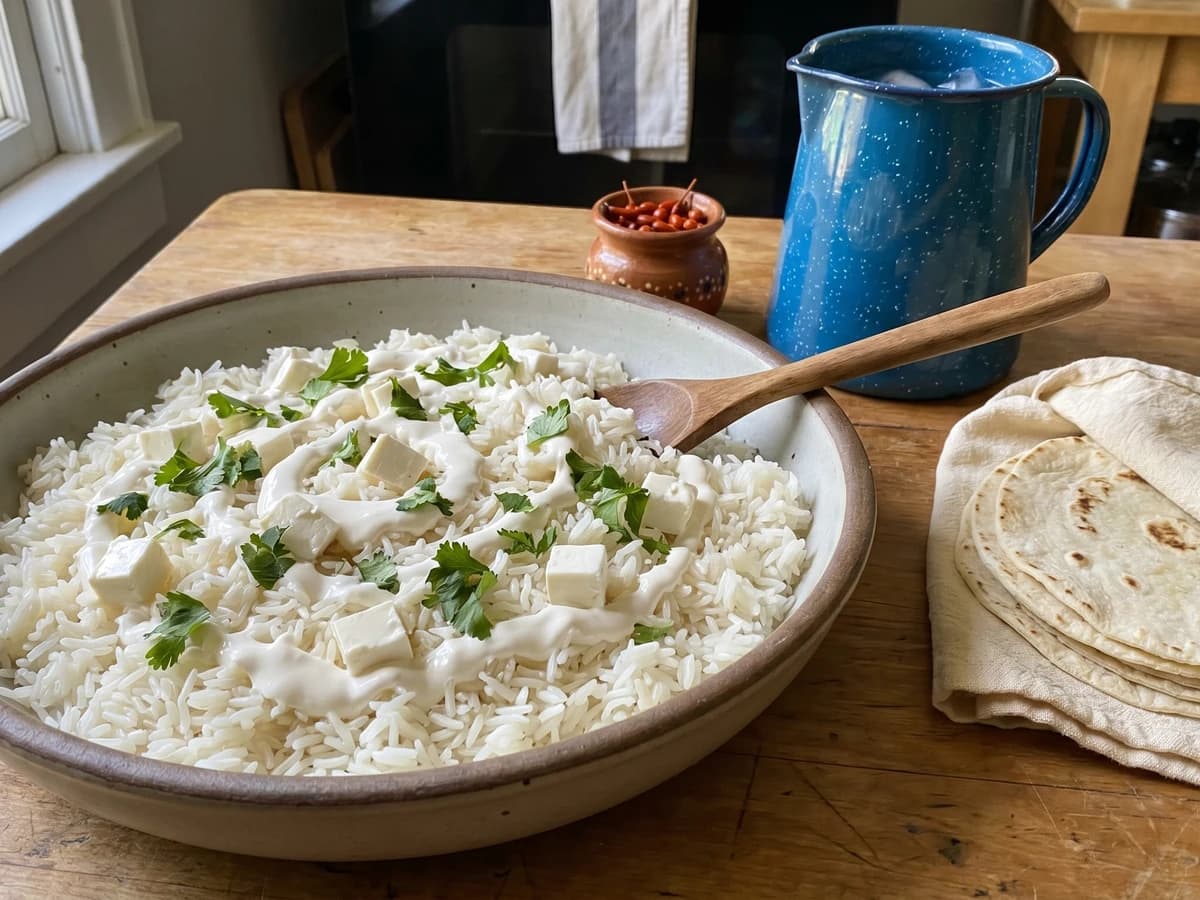
Sinaloa's home-cook white rice topped with cold cubes of cream cheese that soften into the warm grain, finished with crema and a sprinkle of chiltepin at the table. The trick that makes a side dish feel like a small luxury.
Chef Lupita
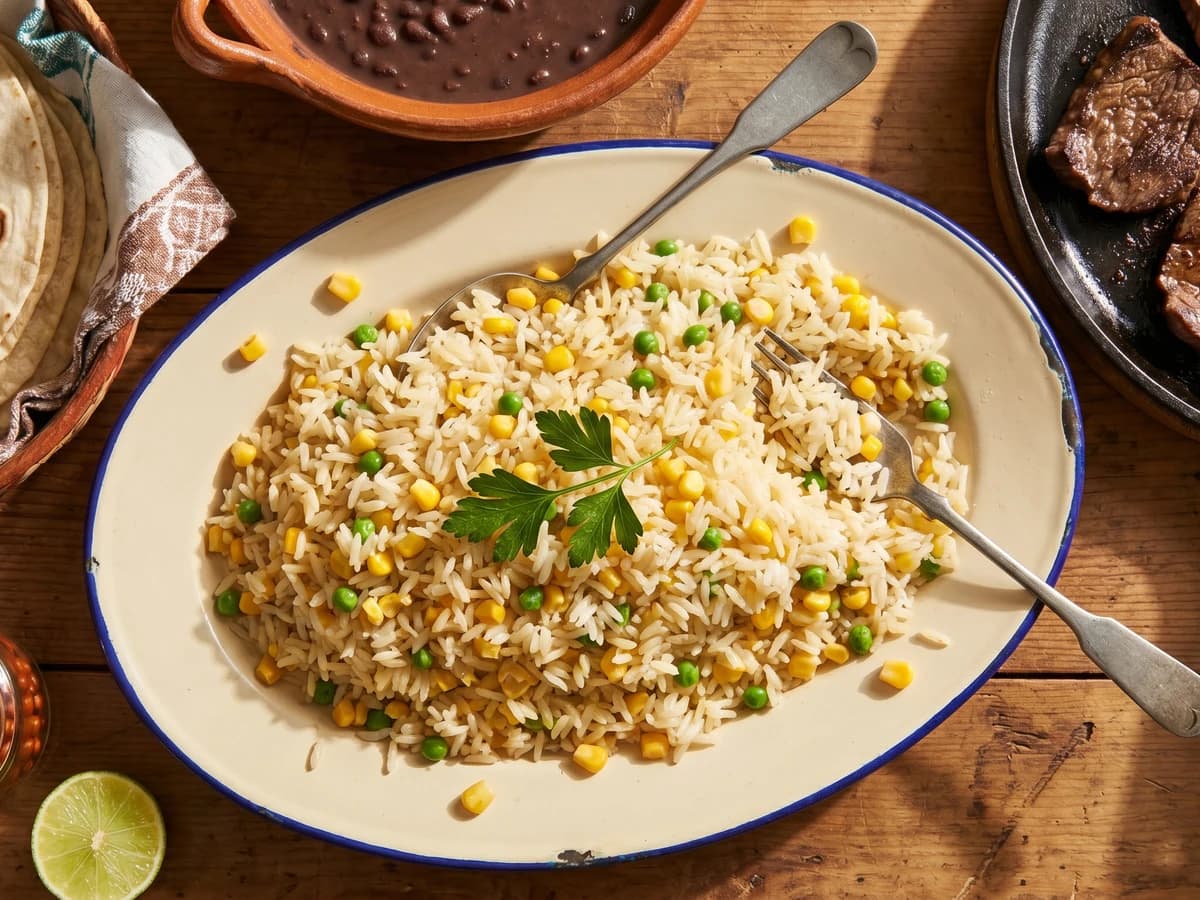
Sonora's white rice, toasted in butter and steamed with sweet corn and tender peas. The clean, quiet partner to a plate of carne asada, not the red rice of central Mexico.

Chef Lupita
Yucatán's white rice with sweet corn kernels, toasted in lard with garlic and onion. The quiet base that holds up against the peninsula's bold achiote-stained stews.