
Chef Lupita
Arroz a la Oaxaqueña
Oaxaca's red rice, stained with tomato and fried in lard, steamed with carrots, ejotes, black beans, and epazote. The side that anchors a Oaxacan family meal and earns its place beside the main.
A cooking platform built around craft, culture, and the stories behind what we eat.

Created by
Jalisco's cookout cactus paddles, scored and charred on a hot comal, then dressed with lime, white onion, cilantro, and a rough salsa of Yahualica chile de arbol.
Jalisco, especially Guadalajara and the towns of Los Altos, knows this dish from the carne asada table. The meat gets the attention. The nopales do the steady work: green paddles from the market, cleaned with a knife, charred on a blackened comal, dressed with lime and salt while everyone is still arguing about the tortillas.
The chile that belongs here is chile de arbol from Yahualica, small, red, sharp, and serious. You do not need a complicated salsa for nopales asados. You need a few toasted chiles, tomato, garlic, and salt ground in a molcajete until the sauce still has texture. If you make it smooth and sweet, you missed the point.
I learned this version from a woman in the Mercado Libertad in Guadalajara who sold nopales in neat stacks, each paddle already scraped clean but never cut. She told me, 'Enteros en el comal, Lupita. Si los picas antes, se hacen baba.' Whole on the comal. If you chop them first, they turn slippery. She was right. Cada estado, su propia cocina.
Nopal has been eaten in central and western Mexico since pre-Columbian times, and the cactus appears on Mexico's national emblem because of the Mexica foundation story of Tenochtitlan. In Jalisco, grilled nopales became tied to the carne asada table and to market cooking, where whole paddles could be cleaned, charred, and served cheaply beside tortillas and salsa. Yahualica chile de arbol, grown in Jalisco's Los Altos region, received Denomination of Origin protection in 2018, recognizing the chile's specific regional identity and its importance to local salsas.
Quantity
8
spines removed and edges trimmed
Quantity
1 teaspoon, plus more to taste
Quantity
1 tablespoon, plus lime wedges for serving
Quantity
1/2 small
thinly sliced
Quantity
1/4 cup
chopped
Quantity
1 tablespoon
melted, for the comal
Quantity
6
stemmed
Quantity
2
Quantity
1 small
unpeeled
Quantity
1/4 teaspoon
Quantity
for serving
| Ingredient | Quantity |
|---|---|
| fresh cactus paddles (nopales)spines removed and edges trimmed | 8 |
| sea salt | 1 teaspoon, plus more to taste |
| fresh lime juice | 1 tablespoon, plus lime wedges for serving |
| white onionthinly sliced | 1/2 small |
| fresh cilantrochopped | 1/4 cup |
| pork lard (manteca de cerdo)melted, for the comal | 1 tablespoon |
| dried chile de arbol from Yahualicastemmed | 6 |
| ripe Roma tomatoes | 2 |
| garlic cloveunpeeled | 1 small |
| sea salt for the salsa | 1/4 teaspoon |
| warm corn tortillas (optional) | for serving |
Lay each cactus paddle flat on a cutting board. Scrape away any remaining spines with the back of a knife, then trim the dry edge all around. Rinse quickly and pat very dry. Do not soak them. Nopales already carry enough moisture inside.
Cut shallow diagonal lines across each nopal without slicing through it. Turn and cut the other direction to make a light crosshatch. This helps the heat enter evenly and lets the slime cook off faster. The paddle should stay whole because it belongs on the comal, not chopped into a salad yet.
Heat a dry comal over medium. Toast the chile de arbol for 10 to 15 seconds, just until fragrant and a shade darker. Remove them before they blacken. Put the tomatoes and unpeeled garlic on the same comal and turn until the tomato skins blister and the garlic softens. This is tatemado, the Jalisco table flavor: char, chile, salt, nothing timid.
Peel the garlic. Grind the toasted chile de arbol, garlic, tomatoes, and 1/4 teaspoon salt in a molcajete until rough and spoonable. A blender works if that is what you have, but pulse it. Do not make baby food. The salsa should have texture, with little red flecks of chile and blackened tomato skin.
Raise the comal or grill to medium-high. Rub it with a thin film of melted manteca de cerdo. Not a puddle. Just enough to season the surface and help the first contact brown. La manteca es el sabor, but the cactus is still the point.
Lay the nopales on the hot comal in one layer. Cook 4 to 6 minutes per side, pressing lightly with tongs so the surface meets the heat. They are ready when they turn from bright green to deeper olive green, the cut lines darken, and the edges soften but still hold their shape. Some sticky liquid will bead out and dry on the surface. That is correct. Keep cooking until the paddle is tender, not wet.
Move the nopales to a Tlaquepaque glazed clay platter. Sprinkle with 1 teaspoon sea salt, lime juice, sliced white onion, and cilantro. Spoon a little chile de arbol salsa over the top or serve it on the side. Taste one corner. It should be smoky, tart, salty, and clean. Not all Mexican food needs to shout with chile. This one needs balance.
Serve the nopales warm or at room temperature with lime wedges, more salsa, and warm corn tortillas. At a Jalisco carne asada, these sit beside the meat quietly and disappear first. Saber cocinar es saber vivir.
1 serving (about 245g)
Culinary guides, cultural storytelling, and the editorial depth that makes cooking meaningful.
Discover Culinary ExplorerChef Lupita
Oaxaca's red rice, stained with tomato and fried in lard, steamed with carrots, ejotes, black beans, and epazote. The side that anchors a Oaxacan family meal and earns its place beside the main.
Chef Lupita
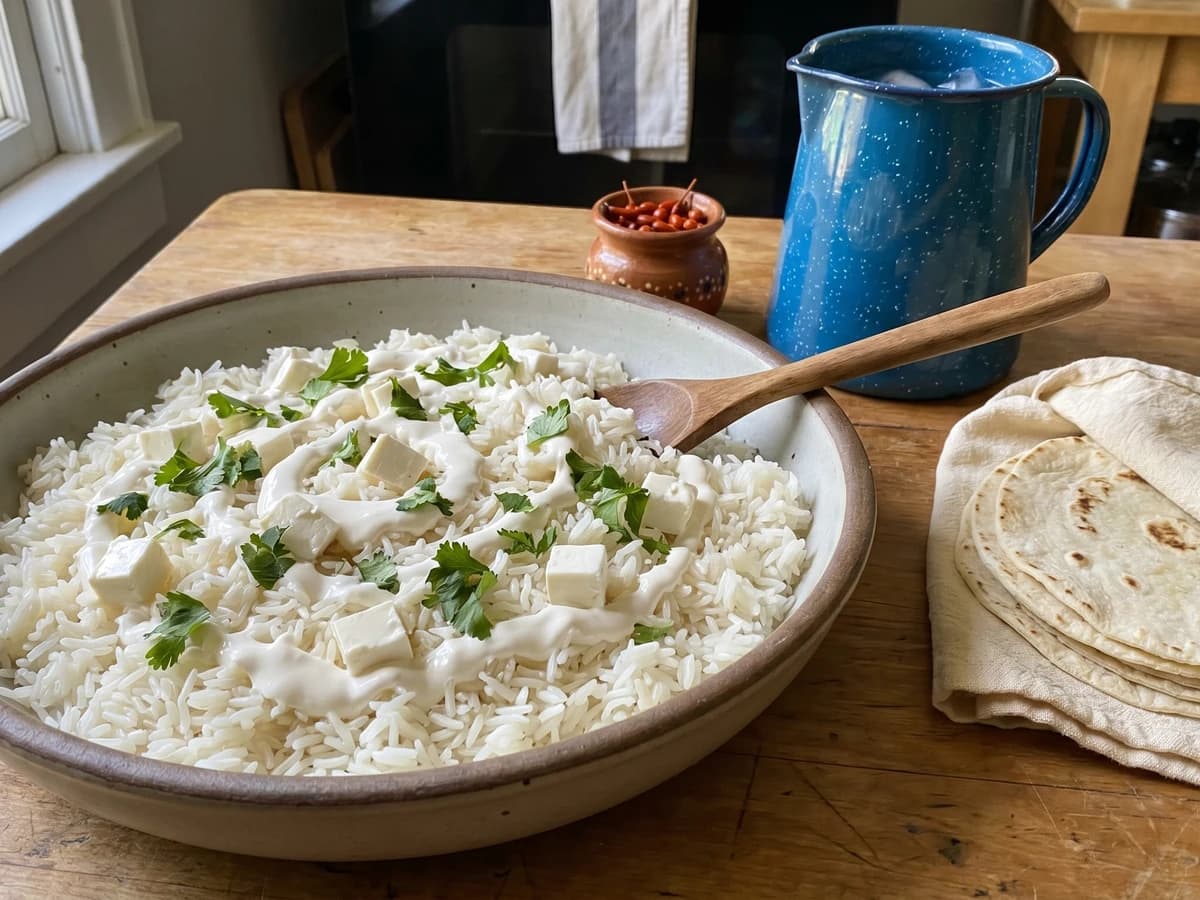
Sinaloa's home-cook white rice topped with cold cubes of cream cheese that soften into the warm grain, finished with crema and a sprinkle of chiltepin at the table. The trick that makes a side dish feel like a small luxury.
Chef Lupita
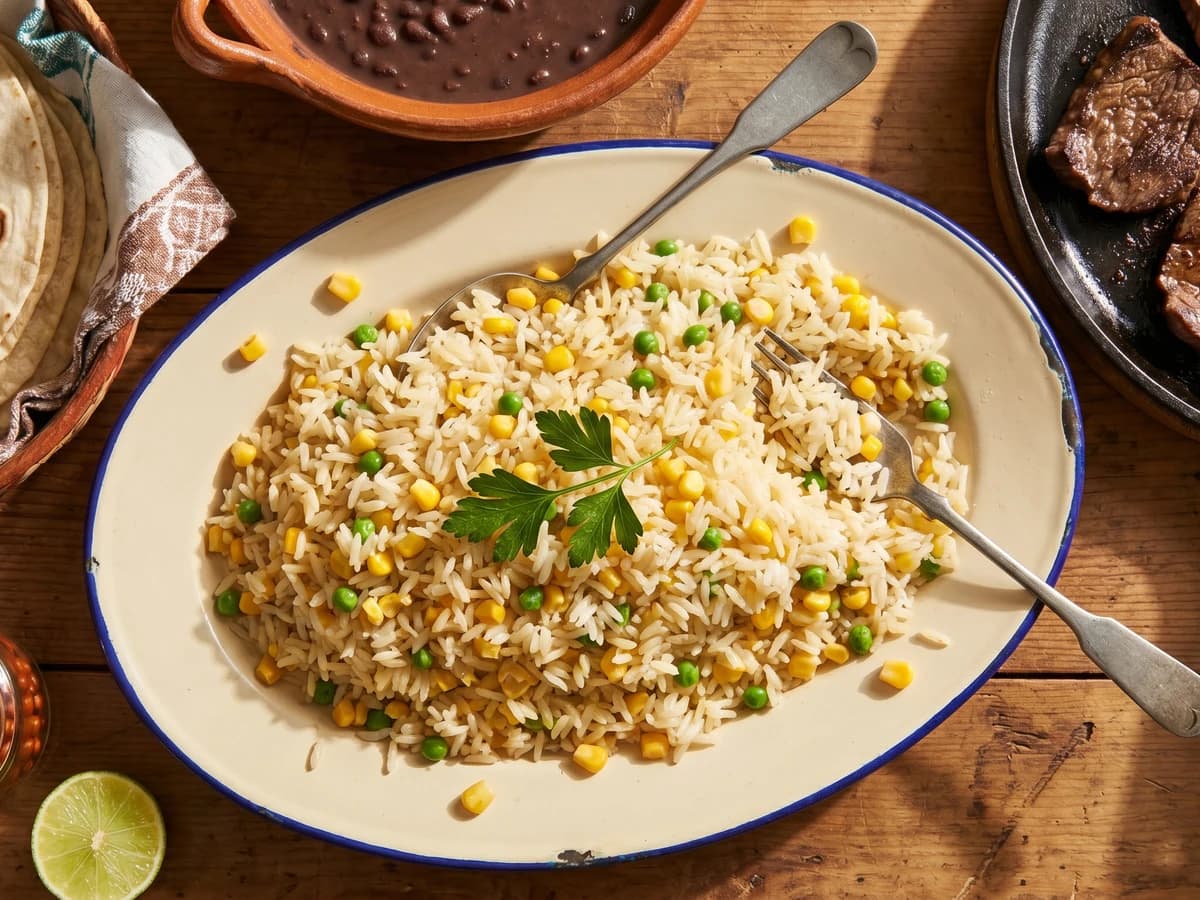
Sonora's white rice, toasted in butter and steamed with sweet corn and tender peas. The clean, quiet partner to a plate of carne asada, not the red rice of central Mexico.

Chef Lupita
Yucatán's white rice with sweet corn kernels, toasted in lard with garlic and onion. The quiet base that holds up against the peninsula's bold achiote-stained stews.