Chef Jeong-sun
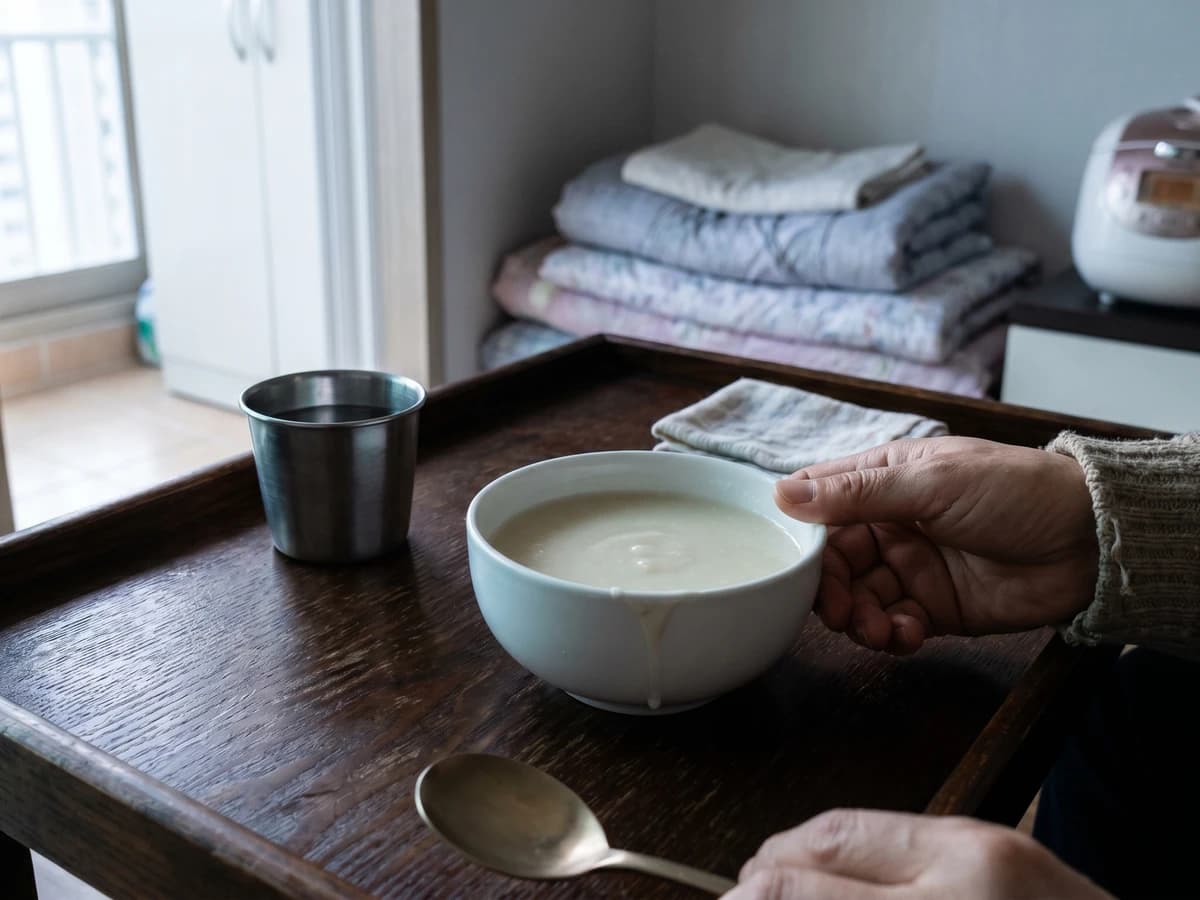
Amjuk (Dried-Grain Weaning Porridge)
Powdered rice or dried baekseolgi cooked thin in cloudy rice water, an old Korean first-spoon porridge that asks for patience at the sieve and gentleness at the stove.
A cooking platform built around craft, culture, and the stories behind what we eat.
Created by
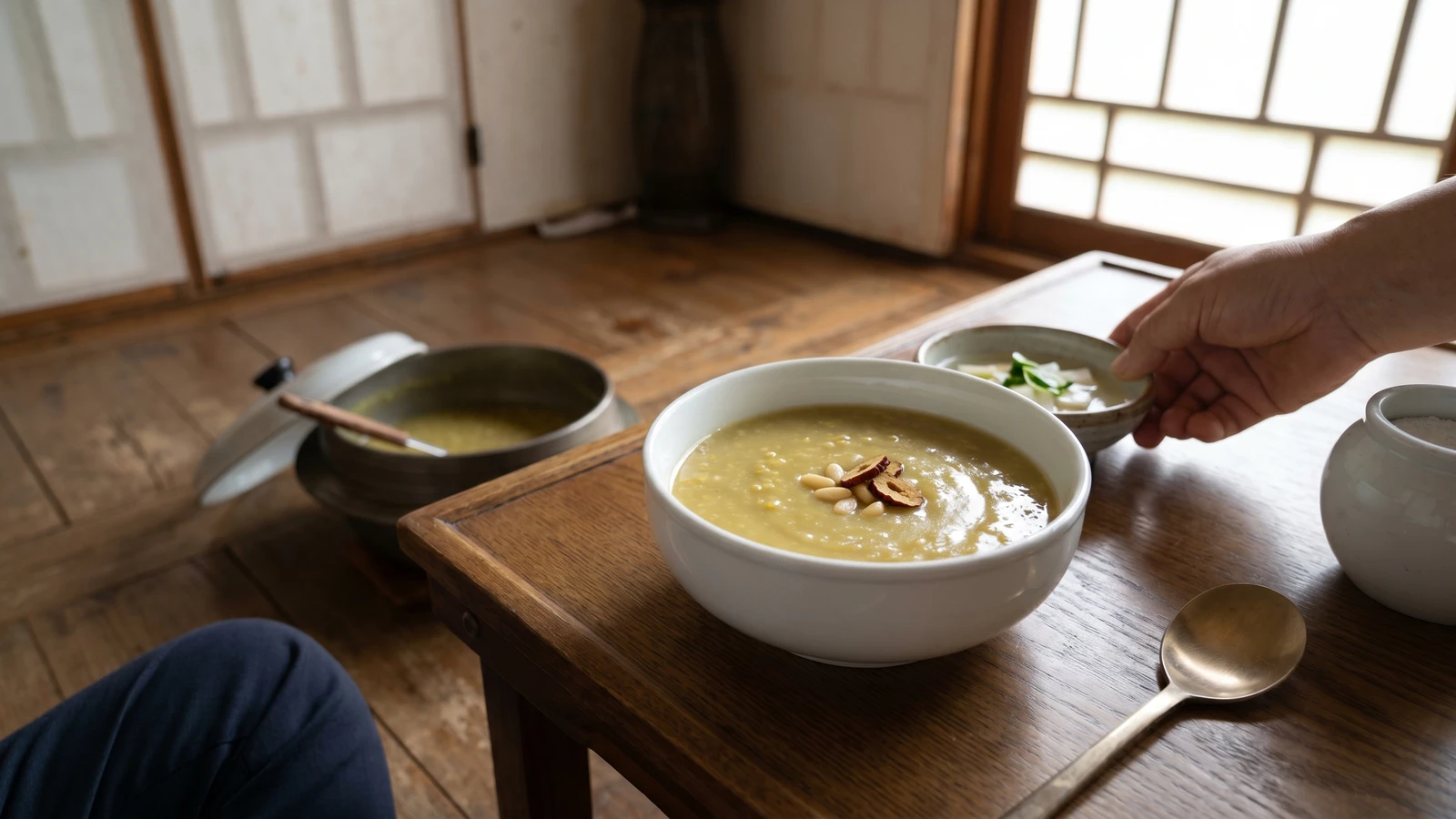
A pale, cooling Chungcheong porridge of mung beans pressed smooth and rice simmered until soft, gentle enough for breakfast, recovery, and the quiet tables where red patjuk does not belong.
Nokdu-juk lives or dies at the sieve. Boil the mung beans until they give up their shape, then press them through while the liquid is still loose and warm. Skip that work and the porridge will be grainy in the exact place it should be kind. This is a soft dish, but it is not a careless one.
Master Seong-nyeo made me sieve my first pot twice. I was young enough to think she was being severe for sport, which was foolish. The second bowl taught me what her words did not: mung beans should make a porridge that cools the stomach and settles it, with rice grains suspended in a smooth pale body. A breakfast bowl can take pine nuts and a thread of jujube. A solemn bowl stays plain.
Tonight it asks for soaking, steady heat, and your attention at the bottom of the pot. Salt comes late, in a measured amount, because this porridge turns sharp quickly if you season it like soup. Write it down. Memory is a borrowed bowl. Once you know your pot and your beans, this becomes the kind of food a house can offer without performance: gentle, useful, and enough.
Nokdu-juk is strongly associated with Chungcheong home and ritual cooking, made by boiling mung beans soft, sieving them, and simmering the strained bean liquid with rice. In regional funeral custom, it could be set at the 빈소 (mourning room) or near the bier because red patjuk (adzuki bean porridge), used in other rites to drive away unwelcome spirits, did not suit the dead. Away from mourning, mung beans have long been treated in Korean foodways as cooling and gentle, which is why the porridge also belongs to summer breakfasts and recovery meals.
Quantity
1 cup (200g)
rinsed and soaked 2 hours
Quantity
1/2 cup (100g)
rinsed and soaked 30 minutes
Quantity
8 cups
divided, plus 1 to 2 cups more as needed
Quantity
3/4 teaspoon
plus more in 1/8 teaspoon increments if needed
Quantity
1 tablespoon
Quantity
2
seeded and cut into fine slivers
Quantity
to serve
| Ingredient | Quantity |
|---|---|
| hulled split mung beans (nokdu)rinsed and soaked 2 hours | 1 cup (200g) |
| short-grain white ricerinsed and soaked 30 minutes | 1/2 cup (100g) |
| waterdivided, plus 1 to 2 cups more as needed | 8 cups |
| fine sea saltplus more in 1/8 teaspoon increments if needed | 3/4 teaspoon |
| pine nuts (optional) | 1 tablespoon |
| dried jujubes (daechu) (optional)seeded and cut into fine slivers | 2 |
| clear dongchimi or mild kimchi (optional) | to serve |
Rinse the hulled mung beans until the water runs mostly clear, then soak them in plenty of cool water for 2 hours. Rinse the rice and soak it separately for 30 minutes. They are not the same ingredient, so do not treat them as one: the beans need time to soften through, while the rice only needs enough water in its core to bloom evenly in the porridge.
Drain the soaked mung beans and put them in a heavy pot with 6 cups of the water. Bring to a boil over medium-high heat, skim off the pale foam, then lower the heat and simmer 35 to 40 minutes, stirring now and then, until the beans collapse when pressed against the side of the pot. Do not add salt yet. Salt makes the beans slower to soften, and this porridge needs softness before seasoning.
Set a fine-mesh sieve over a large bowl. Ladle the beans and their cooking liquid into the sieve and press firmly with a wooden spoon until the smooth bean body passes through. Rinse the pot with 1 cup of the remaining water and pour that through the sieve too, so you do not lose the starch clinging to the sides. Discard any dry skins or coarse bits left behind. Nokdu-juk lives or dies here: the sieve is what makes it gentle instead of gritty.
Return the strained mung bean liquid to the clean pot. Drain the soaked rice and stir it in with the last 1 cup of water. Bring it just to a gentle boil, then lower the heat. The rice must cook inside the bean liquid, not beside it, so stir well from the start and scrape the bottom where the starch wants to settle.
Simmer 25 to 30 minutes, stirring every 2 to 3 minutes at first and more often near the end, until the rice grains are swollen and soft and the porridge falls from the spoon in a thick ribbon. If it tightens too much before the rice is tender, add hot water 1/2 cup at a time. Do not hurry it with high heat. Scorched mung bean announces itself at the first spoonful, and there is no garnish that can apologize for it.
Stir in 3/4 teaspoon fine sea salt, then taste. Add more only in 1/8 teaspoon increments. This is not soup; it should taste quietly seasoned, with the mung bean still clear. Rest 5 minutes off the heat so the rice and bean settle into one body. Spoon into bowls and garnish with pine nuts and jujube slivers if this is a breakfast or guest bowl. For a solemn table, serve it plain.
1 serving (about 430g)
Culinary guides, cultural storytelling, and the editorial depth that makes cooking meaningful.
Discover Culinary ExplorerChef Jeong-sun
Powdered rice or dried baekseolgi cooked thin in cloudy rice water, an old Korean first-spoon porridge that asks for patience at the sieve and gentleness at the stove.

Chef Jeong-sun
A soft summer rice porridge of kneaded mallow greens, dried shrimp, and careful doenjang broth, plain enough for breakfast and exact enough to keep the grit and bitterness out.
Chef Jeong-sun
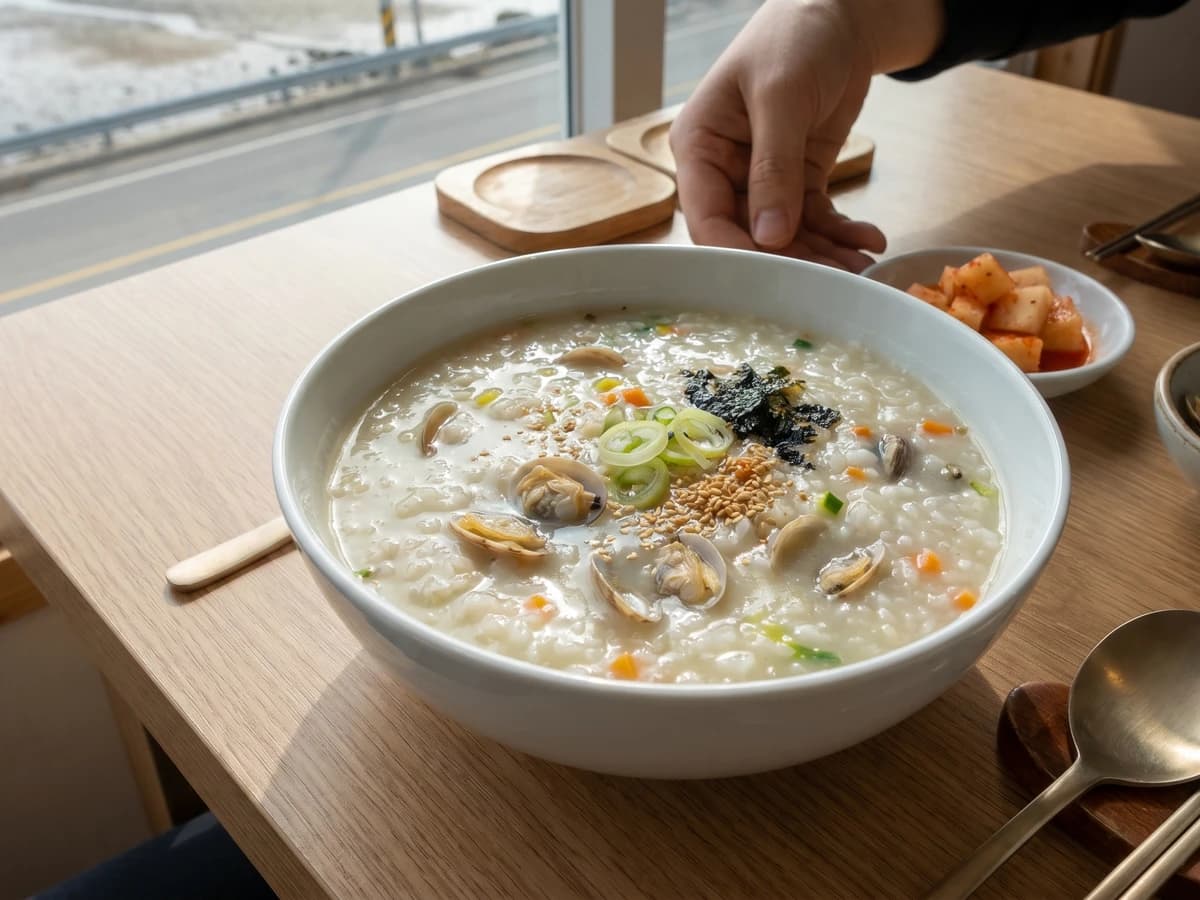
A west-coast clam porridge from Buan's tidal flats: live bajirak opened for their liquor, sesame-slicked rice toasted in the pot, and vegetables cut small enough to comfort without hiding the clams.

Chef Jeong-sun
An autumn juk of boiled chestnuts and soaked short-grain rice, simmered low until smooth and softly sweet, the kind of bowl you set before an elder, a child, or yourself.