
Chef Lupita
Acitrón de Cidra Conventual
Puebla's convent-style acitrón, made from cidra peel instead of endangered biznaga, built through repeated syrup soakings until the cubes turn firm, translucent, and ready for rosca or chiles en nogada.
A cooking platform built around craft, culture, and the stories behind what we eat.
Created by
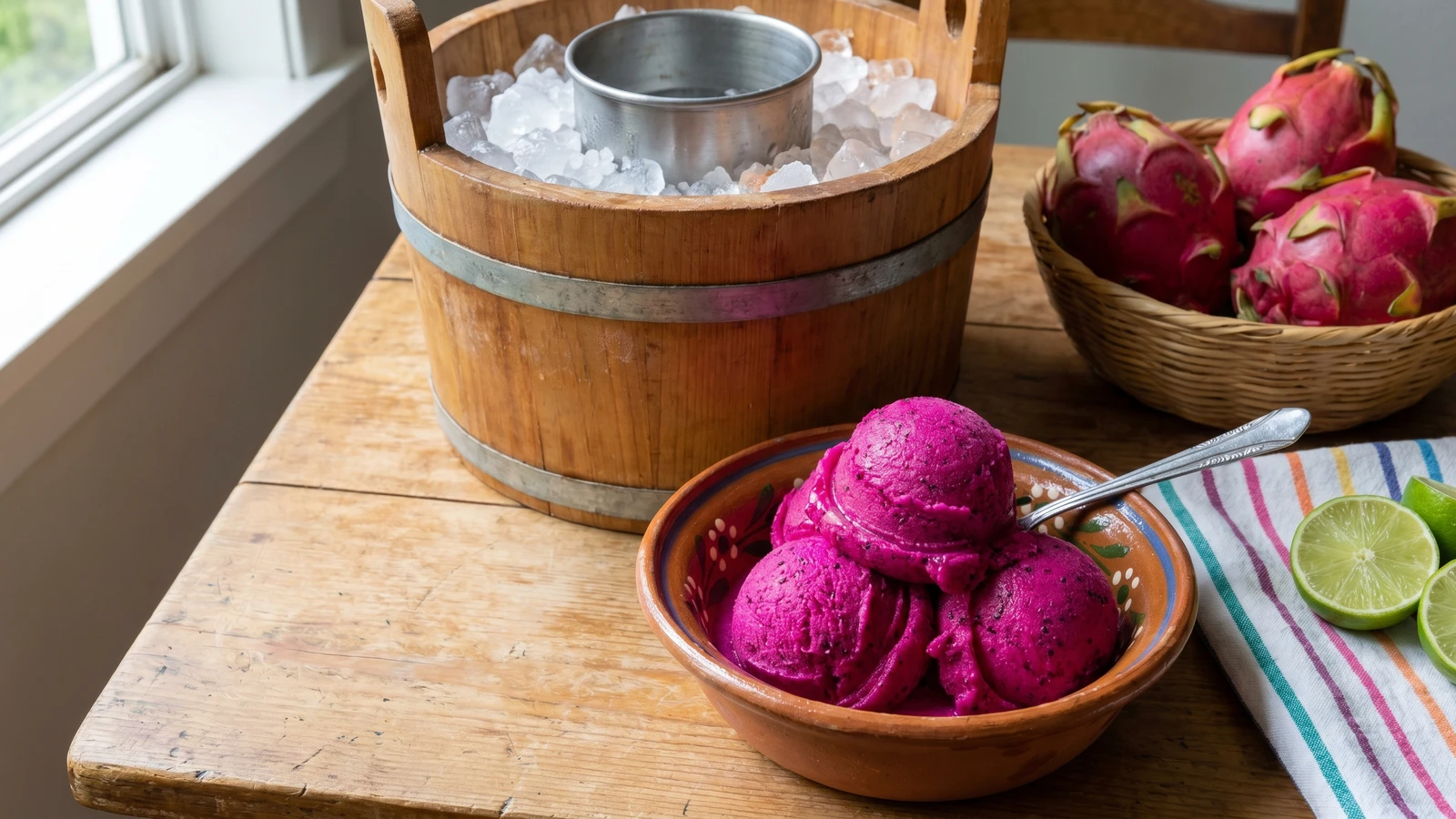
Southern Jalisco's late-spring nieve, built from ripe magenta pitayas and hand-churned in a garrafa until the fruit turns icy, bright, and faintly earthy.
This is from southern Jalisco, from the pitaya towns around Amacueca, Techaluta, Sayula, and Zacoalco de Torres, where late spring means the cactus fruit arrives in baskets before the heat gets cruel. The fruit is not decoration. It is the whole dish.
Pitaya is seasonal, stubborn, and short-lived. The magenta flesh stains your fingers, the little black seeds stay in the nieve, and the flavor is sweet with a faint earthiness that tells you it came from cactus, not from a perfume bottle. Do not confuse it with dragon fruit. In Jalisco, the pitaya from Stenocereus cactus has its own calendar and its own pride.
The women who sell nieve de garrafa know the rhythm by hand: ice around the metal canister, coarse salt to make it colder, turn, scrape, turn again. No machine teaches you the sound of the mixture thickening against the paddle. A modern ice cream maker will work, but the garrafa is the school. Recetas probadas y garantizadas, when the fruit is ripe.
If the mercado has no good pitaya, don't make this. Make another nieve. Mexican grandmothers cook with what the market is selling today, not what someone promised on a screen. Cada estado, su propia cocina.
The pitaya season in southern Jalisco, especially around Techaluta and Amacueca, is tied to Stenocereus queretaroensis, a columnar cactus cultivated and gathered in western Mexico since long before commercial refrigeration. Nieve de garrafa became common in Mexican towns in the 19th and early 20th centuries, when ice, salt, and hand-cranked metal canisters made frozen desserts possible outside elite kitchens. Jalisco's pitaya version remains seasonal because the fruit bruises easily, ferments quickly, and rarely travels well beyond its regional market window.
Quantity
4 cups
scooped from about 12 to 16 Jalisco pitayas
Quantity
1 1/4 cups
Quantity
1 cup
Quantity
2 tablespoons
Quantity
1/4 teaspoon
Quantity
6 cups
for packing around the garrafa
Quantity
1 1/2 cups
for packing with the ice
| Ingredient | Quantity |
|---|---|
| ripe magenta pitaya fleshscooped from about 12 to 16 Jalisco pitayas | 4 cups |
| granulated sugar | 1 1/4 cups |
| water | 1 cup |
| fresh Mexican lime juice | 2 tablespoons |
| fine sea salt | 1/4 teaspoon |
| icefor packing around the garrafa | 6 cups |
| coarse rock saltfor packing with the ice | 1 1/2 cups |
Use pitayas that feel heavy for their size and smell faintly sweet at the stem end. The skin should be bright and the flesh inside should be deep magenta, not pale and watery. If the fruit tastes flat, the nieve will taste flat. Start at the market, not the freezer.
Combine the sugar and water in a small saucepan. Bring to a simmer over medium heat, stirring until the sugar dissolves completely. Simmer for 2 minutes, then remove from the heat and cool to room temperature. A clean syrup keeps the fruit flavor sharp. Do not caramelize it. This is not cajeta.
Cut the pitayas open and scoop the flesh into a bowl. Mash it with a fork or pulse it briefly in a blender. Briefly means briefly. You want the flesh broken down, but the tiny black seeds should remain visible. They are part of the fruit's texture and a Jalisciense cook would notice if you erased them.
Stir the cooled syrup into the pitaya pulp. Add the lime juice and sea salt. Taste it cold if you can, because freezing dulls sweetness. The base should taste slightly sweeter and slightly brighter than you want the finished nieve to taste. That is not excess. That is planning.
Cover the pitaya base and refrigerate until very cold, at least 3 hours or overnight. A warm base makes loose, grainy nieve and wastes your ice. The women with garrafas in Jalisco know this without measuring anything. You are going to measure until your hands learn.
Set the metal canister inside the wooden garrafa bucket. Pour the cold pitaya base into the canister and close it. Pack the space around it with alternating layers of ice and coarse rock salt. The salt makes the ice colder than freezing, which is why the mixture sets while you turn it. Así se hace y punto.
Turn the canister steadily for 25 to 35 minutes, scraping the sides every few minutes if your garrafa allows it. The mixture will move from liquid to slush to a soft, scoopable nieve. Listen for the drag against the paddle. That sound tells you the ice crystals are forming small, not coarse.
Transfer the nieve to a chilled container, press parchment directly on the surface, and freeze for 45 to 60 minutes if you want cleaner scoops. For market-style nieve, serve it softer, straight from the garrafa, in small clay bowls. It should be bright magenta, icy, and clean on the tongue.
1 serving (about 140g)
Culinary guides, cultural storytelling, and the editorial depth that makes cooking meaningful.
Discover Culinary ExplorerChef Lupita
Puebla's convent-style acitrón, made from cidra peel instead of endangered biznaga, built through repeated syrup soakings until the cubes turn firm, translucent, and ready for rosca or chiles en nogada.

Chef Lupita
Ciudad de México's Tulyehualco alegría is popped huautli folded into piloncillo honey, pressed with peanuts, pepitas, and raisins, then cut into the rectangular bars that built a pueblo's identity.

Chef Lupita
Oaxaca's pre-Columbian amaranth bar, popped on a hot comal and bound with piloncillo, honey, and the sacred Zapotec grain that the Spanish tried, and failed, to outlaw.

Chef Lupita
Querétaro's mercado candy of popped amaranto pressed with dark piloncillo syrup, pepitas, pecans, and cacahuate, a Bajío sweet that respects the seed before it decorates the table.