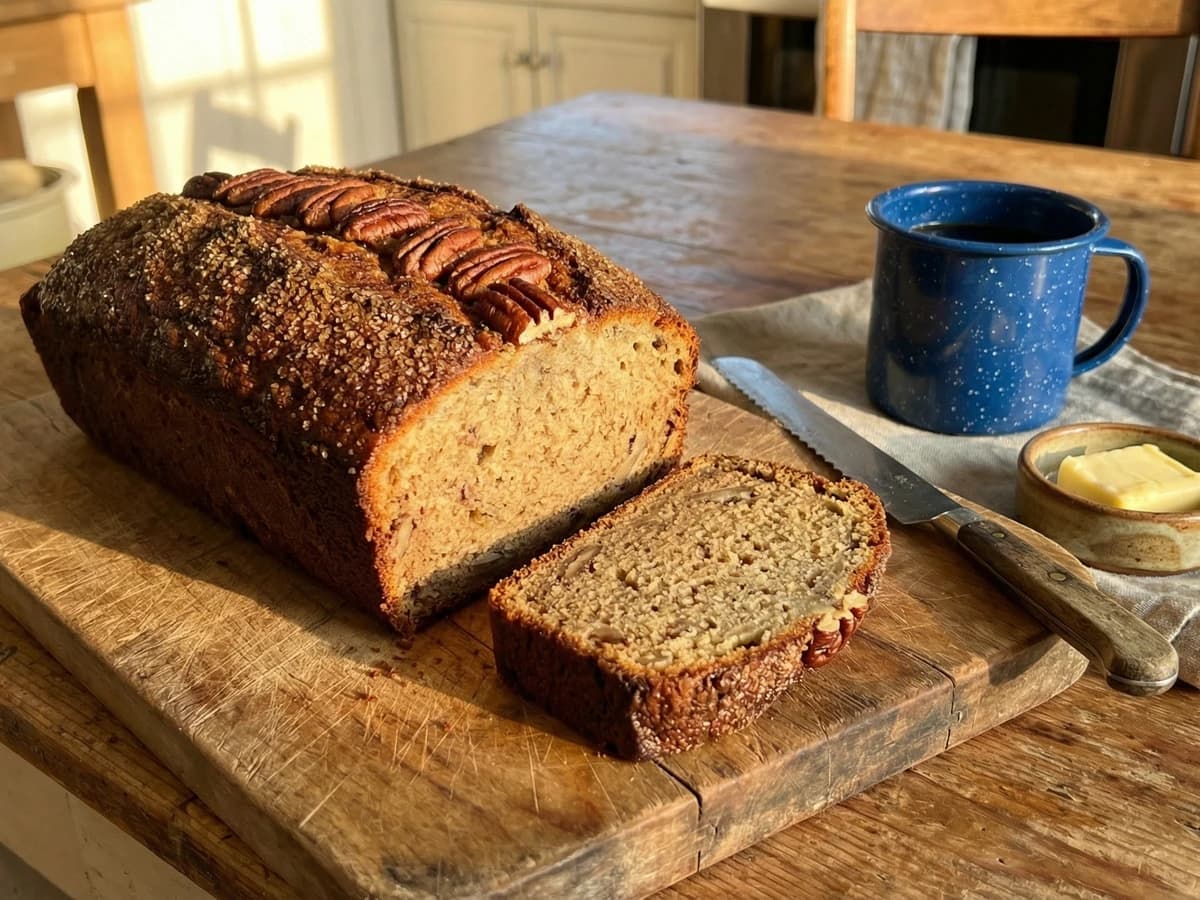
Golden, pillowy bread so rich with butter and eggs it practically melts on your tongue, the kind of loaf that makes Sunday mornings in the French Quarter feel like a blessing from above.
Breads
Cajun
Make Ahead
Special Occasion
45 min
Active Time
30 min cook•5 hr total
Yield2 loaves or 12 individual brioche
Good bread takes patience. That's the bayou way. My grandmother Evangeline learned to make brioche from her mother, who learned it from the Ursuline nuns in New Orleans. Four generations of Boudreaux women kneading this dough, waiting for it to rise, filling their kitchens with that smell of butter and yeast that tells you something special is happening.
Brioche is where Louisiana meets France in the most beautiful way possible. The French brought this bread to our shores centuries ago, and we made it ours. We slice it thick for pain perdu on Sunday mornings. We cube it for bread pudding swimming in bourbon sauce. We toast it and spread it with cane syrup while the café au lait steams in our cups. This is not just bread. This is heritage.
The technique here is simple but demands your attention. You're building a dough so enriched with eggs and butter that it barely holds together at first. Trust the process. Keep mixing. The gluten will develop and suddenly that shaggy mess transforms into something silky and alive. When you tear into the finished loaf and see that golden, feathery crumb, you'll understand why this bread has survived four hundred years in Louisiana kitchens.
The technique, the tradition, and the story behind every dish.
egg yolkbeaten with 1 tablespoon milk for egg wash
1
Equipment Needed
•Stand mixer with dough hook attachment
•9x5-inch loaf pans or individual brioche molds
•Wire cooling rack
•Pastry brush
•Instant-read thermometer
Instructions
1
Combine dry ingredients
In the bowl of a stand mixer fitted with the dough hook, whisk together the flour, instant yeast, sugar, and salt. Make sure the yeast and salt are on opposite sides of the bowl before mixing. Salt can kill yeast if they sit together too long. This small act of separation protects your rise.
Room temperature eggs are not optional. Cold eggs will shock the yeast and slow your rise dramatically. Set them out an hour before you begin.
2
Add wet ingredients
Pour the warm milk over the flour mixture. Add the eggs one at a time with the mixer running on low speed. The dough will look shaggy and hopeless at first. Keep mixing. After about five minutes, it will start to come together into a rough mass that pulls away from the sides of the bowl.
3
Develop the gluten
Increase the speed to medium and knead for eight to ten minutes. The dough should become smooth, elastic, and slightly tacky but not sticky. It will make a slapping sound against the bowl. When you can stretch a small piece thin enough to see light through it without tearing, the gluten is ready. This is called the windowpane test, and it tells you the structure is built.
If your dough climbs up the hook, stop the mixer and push it back down. This happens with enriched doughs. Be patient.
4
Incorporate the butter slowly
Here is where the magic happens. With the mixer on medium-low, add the softened butter one tablespoon at a time. Wait until each piece is fully absorbed before adding the next. The dough will fall apart and look greasy and wrong. This is normal. Keep going. After all the butter is in, increase speed to medium and mix for another five to seven minutes until the dough is glossy, smooth, and pulls cleanly from the bowl.
Your butter must be soft enough to spread easily but not melted or greasy. Press it with your finger: it should yield without being oily. This takes about an hour at room temperature.
5
First rise
Transfer the dough to a large, lightly greased bowl. Cover tightly with plastic wrap. Let rise at room temperature until doubled in size, about two hours. The dough will be soft and pillowy, barely holding its shape when you touch it. For even better flavor, refrigerate overnight after the first hour at room temperature. Cold fermentation develops complex, slightly tangy notes.
6
Shape the loaves
Punch down the dough gently to release the gas. Turn it out onto a lightly floured surface. For traditional loaves, divide the dough in half. Roll each half into a smooth ball, then place in greased 9x5-inch loaf pans. For individual brioche à tête, divide into twelve pieces, roll into balls, and place in greased brioche molds. Cover loosely with plastic wrap.
7
Second rise
Let the shaped dough rise until nearly doubled, about one hour at room temperature. The dough should spring back slowly when pressed with a fingertip. If it springs back quickly, it needs more time. If it does not spring back at all, you have overproofed and the texture will suffer.
8
Apply egg wash
Preheat your oven to 375°F. Brush the risen loaves gently with the egg wash, taking care not to deflate them. The egg wash creates that beautiful mahogany shine you see in bakery windows. One coat is good. Two coats, applied five minutes apart, is better.
9
Bake until golden
Bake loaves for 25 to 30 minutes, individual brioche for 15 to 18 minutes. The bread is done when it is deep golden brown and sounds hollow when tapped on the bottom. A thermometer inserted in the center should read 190°F. If the tops brown too quickly, tent loosely with foil for the final ten minutes.
Rotate the pans halfway through baking for even color. Every oven has hot spots.
10
Cool properly
Remove from pans immediately and let cool on a wire rack for at least thirty minutes before slicing. Cutting into hot brioche releases all the steam and dries out the crumb. I know the smell is torture. Wait anyway. When the last bite is as good as the first, you've done it right.
Chef Tips
•Day-old brioche makes the best pain perdu and bread pudding. The slightly stale texture absorbs custard without falling apart. At Lagniappe, we always bake our brioche a day ahead for weekend brunch service.
•If you do not have a stand mixer, you can make brioche by hand. It takes about twenty minutes of slapping the dough against your counter to develop the gluten, then another ten to incorporate the butter. Your arms will burn. The bread will be worth it.
•For a Louisiana twist, brush the warm loaves with cane syrup butter: two tablespoons soft butter beaten with one tablespoon Steen's cane syrup. The slight molasses note pairs beautifully with the rich bread.
•Store at room temperature wrapped in a clean kitchen towel for up to three days. Never refrigerate bread: it stales faster in the cold.
Advance Preparation
•The dough can be refrigerated after the first rise for up to 48 hours. This cold fermentation improves flavor and makes shaping easier since the butter firms up.
•Shaped, unbaked brioche freezes beautifully for up to one month. Thaw overnight in the refrigerator, let rise at room temperature for one hour, then bake as directed.
•Baked brioche freezes well for up to two months. Wrap tightly in plastic, then foil. Thaw at room temperature and refresh in a 350°F oven for five minutes.
Frequently Asked Questions
Nutrition Information
1 serving (about 85g)
Calories
340 calories
Total Fat
19 g
Saturated Fat
11 g
Trans Fat
0 g
Unsaturated Fat
8 g
Cholesterol
134 mg
Sodium
295 mg
Total Carbohydrates
35 g
Dietary Fiber
1 g
Sugars
5 g
Protein
8 g
Where cooking meets culture.
Culinary guides, cultural storytelling, and the editorial depth that makes cooking meaningful.