
Chef Lupita
Aguascalientes Beef Tongue Pozole (Pozole de Lengua)
Aguascalientes' Bajio pozole de lengua, built with cacahuazintle hominy, tender beef tongue, chile ancho and guajillo, with xoconostle brightness and table garnishes.
A cooking platform built around craft, culture, and the stories behind what we eat.
Created by
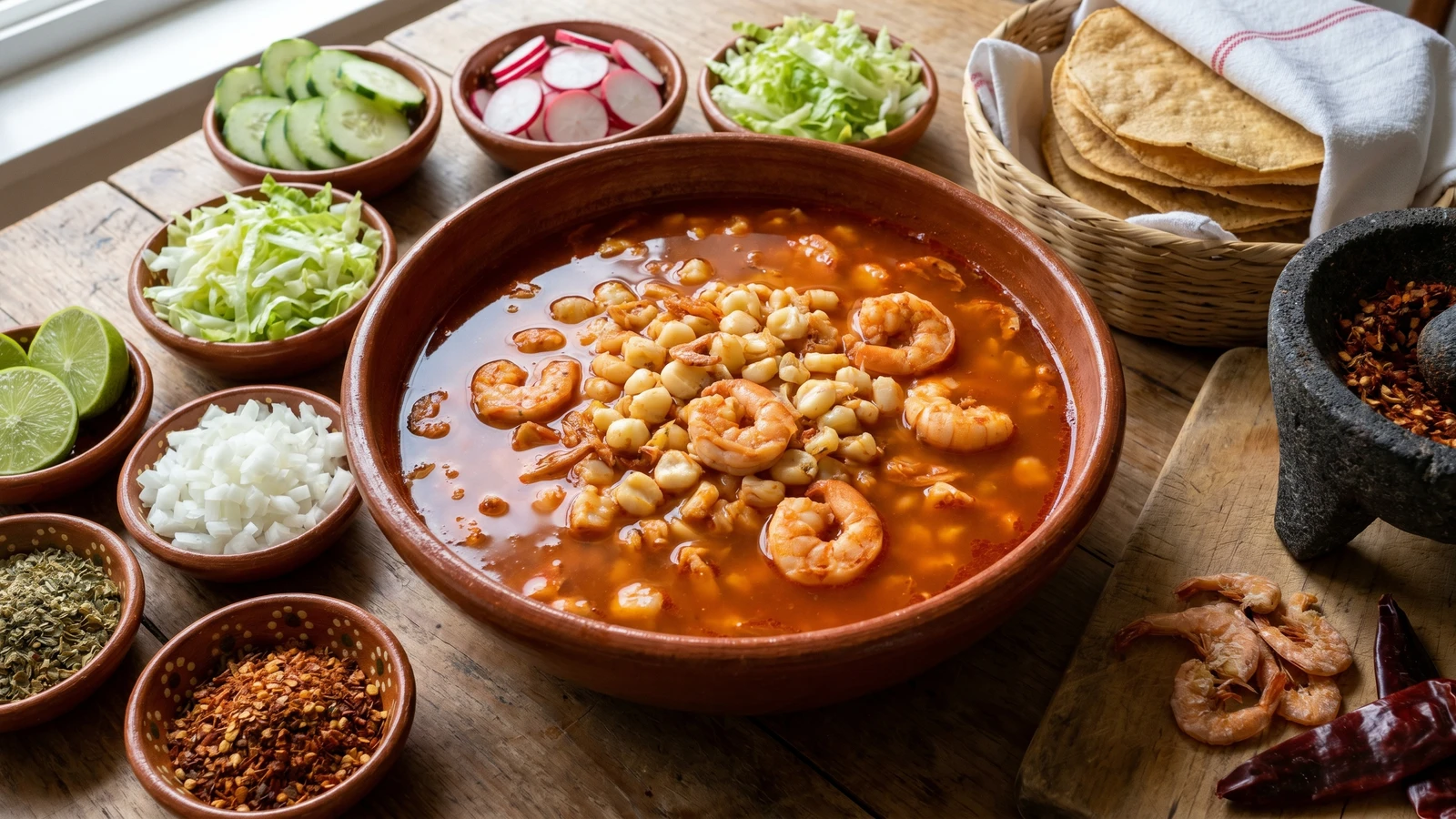
Nayarit's coastal pozole is hominy simmered in a broth of fresh and dried shrimp, guajillo, chile cola de rata, jitomate, and oregano, with pepino and tostadas waiting at the table.
Nayarit puts this pozole on the Pacific coast, from San Blas up through the mangrove country where shrimp, jaiba, robalo, and lisa shape the kitchen as much as corn does. This is not pork pozole with shrimp dropped in. No. The broth begins with shrimp heads and shells, dried camarón, chile guajillo, chile cola de rata, jitomate guaje, and the patient simmer that lets maíz pozolero open like a flower.
The ingredient that tells you where you are is the dried shrimp. Fresh shrimp gives the bite. Dried shrimp gives the backbone. The women who taught me this on the Nayarit coast kept stirring the pot because the ground camarón settles if you ignore it. That is not fussiness. That is knowledge from cooking the same pot through Cuaresma, celebrations, and Fridays when the family still wanted pozole but no pork.
My mother was from Jalisco, so she had opinions about pozole. Of course she did. But even in her notebook, next to a red pozole recipe, she wrote: "en la costa, preguntar por camarón seco." Ask on the coast. Pregúntale a las señoras del mercado. In Nayarit they will tell you: guajillo for color, chile cola de rata or chile de árbol for bite, pepino at the table, tostadas beside the bowl. Cada estado, su propia cocina.
This is a long pot. The corn has to soften, shed its skin, and burst in the shrimp broth. If you use canned hominy, I will tell you how, but do not pretend it is the same. A substitution is a compromise, not an upgrade. Saber cocinar es saber vivir.
Nayarit became a state in 1917 after the Territory of Tepic had been separated from Jalisco, which helps explain why the Nayarit and Jalisco coasts both claim versions of shrimp pozole. The dish joins two older food systems: nixtamalized corn, from the Nahua word "pozolli," and the Pacific mangrove economy of dried and fresh shrimp. Nayarit cooks often point to local cora and huichol maize, including maíz bofo, chaquirita, and tabloncillo, as better suited to this smaller, delicate coastal pozole than the larger grains used in Guerrero.
Quantity
1 pound
rinsed
Quantity
2 teaspoons
Quantity
6 quarts, divided
plus more for rinsing
Quantity
2 pounds
heads attached if possible
Quantity
3 ounces
heads removed if present
Quantity
2 tablespoons
Quantity
8
stemmed and seeded
Quantity
3
stemmed
Quantity
5
Quantity
1 medium
halved
Quantity
6
peeled
Quantity
1/2 teaspoon
Quantity
8
Quantity
2 sprigs
Quantity
2 teaspoons, plus more for serving
Quantity
1 tablespoon, plus more to taste
Quantity
2
peeled if waxed and thinly sliced
Quantity
6
thinly sliced
Quantity
1/2 small head
thinly shredded
Quantity
1 small
finely diced
Quantity
6
halved
Quantity
for serving
Quantity
for serving
| Ingredient | Quantity |
|---|---|
| dried maíz pozolero criollo, maíz bofo, tabloncillo, or cacahuazintlerinsed | 1 pound |
| food-grade cal (calcium hydroxide) | 2 teaspoons |
| waterplus more for rinsing | 6 quarts, divided |
| medium shell-on shrimpheads attached if possible | 2 pounds |
| dried shrimp (camarón seco)heads removed if present | 3 ounces |
| neutral oil, preferably aceite de maíz | 2 tablespoons |
| dried chile guajillostemmed and seeded | 8 |
| dried chile cola de rata or dried chile de árbolstemmed | 3 |
| jitomates guaje or Roma tomatoes | 5 |
| white onionhalved | 1 medium |
| garlic clovespeeled | 6 |
| cumin seeds | 1/2 teaspoon |
| black peppercorns | 8 |
| fresh epazote | 2 sprigs |
| dried Mexican oregano | 2 teaspoons, plus more for serving |
| sea salt | 1 tablespoon, plus more to taste |
| pepinos (optional)peeled if waxed and thinly sliced | 2 |
| radishes (optional)thinly sliced | 6 |
| romaine lettuce (optional)thinly shredded | 1/2 small head |
| white onion (optional)finely diced | 1 small |
| limes (optional)halved | 6 |
| toasted and crushed chile cola de rata or chile de árbol (optional) | for serving |
| tostadas raspadas or baked corn tostadas (optional) | for serving |
Put the rinsed dried corn in a heavy pot with 3 quarts water and the food-grade cal. Stir until the cal dissolves. Bring to a steady simmer and cook for about 1 hour 30 minutes, until the skins rub loose between your fingers and the kernels feel tender at the edge but still firm in the center. This is the foundation. If the corn is wrong, the pozole is wrong.
Drain the hot corn into a large colander and rinse under cool water. Rub the kernels hard between your hands to remove the loosened skins. The water will turn cloudy at first. Keep rinsing and rubbing until the corn feels clean and no longer slippery. If a few skins stay on, nobody dies. If most of them stay on, you were lazy. No me vengas con atajos.
Peel and devein the fresh shrimp, keeping the heads and shells in one bowl and the cleaned shrimp in another. Refrigerate the cleaned shrimp until the very end. The shells and heads make the broth. The shrimp meat is added last so it stays tender. Overcooked shrimp turns tight and rubbery, and the pot will tell on you.
Heat a dry comal over medium. Toast the dried shrimp for 1 to 2 minutes, stirring constantly, just until the smell turns deep and ocean-sweet. Do not blacken them. Burned dried shrimp tastes bitter and dirty. Set them aside.
On the same comal, toast the chile guajillo for about 20 seconds per side, just until flexible and fragrant. Toast the chile cola de rata or chile de árbol for 5 to 10 seconds, because those thin chiles burn fast. Guajillo gives red color and fruit. Cola de rata gives the sharp coastal bite. Blackened chile gives bitterness. Throw out any chile that burns.
Heat the oil in a large olla or heavy stockpot over medium-high. Add the reserved shrimp heads and shells and cook, stirring, until they turn coral red and smell roasted. Add 3 quarts water, the toasted chiles, jitomates, half onion, garlic cloves, cumin seeds, peppercorns, and 1 teaspoon salt. Simmer for 25 minutes. This is seafood cooking, so the fat is aceite, not manteca. Do not force pork into a coastal Cuaresma pot.
Strain the broth, saving the liquid, chiles, jitomates, onion, and garlic. Discard the shrimp shells, heads, and peppercorns. Blend the saved chiles, jitomates, onion, garlic, toasted dried shrimp, and 2 cups of the broth until completely smooth. Strain this red mixture through a fine-mesh sieve into a clean olla, pressing with a spoon. Add the remaining broth. The liquid should be brick red and smell like shrimp, chile, and the coast.
Add the washed nixtamal to the red shrimp broth. Bring to a simmer, then lower the heat so the pot bubbles steadily. Cook uncovered for 3 1/2 to 4 hours, stirring every 20 minutes, until the kernels burst open and look like small flowers. Add hot water as needed to keep the corn covered by 2 inches. Stir from the bottom because the dried shrimp settles. A señora in San Blas would tap your spoon if she saw you ignoring the pot.
When the corn has opened, add the dried Mexican oregano, epazote sprigs, and remaining salt. Simmer 25 to 30 minutes more. Taste the broth. It should be assertive, red, briny, and round, not timid. Remove the epazote before serving. Epazote gives its perfume, then it leaves. Así se hace y punto.
Add the cleaned fresh shrimp to the simmering pozole and cook 4 to 5 minutes, just until the shrimp curl and turn opaque. Turn off the heat immediately. The shrimp are not pork shoulder. They do not need courage, they need timing.
Ladle the pozole into deep bowls with plenty of hominy, broth, and shrimp. Put pepino, radish, romaine lettuce, diced white onion, lime halves, dried Mexican oregano, crushed toasted chile, and tostadas on the table. Each person finishes the bowl. No crema. No cheese. No flour tortillas. This is pozole de camarón from the Nayarit coast, and it knows what it is.
1 serving (about 700g)
Culinary guides, cultural storytelling, and the editorial depth that makes cooking meaningful.
Discover Culinary ExplorerChef Lupita
Aguascalientes' Bajio pozole de lengua, built with cacahuazintle hominy, tender beef tongue, chile ancho and guajillo, with xoconostle brightness and table garnishes.

Chef Lupita
Veracruz's Gulf coast rice from Alvarado, built with seafood stock, tomato, chile chipotle, epazote, shrimp, fish, jaiba, and pulpo, served loose and brothy in a clay cazuela.

Chef Lupita
Costa Chica's wet salt-beef stew, built from chile costeño, guajillo, tomato, manteca, yuca, plantain, and masa dumplings, the ranching pot of Cuajinicuilapa and Pinotepa.

Chef Lupita
Michoacán's P'urhépecha atápakua is a masa-thickened sauce and stew at once, built with pork, chile guajillo, and hierbabuena added only at the end.