
Chef Fai
Southern Cucumber Relish (Ajad)
The one Thai condiment where vinegar replaces lime as the sour pillar, and the system still holds. Palm sugar for sweet, nam pla for salt, prik for heat. Ajad is the four pillars in a jar.
A cooking platform built around craft, culture, and the stories behind what we eat.
Created by
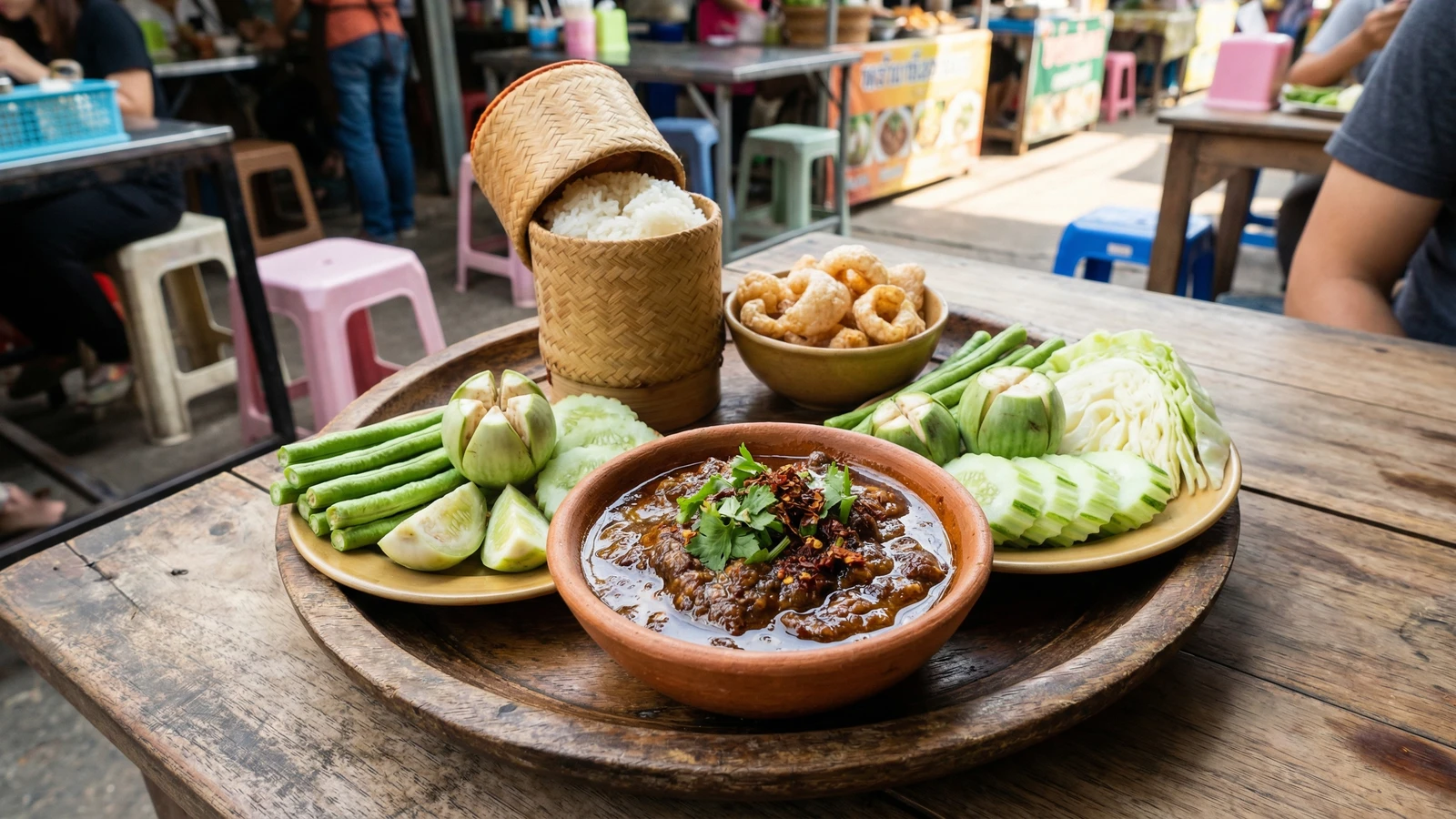
Grilled chicken liver pounded in the krok with charcoal-roasted chilies, garlic, and shallots. The kreung tam foundation taken to its richest, darkest, most Northern expression. Khantoke food, not restaurant food.
Every nam prik is a kreung tam. That's the first thing to understand. The mortar is the tool, the paste is the foundation, and the principle is the same whether you're pounding green chilies for num or roasting dried reds for ta daeng. Nam prik dab takes that foundation and adds something most people outside Lanna never expect: liver.
Grilled chicken liver, smoky from charcoal, pounded into a paste with roasted dried chilies, garlic, and shallots. The result is dark, rich, earthy, with a mineral depth that no other nam prik touches. This is iron and fire. The liver gives body. The roasted aromatics give smoke. The fish sauce gives salt. The lime pulls everything into focus.
Ajarn always said the four pillars are the law: nam pla for salt, nam tan pip for sweet, manao for sour, prik for spice. Nam prik dab leans hard into salt and spice, with sour from lime acting as the counterweight to all that richness. Sweet is barely there, just a whisper of palm sugar to round the edges. The balance here is darker, heavier than a Central Thai nam prik. That's the Lanna palate. Northern Thai food doesn't apologize for intensity.
At my Fai Thai workshops, this is the dish that surprises people. They expect nam prik to be all chili and shrimp paste. Then they taste this: the creaminess of pounded liver, the smokiness of charcoal-roasted garlic, the slow heat of dried chilies. You scoop it with sticky rice, eat it with a bite of raw long bean or a piece of kab moo, and suddenly you understand why the khantoke exists. Every bowl on that tray is a different principle expressed differently. Nam prik dab is the richest voice at the table.
Nam prik dab belongs to the Lanna culinary tradition of Northern Thailand, centered around Chiang Mai, Chiang Rai, and Lamphun. The use of offal in nam prik reflects a rural economy where no part of the animal was wasted, and liver's iron-rich, mineral flavor became a feature rather than a byproduct. The dish occupies a specific seat on the khantoke, the traditional Lanna low tray for communal meals, where it serves as the richest, most protein-dense dip alongside lighter preparations like nam prik num and nam prik ong.
Quantity
200g
cleaned and trimmed of sinew
Quantity
5
stems removed, seeds shaken out
Quantity
8 cloves
unpeeled
Quantity
4 small
unpeeled
Quantity
2 tablespoons
Quantity
1 tablespoon (about 1 lime)
Quantity
1 teaspoon
Quantity
2 sprigs
roughly chopped
Quantity
for serving
Quantity
for serving
Quantity
for serving
| Ingredient | Quantity |
|---|---|
| chicken liverscleaned and trimmed of sinew | 200g |
| dried red chilies (prik haeng)stems removed, seeds shaken out | 5 |
| garlicunpeeled | 8 cloves |
| shallots (hom daeng)unpeeled | 4 small |
| fish sauce (nam pla) | 2 tablespoons |
| lime juice (nam manao) | 1 tablespoon (about 1 lime) |
| palm sugar (nam tan pip) | 1 teaspoon |
| cilantro (pak chi)roughly chopped | 2 sprigs |
| sticky rice (khao niew) | for serving |
| kab moo (pork rinds) | for serving |
| raw vegetables (long beans, round Thai eggplant, cucumber, cabbage) | for serving |
Set your dried chilies, unpeeled garlic cloves, and unpeeled shallots directly over charcoal or an open gas flame. Charcoal is traditional and gives the best smoke. Turn them with tongs as they blister. The chilies go fast, maybe 30 seconds per side until they darken and puff slightly. Don't blacken them to ash or they'll taste bitter. The garlic and shallots take longer, 5 to 8 minutes, turning until the skins are charred all over and the flesh inside is soft and sweet. You'll smell the sugars caramelizing through the charred skin. That smell is the backbone of every roasted Lanna nam prik.
Thread the chicken livers onto a skewer or place them in a grilling basket. Grill over the same charcoal or flame, turning once, until cooked through but still slightly pink in the center. About 3 to 4 minutes per side. You want them firm on the outside with a creamy interior. Overcooked liver goes chalky and grainy. That texture ruins the paste. Pull them when they feel set but still give slightly when pressed. Let them rest for a minute, then chop roughly into smaller pieces to make pounding easier.
Peel the charred garlic and shallots. In a heavy granite mortar (krok hin), start with the roasted dried chilies. Pound them first until they break down into flakes and rough powder. The smoke will hit your nose immediately. Add the peeled garlic and shallots and pound into a coarse paste. You're not going for baby food. You want texture: identifiable fragments of charred shallot, rough bits of chili. The kreung tam for nam prik dab should look rustic, not refined.
Add the chopped grilled liver to the mortar. Pound and fold, pound and fold. The liver will break down and merge with the chili paste. You're looking for a thick, rough, spreadable texture. Not smooth. The liver should be incorporated but still have body. Some small chunks are fine. They're part of the character. The color will be dark, almost brown-red, with visible chili flakes throughout. That's correct. This is not a pretty nam prik. It's a powerful one.
Add the fish sauce and palm sugar directly into the mortar. Pound a few more times to incorporate. Now taste. The liver should be rich and savory, the chilies should build heat slowly, the roasted aromatics should give smokiness. Add the lime juice last. Ajarn always said: add sour last, add sour slowly. Lime changes the moment it hits. Too much and the liver's richness gets buried. You want just enough to cut through and brighten. One tablespoon, taste, then decide. Stir in the chopped cilantro with a spoon. Transfer to a small bowl for the khantoke.
Scoop the nam prik dab into a small bowl and place it on the khantoke alongside sticky rice (khao niew), kab moo (pork rinds), and a plate of raw vegetables: long beans cut into 3-inch lengths, quartered round Thai eggplant (makhuea pro), cucumber slices, and fresh cabbage wedges. Tear off a piece of sticky rice, press it into a small pad with your fingers, scoop some nam prik, eat it with a bite of vegetable or a shard of kab moo. That's the design. Every element has a job: the rice absorbs, the vegetables refresh, the pork rind adds crunch, and the nam prik dab delivers richness and fire.
1 serving (about 70g)
Culinary guides, cultural storytelling, and the editorial depth that makes cooking meaningful.
Discover Culinary ExplorerChef Fai
The one Thai condiment where vinegar replaces lime as the sour pillar, and the system still holds. Palm sugar for sweet, nam pla for salt, prik for heat. Ajad is the four pillars in a jar.

Chef Fai
Every grilled dish in Isan answers to this dip. Roasted dried chilies, nam pla, manao, khao khua, and shallots: the four pillars in a condiment that's structural, not optional.
Chef Fai
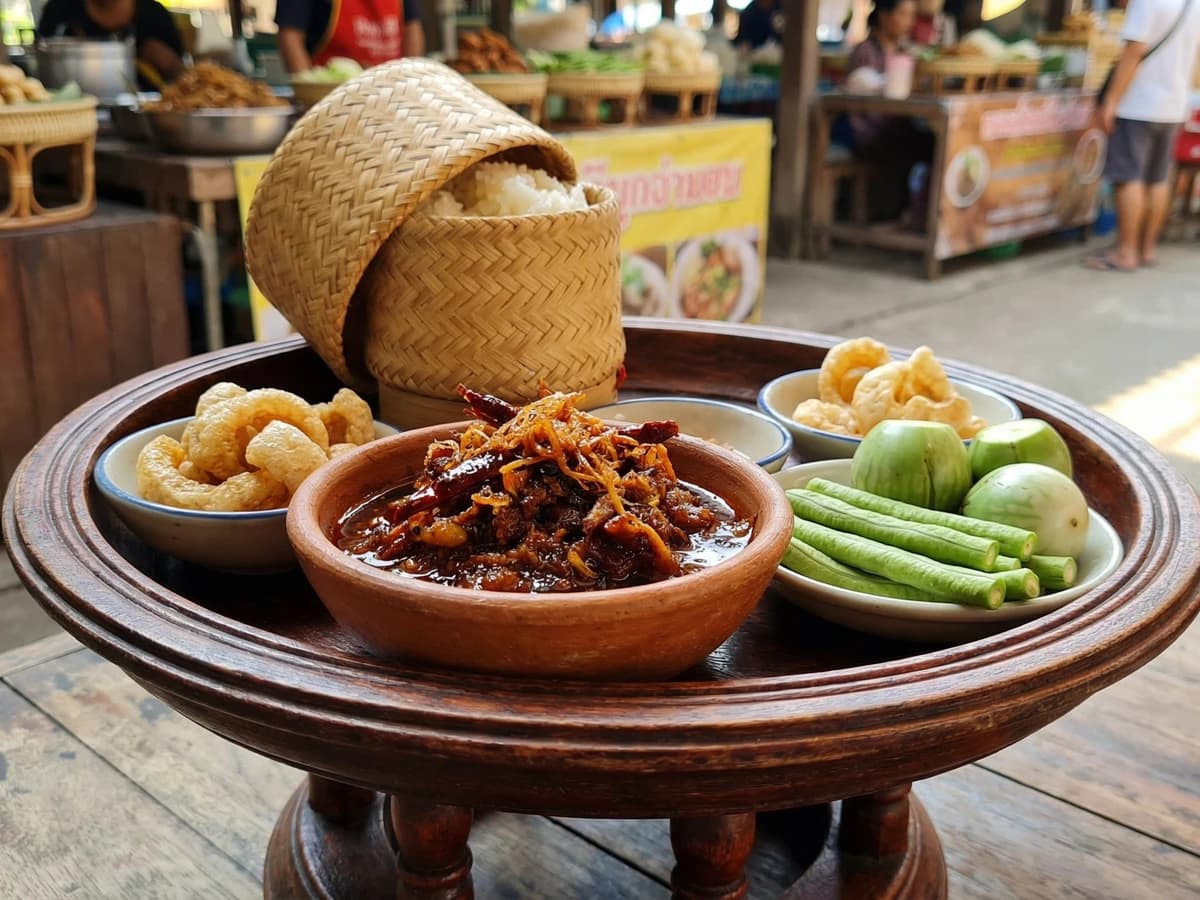
Roasted dried chilies and galangal pounded to a rough paste, folded with shredded pork skin and palm sugar until it becomes something sweet, smoky, and chewy that belongs on every khantoke tray in Chiang Mai.
Chef Fai
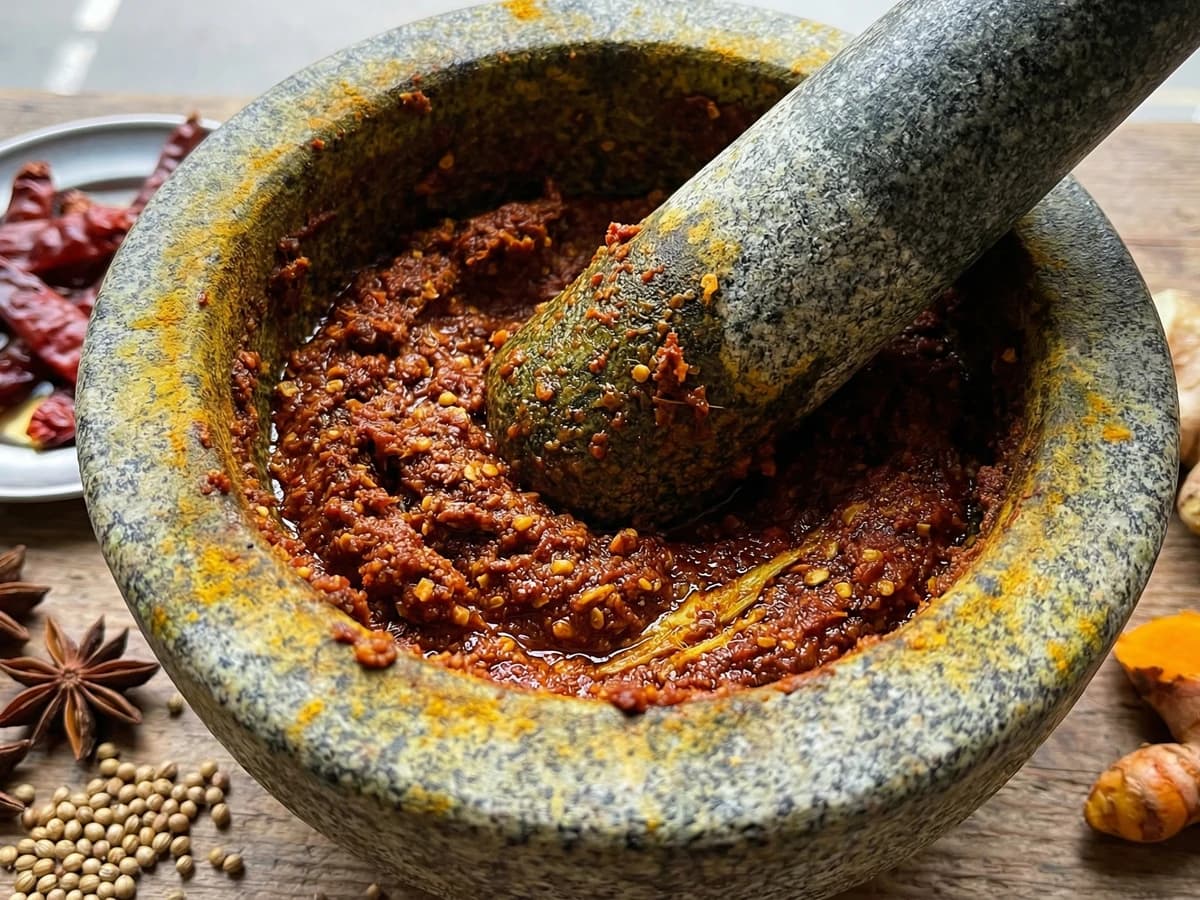
The kreung tam that proves the system adapts. Ginger instead of galangal, cumin and star anise alongside lemongrass. Lanna's mortar holds the whole Burma-to-Chiang Mai trade route in a single paste.