
Chef Jeong-sun
Agwi-jjim (Braised Monkfish with Bean Sprouts)
Firm monkfish buried under crisp soybean sprouts, minari, and a red gochugaru sauce thickened at the end; Masan's market dish asks for heat, timing, and a steady hand.
A cooking platform built around craft, culture, and the stories behind what we eat.
Created by
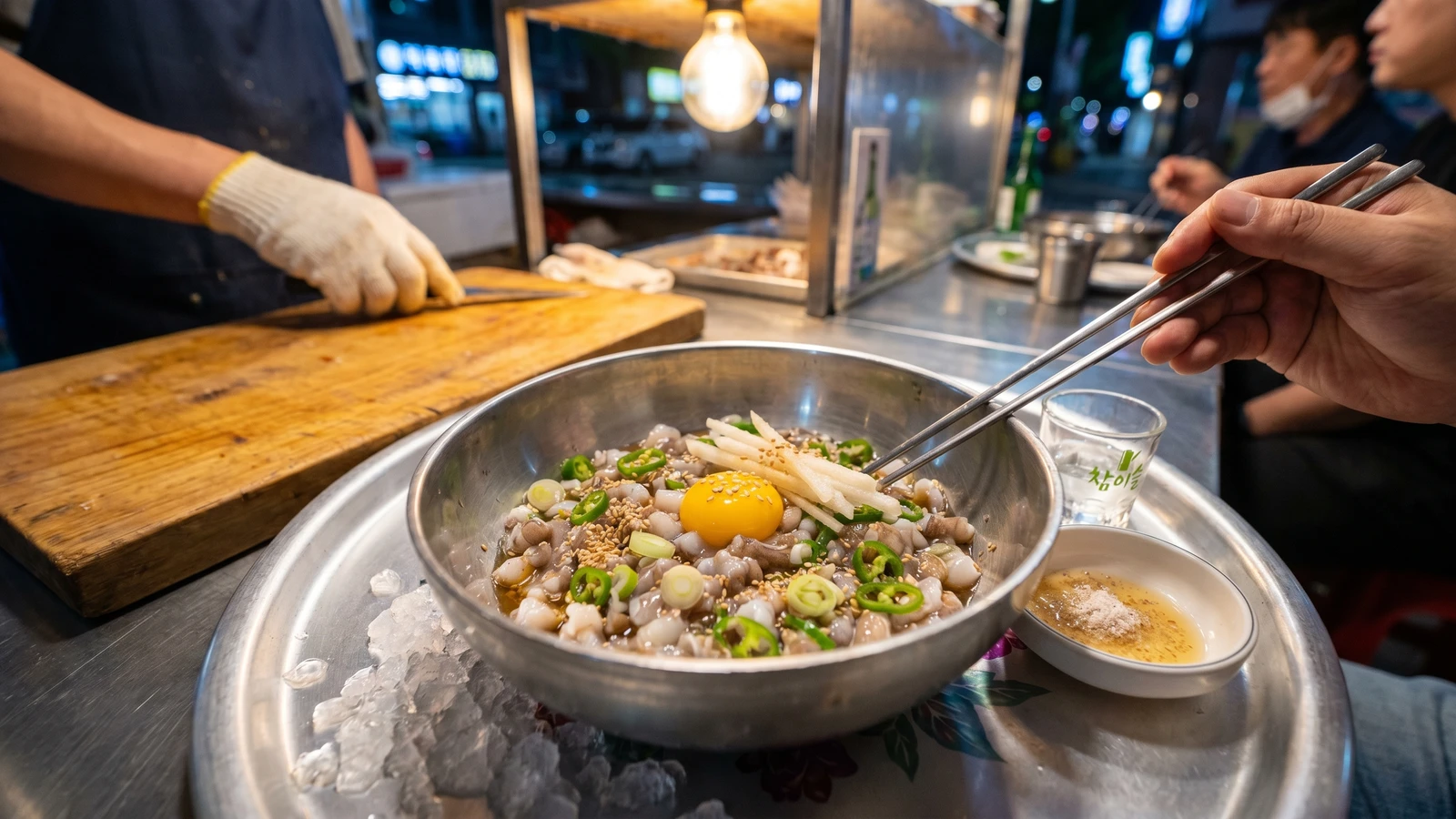
Jeonnam's lively raw octopus dish, chopped to the rhythm of the knife, seasoned with sesame oil and salt, and served at once while the sea still reads clearly.
Nakji-tangtangi lives or dies by the knife. People talk about the movement on the plate, the way the pieces still curl, but that is not the lesson. The lesson is size. Cut the tentacles small enough to chew safely, season them lightly enough to taste the octopus, and serve them cold before the table starts waiting on you.
Nakji-tangtangi is strongly associated with Jeolla, especially Jeonnam and Gwangju, where small octopus from the tidal flats has long been valued as an invigorating food. Its name comes from the tang-tang sound of the knife chopping raw octopus on the board, and in Gwangju the dish is often joined with yukhoe, raw seasoned beef, as yukhoe-tangtangi. This is not palace food dressed in silk; it belongs to market tables, seafood restaurants, and drinking tables where freshness and knife work are judged immediately.
Quantity
2 small, about 600g total before cleaning
Quantity
2 tablespoons
for scrubbing
Quantity
1 tablespoon
for scrubbing
Quantity
1 1/2 tablespoons
Quantity
1/2 teaspoon, plus more to taste
Quantity
1 tablespoon
Quantity
1 small clove
very finely minced
Quantity
1
white and pale green parts only, finely sliced
Quantity
1
thinly sliced
Quantity
1 small wedge
cut into matchsticks
Quantity
1
very fresh
Quantity
80g
very fresh, trimmed, optional for Gwangju-style yukhoe topping
Quantity
1 teaspoon
Quantity
1/2 teaspoon
Quantity
1/4 teaspoon
Quantity
1/2 teaspoon
| Ingredient | Quantity |
|---|---|
| live or sashimi-grade nakji (small octopus) | 2 small, about 600g total before cleaning |
| coarse sea saltfor scrubbing | 2 tablespoons |
| all-purpose flourfor scrubbing | 1 tablespoon |
| toasted sesame oil | 1 1/2 tablespoons |
| fine sea salt | 1/2 teaspoon, plus more to taste |
| toasted sesame seeds | 1 tablespoon |
| garlicvery finely minced | 1 small clove |
| scallionwhite and pale green parts only, finely sliced | 1 |
| fresh green chili (optional)thinly sliced | 1 |
| Asian pear (optional)cut into matchsticks | 1 small wedge |
| egg yolk (optional)very fresh | 1 |
| beef eye of round or tenderloin for tartare (optional)very fresh, trimmed, optional for Gwangju-style yukhoe topping | 80g |
| soy sauce (optional) | 1 teaspoon |
| toasted sesame oil for yukhoe (optional) | 1/2 teaspoon |
| sugar (optional) | 1/4 teaspoon |
| toasted sesame seeds for yukhoe (optional) | 1/2 teaspoon |
Buy nakji only from a fishmonger who sells it for raw eating, live if possible, or clearly labeled sashimi-grade. Keep it on ice and make this the same day. Raw seafood does not forgive a long walk home or a warm counter. If anyone at the table is pregnant, immunocompromised, very young, elderly, or has trouble swallowing, serve a blanched octopus dish instead.
Turn the head sac inside out, remove the innards, and cut away the eyes and beak. Rub the octopus with the coarse salt and flour for 2 minutes, working especially around the suckers. This pulls away slime and grit without washing out the clean sea taste. Rinse under cold running water until the surface feels clean, then drain very well.
Pat the octopus dry with paper towels and set it over a bowl of ice, not directly in melting water. Water makes the seasoning slide off. Keep your board and knife cold if your kitchen is warm; ten minutes in the refrigerator is enough. This dish is raw, so cleanliness and temperature are not decoration.
Separate the tentacles, then chop them crosswise into 1/2-inch pieces, striking cleanly with a heavy knife. The name comes from that tang-tang sound on the board. Do not leave long pieces. The suckers can cling in the throat, so the knife work is part of the safety of the dish, not just its texture.
Put the chopped octopus in a chilled bowl. Add 1 1/2 tablespoons sesame oil, 1/2 teaspoon fine sea salt, 1 tablespoon sesame seeds, the garlic, and the scallion. Toss for 20 seconds with chopsticks or a gloved hand. Taste one piece. It should be nutty and clean, with the octopus still tasting like itself. Add salt in pinches only, 1/8 teaspoon at a time.
For the Gwangju-style crown, slice the beef into fine matchsticks and toss it separately with 1 teaspoon soy sauce, 1/2 teaspoon sesame oil, 1/4 teaspoon sugar, and 1/2 teaspoon sesame seeds. Keep it cold and place it on top of the octopus just before serving. Raw beef asks the same discipline as raw seafood: buy properly, trim cleanly, season lightly, and eat at once.
Pile the seasoned octopus on a cold plate or shallow stainless bowl. Add pear matchsticks, green chili, and an egg yolk if using. Bring it to the table immediately with metal chopsticks and rice or soju. Tell people plainly: chew well. Nakji-tangtangi is lively food, but no dish is worth careless swallowing.
1 main serving (about 290g)
Culinary guides, cultural storytelling, and the editorial depth that makes cooking meaningful.
Discover Culinary ExplorerChef Jeong-sun
Firm monkfish buried under crisp soybean sprouts, minari, and a red gochugaru sauce thickened at the end; Masan's market dish asks for heat, timing, and a steady hand.

Chef Jeong-sun
A quick Korean rice bowl built on contrast: warm rice, cold popping flying-fish roe, chopped vegetables, gim, sesame oil, and the crisp rice bottom a hot stone bowl gives you.
Chef Jeong-sun
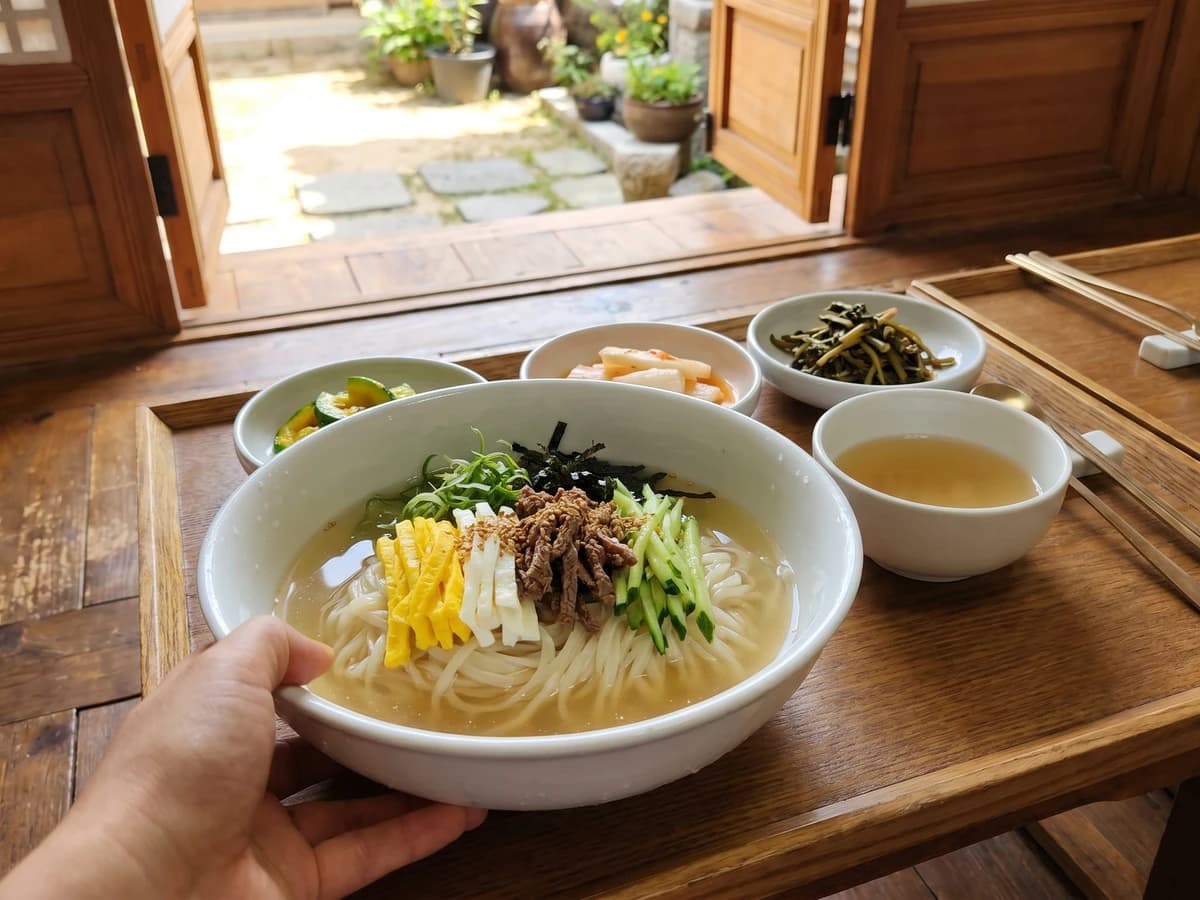
Andong's guest noodles, wheat and roasted soybean flour rolled thin, boiled and rinsed cold, then set in a clear chilled anchovy broth with careful strips of beef, egg, and cucumber.

Chef Jeong-sun
Andong's ritual-table rice served on an ordinary day: separate soy-sesame namul, warm rice, and clear radish soup, mixed without gochujang so every vegetable keeps its own voice.