
Chef Thomas
A Proper Hot Toddy
A winter glass of whisky, honey, and lemon, stirred together in a warm mug and carried up to bed when the cough won't leave and the evening has asked you politely to stop.
A cooking platform built around craft, culture, and the stories behind what we eat.

Created by Chef Thomas
Rough cider warmed slowly with cinnamon, cloves, and orange peel, the drink for bonfire night and cold Saturdays when the apples have all come in and the evenings have shortened without asking.
There's a fortnight in early November when the year tips properly into cold. The apples are all down by then, the bonfires start up in back gardens, and the evenings arrive before tea. This is the drink for that fortnight.
Mulled wine gets all the attention, but mulled cider is the better thing. Stronger, rounder, more honest. It tastes of the orchard rather than the vineyard, which is to say it tastes of here. Use a rough dry cider, the farmhouse sort if you can find it, the kind that comes in a plastic flagon and smells faintly of the barn it came from. Sweet supermarket cider will give you a sweet supermarket drink, and there's no rescuing it afterwards.
The spices are a conversation, not a contract. Cinnamon and cloves are the non-negotiables. After that, whatever is in the cupboard: a bay leaf, a few allspice berries, a thumb of ginger sliced without ceremony. Orange peel does more work than you'd think. The sugar is there to round off the edges, not to sweeten.
I make a panful every bonfire night and carry the mugs out into the garden where someone is always standing too close to the fire. I wrote it down in the notebook years ago: cider, spice, cold air, November. That was enough of a recipe then and it still is now.
Quantity
1.5 litres
Quantity
1
peel in strips, juice squeezed
Quantity
2
Quantity
6
Quantity
4
Quantity
1 thumb
sliced, skin on
Quantity
2
Quantity
3 tablespoons
Quantity
small splash
| Ingredient | Quantity |
|---|---|
| rough dry cider | 1.5 litres |
| unwaxed orangepeel in strips, juice squeezed | 1 |
| cinnamon sticks | 2 |
| whole cloves | 6 |
| allspice berries | 4 |
| fresh gingersliced, skin on | 1 thumb |
| bay leaves | 2 |
| soft light brown sugar | 3 tablespoons |
| calvados or dark rum (optional) | small splash |
Use a peeler to take long strips of zest off the orange, trying to avoid the bitter white pith underneath. Squeeze the juice into a jug and keep it to one side. The peel does most of the perfuming here. The juice just rounds it out.
Pour the cider into a wide, heavy pan. Add the orange peel, cinnamon sticks, cloves, allspice, sliced ginger, bay leaves, and sugar. Set it over a low heat. You are not trying to cook this. You are trying to coax it. A lazy, gentle warmth, nothing more.
Keep the heat low for fifteen to twenty minutes. You're looking for the faintest tremble on the surface, not a simmer. If you see bubbles breaking, you've gone too hot: pull the pan half off the ring. The cider should go from sharp and apple-clean to something rounder, spicier, darker around the edges. Trust your nose. When the kitchen smells of orange peel and cinnamon and warm apple, it's ready.
Stir in the orange juice. Taste it. If it feels thin or too sharp, add another spoon of sugar and let it dissolve. If you're using calvados or rum, add it off the heat at the very end, a small splash per person's worth, no more. You want it to lift the cider, not take it over.
Ladle into mugs or heatproof glasses, catching the spices in the ladle and leaving them in the pan. A strip of fresh orange peel draped over the rim if you're feeling ceremonial. Carry the mugs outside if there's a fire going, or keep them in both hands at the kitchen table. Either works.
1 serving (about 260g)
Culinary guides, cultural storytelling, and the editorial depth that makes cooking meaningful.
Discover Culinary ExplorerChef Thomas
A winter glass of whisky, honey, and lemon, stirred together in a warm mug and carried up to bed when the cough won't leave and the evening has asked you politely to stop.

Chef Thomas
Hot spiced ale with roasted apples bobbing on the surface, honeyed and fragrant with cinnamon and orange peel, the oldest winter drink in the British kitchen and still the best.

Chef Thomas
A deep, inky cordial made from a glut of August blackcurrants, bottled for the months when summer feels like something you dreamed, and poured over ice when you need proof it happened.
Chef Thomas
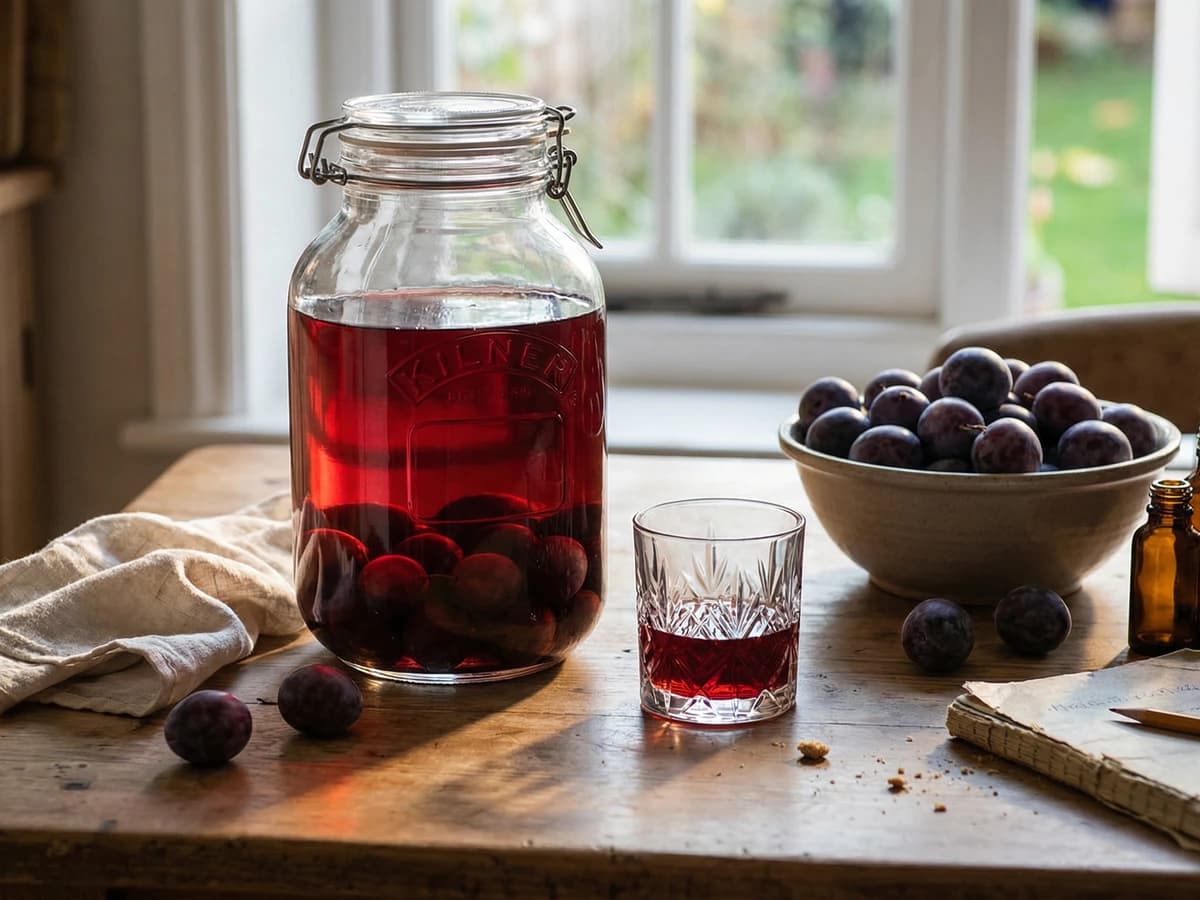
A slow autumn ritual that turns a glut of sharp purple plums into a bottle of ruby warmth, ready to pour on dark December evenings when the kitchen smells of woodsmoke and the year is winding down.