
Chef Jeong-sun
Aehobak-guk (애호박국, Korean Zucchini Soup)
A clean summer soup of Korean zucchini and salted shrimp, built on quick anchovy-kelp broth and finished before the half-moons lose their shape on a weeknight table.
A cooking platform built around craft, culture, and the stories behind what we eat.

Created by
Trembling acorn jelly in a cold anchovy-kelp broth, sharpened with kimchi brine and vinegar, then finished with cucumber, toasted gim, and sesame for a summer bowl that eats like soup and snack together.
Muk-naengguk belongs to the hot months, when the market sells blocks of dotori-muk (acorn jelly) that tremble if the vendor taps the tray. Buy one that was made that morning if you can. Old muk goes stiff at the corners and loses the clean, nutty taste that makes this simple bowl worth eating.
The mistake is cutting the jelly too thin. Thin strips look tidy for one minute, then break apart and cloud the broth. Slice the muk thick enough to lift with a spoon, about 1/2 inch, and keep the broth cold enough that the jelly stays firm. This dish lives or dies by restraint: a clean anchovy-kelp broth, a measured spoon of soy sauce, a little vinegar, enough kimchi brine to wake it up, not enough to turn the bowl into kimchi soup.
My teacher served this on afternoons when no one wanted rice but everyone still needed feeding. She would say, with that face of hers, that a cold dish has no fire to hide behind. She was right. Chill the broth hard, taste it sharper than seems polite, and assemble only when the table is ready. 손맛 is real; I measure it anyway, so the next bowl does not depend on your mood.
Dotori-muk (acorn jelly) comes from Korea's long habit of using mountain foods carefully: acorns were gathered, leached to remove tannic bitterness, dried, and ground into starch that could be cooked into a set jelly. In lean years it was survival food, but it also became ordinary home and tavern food, especially in mountain regions where oak trees were plentiful. Muk served in cold broth is closely related to muk-sabal and summer naengguk bowls, practical dishes shaped by leftovers, kimchi brine, and a need for something cold, cheap, and filling.
Quantity
1 block (about 500g)
cut into 1/2-inch-thick batons
Quantity
5 cups
Quantity
1 piece, about 4 inches square
Quantity
10
heads and guts removed
Quantity
1/2 cup
thinly sliced
Quantity
1/4 cup
strained
Quantity
1/2
julienned
Quantity
2
thinly sliced
Quantity
2 tablespoons
Quantity
2 tablespoons
Quantity
1 teaspoon
Quantity
1/2 teaspoon, plus more only if needed
Quantity
1 teaspoon
Quantity
1 tablespoon
Quantity
2 sheets
crumbled
Quantity
1 cup
| Ingredient | Quantity |
|---|---|
| dotori-muk (acorn jelly)cut into 1/2-inch-thick batons | 1 block (about 500g) |
| water | 5 cups |
| dried kelp (dasima) | 1 piece, about 4 inches square |
| large dried anchovies (myeolchi)heads and guts removed | 10 |
| well-fermented napa cabbage kimchithinly sliced | 1/2 cup |
| kimchi brinestrained | 1/4 cup |
| English cucumberjulienned | 1/2 |
| scallionsthinly sliced | 2 |
| soy sauce | 2 tablespoons |
| rice vinegar | 2 tablespoons |
| sugar | 1 teaspoon |
| fine sea salt | 1/2 teaspoon, plus more only if needed |
| toasted sesame oil | 1 teaspoon |
| toasted sesame seeds | 1 tablespoon |
| roasted gim (dried seaweed)crumbled | 2 sheets |
| ice cubes (optional) | 1 cup |
Put the water, kelp, and prepared anchovies in a small pot over medium heat. When the water reaches a gentle simmer, lift out the kelp right away, because kelp left too long turns the broth slick and bitter. Simmer the anchovies 10 minutes more, then strain. You should have about 4 cups of clean broth.
Stir the soy sauce, rice vinegar, sugar, salt, and strained kimchi brine into the warm broth until dissolved. Taste it now. It should be a little sharper and saltier than you want in the bowl, because cold dulls seasoning and the muk will soften the flavor. Chill at least 2 hours, or 45 minutes in the freezer if you use a wide metal bowl and stir once.
Rinse the dotori-muk briefly under cold water and pat it dry. Cut it into batons about 1/2 inch thick and 2 inches long. This size matters: thinner pieces break, thicker slabs taste heavy. The jelly should tremble but hold its edges.
Put the sliced kimchi in a small bowl with the sesame oil and half the sesame seeds. Toss it by hand or with chopsticks. Seasoning the kimchi separately keeps the broth clean and lets the kimchi taste like itself, not like everything else in the bowl.
Divide the muk among four chilled bowls. Place the seasoned kimchi over one side and the cucumber over the other, then scatter the scallions. Do not stir yet. A cold soup should arrive at the table looking cared for, even when it cost very little.
Pour 1 cup of the cold broth into each bowl, adding a few ice cubes if the room is hot. Finish with crumbled gim and the remaining sesame seeds. Serve at once, before the gim softens and before the muk loses its clean chill.
1 serving (about 550g)
Culinary guides, cultural storytelling, and the editorial depth that makes cooking meaningful.
Discover Culinary ExplorerChef Jeong-sun
A clean summer soup of Korean zucchini and salted shrimp, built on quick anchovy-kelp broth and finished before the half-moons lose their shape on a weeknight table.
Chef Jeong-sun
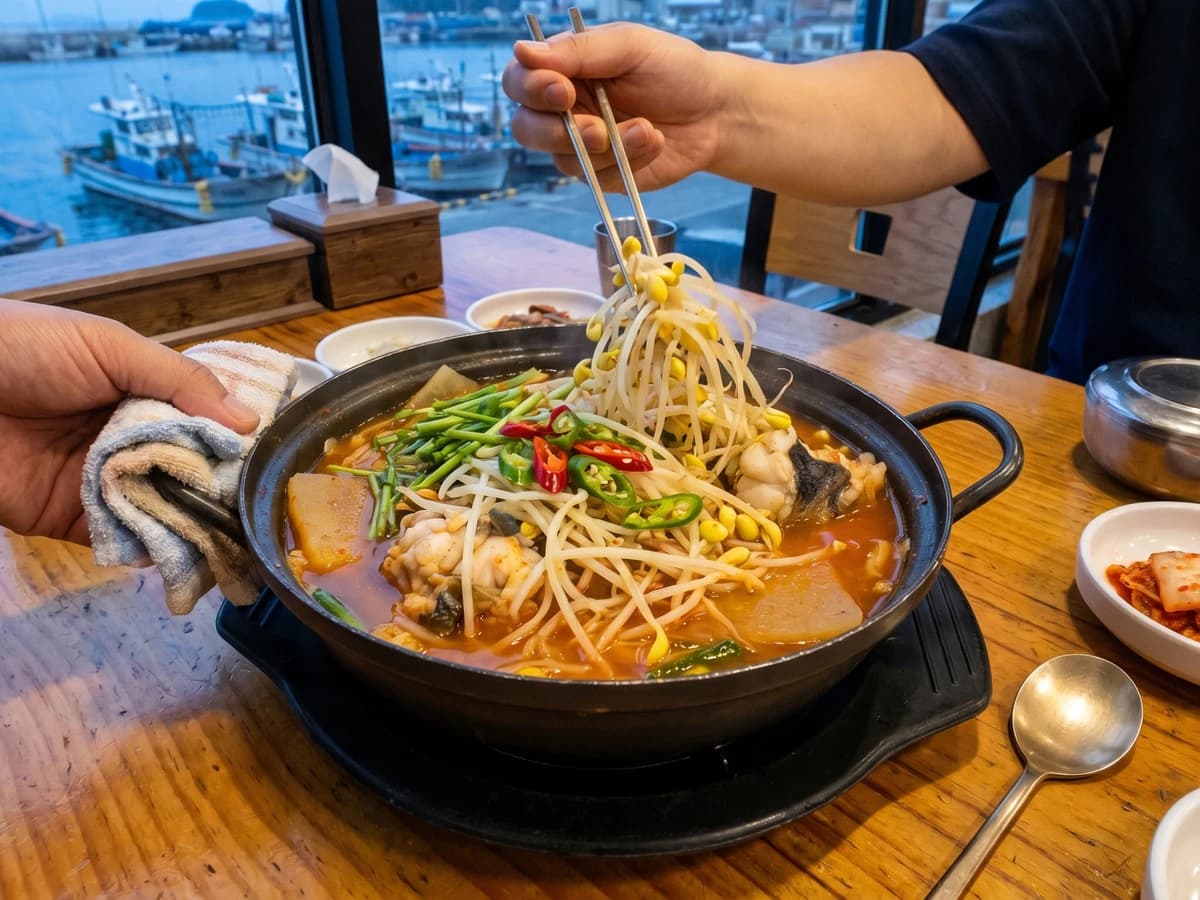
A Masan coast monkfish stew with firm white meat, gelatin at the bones, soybean sprouts for crunch, and a red broth seasoned to carry the fish, not bury it.

Chef Jeong-sun
A weeknight fish roe stew with radish and crown daisy in a clean spicy broth, where the whole success depends on adding the roe late enough that it sets tender, not chalky.

Chef Jeong-sun
Late-summer mallow leaves rubbed with salt until the bitter green water runs off, then simmered in a clean doenjang broth with dried shrimp, the quiet soup a Korean weeknight deserves.