
Chef Isabel
Androlla Gallega con Cachelos y Grelos
Androlla is Galician winter food from the eastern mountains: smoked pork rib and skin, cured with pimentón, boiled slowly until tender, then served with cachelos and greens.
A cooking platform built around craft, culture, and the stories behind what we eat.
Created by
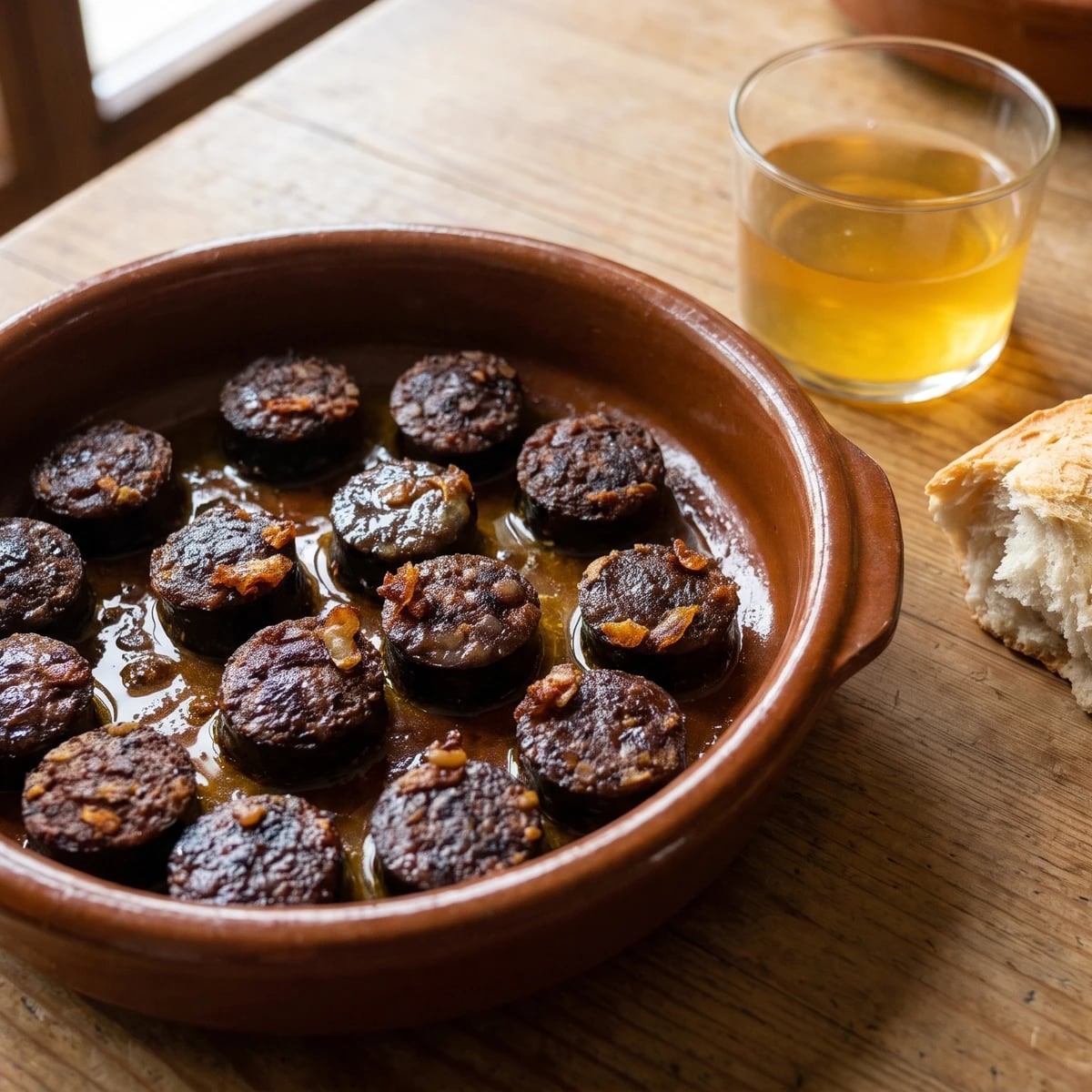
Morcilla Asturiana is Asturias in a sausage: blood, onion, pimentón, and smoke, fried gently so the casing holds and the soft filling stays rich.
Morcilla Asturiana belongs to Asturias, and Asturias makes its blood sausage with onion, pimentón, and smoke, not rice. That matters. Rice morcilla from Burgos is a fine thing, but it is not this. This one is softer, darker, smoky from the curing house, and built to season fabada as much as to be eaten on its own.
When I serve it as a ración, I cook it gently first and let the casing do its work. Too much heat and the morcilla bursts, spilling its soft onion filling into the pan before it has had time to warm through. Low heat first, then a brief stronger fry for colour. That is the method that decides it.
If you are far from Asturias, buy the closest Spanish smoked onion morcilla you can find. If all you have is unsmoked blood sausage, add a small pinch of pimentón de la Vera to the oil and accept the difference: you will get warmth and smoke in the pan, but not the deep curing-house flavour in the sausage itself. No hace falta haber pisado España. You do need the right sausage, a steady hand with the heat, and bread for the oil. Siempre sale, si lo sigues.
Morcilla Asturiana comes from the Asturian matanza, the household pig slaughter that turned every part of the animal into food for the year. Its onion-rich filling and smoked cure made it useful in the damp north, where sausages had to keep and where slow bean dishes needed a deep, smoky backbone. In fabada it is part of the compango with chorizo and cured pork, but fried alone it becomes a simple Asturian ración, rich enough to need only bread and cider beside it.
Quantity
2 links, about 250g total
Quantity
1 tablespoon
Quantity
60ml
Quantity
1 small pinch
only if the morcilla is not well smoked
Quantity
to serve
| Ingredient | Quantity |
|---|---|
| morcilla asturiana | 2 links, about 250g total |
| olive oil | 1 tablespoon |
| Asturian cider or water | 60ml |
| pimentón de la Vera (optional)only if the morcilla is not well smoked | 1 small pinch |
| crusty bread | to serve |
Put the olive oil in a heavy frying pan over low heat. Lay in the whole morcillas and add the cider or water. Keep the heat gentle; the liquid warms the sausage through before the casing has to face direct frying heat.
Cover the pan and cook for 6 to 7 minutes, turning the morcillas once with tongs. Do not prick them. The casing is holding a soft onion and blood filling, and if you pierce it, you have told it to leak.
Uncover the pan and let the liquid cook away. Raise the heat to medium and fry the morcillas for 2 to 3 minutes, turning carefully, until the casing is glossy, dark, and lightly crisp in places. If your sausage is weakly smoked, stir the pinch of pimentón into the oil at the edge of the pan for the last 20 seconds, never longer, or it turns bitter.
Move the morcillas to a board and let them rest for 2 minutes. Slice into thick coins with a sharp knife, about 2cm each, and spoon a little of the dark oil from the pan over them. Serve at once with bread. Pésalo, no lo adivines, matters when you make sausage; here, what matters is patience with the pan.
1 serving (about 95g)
Culinary guides, cultural storytelling, and the editorial depth that makes cooking meaningful.
Discover Culinary Explorer
Chef Isabel
Androlla is Galician winter food from the eastern mountains: smoked pork rib and skin, cured with pimentón, boiled slowly until tender, then served with cachelos and greens.

Chef Isabel
Botifarra amb mongetes is Catalan: fresh pork sausage cooked through, white beans turned in its fat until glossy, and allioli beside it. Simple food, if the sausage is right.

Chef Isabel
Botillo del Bierzo is Berciano winter food: smoked, pimentón-cured pork cooked whole and slow, then served hot with cabbage and potatoes to catch every drop.

Chef Isabel
Cecina de León is cured smoked beef from León, sliced thin enough to bend, rested until its fat softens, and finished with a thread of good olive oil.