
Chef Juliana
Açaí com Camarão do Pará
You think açaí belongs with banana and granola because that's the version that traveled. In Pará, thick unsweetened açaí sits beside shrimp, rice, and farinha. Anota aí: same fruit, different meal.
A cooking platform built around craft, culture, and the stories behind what we eat.
Created by
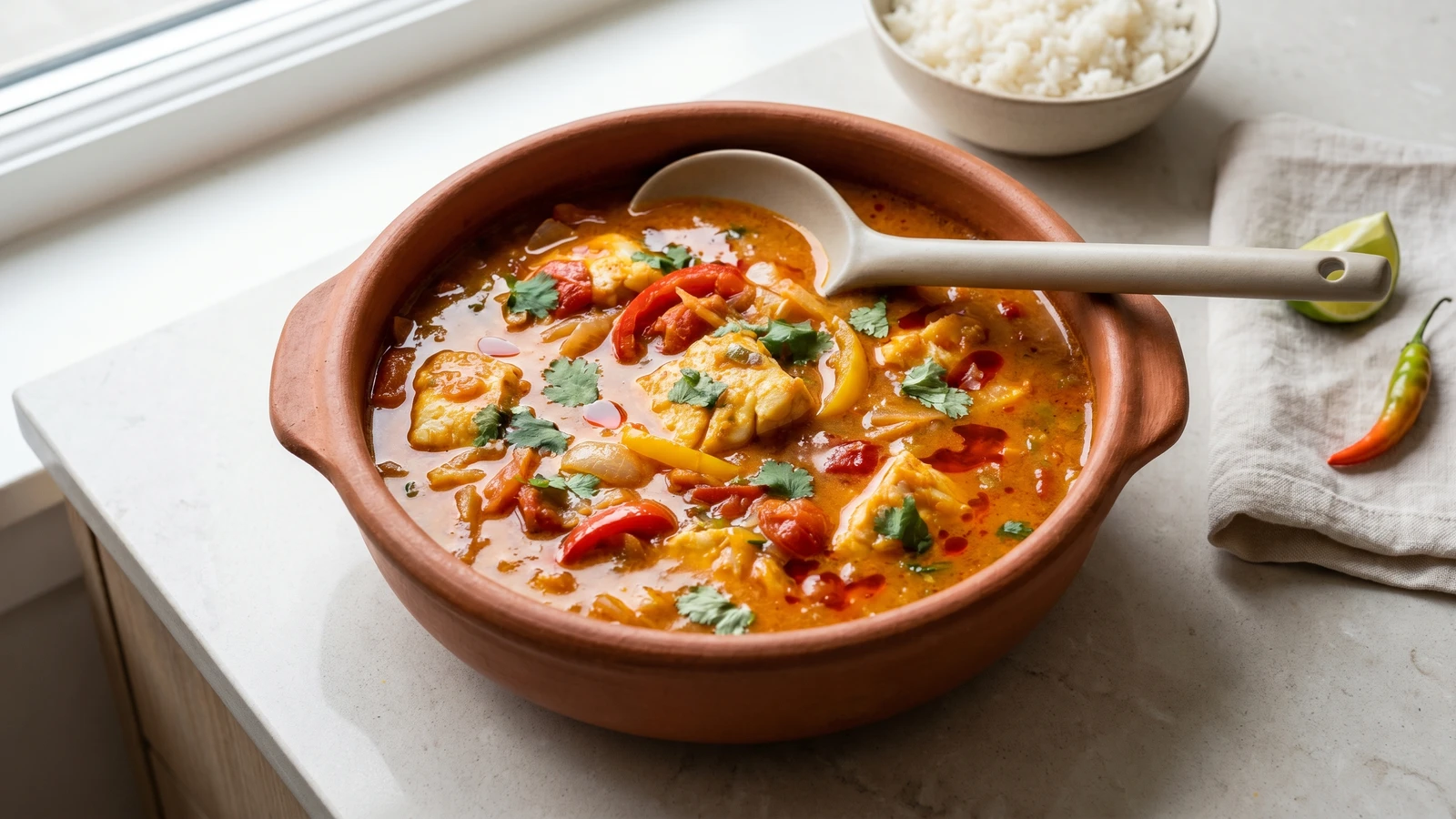
You don't need a Salvador kitchen to make this. You need real dendê, full-fat coconut milk, a heavy pot, and the discipline to let the fish cook gently.
You hear "moqueca baiana" and some quiet voice says, isso não é pra mim. Too much history, too much dendê, too much somebody else's kitchen. I know that voice. It loves to make dinner sound impossible. Anota aí: cooking isn't a gift, it's something you learn, and this one is more about arranging the pot well than showing off.
This is comida de verdade with a little ceremony, but still the same logic that keeps a Brazilian table standing: rice, beans, fish, something green. A pê-efe can be plain or it can arrive orange with dendê and smelling like coentro. The structure doesn't disappear. It gets dressed for a better day.
The method is simple, and the ingredients are not negotiable where they matter. Real azeite de dendê gives the dish its color, perfume, and backbone. Refined deodorized palm oil is not dendê. Annatto in sunflower oil is not dendê. Full-fat coconut milk carries the sauce; the thin version dilutes it and leaves you wondering why the pot tastes tired.
I don't claim the Bahian terreiro or the baianas de acarajé. They carry these foods. What I can do is teach you a home version with respect for the lineage and steps that behave. Layer the onions, tomatoes, and pimentão under the fish, simmer gently, and don't stir like you're angry at it. By the end, you'll have peixe tender enough to flake with a spoon and a sauce worth pouring over arroz soltinho.
Moqueca baiana belongs to the Afro-Bahian coastal kitchen, where dendê, coconut milk, pimentão, tomato, onion, and coentro shape fish into a pot served with rice, pirão, or farofa. It is separate from moqueca capixaba from Espírito Santo, which uses neither dendê nor coconut milk and has its own clay-pot tradition. In Bahia, dendê also marks the broader Yoruba-Jeje food grammar behind dishes such as vatapá, caruru, xinxim, and efó, carried historically by Black women cooks, terreiros, and the baianas who made the street and home kitchens inseparable.
Quantity
700g
cut into large pieces, such as snapper, grouper, or cod
Quantity
1 teaspoon
divided
Quantity
2 tablespoons
Quantity
3 cloves
minced
Quantity
3 tablespoons
2 tablespoons for the pot, 1 tablespoon to finish
Quantity
1 tablespoon
Quantity
1 large
thinly sliced
Quantity
1
thinly sliced
Quantity
1
thinly sliced
Quantity
3 medium
sliced
Quantity
1 small
minced, or 1 teaspoon malagueta sauce
Quantity
1/2 cup
chopped, divided
Quantity
1 cup
Quantity
1/2 cup
Quantity
2 tablespoons
rinsed and finely ground
Quantity
as needed
Quantity
for serving
| Ingredient | Quantity |
|---|---|
| firm white fish filletscut into large pieces, such as snapper, grouper, or cod | 700g |
| fine saltdivided | 1 teaspoon |
| lime juice | 2 tablespoons |
| garlicminced | 3 cloves |
| azeite de dendê2 tablespoons for the pot, 1 tablespoon to finish | 3 tablespoons |
| neutral oil | 1 tablespoon |
| onionthinly sliced | 1 large |
| red bell pepperthinly sliced | 1 |
| yellow bell pepperthinly sliced | 1 |
| ripe tomatoessliced | 3 medium |
| fresh malagueta chile (optional)minced, or 1 teaspoon malagueta sauce | 1 small |
| cilantro stems and leaveschopped, divided | 1/2 cup |
| full-fat coconut milk | 1 cup |
| fish stock or water | 1/2 cup |
| dried shrimp (optional)rinsed and finely ground | 2 tablespoons |
| lime wedges (optional) | as needed |
| cooked white rice | for serving |
Put the fish in a shallow bowl. Add 1/2 teaspoon salt, the lime juice, and the garlic, then turn the pieces gently with your hands. Let them sit for 15 minutes while you slice everything else. The lime wakes up the fish, but don't leave it there for an hour or you'll start curing the flesh and the texture will go chalky before it even reaches the pot.
Warm 2 tablespoons dendê with the neutral oil in a heavy wide pot over medium heat. Add the onion and cook until it murcha, soft and glossy, about 4 minutes. This is not a deep brown refogado. You want sweetness and perfume, not a burnt bottom that will bully the fish.
Spread half the peppers and tomatoes over the onion, then scatter in half the cilantro and the dried shrimp if using. Lay the fish pieces on top in one layer, then cover with the remaining peppers and tomatoes. Layering matters because the vegetables release liquid under and over the fish, protecting it from direct heat so it simmers instead of toughening.
Stir the coconut milk, fish stock or water, the remaining 1/2 teaspoon salt, and the malagueta in a cup, then pour it around the sides of the pot, not straight over the fish like you're washing it. The liquid should come partway up the fish, not drown it. Moqueca is a stew with a sauce, not fish soup.
Bring the pot to a gentle bubble, then lower the heat, cover, and cook for 12 to 15 minutes. Shake the pot once or twice instead of stirring. When the fish flakes with a spoon and the peppers are soft but still bright, it's done. Stirring breaks the fish into shreds, and then nobody knows whether you made moqueca or lost a fight with dinner.
Turn off the heat. Spoon 1 tablespoon dendê over the surface and scatter the remaining cilantro. Let the pot rest, uncovered, for 5 minutes. That last dendê keeps its clean peppery perfume, and the rest lets the sauce settle so it looks glossy instead of split.
Serve with arroz branco soltinho and lime wedges. Spoon plenty of sauce over the rice, because that's half the point. Add feijão and something green if you're building the full pê-efe. Special occasion, yes. Still dinner. A gente can do both.
1 serving (about 500g)
Culinary guides, cultural storytelling, and the editorial depth that makes cooking meaningful.
Discover Culinary ExplorerChef Juliana
You think açaí belongs with banana and granola because that's the version that traveled. In Pará, thick unsweetened açaí sits beside shrimp, rice, and farinha. Anota aí: same fruit, different meal.

Chef Juliana
You think savory açaí is not for you. I understand. Then you taste the cold, dark bowl beside hot fried fish, rice, greens, and farinha, and dinner gets very quiet.

Chef Juliana
You think salted beef and rice sound like trouble. Anota aí: soak the charque, brown it properly, build the refogado, and this one pot resolves dinner.

Chef Juliana
You think a Maranhão green rice belongs to somebody else's clever hands. It doesn't. Wilt the vinagreira, build the refogado, fold it through arroz soltinho, and dinner gets bright, coastal, and yours.