
Chef Juliana
Amalá de Xangô
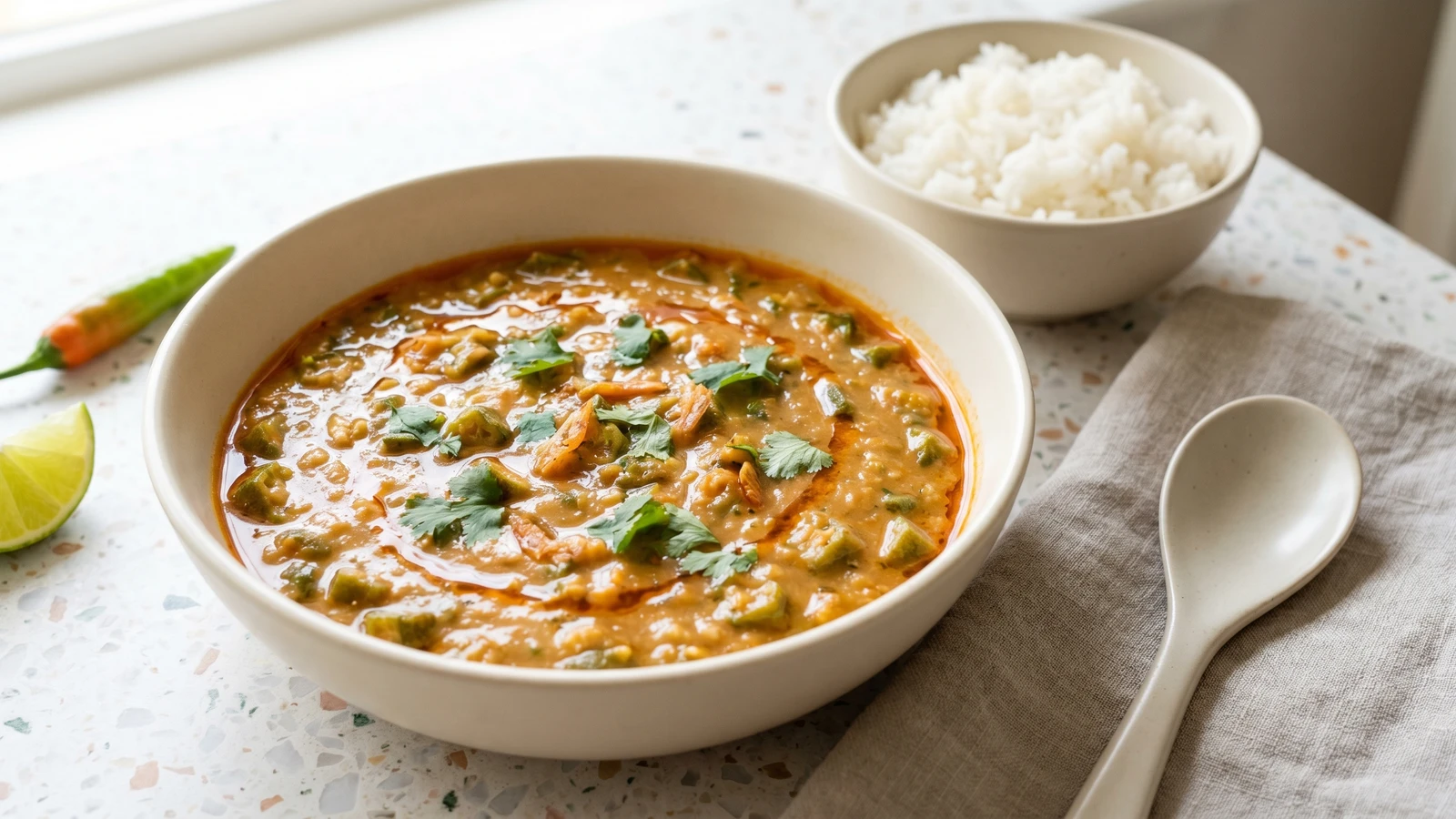
You don't need mystery for this pot. You need okra, dendê, onion, dried shrimp, and the patience to stir until the quiabo gives up its own caldo.
A cooking platform built around craft, culture, and the stories behind what we eat.
Created by
You think this isn't your kitchen because it sounds ritual and old. Anota aí: chop the quiabo fine, build the paste, respect the dendê, and the pot teaches you.
You hear caruru de Cosme e Damião and that little voice starts: isso não é pra mim. Too Bahian, too ritual, too much history for one home stove. I understand the fear. I just don't accept the excuse. Cozinhar não é dom, é um aprendizado, and a gente learns by putting the next true step in front of the last one.
I don't claim the terreiro, the baianas de acarajé, or the families who carry this calendar with their hands. They are the carriers. What I can do is write a home version with respect for the grammar of the dish: quiabo chopped fine, camarão seco, amendoim, castanha-de-caju, coconut milk, and azeite de dendê. Not refined palm oil. Not annatto oil pretending. Dendê is the flavor, color, and memory of this pot, and if you take it out, you made something else.
This is not a quick Tuesday pê-efe, but it still belongs beside the everyday plate because it explains what that plate is protecting: rice, beans, something from the pan, something green, and the habit of cooking real food before a packet sells you the imitation. Serve caruru with arroz branco soltinho and, if you're making the full Bahian table, with the dishes carried by that tradition. At home tonight, rice is enough to catch the sauce.
The method is plain. Cook the okra until it softens and thickens the pot. Grind the shrimp, peanuts, and cashews so they give body instead of floating around like strangers. Add dendê near the end so it stays bright and fragrant. That's it. Not mystique. Method.
Caruru de Cosme e Damião is tied in Bahia to September 27, when families serve caruru in honor of the twin saints and the Ibejis, with the tradition that seven children eat first. In 2024, Bahia recognized the celebration of São Cosme and São Damião as patrimônio imaterial, naming the food calendar as part of the state's living cultural heritage. The dish belongs to the Afro-Baian canon shaped by Yoruba-Jeje foodways, where dendê, dried shrimp, peanuts, cashews, and okra carry a grammar shared with dishes such as vatapá, xinxim, and efó.
Quantity
1 1/2 pounds
trimmed and chopped very fine
Quantity
1 cup
rinsed, peeled if needed, and divided
Quantity
1/2 cup
Quantity
1/2 cup
Quantity
1 large
chopped
Quantity
4 cloves
chopped
Quantity
1 tablespoon
grated
Quantity
1 cup
Quantity
1 cup, plus more as needed
Quantity
1/3 cup
Quantity
2 tablespoons
Quantity
1 to 2
minced, or to taste
Quantity
1/2 cup, plus more for serving
chopped
Quantity
1 tablespoon, plus wedges for serving
Quantity
1 teaspoon, plus more to taste
Quantity
for serving
| Ingredient | Quantity |
|---|---|
| okratrimmed and chopped very fine | 1 1/2 pounds |
| dried shrimprinsed, peeled if needed, and divided | 1 cup |
| roasted unsalted peanuts | 1/2 cup |
| roasted unsalted cashews | 1/2 cup |
| onionchopped | 1 large |
| garlicchopped | 4 cloves |
| fresh gingergrated | 1 tablespoon |
| full-fat coconut milk | 1 cup |
| water | 1 cup, plus more as needed |
| azeite de dendê | 1/3 cup |
| neutral oil | 2 tablespoons |
| fresh malagueta peppersminced, or to taste | 1 to 2 |
| cilantrochopped | 1/2 cup, plus more for serving |
| lime juice | 1 tablespoon, plus wedges for serving |
| salt | 1 teaspoon, plus more to taste |
| cooked white rice | for serving |
Put the dried shrimp in a bowl, cover with cool water, swish well, and drain. Taste one tiny piece. If it is fiercely salty, soak for 10 minutes and drain again. You want shrimp flavor, not a salt attack that bullies the whole pot.
Set aside 1/4 cup of the shrimp to leave whole in the stew. Grind the remaining shrimp with the peanuts and cashews in a food processor or pilão until sandy and fragrant, with no big chunks. This paste is what thickens the caruru and carries the Afro-Baian flavor underneath it. If the nuts stay coarse, the sauce stays rough instead of creamy.
Trim the okra tips and chop the pods very fine, no thicker than small coins, then chop once more through the pile. Keep the pieces small so they soften evenly and release their body into the stew. Big chunks stay separate and slippery, and then you fight the texture instead of using it.
Warm the neutral oil in a heavy 4-liter pot or panela de barro over medium heat. Add the onion and cook, stirring, until soft and see-through, about 5 minutes. Add the garlic, ginger, and malagueta and cook for 1 minute, just until you smell them. Burnt garlic turns bitter and follows you through the whole dish, so stay there with the spoon.
Add the chopped okra and salt to the pot. Cook, stirring often, until the green turns deeper and the okra starts to soften and look glossy, about 8 minutes. This first cooking drives off some raw vegetable taste and wakes up the thickening power of the quiabo before the liquid goes in.
Stir in the shrimp, peanut, and cashew paste until it coats the okra. Add the coconut milk and 1 cup water, scraping the bottom so nothing sticks. The mixture will look thick quickly. Good. The nuts and shrimp are doing their job. Keep the heat at a gentle simmer so the bottom doesn't scorch while the okra finishes cooking.
Cook uncovered for 20 to 25 minutes, stirring every few minutes, until the okra is tender and the stew moves slowly when you drag the spoon through it. If it gets stiff before the okra is tender, add water 2 tablespoons at a time. The ponto is thick and spoonable, not dry paste and not soup.
Stir in the reserved whole shrimp and the azeite de dendê. Simmer for 5 minutes, until the surface turns rust-orange and glossy at the edges. Add dendê near the end because its color and aroma are the point, not a background detail. Refined palm oil is not dendê. Annatto mixed into another oil is not dendê. Anota aí.
Turn off the heat and stir in the cilantro and lime juice. Taste for salt and pepper heat. Serve with arroz branco soltinho, spooning the caruru so the glossy dendê shows at the rim. Let it sit 5 minutes before serving if you can stand it, because the sauce settles and the flavors stop shouting over each other.
1 serving (about 290g)
Culinary guides, cultural storytelling, and the editorial depth that makes cooking meaningful.
Discover Culinary ExplorerChef Juliana
You don't need mystery for this pot. You need okra, dendê, onion, dried shrimp, and the patience to stir until the quiabo gives up its own caldo.

Chef Juliana
You think a Polish hunter's stew is not for your kitchen. Wrong. Brown meat properly, build a real refogado, simmer cabbage low, and tomorrow's lunch is already better.
Chef Juliana
Whole fish in a pot looks like a test. It isn't. Build the refogado, layer the filhote, let tucupi do its work, and the Círio table starts making sense.
Chef Juliana
You don't need river wisdom in your bones to cook tambaqui well. You need real tucupi, a calm simmer, and the sense to let the fish stay whole until it gives.