Chef Zohra
Boushnikha
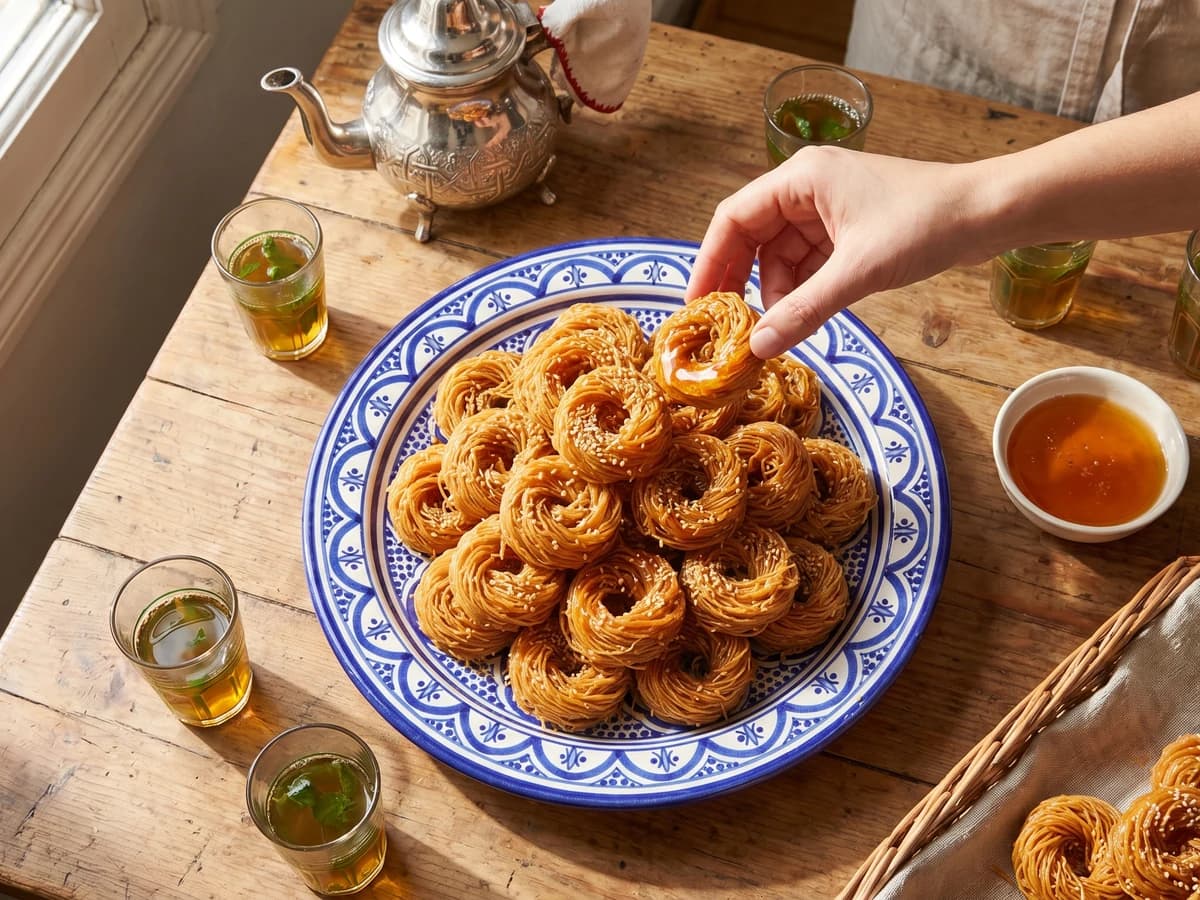
A Ramadan sweet lighter than chebakia: fine milk dough drawn into threads, fried until crisp, then bathed in orange-blossom honey and shared from a generous plate.
A cooking platform built around craft, culture, and the stories behind what we eat.

Created by
Pale, friable Moroccan montécaos, the Andalusi shortbread carried west: oil, flour, sugar, and one cinnamon mark, pulled from the oven before color steals the melt.
The whole cookie depends on stopping in time. Montécaos should leave the oven pale, almost shy, with only the cinnamon mark on top telling you where your hand has been. Let them brown and they lose the thing we came for: that sandy, melting crumble that gives way before your teeth have much work to do.
This is holiday pastry with poor ingredients and proud technique. Flour, oil, sugar, a little salt, no decoration except cinnamon. The dough must feel like damp sand that agrees to hold together when you press it. Too much oil and it spreads. Too much flour and it turns hard. La balance est dans les yeux, the scale is in the eyes, but I give you measures so your first tray has a good chance.
Bake them low, watch the bottoms, not the tops. The bottom should be barely blond, the top still pale. Then leave them alone until they cool, because warm montécaos break if you breathe too strongly near them. Put them on a plate with mint tea and make more than you counted. Une table, c'est une porte qu'on laisse ouverte, a table is a door you leave open.
Montécaos belong to the Andalusi and Sephardic-Moroccan pastry family that moved across the western Mediterranean after the expulsions from Iberia in the late 15th century, especially into cities such as Tetouan, Fez, Rabat-Salé, and Oujda's eastern tables. The name is related to Spanish mantecado, from manteca, though Moroccan Muslim and Jewish households often settled on oil versions that could sit comfortably at more tables. The exact path from Iberian mantecado to North African montécaos is argued in families more than proven in archives, and that uncertainty is part of des cuisines marocaines.
Quantity
500g
plus 1 to 2 tbsp if needed
Quantity
150g
sifted
Quantity
220ml
Quantity
1 tsp
Quantity
1/2 tsp
Quantity
1 tsp vanilla sugar or 1/2 tsp extract
Quantity
2 tsp
for marking the tops
| Ingredient | Quantity |
|---|---|
| plain flourplus 1 to 2 tbsp if needed | 500g |
| icing sugarsifted | 150g |
| neutral oil, such as sunflower or grapeseed | 220ml |
| baking powder | 1 tsp |
| fine sea salt | 1/2 tsp |
| vanilla sugar or vanilla extract (optional) | 1 tsp vanilla sugar or 1/2 tsp extract |
| ground cinnamonfor marking the tops | 2 tsp |
Heat the oven to 160°C. Line two baking sheets with parchment. Montécaos need gentle heat, because the top must stay pale while the cookie sets all the way through.
Sift the flour, icing sugar, baking powder, and salt into a wide bowl. If you're using vanilla sugar, add it now. Stir with your hand so the sugar disappears evenly into the flour.
Pour in most of the oil and rub it through the flour with your fingertips, then add the rest little by little. The dough should look like damp sand and hold together when squeezed in your palm. This is the deciding point: the dough is not kneaded like bread, it is pressed together so the cookie stays friable.
Take walnut-sized pieces, about 28 to 30g each, and press them firmly between your palms before rolling. Shape into small domes with a flat base, not balls, and set them 3cm apart on the trays. A firm press now keeps them from falling apart later.
Pinch a little cinnamon between your fingers and touch the top of each dome, or use the tip of a small spoon to leave one dark circle. Do not bury the cookie under spice. The mark should be a sign, not a blanket.
Bake for 15 to 18 minutes, rotating the tray once if your oven has hot corners. Look at the bottoms, not the tops. They should be barely blond underneath, with pale tops and fine little cracks near the cinnamon.
Leave the cookies on the tray for 15 minutes before moving them. Warm montécaos are fragile, and patience here is not politeness, it is structure. Once cool, lift them gently to a plate and serve with mint tea.
1 serving (about 35g)
Culinary guides, cultural storytelling, and the editorial depth that makes cooking meaningful.
Discover Culinary ExplorerChef Zohra
A Ramadan sweet lighter than chebakia: fine milk dough drawn into threads, fried until crisp, then bathed in orange-blossom honey and shared from a generous plate.

Chef Zohra
Tissue-thin warqa folded into small triangles around orange-blossom almond paste, fried until gold, then dipped warm into honey. This is the sweet Fassi briouat that makes tea feel like a feast.
Chef Zohra
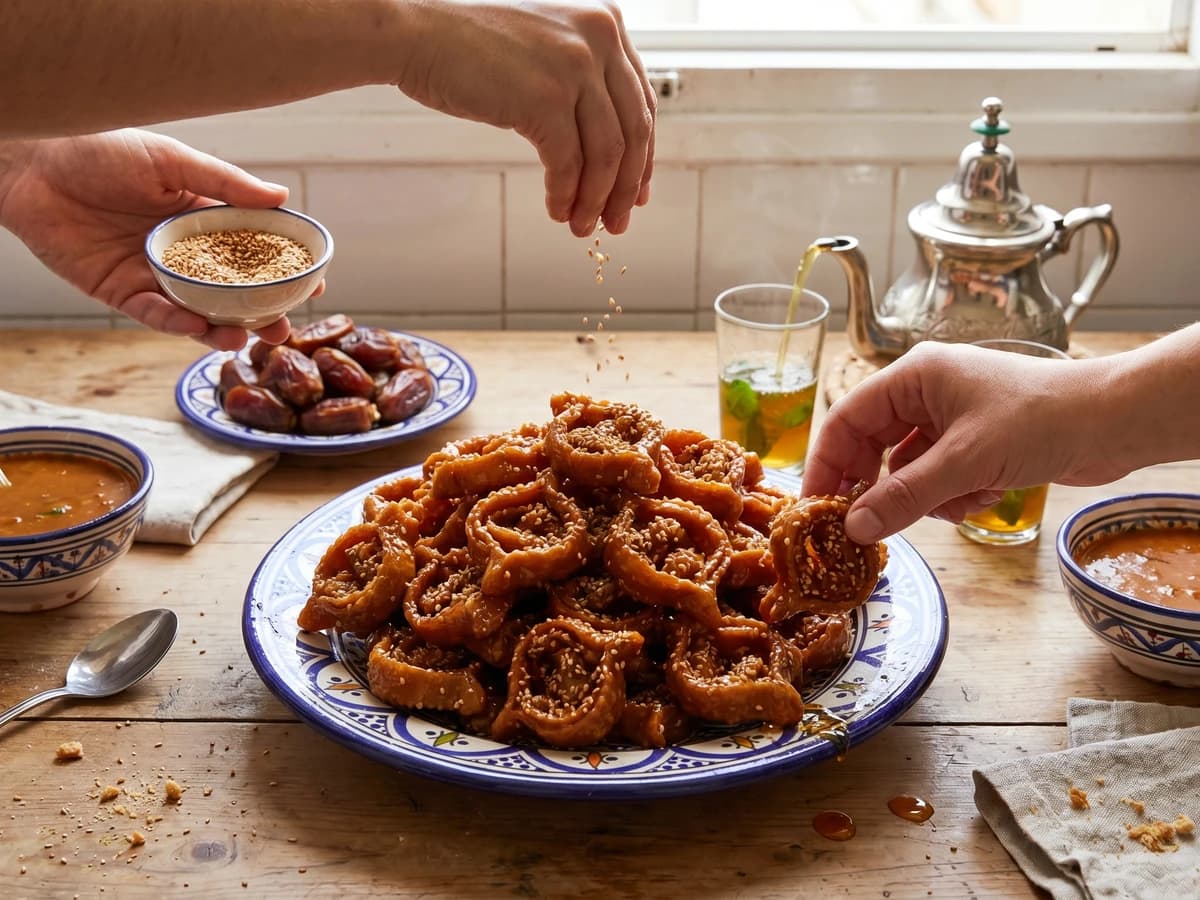
The flower of the Ramadan table: dough scented with toasted sesame, anise, saffron, and orange blossom water, fried crisp, then soaked in warm honey beside harira.

Chef Zohra
Slim warqa cigars filled with orange-blossom almond paste, fried until crisp under the teeth, then soaked in warm honey for the festive table.