Chef Zohra
Boushnikha
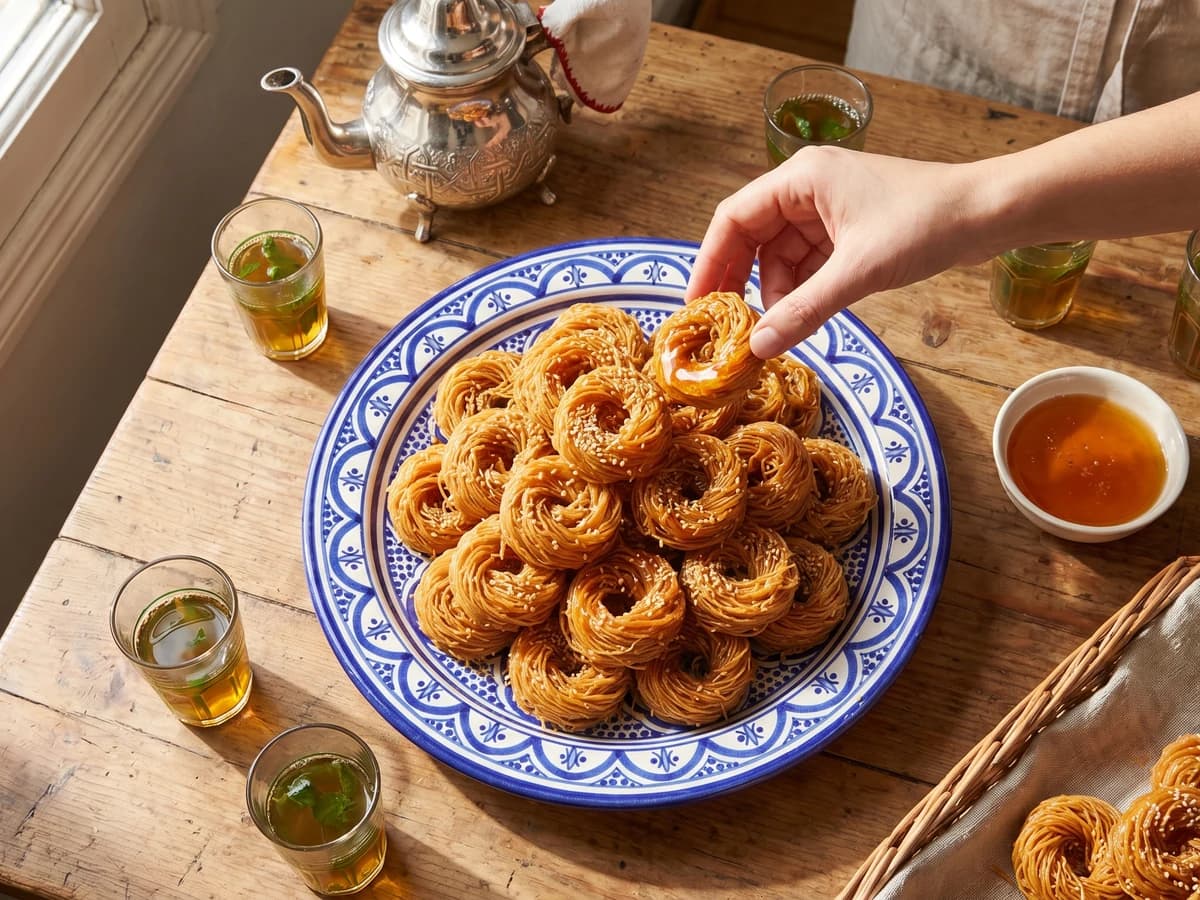
A Ramadan sweet lighter than chebakia: fine milk dough drawn into threads, fried until crisp, then bathed in orange-blossom honey and shared from a generous plate.
A cooking platform built around craft, culture, and the stories behind what we eat.

Created by
The Moroccan biscuit that waits well: anise-scented logs baked once, cooled, sliced thin, then baked again until crisp enough for mint tea and generous enough for guests.
Everything here turns on the second bake. The first bake sets the log so it can be sliced; the second bake dries each piece until it snaps clean under the teeth and keeps for days in a tin. Skip that patience and you don't have fekkas, you have a soft cake pretending.
Fekkas belongs beside tea, to Eid trays, wedding plates, and the afternoon when someone knocks and you want to put something real on the table. The anise comes first in the nose, then toasted sesame, almond, raisin, and a little orange blossom if your house likes it. Cut the slices thin, but not so thin they break in your hand. La balance est dans les yeux, the scale is in the eyes.
Make more than you think. Fekkas is made for keeping, carrying, and offering, one tin on the shelf and one plate already open. Une table, c'est une porte qu'on laisse ouverte, a table is a door you leave open.
Fekkas sits in the Moroccan tea-and-celebration repertoire of the urban north and center, especially Fez, Rabat, Casablanca, and Marrakech, though families across the country claim their own proportions of anise, sesame, almonds, and raisins. Its twice-baked method has cousins around the Mediterranean, but the Moroccan grammar is clear in the anise seed, orange blossom water, sesame, and the way it joins the Eid and wedding cookie tray. A precise century is difficult to prove; the almond, sugar, and spice route points to the long commerce linking Andalusi, Maghrebi, and Saharan kitchens.
Quantity
500g
plus more as needed
Quantity
150g
Quantity
3
Quantity
120ml
Quantity
60ml
Quantity
1 tbsp
lightly crushed
Quantity
2 tbsp
toasted
Quantity
100g
toasted and roughly chopped
Quantity
80g
soaked 10 minutes and drained
Quantity
2 tsp
Quantity
1/2 tsp
Quantity
1
for brushing
Quantity
1 tsp
for brushing
| Ingredient | Quantity |
|---|---|
| all-purpose flourplus more as needed | 500g |
| granulated sugar | 150g |
| large eggs | 3 |
| neutral oil | 120ml |
| orange blossom water | 60ml |
| anise seedslightly crushed | 1 tbsp |
| sesame seedstoasted | 2 tbsp |
| whole almondstoasted and roughly chopped | 100g |
| raisinssoaked 10 minutes and drained | 80g |
| baking powder | 2 tsp |
| fine sea salt | 1/2 tsp |
| egg yolkfor brushing | 1 |
| milk or coffeefor brushing | 1 tsp |
Toast the sesame seeds in a dry pan until they smell nutty and turn lightly gold, then tip them out at once. Crush the anise seeds lightly between your fingers or in a mortar, just enough to open their scent without turning them to dust.
In a wide bowl, whisk the eggs and sugar until the mixture loosens and lightens a little. Whisk in the oil and orange blossom water, then stir in the anise, sesame, almonds, and drained raisins. Add the flour, baking powder, and salt, mixing by hand until you have a soft dough that holds together without sticking heavily to your fingers.
Divide the dough into 3 logs, each about 5cm wide and 2cm high, and set them on a lined baking sheet with space between them. Smooth the tops with oiled hands. Beat the egg yolk with the milk or coffee and brush the logs lightly so they bake with a warm gold skin.
Bake at 180 C for 22 to 28 minutes, until the logs are set, lightly colored, and firm enough to lift without bending. They should not be deeply browned yet. This bake is only to set the structure so the knife can pass through cleanly.
Let the logs cool until fully firm, at least 1 hour. For the cleanest slices, wrap the cooled logs in a clean towel and rest them until no warmth remains. Use a serrated knife and a gentle sawing motion to cut thin diagonal slices, about 7mm thick. Pressing straight down breaks the almonds and tears the biscuit.
Lay the slices flat on baking sheets and bake at 160 C for 18 to 25 minutes, turning once, until both sides are dry, crisp, and lightly golden at the edges. Let them cool completely on the tray; they finish firming as they sit.
Once fully cool, pack the fekkas into an airtight tin. Keep them dry and they'll hold well for 2 weeks, ready for mint tea, coffee, Eid plates, or the guest who arrives after you thought the table was finished.
1 serving (about 22g)
Culinary guides, cultural storytelling, and the editorial depth that makes cooking meaningful.
Discover Culinary ExplorerChef Zohra
A Ramadan sweet lighter than chebakia: fine milk dough drawn into threads, fried until crisp, then bathed in orange-blossom honey and shared from a generous plate.

Chef Zohra
Tissue-thin warqa folded into small triangles around orange-blossom almond paste, fried until gold, then dipped warm into honey. This is the sweet Fassi briouat that makes tea feel like a feast.
Chef Zohra
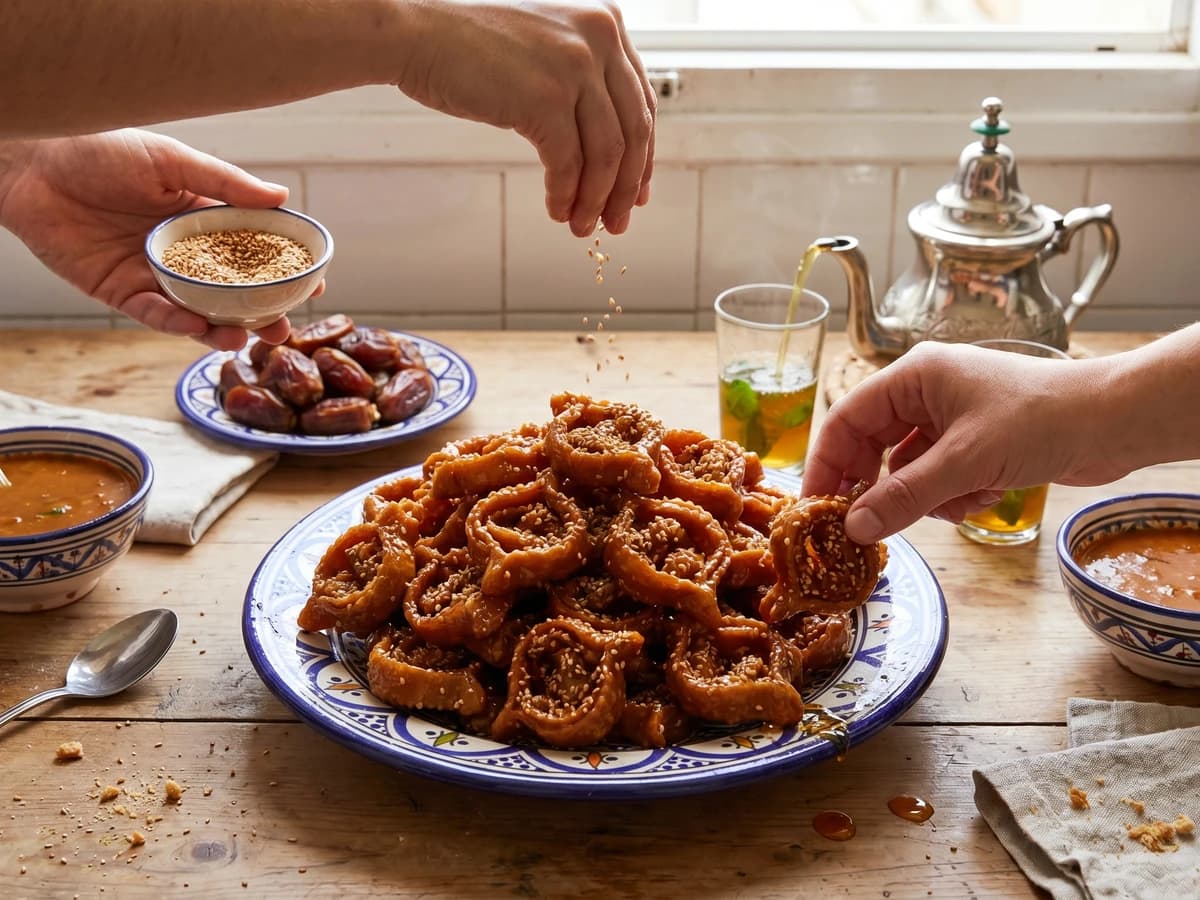
The flower of the Ramadan table: dough scented with toasted sesame, anise, saffron, and orange blossom water, fried crisp, then soaked in warm honey beside harira.

Chef Zohra
Slim warqa cigars filled with orange-blossom almond paste, fried until crisp under the teeth, then soaked in warm honey for the festive table.