Chef Zohra
Boushnikha
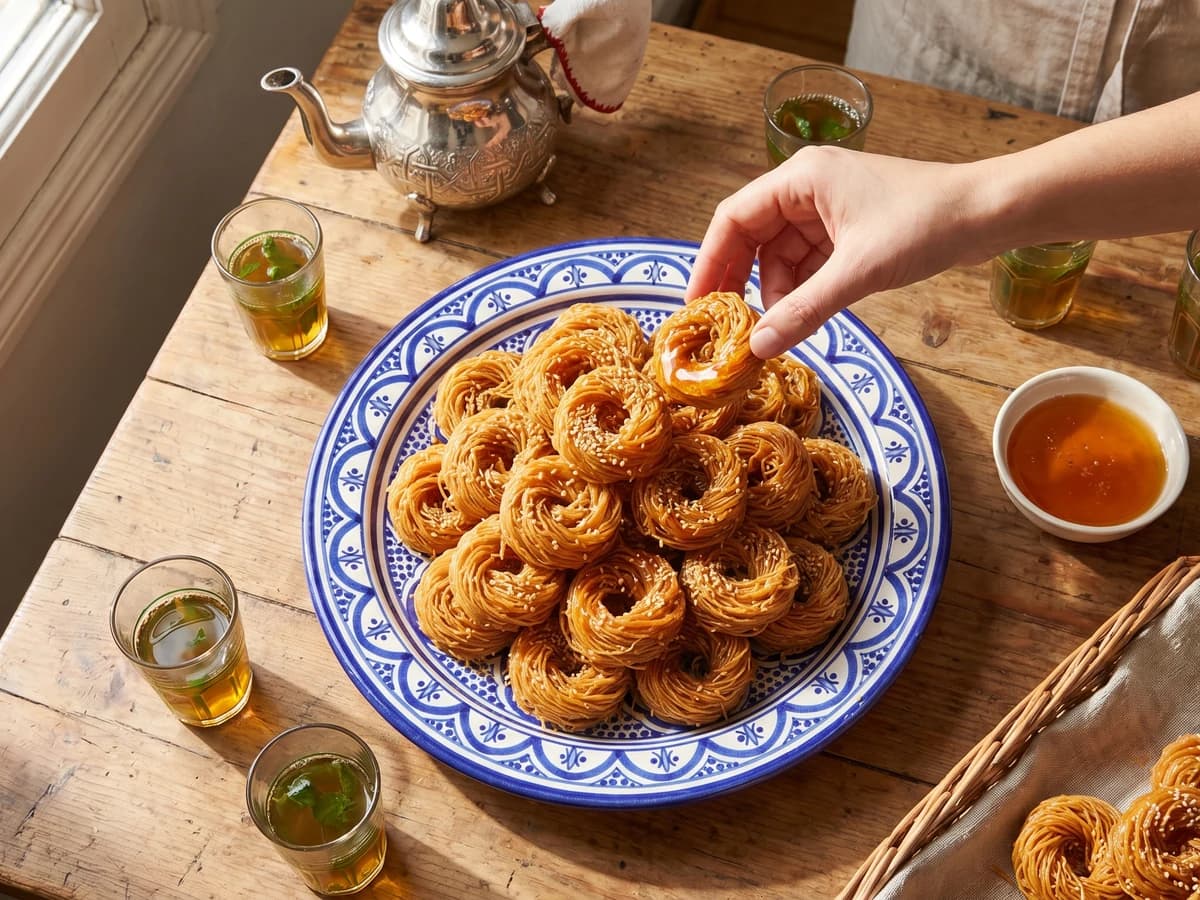
A Ramadan sweet lighter than chebakia: fine milk dough drawn into threads, fried until crisp, then bathed in orange-blossom honey and shared from a generous plate.
A cooking platform built around craft, culture, and the stories behind what we eat.
Created by
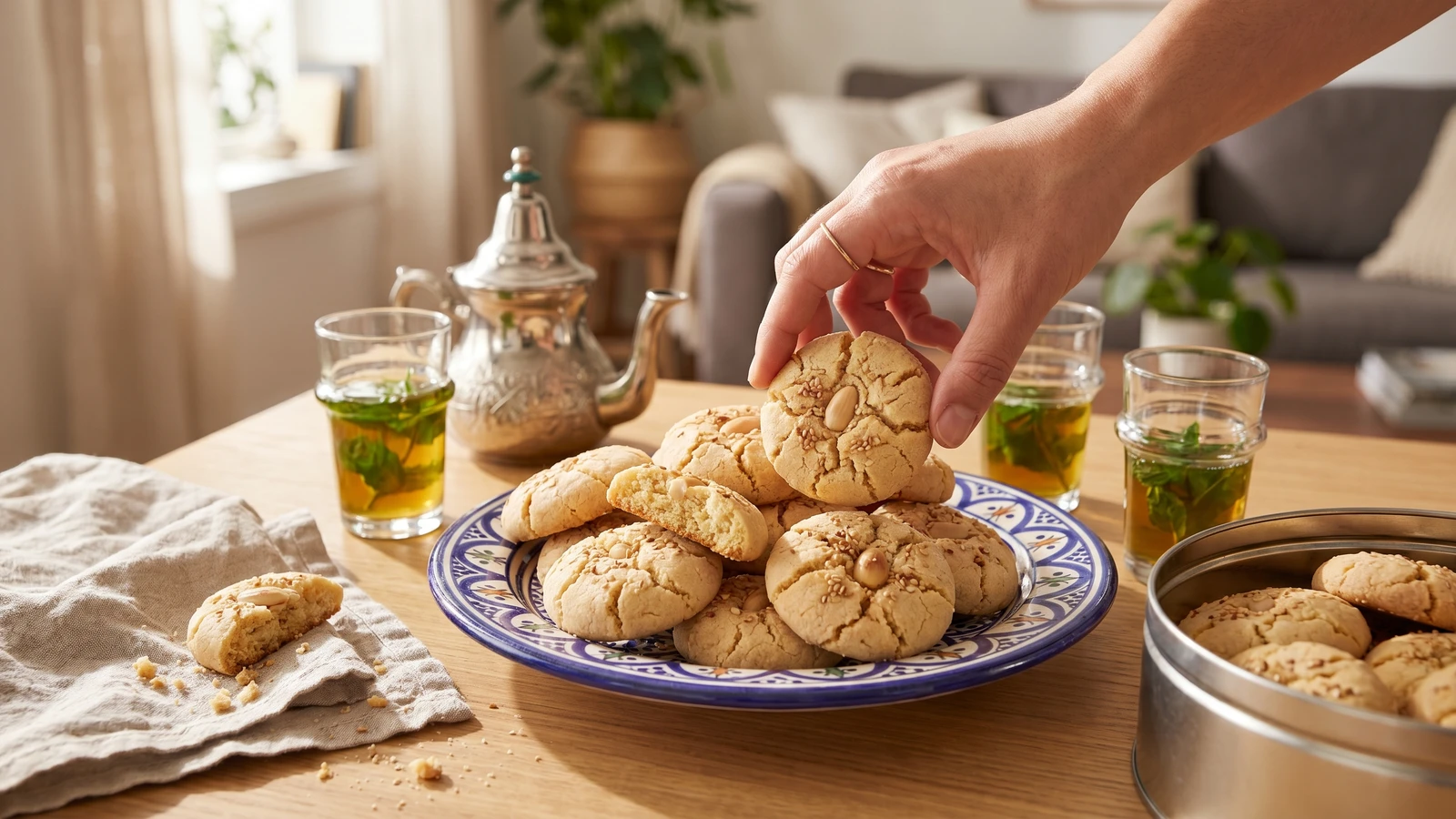
The cracked Fassi cookie that asks for good butter, toasted sesame, and a gentle hand: sandy under the teeth, sweet enough for mint tea, generous enough for every celebration tray.
The crack on top is the whole promise. A ghriba bahla should sit a little proudly on the tray, pale gold at the base, split on top like dry earth opened by heat, then give under your teeth into sand and sesame. Bahla means foolish in darija, not because the cookie is careless, but because it looks as if it has made a happy mistake.
The gesture is small and exact: rub the butter and oil through the flour until the mixture feels like damp sand, then stop working it as soon as it holds together. If you knead it like bread, you wake the flour and lose the crumble. This is one of those pastries where la balance est dans les yeux, the scale is in the eyes; the dough tells you by touch whether it needs a spoon more oil or a breath more flour.
Serve these with mint tea on a celebration tray, for Eid, a birth, or an afternoon when someone knocks and stays. Make more than you think. Cookies that keep this well are made for la cuisine du lien, the cooking of connection, because a table is a door you leave open.
Ghriba belongs to the wider Maghrebi family of crumbly biscuits known from Morocco to Algeria and Tunisia, but ghriba bahla is especially tied to the Fassi tea and celebration tray, where small pastries had to keep well for visitors. Its ingredients carry a Moroccan history: almonds from mountain orchards, sesame from southern routes, and sugar, which became a major Saadian export from the Sous and Chichaoua refineries in the 16th century. The exact date of the cracked bahla form is not fixed in old books; it lived mostly in household practice before it was written down.
Quantity
500g
Quantity
125g
sifted
Quantity
125g
toasted and cooled
Quantity
125g
toasted, cooled, and coarsely ground
Quantity
1 tsp
Quantity
1/2 tsp
Quantity
2 tsp
Quantity
125g
melted and cooled
Quantity
125ml, plus 1 to 2 tbsp if needed
| Ingredient | Quantity |
|---|---|
| all-purpose flour | 500g |
| icing sugarsifted | 125g |
| hulled sesame seedstoasted and cooled | 125g |
| blanched almondstoasted, cooled, and coarsely ground | 125g |
| ground cinnamon | 1 tsp |
| fine sea salt | 1/2 tsp |
| baking powder | 2 tsp |
| unsalted butter, or butter with smenmelted and cooled | 125g |
| neutral oil | 125ml, plus 1 to 2 tbsp if needed |
Toast the sesame seeds in a dry pan over medium heat, stirring often, until they smell nutty and turn one shade darker. Toast the almonds the same way, or in a 160°C oven for 10 to 12 minutes, then cool them completely and grind them coarse. Don't make almond paste; you want little grains that break under the teeth.
In a wide bowl, combine the flour, sifted icing sugar, baking powder, cinnamon, and salt. Add the cooled sesame and ground almonds, then rake everything through your fingers so the nuts and seeds are spread evenly. The mixture should look pale and speckled, with no pockets of sugar hiding at the bottom.
Pour in the melted butter and most of the oil, holding back 2 tablespoons. Rub the mixture between your palms, lifting and dropping it, until every bit of flour looks damp and sandy. Press a handful: it should hold, then crack at the edges. If it falls apart like dry dust, add the held-back oil a teaspoon at a time. Stop as soon as it gathers; kneading wakes the flour and turns the crumble tough.
Cover the bowl and let the dough rest for 45 to 60 minutes at cool room temperature. This pause lets the flour drink the butter and oil, so the cookies shape without needing rough handling. If the kitchen is hot, rest it in the refrigerator, then let it soften just enough to press.
Line two heavy baking sheets with parchment. Pinch off walnut-size pieces, about 28 to 30g each, and press each one firmly into a ball. Set them on the tray with space between them, then flatten only the bottom slightly so they sit steady. Leave the tops a little imperfect. Don't polish away the small cracks; they are already telling you where the cookie wants to open.
Heat the oven to 180°C with one rack in the upper third and one in the middle. Bake one tray on the upper rack for 7 to 9 minutes, until the tops split and the cookies puff slightly. Move the tray to the middle rack and bake 8 to 10 minutes more, until the bottoms are pale gold and the tops still look light. Let them sit on the tray for 10 minutes before lifting; hot ghriba break if you hurry them.
1 serving (about 36g)
Culinary guides, cultural storytelling, and the editorial depth that makes cooking meaningful.
Discover Culinary ExplorerChef Zohra
A Ramadan sweet lighter than chebakia: fine milk dough drawn into threads, fried until crisp, then bathed in orange-blossom honey and shared from a generous plate.

Chef Zohra
Tissue-thin warqa folded into small triangles around orange-blossom almond paste, fried until gold, then dipped warm into honey. This is the sweet Fassi briouat that makes tea feel like a feast.
Chef Zohra
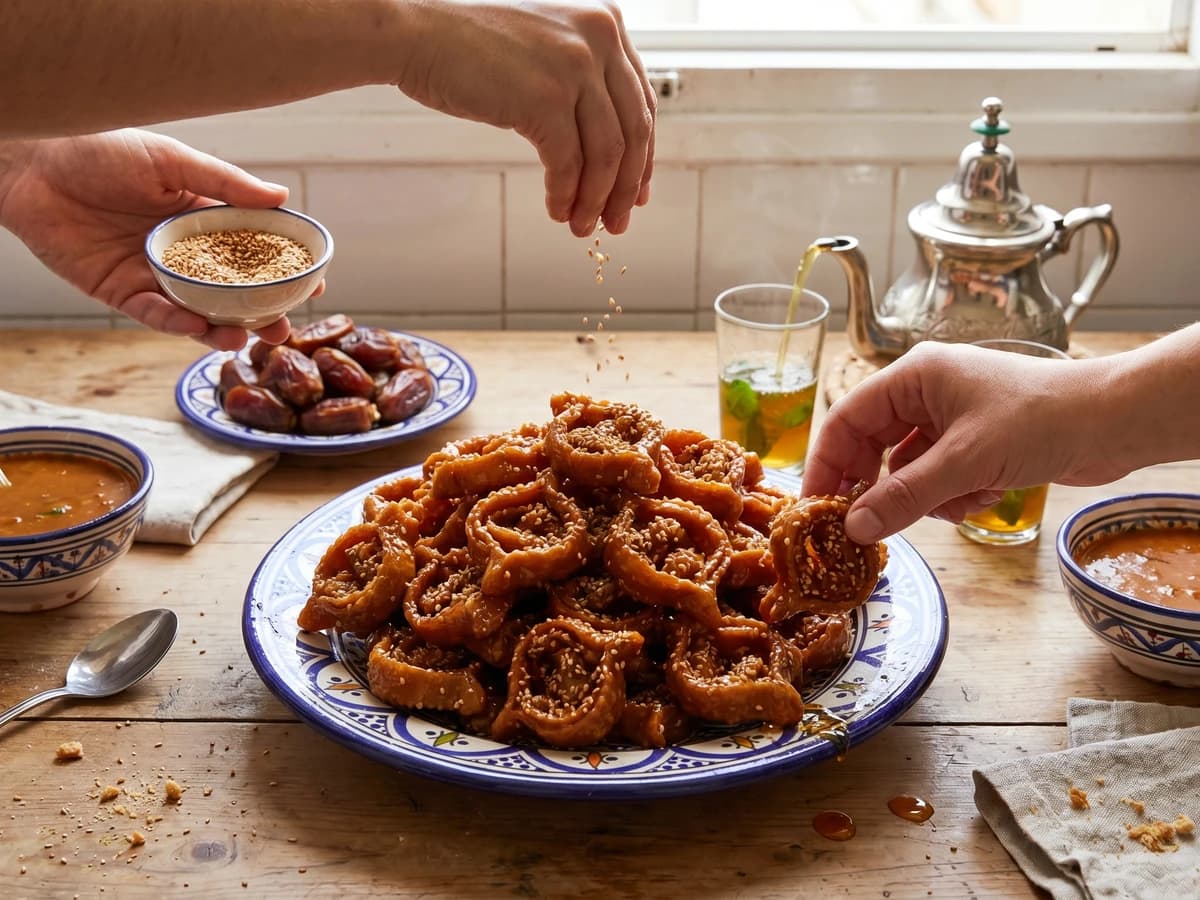
The flower of the Ramadan table: dough scented with toasted sesame, anise, saffron, and orange blossom water, fried crisp, then soaked in warm honey beside harira.

Chef Zohra
Slim warqa cigars filled with orange-blossom almond paste, fried until crisp under the teeth, then soaked in warm honey for the festive table.