Chef Zohra
Boushnikha
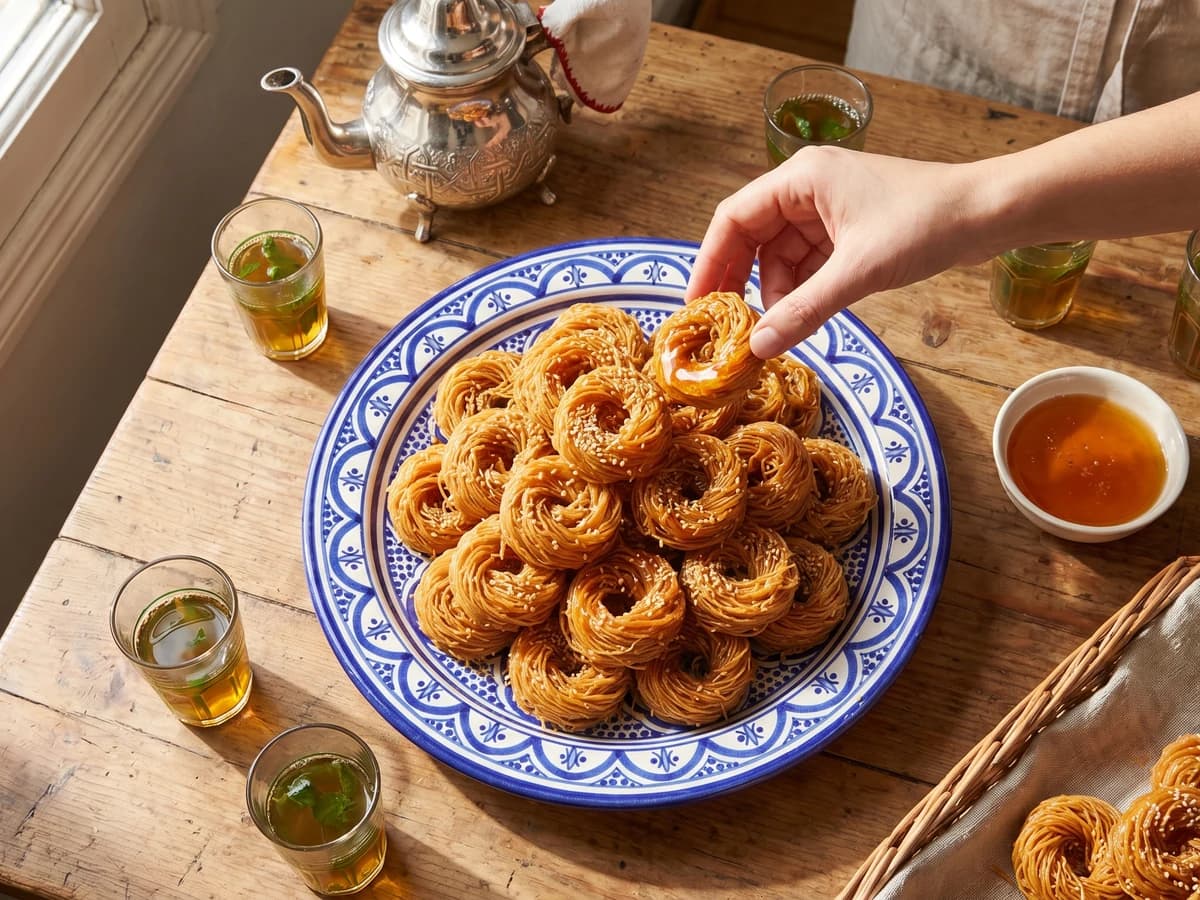
A Ramadan sweet lighter than chebakia: fine milk dough drawn into threads, fried until crisp, then bathed in orange-blossom honey and shared from a generous plate.
A cooking platform built around craft, culture, and the stories behind what we eat.
Created by
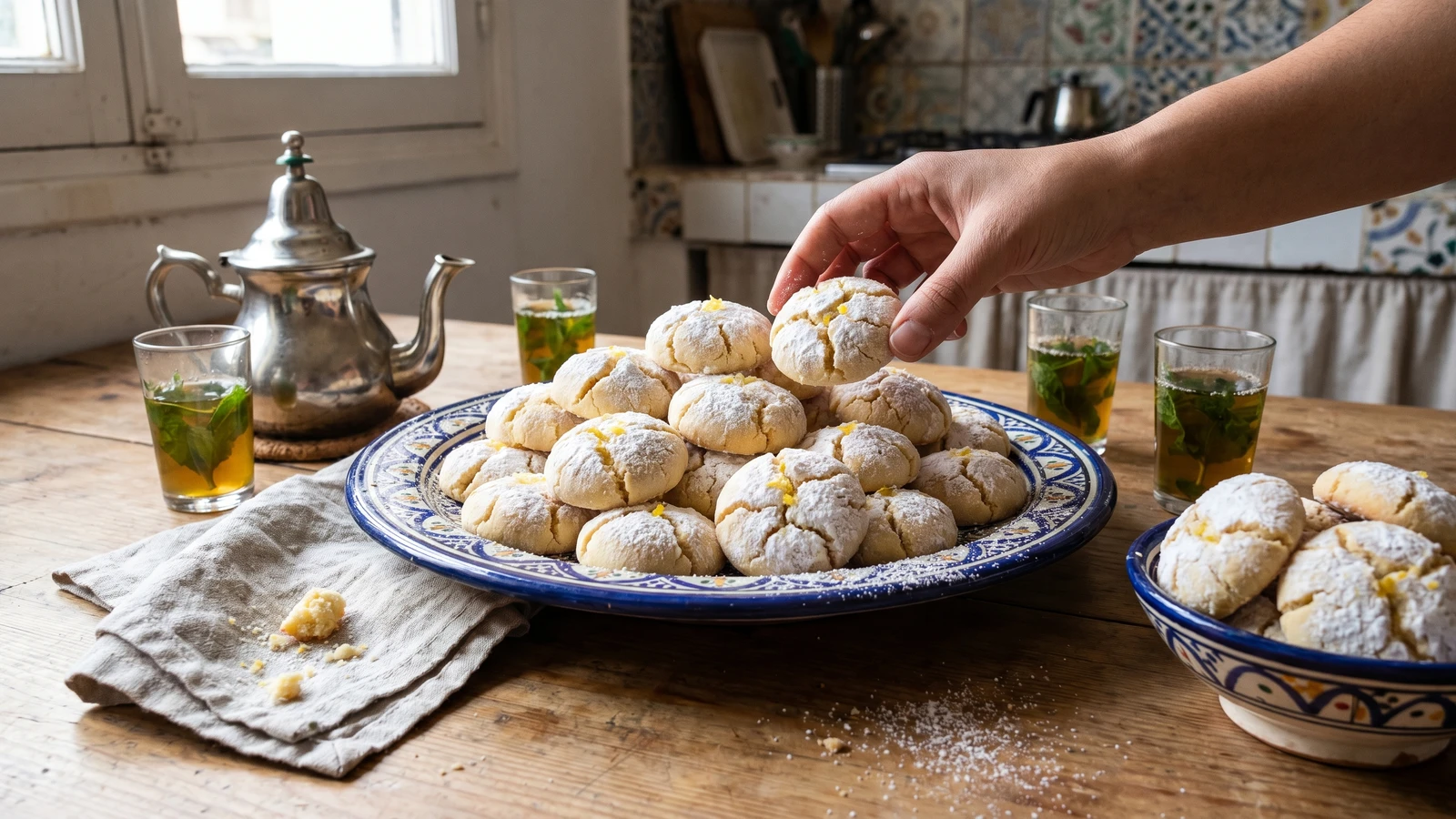
Semolina ghriba, soft under the tooth and bright with lemon, rolled in sugar until the tops crack open. The overnight rest is not decoration, it's what lets the grain drink.
The whole cookie depends on waiting. Smida, semolina, looks dry and stubborn when you first stir it with eggs, oil, butter, and lemon zest. Leave it alone overnight and it changes. The grain drinks. It swells. What would have baked gritty becomes tender and chewy, with that little sandy bite a good ghriba must keep.
This is celebration food, yes, but also the kind of sweet a Moroccan house likes to have ready when someone knocks. A plate of ghriba, small glasses of mint tea, one chair pulled closer. Une table, c'est une porte qu'on laisse ouverte, a table is a door you leave open.
Don't rush the dough. That is the one rule here. Roll it gently, coat it generously in icing sugar, and bake until the tops split into pale cracks while the centers stay soft. The scale is in the eyes: if the dough feels too stiff after resting, loosen it with a spoon of orange blossom water; if it feels too slack, wait a little longer before shaping.
Ghriba belongs to the wider family of North African cracked cookies, found in Moroccan homes from the Atlantic cities to the eastern border, with versions made from flour, almonds, sesame, chickpea flour, coconut, or smida. Semolina sweets in Morocco carry older links to wheat-growing regions and to medieval Andalusi and Maghrebi pastry habits, where grain, sugar, citrus, and flower waters moved through household repertoires as much as court kitchens. The exact date of ghriba dyal smida is not fixed in writing, which is honest for a cookie kept mostly by hand and memory.
Quantity
500g
Quantity
150g
Quantity
2
Quantity
120ml
Quantity
60g
melted and cooled
Quantity
2 tbsp
Quantity
1
finely zested
Quantity
1 tsp
Quantity
14g
Quantity
1/4 tsp
Quantity
120g
for rolling
| Ingredient | Quantity |
|---|---|
| fine semolina (smida rqiqa) | 500g |
| granulated sugar | 150g |
| large eggs | 2 |
| neutral oil | 120ml |
| unsalted buttermelted and cooled | 60g |
| orange blossom water | 2 tbsp |
| lemonfinely zested | 1 |
| vanilla sugar or vanilla extract | 1 tsp |
| baking powder | 14g |
| fine sea salt | 1/4 tsp |
| icing sugarfor rolling | 120g |
Whisk the eggs and granulated sugar in a wide bowl until the mixture turns glossy and a little lighter. Add the oil, melted butter, orange blossom water, lemon zest, vanilla, and salt, then whisk again. Stir in the semolina and baking powder until no dry patches remain. The dough will look loose and grainy now. That's right.
Cover the bowl and refrigerate the dough at least 8 hours, preferably overnight. This rest is the dish: the semolina needs time to drink the liquid and soften. Skip it and the cookie stays gritty under the tooth, no matter how carefully you bake it.
Heat the oven to 180°C. Line two baking sheets with parchment. Put the icing sugar in a shallow bowl. With lightly oiled hands, roll walnut-sized balls of dough, about 28 to 30g each. Don't press them hard. A gentle hand keeps the centers tender.
Roll each ball generously in icing sugar, then set it on the tray with space between cookies. Press only enough to steady it, not to flatten it. The thick coat of sugar dries in the oven and helps the top crack into the proper ghriba face.
Bake one tray at a time for 12 to 14 minutes, until the tops are cracked, the bottoms are lightly gold, and the centers still look soft. Do not wait for deep color. Ghriba firms as it cools, and if you bake it until it looks finished in the oven, it will eat dry at the table.
Let the cookies sit on the hot tray for 10 minutes before moving them, because they are fragile while warm. Cool completely, then pile them on a shared plate with mint tea. Make enough for the person who arrives without warning.
1 serving (about 36g)
Culinary guides, cultural storytelling, and the editorial depth that makes cooking meaningful.
Discover Culinary ExplorerChef Zohra
A Ramadan sweet lighter than chebakia: fine milk dough drawn into threads, fried until crisp, then bathed in orange-blossom honey and shared from a generous plate.

Chef Zohra
Tissue-thin warqa folded into small triangles around orange-blossom almond paste, fried until gold, then dipped warm into honey. This is the sweet Fassi briouat that makes tea feel like a feast.
Chef Zohra
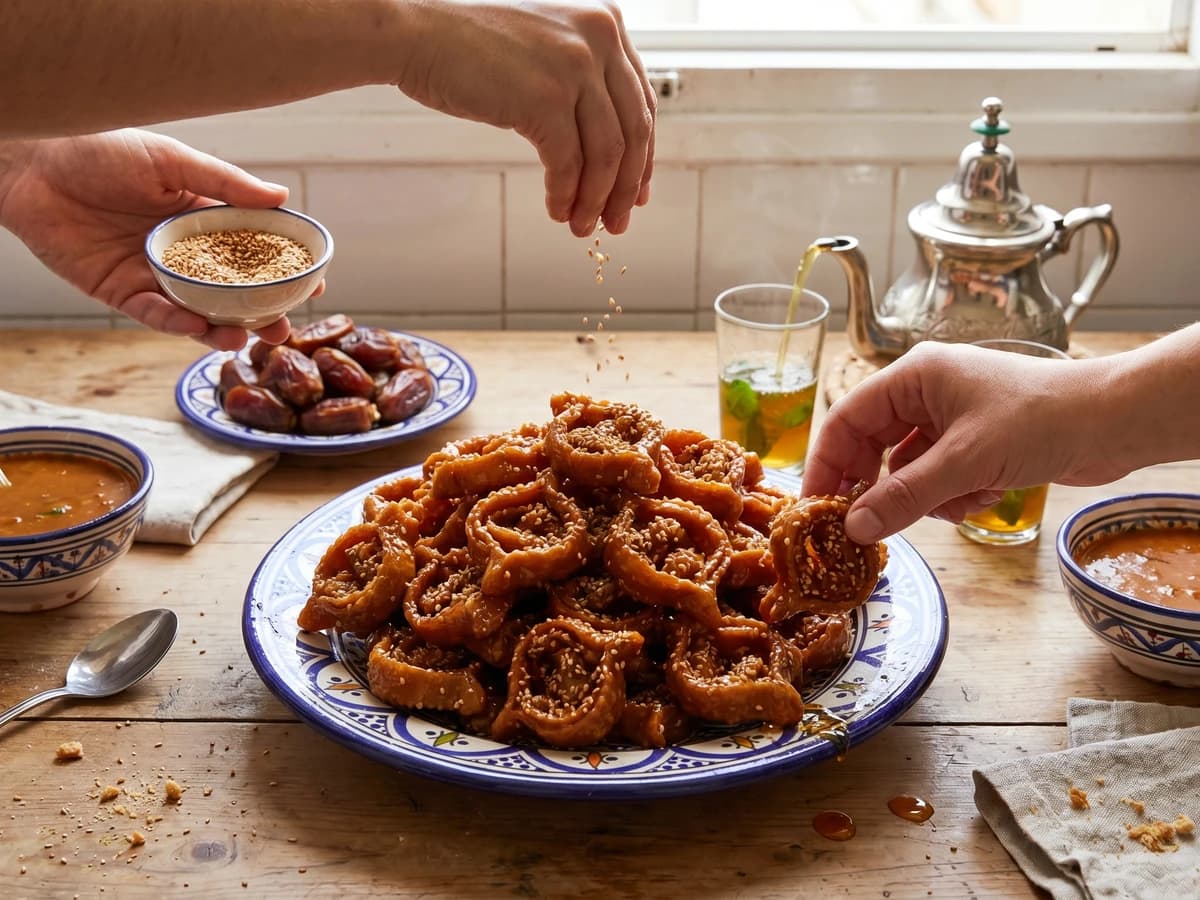
The flower of the Ramadan table: dough scented with toasted sesame, anise, saffron, and orange blossom water, fried crisp, then soaked in warm honey beside harira.

Chef Zohra
Slim warqa cigars filled with orange-blossom almond paste, fried until crisp under the teeth, then soaked in warm honey for the festive table.