
Chef Lesia
Gombovtsi (ґомбовці, plum-stuffed steamed dumplings)
The first cut is the whole argument: pale potato dough, toasted butter crumbs, then a hot purple plum collapsing into syrup at the center.
A cooking platform built around craft, culture, and the stories behind what we eat.
Created by
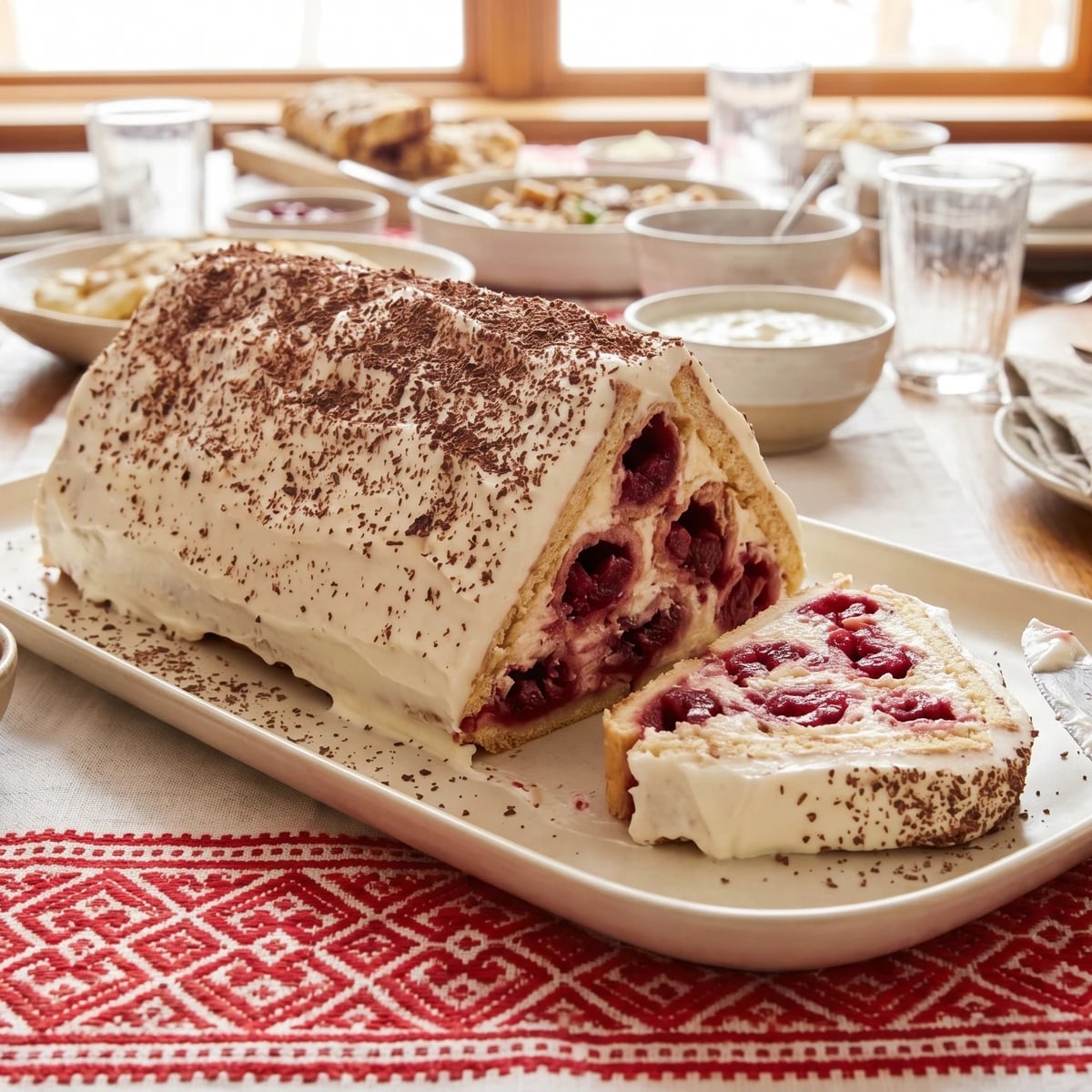
Sour cherries hide inside pale pastry logs, then the whole hut disappears under smetana cream. Slice it cold and you get roof beams, snow, and dark red July juice.
The best part is the cut. From the outside it looks almost plain, a white smetana slope with chocolate grated over it, but the knife goes in and suddenly there are cherries hiding in every beam, dark red and stubborn, their juice staining the pastry where the cream has softened it overnight.
This is a celebration cake with village logic under its pretty coat: make pastry tubes, fill them with sour cherries, stack them smaller and smaller like a wooden khata, a little house, and let smetana do the patient work. The cream must be thick and tangy, not sugary fluff. The cherry must fight back. Sweeten it into jam and you lose the whole conversation.
Aunt Nadia's version said only, "cherries as many as it takes," which is exactly helpful and not helpful at all. Pack them in a single brave line, close the dough without squeezing the fruit to death, then chill the cake until the logs stop being separate pieces and become one sliceable thing. That waiting is not decoration. It is the dish deciding to hold together.
Monastyrska izba, also called cherry hut or sometimes firewood under snow in family notebooks, spread widely through Ukrainian home kitchens in the late Soviet period, when festive cakes had to be built from store-cupboard basics, garden fruit, and plenty of smetana. Its shape belongs to the wooden architecture of the name: stacked logs, a steep roof, a white covering like winter over a small house. Sour cherries are the important Ukrainian note, because July fruit was commonly pitted and preserved in jars so a winter table could still taste the garden.
Quantity
500g, plus more for rolling
Quantity
250g
cubed
Quantity
200g
for the dough
Quantity
1 large
Quantity
2 tablespoons
for the dough
Quantity
1 teaspoon
Quantity
1/2 teaspoon
Quantity
700g
fresh, frozen and thawed, or jarred and well drained
Quantity
80g
for the cherries
Quantity
1 tablespoon
Quantity
900g
for the cream
Quantity
120g
Quantity
1 teaspoon
Quantity
1 teaspoon
Quantity
40g
grated, to finish
| Ingredient | Quantity |
|---|---|
| plain flour | 500g, plus more for rolling |
| cold unsalted buttercubed | 250g |
| smetana or full-fat sour creamfor the dough | 200g |
| egg yolk | 1 large |
| sugarfor the dough | 2 tablespoons |
| baking powder | 1 teaspoon |
| fine sea salt | 1/2 teaspoon |
| pitted sour cherriesfresh, frozen and thawed, or jarred and well drained | 700g |
| sugarfor the cherries | 80g |
| cornstarch | 1 tablespoon |
| thick smetana or full-fat sour creamfor the cream | 900g |
| icing sugar | 120g |
| vanilla extract | 1 teaspoon |
| lemon zest (optional) | 1 teaspoon |
| dark chocolategrated, to finish | 40g |
Put the pitted sour cherries in a sieve over a bowl and let them drain until they stop dripping heavily. Toss them with the sugar and cornstarch just before filling, not hours earlier, or they'll throw too much juice. Keep the drained juice for tea, kompot, or a spoonful over breakfast.
Rub the cold butter into the flour until it looks like coarse crumbs with a few pea-sized pieces still showing. Stir in the sugar, baking powder, and salt, then add the smetana and egg yolk. Bring it together with your hands until it forms a soft, cool dough. Stop as soon as it holds; if you keep working it, the pastry gets sulky.
Flatten the dough into a thick rectangle, wrap it, and chill until firm enough to roll without smearing butter across the table. It should feel bendable but not sticky. If your kitchen is warm, give it more cold; the dough forgives waiting better than it forgives rushing.
Divide the dough into fifteen pieces. Roll each piece into a strip about 20cm long and 6cm wide, dusting lightly with flour only when it sticks. Set a line of cherries down the middle of each strip, close the dough over them, and pinch the seam firmly from end to end. You want a sealed tube, not a squeezed one.
Lay the tubes seam-side down on lined trays, leaving space between them. Bake at 180C until the pastry is pale gold at the edges and dry to the touch, about 25 to 30 minutes. A little cherry juice may escape and caramelize at the seam; that is the cake telling you it has fruit inside.
Beat the thick smetana with icing sugar, vanilla, and lemon zest if using, until it loosens, thickens again, and falls from the whisk in heavy soft folds. Do not chase stiff peaks like buttercream. This cream should spread generously and stay tangy, because it has to soften the pastry without burying the cherries.
Spread a little cream on a serving board or long platter to hold the first layer. Lay down 5 logs, cover with cream, then stack 4, cream, 3, cream, 2, cream, and finally 1 on top. Coat the outside with the remaining cream, filling the gaps so the shape becomes a snowy roof instead of a pile of sticks.
Grate dark chocolate over the cream, then chill the cake overnight. By morning the pastry should cut cleanly but feel tender, the smetana should have settled into the seams, and the cherries should still taste sharp. Slice across the logs so every piece shows the little cabin wall inside.
1 serving (about 235g)
Culinary guides, cultural storytelling, and the editorial depth that makes cooking meaningful.
Discover Culinary Explorer
Chef Lesia
The first cut is the whole argument: pale potato dough, toasted butter crumbs, then a hot purple plum collapsing into syrup at the center.

Chef Lesia
The first spoonful of Christmas Eve is dark wheat, white poppy milk, honey, nuts, and memory. Kutia comes before everything else because grain must speak first.

Chef Lesia
Two dry, crackling hazelnut meringues hold a whole city's pride between them, with cocoa buttercream, pale cream flowers, and the sound of a knife breaking through sugar.

Chef Lesia
A cake made from white curd goes to the table wearing black: dense, lemon-scented syr under dark chocolate glaze, sliced cold and proud from the west.