
Chef Lupita
Aceite de Chiltepin Bajacaliforniano
Baja California's wild chiltepin steeped in olive oil with garlic, orejon, and lime peel, until the oil turns ruby-amber and carries the slow, sneaky burn of the desert coast.
A cooking platform built around craft, culture, and the stories behind what we eat.

Created by
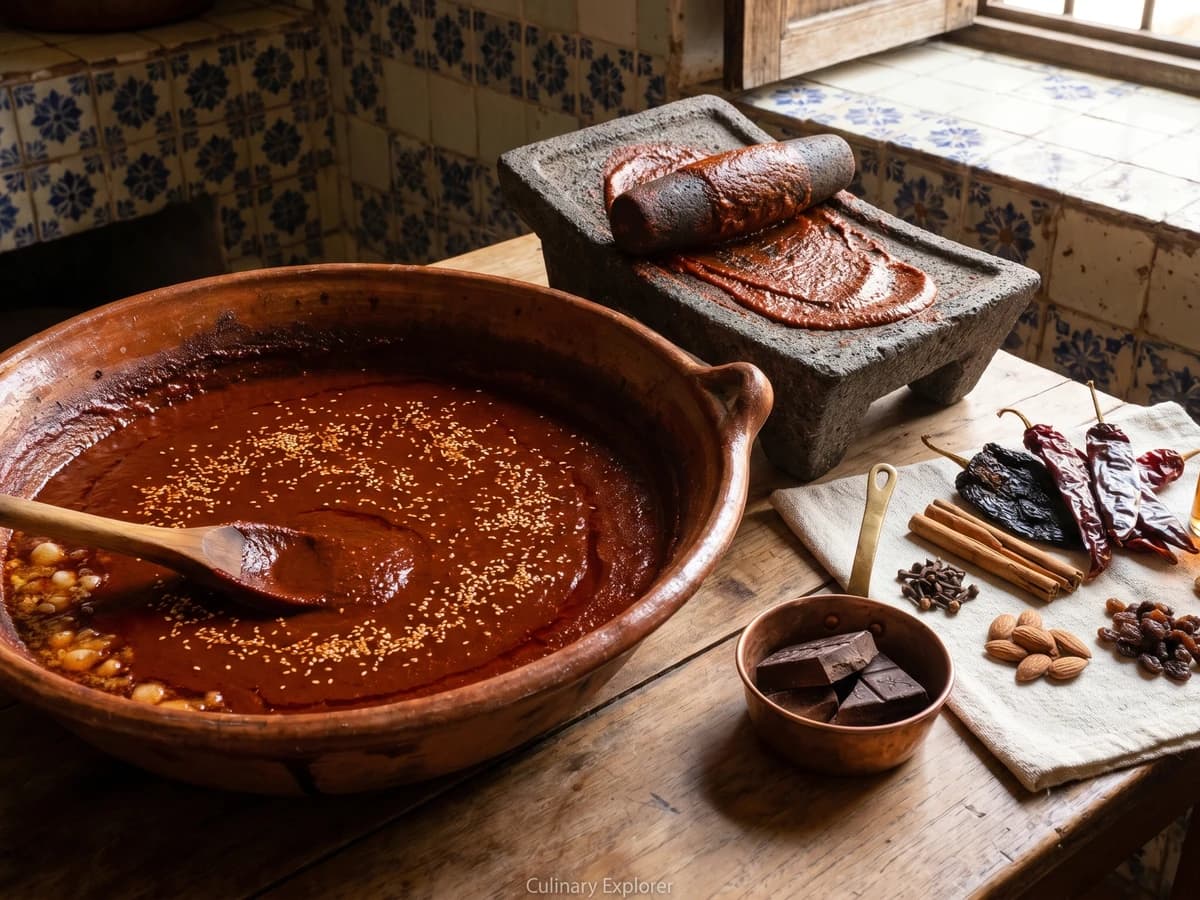
Veracruz's sweet-dark plantain mole from the Sotavento, built with chile ancho, pasilla mexicano, chile costeño, peanuts, sesame, and ripe plátano macho fried in manteca.
Veracruz, especially the Sotavento around Tlacotalpan, Alvarado, and the port kitchens that look toward the Gulf, knows what fruit can do in a sauce. Mole de plátano jarocho lives there, in the lowland heat where plantains, peanuts, sesame, chile costeño, and Afro-jarocho memory sit in the same cazuela.
The plátano macho is not garnish and it is not sweetness thrown in for decoration. It thickens the mole. It gives the sauce its body, the way seeds thicken a pipián and bread thickens some Puebla moles. That is the Afro-jarocho architecture here: fruit as structure, chile as spine, sesame and peanut as the deep floor underneath. Mole is not chocolate sauce. Say that twice if you need to.
I learned a version of this from a woman near the mercado in Veracruz who fried the plantain in manteca before she even touched the blender. She said, 'Si no lo doras, no sabe.' If you don't brown it, it has no flavor. She was right. The ancho gives dried-fruit depth, the pasilla mexicano gives shadow, and the chile costeño gives the coastal edge. Cada estado, su propia cocina.
Serve this in a clay cazuela, dark and glossy, with turkey, chicken, pork, or more fried plantain. Put warm corn tortillas beside it. Flour tortillas belong to the north. Veracruz has its own table, and this sauce knows where it comes from.
Veracruz's port was one of the main entry points for enslaved and free Africans in New Spain from the 16th century onward, and Afro-Mexican communities helped shape the cooking of the Gulf coast through techniques that use peanuts, sesame, fruit, and chile as sauce architecture. Plantain arrived in Mexico through colonial Atlantic trade and took root in humid coastal regions including Veracruz, Tabasco, and Chiapas, where cooks folded it into stews, moles, sweets, and savory sauces. Mole de plátano jarocho belongs to the broader afromestizo Gulf tradition, related in logic to peanut-thickened encacahuatados and coastal pipianes, but it is not the same dish.
Quantity
3
black-spotted but still firm
Quantity
5
stemmed and seeded
Quantity
3
stemmed and seeded
Quantity
2
stemmed and seeded
Quantity
4 tablespoons
divided
Quantity
1 medium
thickly sliced
Quantity
4
unpeeled
Quantity
2
halved
Quantity
1/2 cup
Quantity
1/4 cup, plus more for serving
Quantity
1-inch piece
Quantity
3
Quantity
4
Quantity
1/2 teaspoon
Quantity
1 small leaf or 1 sprig
hoja santa torn
Quantity
3 cups
warm
Quantity
1 tablespoon
grated
Quantity
1 teaspoon, plus more to taste
Quantity
1 tablespoon
| Ingredient | Quantity |
|---|---|
| ripe plátanos machosblack-spotted but still firm | 3 |
| dried chile anchostemmed and seeded | 5 |
| dried chile pasilla mexicanostemmed and seeded | 3 |
| dried chile costeñostemmed and seeded | 2 |
| manteca de cerdodivided | 4 tablespoons |
| white onionthickly sliced | 1 medium |
| garlic clovesunpeeled | 4 |
| Roma tomatoeshalved | 2 |
| raw peanuts | 1/2 cup |
| sesame seeds | 1/4 cup, plus more for serving |
| Mexican cinnamon | 1-inch piece |
| whole cloves | 3 |
| black peppercorns | 4 |
| dried Mexican oregano | 1/2 teaspoon |
| hoja santa leaf or epazotehoja santa torn | 1 small leaf or 1 sprig |
| chicken broth or turkey brothwarm | 3 cups |
| piloncillograted | 1 tablespoon |
| sea salt | 1 teaspoon, plus more to taste |
| apple cider vinegar or pineapple vinegar | 1 tablespoon |
Heat a dry comal over medium. Toast the chile ancho, chile pasilla mexicano, and chile costeño separately, about 20 to 30 seconds per side, just until the skins puff and the smell turns deep and raisiny. The costeño is small and fast, watch it. Burn one chile and the whole mole goes bitter. No me vengas con atajos.
Put the toasted chiles in a bowl and cover with hot water. Not boiling. Let them sit for 20 minutes until the flesh softens. Drain them and save 1/2 cup of the soaking liquid only if it tastes clean. If it tastes bitter, throw it out. The cook decides, not the recipe card.
On the same comal, roast the onion slices, unpeeled garlic, and tomato halves until the onion has brown edges, the garlic skins blacken in spots, and the tomatoes slump. Peel the garlic. This is the Veracruz kitchen doing its work: fruit, chile, smoke from the comal, and patience.
Peel the plátanos machos and slice them into thick coins. Melt 2 tablespoons of manteca in a wide skillet over medium heat. Fry the plantain until deep gold on both sides, 3 to 4 minutes per side. They should smell sweet and caramelized, not burned. The plantain is the body of this mole. Not chocolate. Not flour. Fruit.
In the same skillet, add the peanuts and toast until lightly browned, about 3 minutes. Add the sesame seeds for the last minute so they turn gold without scorching. Toast the cinnamon, cloves, peppercorns, and Mexican oregano for 20 seconds, just until fragrant. Small ingredients burn quickly. Respect them.
Blend the softened chiles, roasted onion, peeled garlic, tomatoes, fried plantain, peanuts, sesame, toasted spices, hoja santa or epazote, piloncillo, salt, vinegar, and 2 cups of warm broth until completely smooth. Work in batches if your blender is small. A Veracruz señora would use the metate if she had the morning. A blender is fine when you blend long enough.
Melt the remaining 2 tablespoons of manteca in a 12-inch clay cazuela or heavy pot over medium heat. Pour in the blended mole carefully. It will sputter. Stir constantly for 8 to 10 minutes, scraping the bottom, until the color darkens from brick red to mahogany brown and the fat begins to shine at the edges. La manteca es el sabor.
Add the remaining 1 cup warm broth and lower the heat. Simmer 25 to 30 minutes, stirring often, until the sauce falls from the spoon in a thick ribbon and leaves a clean line when you drag the spoon across the bottom of the cazuela. Taste for salt. If it needs brightness, add a few more drops of vinegar. If it tastes flat, it needs salt, not more sugar.
Spoon the mole over poached chicken, turkey, roasted pork, or fried plantain. Scatter sesame seeds on top if serving now. For storage, cool it completely and refrigerate up to 4 days. It thickens as it rests, so loosen it with warm broth when reheating. Recetas probadas y garantizadas.
1 serving (about 195g)
Culinary guides, cultural storytelling, and the editorial depth that makes cooking meaningful.
Discover Culinary ExplorerChef Lupita
Baja California's wild chiltepin steeped in olive oil with garlic, orejon, and lime peel, until the oil turns ruby-amber and carries the slow, sneaky burn of the desert coast.

Chef Lupita
Puebla's Lenten convent adobo, a brick-red vinegar chile paste of ancho, guajillo, garlic, oregano, and comino made to dress fish for the meatless calendar.
Chef Lupita
Zacatecas' wedding-table adobo, built from toasted guajillo and ancho, piloncillo, sour orange, chocolate, canela, clavo, almonds, sesame, and lard.

Chef Lupita
Puebla's convent kitchens built this adobo with ancho, guajillo, jerez, almonds, raisins, clove, and lard, a baroque marinade that stains pork loin and finishes as the sauce.