Chef Isabel
Aceitunas Aliñadas Andaluzas
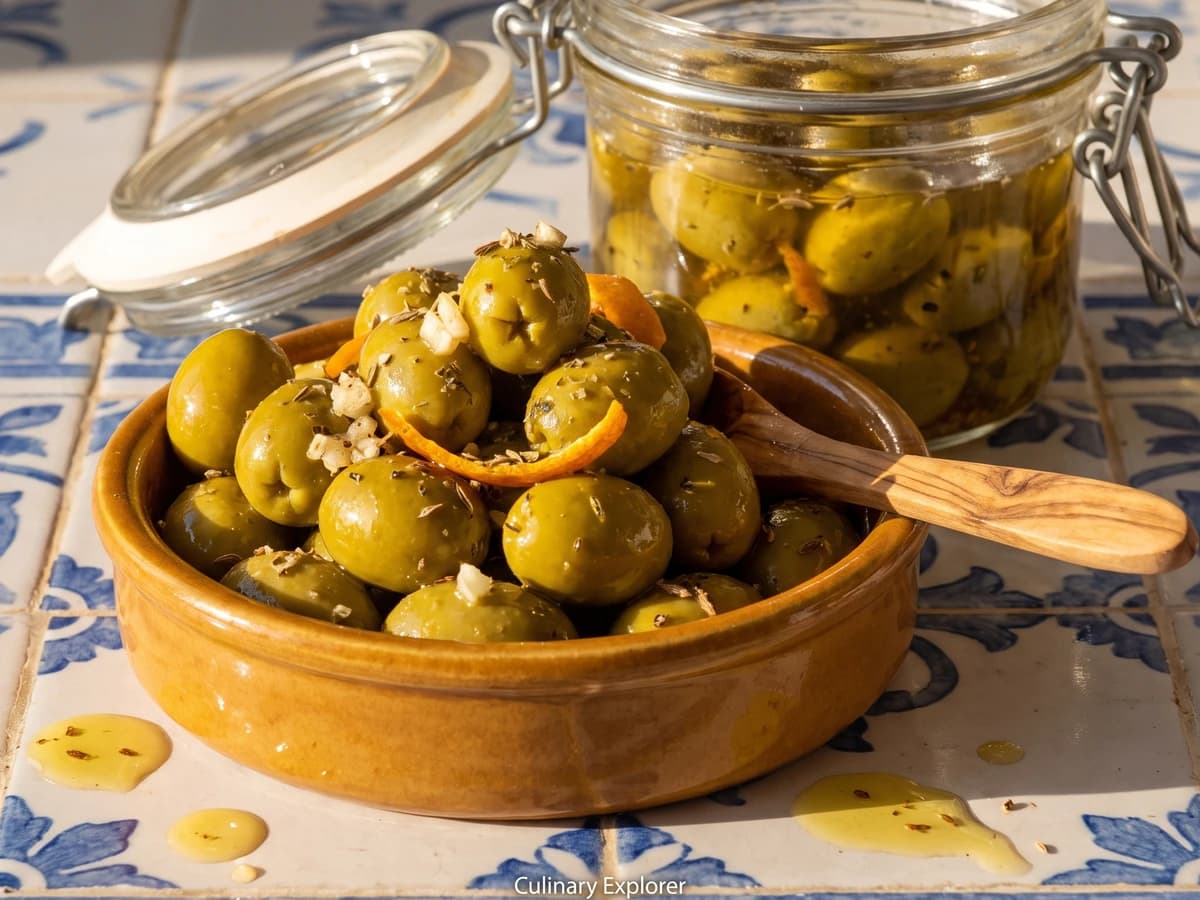
Andalucía's green olives are cracked just enough to drink in garlic, cumin, oregano and sherry vinegar, then left two days until the brine turns fragrant and every bite carries the aliño.
A cooking platform built around craft, culture, and the stories behind what we eat.
Created by
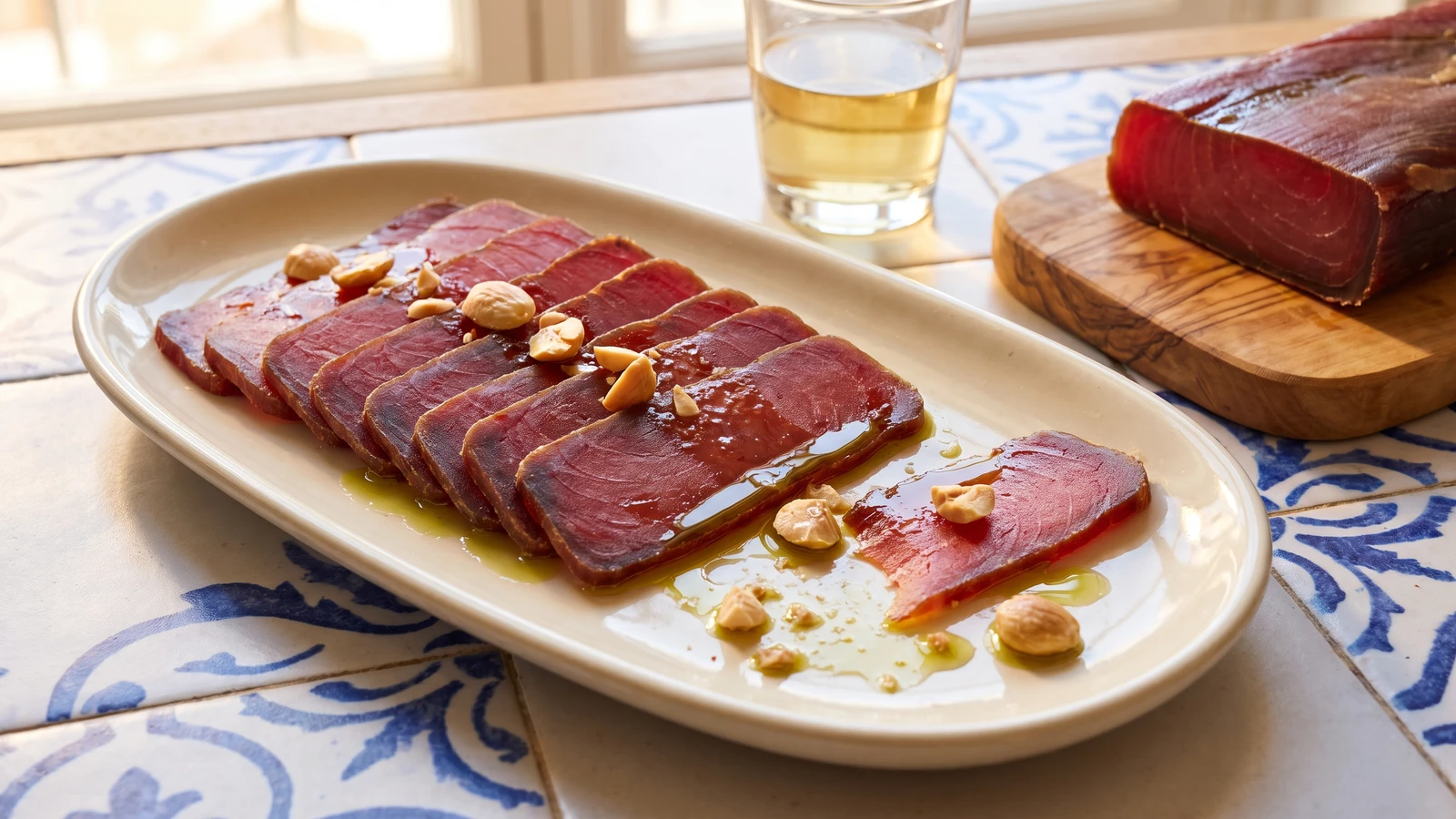
Mojama gaditana is Cádiz's salt-cured tuna loin, firm, mahogany-dark and cut almost transparent. Pack it evenly in sea salt, then dry it cold until it has lost 35 percent of its starting weight.
Mojama de atún gaditana belongs to the Cádiz coast, above all Barbate: a clean tuna loin packed in sea salt, pressed, then dried until mahogany-dark, firm, and dense enough to shave into thin slices. It isn't smoked, spiced, or cooked. Salt, moving air, and tuna make it, and on an Andalusian table a few slices with green-gold olive oil and toasted almonds are enough.
Even drying decides the dish. Pack every face completely in coarse sea salt, keep the fish between 0 and 4°C, then dry it on a rack until it has lost exactly 35 percent of its starting weight. Time only points you in the right direction; the scale tells you how much water has left. Stop early and the centre stays soft and wet. Carry on too far and you have a piece of salty wood. Pésalo, no lo adivines, weigh it, don't guess.
Far from Barbate, use a thick, previously commercially frozen yellowfin loin sold for raw preparation. Yellowfin is used in the recognized Andalusian craft and gives a leaner, lighter cure than rich bluefin. A household refrigerator stands in for the ventilated drying room: it is colder and takes longer, so the aroma will be a little less developed, but the fish stays safely chilled while it dries. No hace falta haber pisado España. Keep it cold, follow the weight, and it comes out.
Mojama is rooted in the tuna towns of the Andalusian Atlantic, especially Barbate in Cádiz and Isla Cristina in Huelva, where almadraba fisheries and coastal saltworks made curing the valuable loin a practical way to preserve the catch. Fish salting was established around Phoenician Gadir, while Roman Baelo Claudia later processed tuna into preserved fish and garum; the name mojama comes through Hispanic Arabic from mušámma, meaning made waxlike. Barbate and Isla Cristina retain separate named traditions, but both rest on the same sequence of salting, pressing, and drying.
Quantity
600g
one rectangular piece 4 to 5cm thick, with skin, sinew, and dark bloodline removed
Quantity
1.5kg
for packing; most will be discarded
Quantity
45ml
for serving
Quantity
40g
roughly broken
| Ingredient | Quantity |
|---|---|
| previously commercially frozen yellowfin or bluefin tuna loinone rectangular piece 4 to 5cm thick, with skin, sinew, and dark bloodline removed | 600g |
| coarse non-iodized sea saltfor packing; most will be discarded | 1.5kg |
| extra virgin olive oilfor serving | 45ml |
| toasted unsalted Marcona almonds (optional)roughly broken | 40g |
Keep the tuna between 0 and 4°C throughout the work. Trim away every strip of skin, sinew, silvery membrane, and dark bloodline, leaving one neat block 4 to 5cm thick. Pat it thoroughly dry and weigh it. For a 600g loin, the finished target is 390g, exactly 65 percent of its starting weight. Write that number down.
Spread a 2cm bed of salt in a nonreactive dish just larger than the loin. Set the tuna on top and pack salt firmly against the ends, sides, and upper face, leaving no fish exposed and at least 2cm of salt around it. Cover the dish and refrigerate at 0 to 4°C for exactly 24 hours. After 12 hours, pour away any pooled liquid, turn the loin, and cover any exposed patch with reserved salt.
Lift the loin from the salt and discard all the used salt. Rinse the fish under very cold running water for 30 seconds, rubbing away every grain, then soak it in 1 litre of ice-cold water for 20 minutes in the refrigerator. This removes the harsh surface salt without washing the cure from the centre. Drain and pat completely dry with clean paper towels.
Wrap the tuna in two layers of clean absorbent paper or a lint-free cloth. Place it between two flat trays, set a 1.5kg weight evenly on top, and refrigerate for 8 hours. Change the wrapping after 4 hours if it becomes wet. Pressing removes loose moisture and gives the loin the close, even texture needed for thin slicing.
Unwrap the loin and place it on a clean wire rack over a lined tray, with air able to reach every face. Dry it uncovered in a clean refrigerator held between 0 and 4°C, away from uncovered food. Turn it once daily with clean tongs and replace the tray lining whenever it becomes damp. Begin weighing after 8 days, then weigh daily until it reaches 390g. This usually takes 8 to 12 days. The surface should be dry and mahogany-brown, while the whole piece feels firm with only slight give.
When the loin reaches its target weight, wrap it first in clean parchment and then loosely in a clean kitchen towel. Refrigerate for 24 hours. This short descanso, or rest, lets the remaining moisture settle evenly through the loin so the centre and edges slice alike.
Put the mojama in the freezer for 20 minutes to firm it without freezing it solid. With a long, very sharp knife, slice across the grain into pieces 1 to 2mm thick. Arrange about 30g per person, spoon over the olive oil, and scatter with the broken almonds. Add no salt. Mojama has already had quite enough.
1 serving (about 39g)
Culinary guides, cultural storytelling, and the editorial depth that makes cooking meaningful.
Discover Culinary ExplorerChef Isabel
Andalucía's green olives are cracked just enough to drink in garlic, cumin, oregano and sherry vinegar, then left two days until the brine turns fragrant and every bite carries the aliño.
Chef Isabel
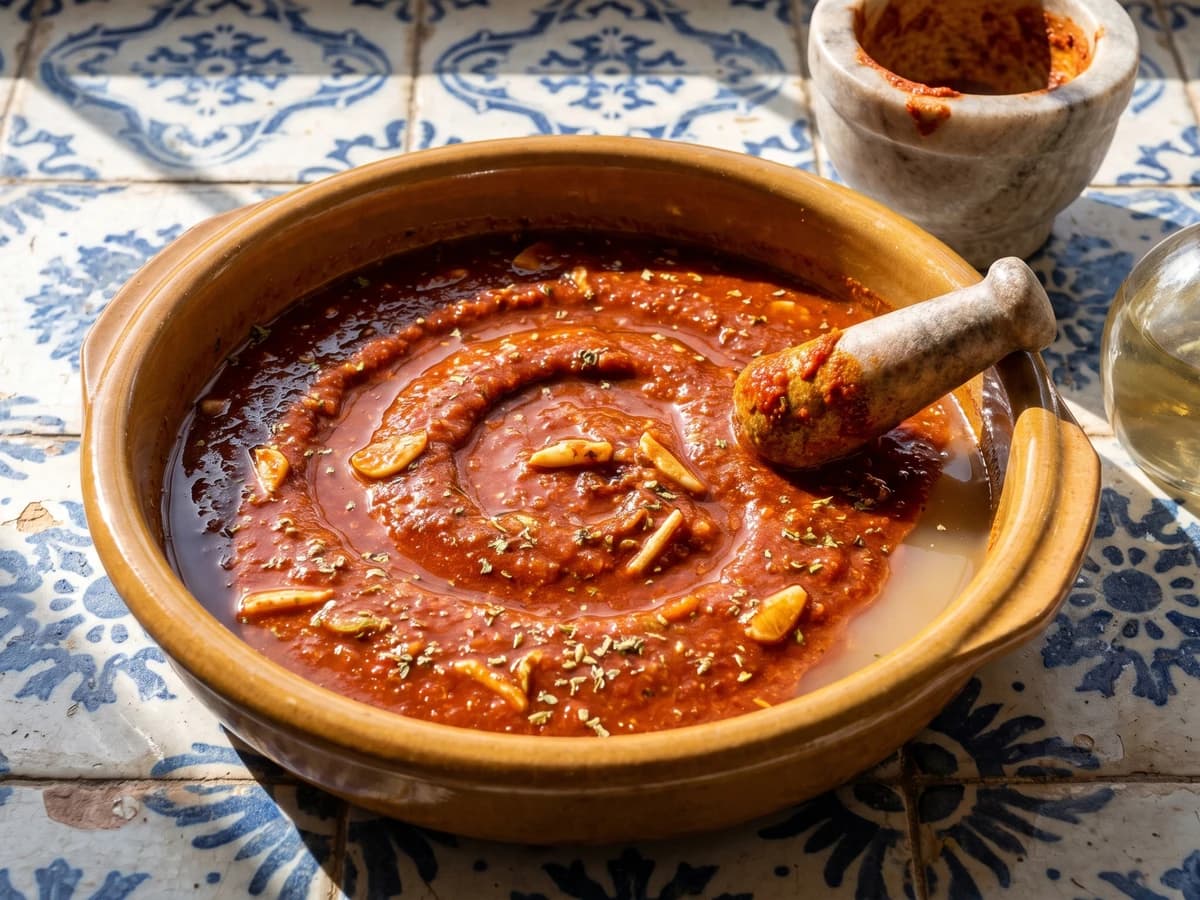
Andalucía's sharp, brick-red marinade brings vinegar, garlic, oregano, cumin and pimentón to fish and pork; pound the seasonings first, then give the acid time to carry them through.
Chef Isabel
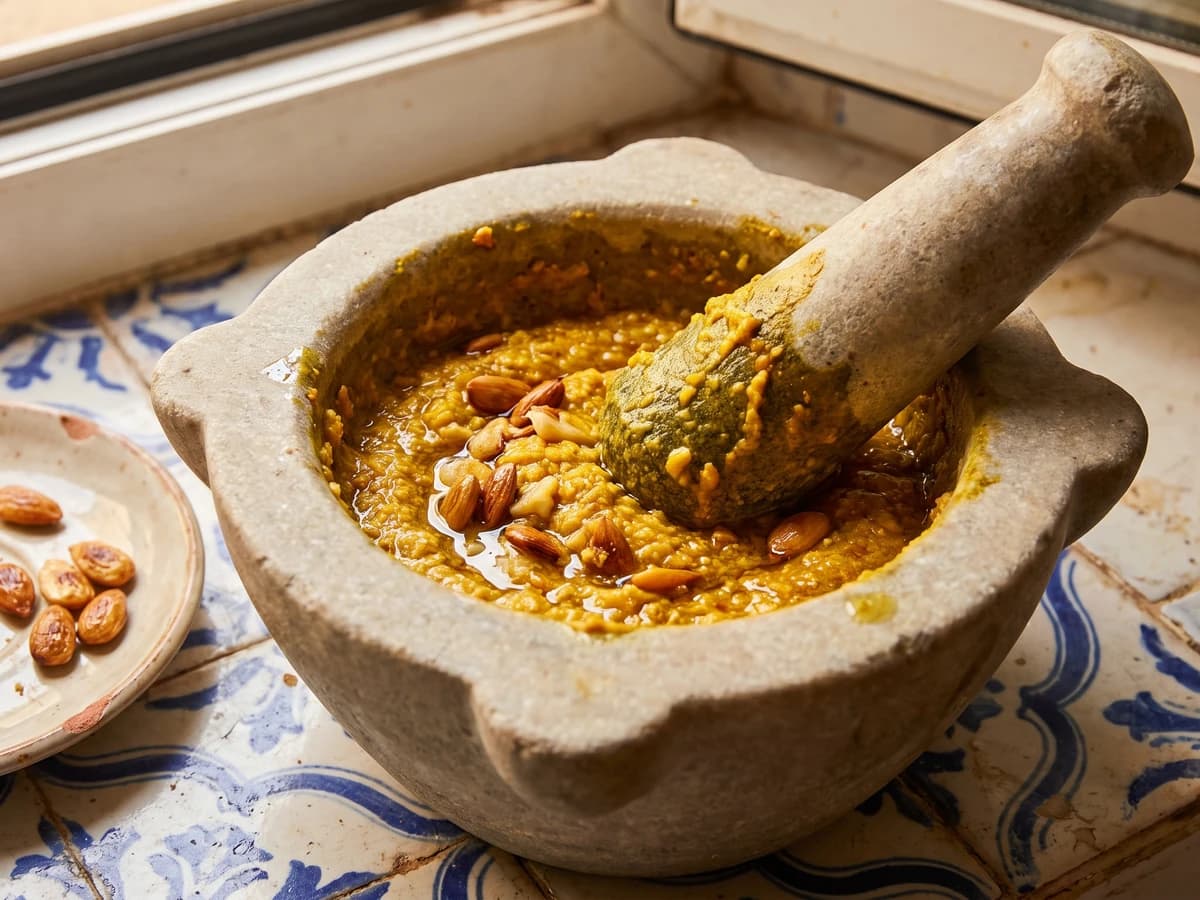
Almería's ajopollo turns fried garlic, almonds, bread and saffron into a golden mortar paste that gives modest fish and potato guisos their body, richness and unmistakable southern depth.
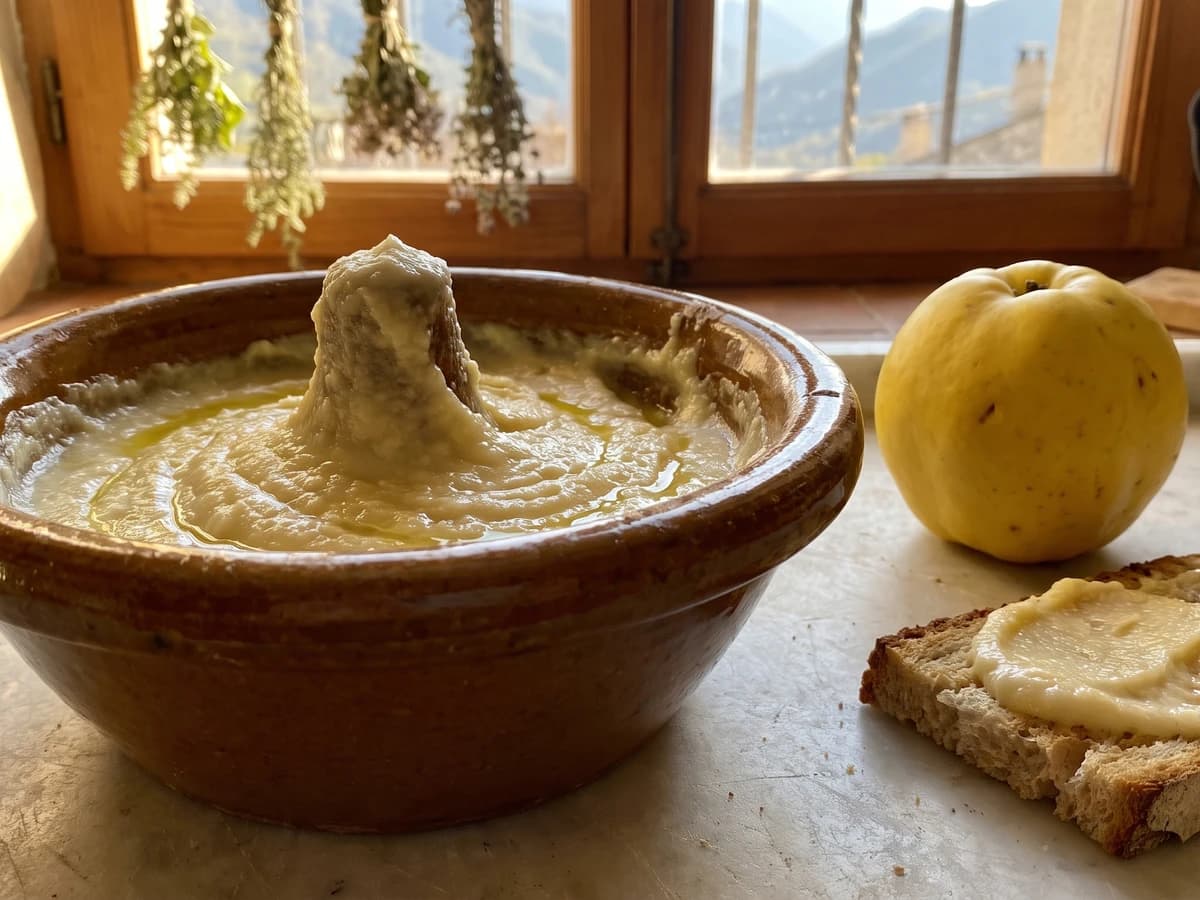
Chef Isabel
Allioli de codony belongs to the Catalan Pyrenees: boiled quince, raw garlic, salt, and olive oil worked into a thick, fragrant sauce for grilled meat, sausages, bread, and the autumn table.