
Chef Jeong-sun
Aehobak-guk (애호박국, Korean Zucchini Soup)
A clean summer soup of Korean zucchini and salted shrimp, built on quick anchovy-kelp broth and finished before the half-moons lose their shape on a weeknight table.
A cooking platform built around craft, culture, and the stories behind what we eat.

Created by
The seaweed soup eaten by new mothers and served again every birthday, gentle enough for recovery, plain enough for a weeknight, and exact enough to cook twice.
Miyeok-guk begins with the mother, not the birthday child. A woman eats it after childbirth because it is soft, mineral-rich, and easy on the body, then the child eats it every year to remember the labor that brought them to the table. That is why a birthday bowl should never be careless. It is a thank-you in soup form.
The dish lives or dies before the water goes in. Soak the dried miyeok until it opens, squeeze it dry, cut it into spoon-length pieces, then sweat it in sesame oil with beef and soup soy sauce. People rush this and wonder why the broth tastes thin. Miyeok needs a few minutes in fat and seasoning first, so it turns supple and carries the broth instead of floating in it like wet ribbon.
I learned this bowl at my mother's stove, then wrote it again in Notebook 14 after Master Seong-nyeo corrected my hand: less soy sauce, longer sweating, no shouting garlic. Let it taste like itself. The soup should be clear, savory, and quiet, with the seaweed soft enough to fold on the spoon. 손맛 is real; I measure it anyway, so the birthday bowl can be handed on.
Miyeok has been recorded as a Korean food since the Goryeo period, and coastal regions supplied seaweed as tribute through later dynasties because dried sea vegetables stored well and traveled inland. Miyeok-guk became closely tied to childbirth and birthdays: a new mother ate it during recovery, and the child later ate the same soup each birthday as a ritual of gratitude to the mother. The custom remains ordinary and strong, which is why many Koreans still ask for miyeok-guk before cake.
Quantity
25g, about 1 packed cup
Quantity
225g
thinly sliced into bite-size pieces
Quantity
1 tablespoon
Quantity
2 tablespoons, divided
Quantity
1 teaspoon
minced
Quantity
7 cups
Quantity
1/2 teaspoon, plus more as needed
Quantity
1/4 teaspoon
| Ingredient | Quantity |
|---|---|
| dried miyeok (Korean seaweed) | 25g, about 1 packed cup |
| beef brisket or flankthinly sliced into bite-size pieces | 225g |
| toasted sesame oil | 1 tablespoon |
| guk-ganjang (Korean soup soy sauce) | 2 tablespoons, divided |
| garlicminced | 1 teaspoon |
| water | 7 cups |
| fine sea salt | 1/2 teaspoon, plus more as needed |
| freshly ground black pepper (optional) | 1/4 teaspoon |
Put the dried miyeok in a large bowl and cover it with plenty of cold water. Soak 10 to 12 minutes, until it opens fully and feels soft but still has some spring. Do not walk away for half an hour; over-soaked miyeok loses its clean bite.
Drain the miyeok, rinse it once under cold water, then squeeze it firmly with both hands. Cut it into 2-inch lengths so it fits on a spoon. This is not decoration. Long strands make a messy bowl, and birthday soup should be easy to eat.
Put the beef in a bowl with 1 tablespoon of the soup soy sauce and the minced garlic. Mix with your hand and let it stand 5 minutes while the pot heats. The short seasoning gives the beef enough salt to flavor the broth without turning the whole soup dark.
Heat a heavy pot over medium heat and add the sesame oil. Add the seasoned beef and stir 2 minutes, just until the red color is mostly gone. Add the squeezed miyeok and cook 5 full minutes, stirring often, until the seaweed darkens, turns glossy, and smells nutty. This is the step people skip. Do not skip it.
Pour in 7 cups water, scraping the bottom of the pot. Bring it to a boil, then lower the heat to a steady simmer. Skim any gray foam from the top for the first few minutes so the broth stays clean.
Simmer uncovered for 25 to 30 minutes, until the miyeok is tender enough to fold on the spoon and the broth tastes rounded. If the liquid drops below the seaweed, add 1/2 cup water. You are not making a thick stew; miyeok-guk should be generous with broth.
Stir in the remaining 1 tablespoon soup soy sauce and 1/2 teaspoon salt, then taste. Add more salt only in pinches. The soup should taste clear and savory, not salty. Finish with black pepper if your house likes it, and serve with rice and kimchi.
1 serving (about 480g)
Culinary guides, cultural storytelling, and the editorial depth that makes cooking meaningful.
Discover Culinary ExplorerChef Jeong-sun
A clean summer soup of Korean zucchini and salted shrimp, built on quick anchovy-kelp broth and finished before the half-moons lose their shape on a weeknight table.
Chef Jeong-sun
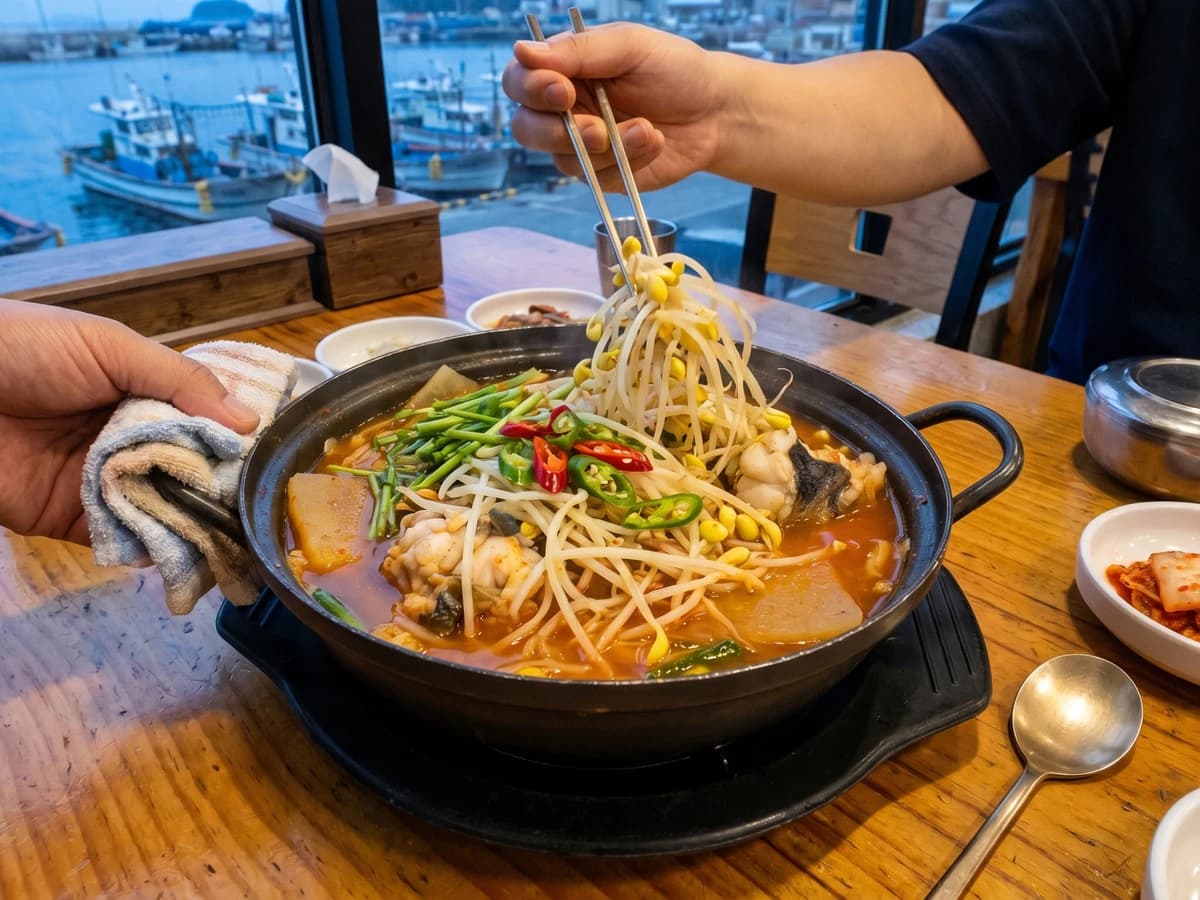
A Masan coast monkfish stew with firm white meat, gelatin at the bones, soybean sprouts for crunch, and a red broth seasoned to carry the fish, not bury it.

Chef Jeong-sun
A weeknight fish roe stew with radish and crown daisy in a clean spicy broth, where the whole success depends on adding the roe late enough that it sets tender, not chalky.

Chef Jeong-sun
Late-summer mallow leaves rubbed with salt until the bitter green water runs off, then simmered in a clean doenjang broth with dried shrimp, the quiet soup a Korean weeknight deserves.