Culinary Explorer

A cooking platform built around craft, culture, and the stories behind what we eat.
Discover Culinary Explorer
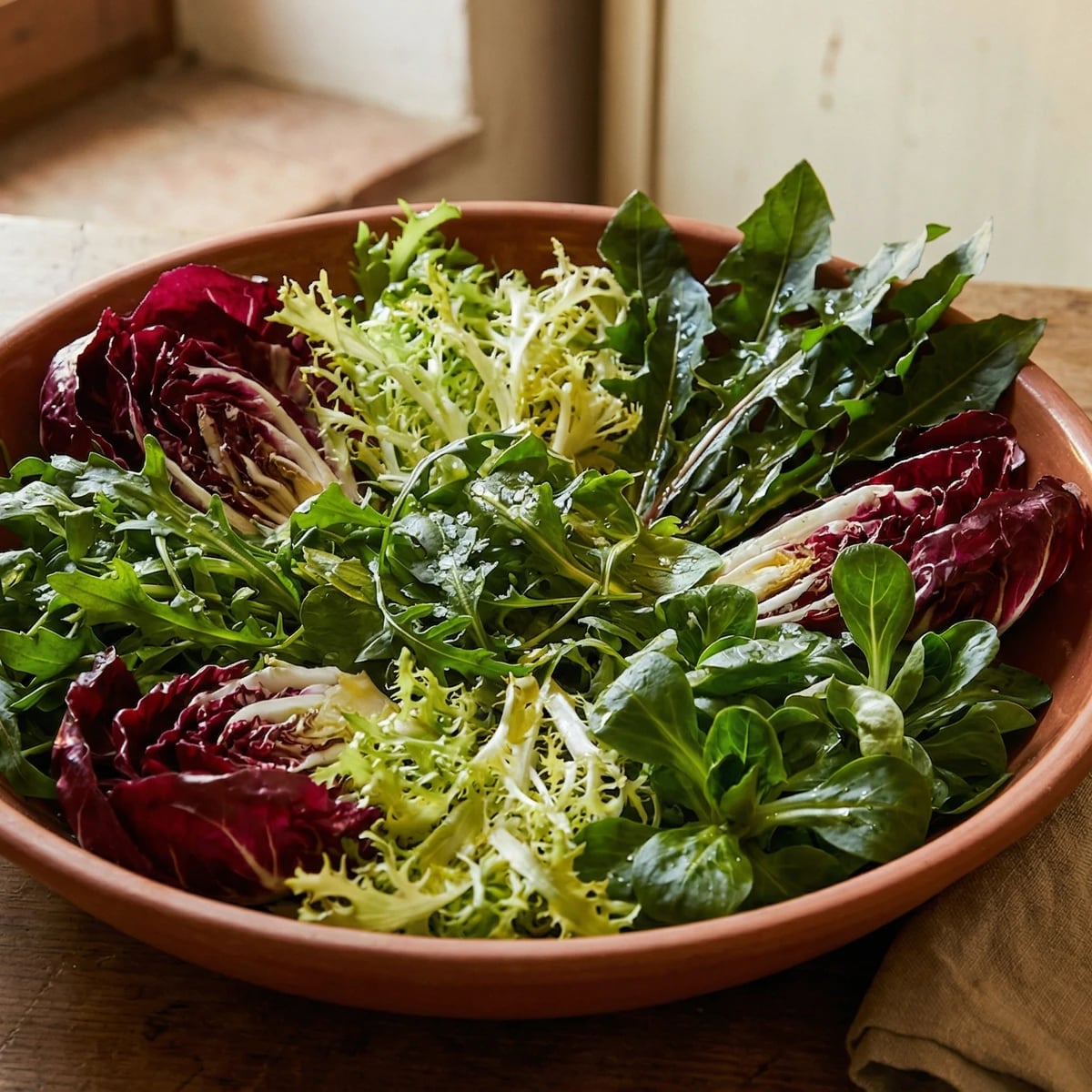
Misticanza Romana

Misticanza Romana

Created by

The wild mixed salad of the Roman countryside, where bitter, peppery, and tender greens come together in a tangle dressed with nothing but honest olive oil, a whisper of lemon, and salt.

Salads
Italian, Roman
Weeknight
Dinner Party
20 min
Active Time
0 min cook20 min total
Yield4 servings

Misticanza is not a recipe. It is a tradition, an act of gathering, a testament to what grows wild in the fields around Rome. The name comes from mescolare, to mix, and the mixing is the point. No single green should dominate. Each leaf contributes its character: the sharp bite of wild arugula, the gentle bitterness of chicory, the clean crunch of puntarelle, the peppery heat of watercress, the buttery softness of lamb's lettuce.

Roman women walked the campagna with baskets, knowing exactly which plants to pick at which stage of growth. A dandelion too old becomes tough. Arugula left too long turns harsh. This knowledge passed through generations, unwritten, learned by tasting and walking the same fields your grandmother walked.

What you keep out matters as much as what you put in. There is no vinegar here, only lemon. No herbs beyond what the greens themselves provide. No garlic, no onion, no distractions. The greens speak for themselves, and your job is to not shout over them.

Misticanza predates written recipes, stretching back to when Roman peasants foraged the fields of the Agro Romano for edible wild plants. The tradition nearly vanished as Rome urbanized, but the Mercato di Campo de' Fiori and specialty farms have preserved it. Traditional misticanza contains a minimum of seven greens, with some old recipes calling for as many as twenty-one different varieties.

The technique, the tradition, and the story behind every dish.

Discover Culinary Explorer

Ingredients

mixed wild and bitter greens

Quantity

8 ounces

rucola selvatica, puntarelle, cicoria, radicchio

tender lettuces

Quantity

4 ounces

lattughino, valerianella

peppery greens

Quantity

2 ounces

crescione, young dandelion leaves

extra virgin olive oil

Quantity

1/4 cup

fresh lemon juice

Quantity

1 tablespoon

flaky sea salt

Quantity

to taste

Equipment Needed

  • Large basin for washing greens
  • Salad spinner
  • Wide serving bowl

Instructions

  1. 1

    Select the greens

    True misticanza contains no single green in dominance. You want variety: something bitter (cicoria, radicchio), something peppery (rucola selvatica, crescione), something tender and mild (valerianella, lattughino), something with interesting texture (puntarelle). Seven or more varieties is traditional. Fewer than five is not misticanza at all.

    The women who gathered these greens in the Roman campagna knew each plant by taste. A handful of dandelion for bitterness, some wild arugula for pepper, tender mâche for balance. Think of yourself as composing, not just collecting.
  2. 2

    Wash and dry thoroughly

    Submerge all greens in a large basin of very cold water. Lift them out gently, letting dirt sink to the bottom. Repeat until no grit remains. Dry them completely in a salad spinner, then spread on clean towels and pat dry. Water is the enemy of proper dressing. A single wet leaf and the oil slides off, pooling uselessly at the bottom of the bowl.

  3. 3

    Tear, do not cut

    Tear larger leaves into bite-sized pieces with your hands. A knife bruises the delicate edges and causes oxidation. Small leaves remain whole. The variety of shapes is part of the beauty.

  4. 4

    Dress at the last moment

    Place the greens in a wide bowl that gives you room to toss. Drizzle the olive oil over all. Toss gently with your hands or two large spoons, coating every leaf with the thinnest possible film of oil. The greens should glisten, not drip. Add the lemon juice and a generous pinch of flaky salt. Toss again briefly.

    Your olive oil must be excellent. A fresh, peppery oil from Lazio is ideal. The greens provide the complexity; the oil provides the body. There is nowhere to hide mediocrity.
  5. 5

    Serve immediately

    Transfer to a serving bowl or individual plates. Serve within minutes. Dressed greens wait for no one. The salt draws moisture, the acid wilts the leaves. This is not a salad that sits on a buffet. You dress it, you serve it, you eat it.

Chef Tips

  • Seek out Italian specialty markets or farmers who grow traditional bitter greens. Supermarket mesclun is a pale imitation: too mild, too uniform, bred for long shelf life rather than flavor.
  • If you cannot find true wild greens, compose your own misticanza from arugula (the peppery kind, not baby arugula), radicchio di Treviso, frisée, watercress, mâche, and dandelion greens. The balance of bitter, peppery, and tender must remain.
  • Romans sometimes add a few shavings of pecorino Romano. This is acceptable. What is not acceptable is turning misticanza into a composed salad with croutons, nuts, or dried fruit. That is something else entirely.
  • The oil goes on before the acid. This coats the leaves and protects them from wilting too quickly. If you dress the greens properly, they hold for perhaps ten minutes. After that, the salad collapses.

Advance Preparation

  • The greens can be washed, dried, and stored loosely wrapped in towels inside a plastic bag for up to one day. They must be absolutely dry.
  • Do not dress the salad until the moment of serving. This cannot be made ahead in any meaningful sense. The preparation is the work; the eating follows immediately.

Frequently Asked Questions

Nutrition Information

1 serving (about 115g)

Calories
140 calories
Total Fat
14 g
Saturated Fat
2 g
Trans Fat
0 g
Unsaturated Fat
12 g
Cholesterol
0 mg
Sodium
150 mg
Total Carbohydrates
3 g
Dietary Fiber
1 g
Sugars
1 g
Protein
2 g

Note: Chef personas and recipes are created with AI assistance. Cook with care: follow safe food-handling practices, check doneness with a thermometer when needed, and adapt for allergies and your kitchen.

Where cooking meets culture.

Culinary guides, cultural storytelling, and the editorial depth that makes cooking meaningful.

Discover Culinary Explorer

More from Chef Graziella's Italian Salad Collection

Browse the full collection