Chef Graziella
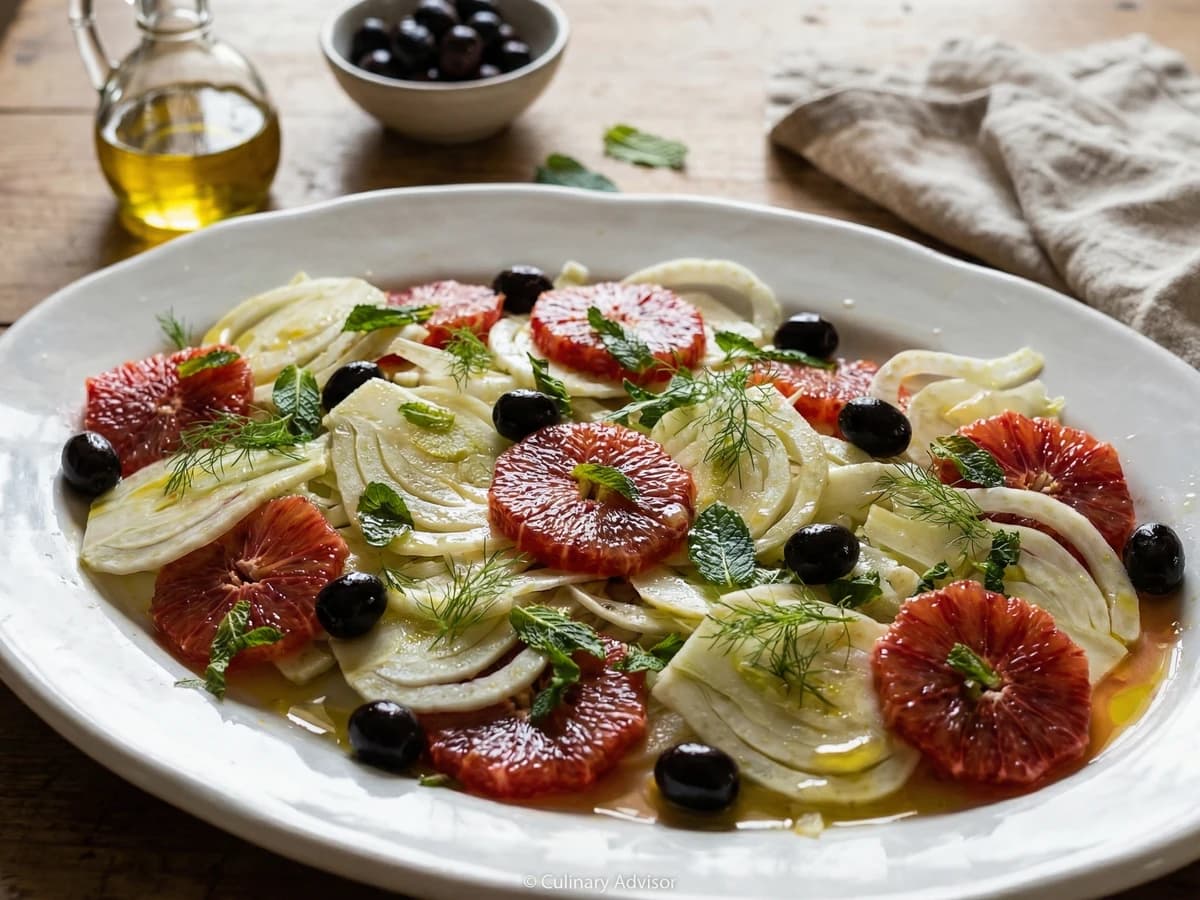
Insalata di Finocchi e Arance
A Sicilian winter salad where anise-sweet fennel meets blood oranges, black olives, and mint. The Arabs who ruled Sicily for two centuries left this gift behind.
A cooking platform built around craft, culture, and the stories behind what we eat.
Created by
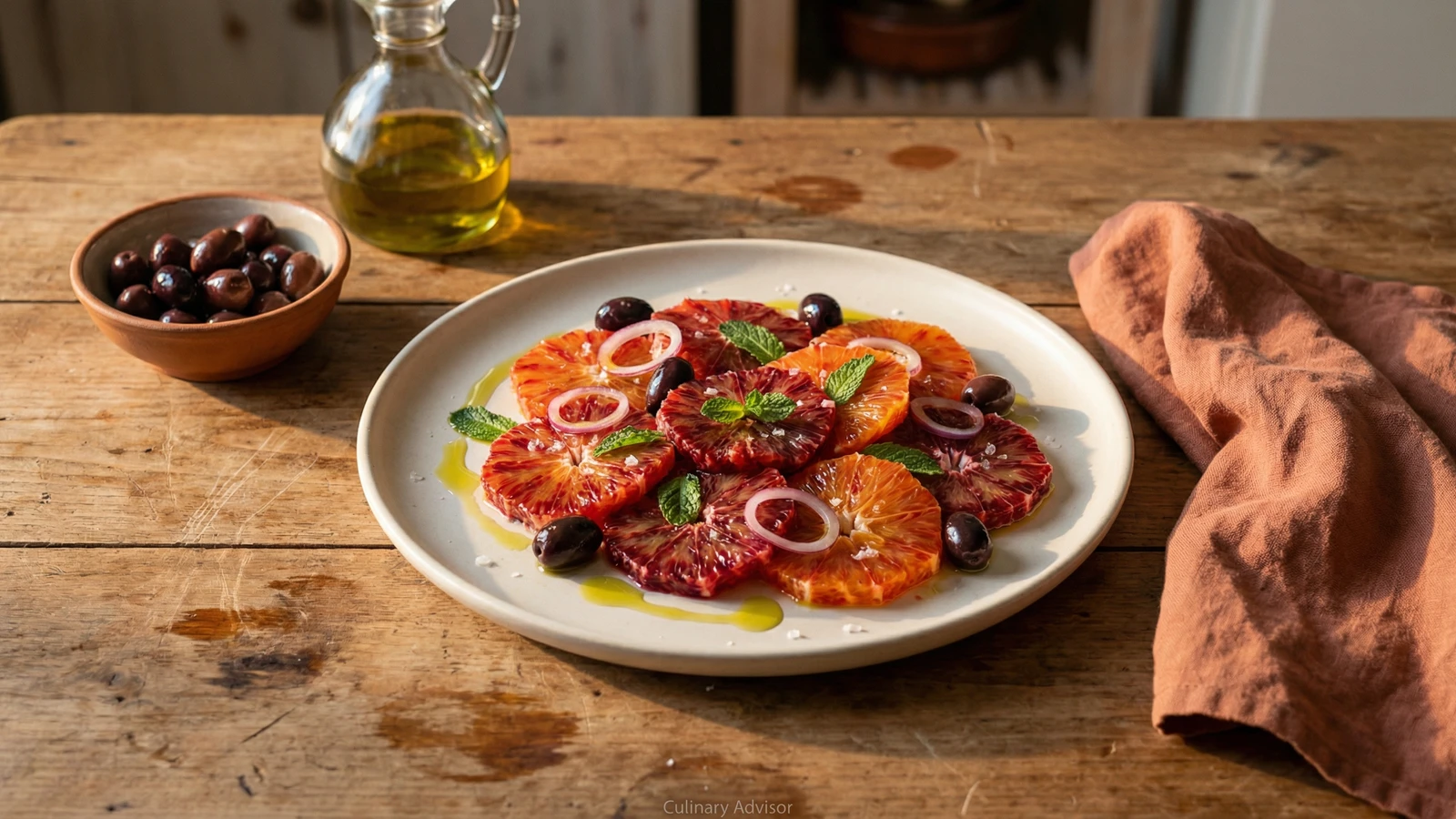
The orange salad of Syracuse, where winter citrus needs nothing but olive oil, salt, and the restraint to add nothing more. A lesson in what happens when you trust perfect ingredients.
Sicilians do not need lessons in restraint, but they could teach them. This salad from Syracuse proves the point. Blood oranges, sliced and dressed with olive oil. Salt. Perhaps a few rings of red onion, perhaps some olives. Nothing else.
No vinegar. The orange is its own acid. Those who add lemon juice or balsamic have missed the entire philosophy of the dish. The fruit does the work. You simply arrange it properly and get out of the way.
This is winter food. Blood oranges come into season in January and February, their flesh striped with crimson from the volcanic soil and cold Sicilian nights. When you slice one open and see that deep red bleeding into orange, you understand why generations of Syracusans have been making this salad. You do not improve upon perfection. You serve it.
Arab traders brought bitter oranges to Sicily in the 9th century, but the sweet oranges that make this salad possible arrived centuries later via Portuguese trade routes. Syracuse, one of the ancient world's greatest Greek cities, sits in the heart of Sicily's blood orange country, where the volcanic soil of Mount Etna and dramatic temperature swings between day and night create the characteristic crimson pigment. This salad has been served in Syracusan homes for generations, always in winter, always without vinegar.
Quantity
4 large
Quantity
1 small
sliced paper-thin
Quantity
12
pitted
Quantity
finest quality, Sicilian if possible
Quantity
to taste
Quantity
to taste
freshly ground
Quantity
small handful
| Ingredient | Quantity |
|---|---|
| blood oranges | 4 large |
| red onionsliced paper-thin | 1 small |
| oil-cured black olivespitted | 12 |
| extra virgin olive oil | finest quality, Sicilian if possible |
| flaky sea salt | to taste |
| black pepperfreshly ground | to taste |
| fresh mint leaves (optional) | small handful |
Slice the red onion as thin as you can manage. If your knife skills allow it, the slices should be translucent. Place them in a small bowl of ice water for 10 minutes. This removes the harsh bite while preserving the crunch. Drain thoroughly and pat dry with a clean towel.
With a sharp knife, cut away the peel and all the white pith from each orange. Work over a bowl to catch the juices. Slice the oranges into rounds about one-quarter inch thick. Remove any seeds. The rounds should be even and intact. Reserve any juice that accumulates.
Lay the orange slices on a serving plate, overlapping them slightly. Scatter the drained onion rings over the oranges. Distribute the olives across the surface. The arrangement should look casual, as though you simply placed them there without fuss. Because you did.
Drizzle the reserved orange juice over the salad, then follow with a generous pour of your finest olive oil. The oil should pool slightly around the edges and glisten on the surface of each slice. Season with flaky salt and a few grinds of black pepper. If using mint, scatter the leaves now. Serve immediately.
1 serving (about 200g)
Culinary guides, cultural storytelling, and the editorial depth that makes cooking meaningful.
Discover Culinary ExplorerChef Graziella
A Sicilian winter salad where anise-sweet fennel meets blood oranges, black olives, and mint. The Arabs who ruled Sicily for two centuries left this gift behind.
Chef Graziella
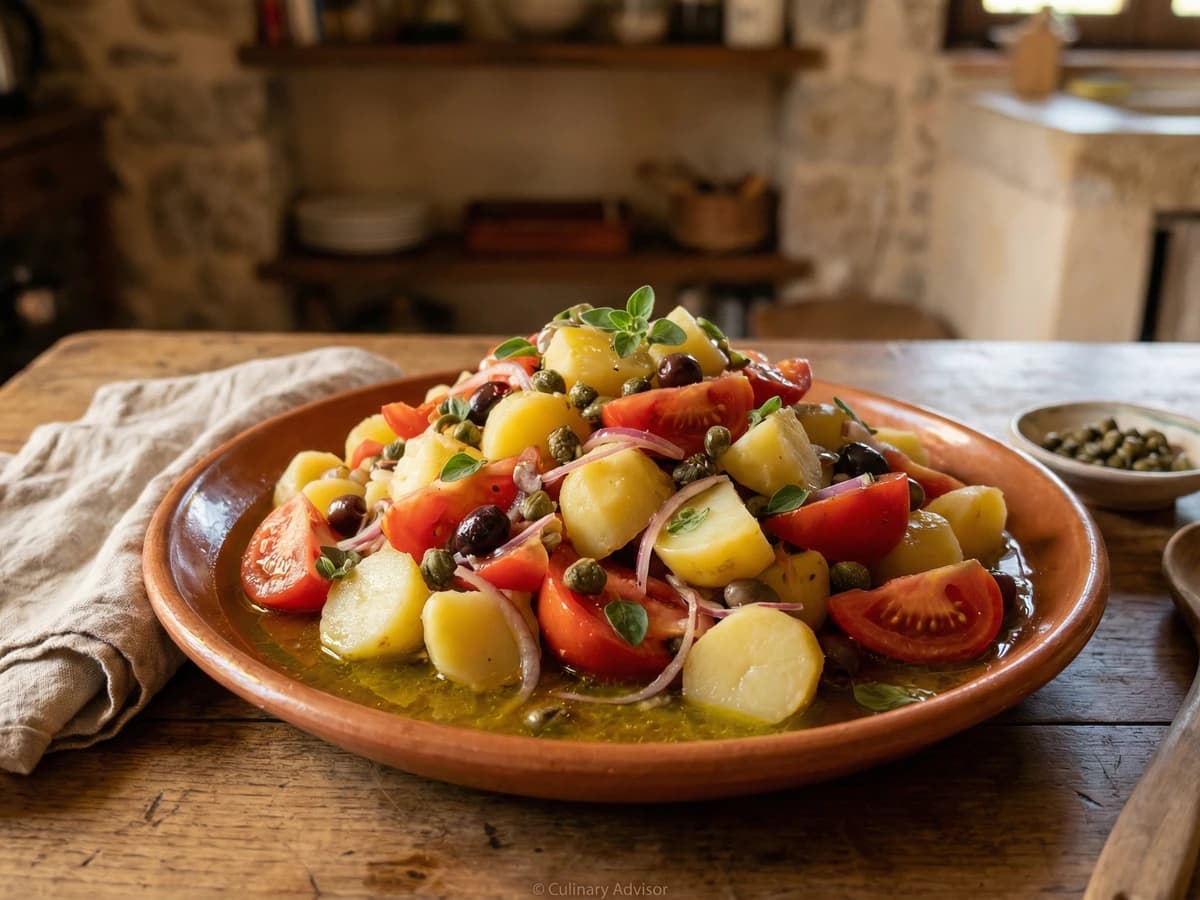
A salad born on a volcanic island suspended between Sicily and Africa, where the capers grow wild among the lava rocks and the sun ripens tomatoes to impossible sweetness. This is what summer tastes like.
Chef Graziella
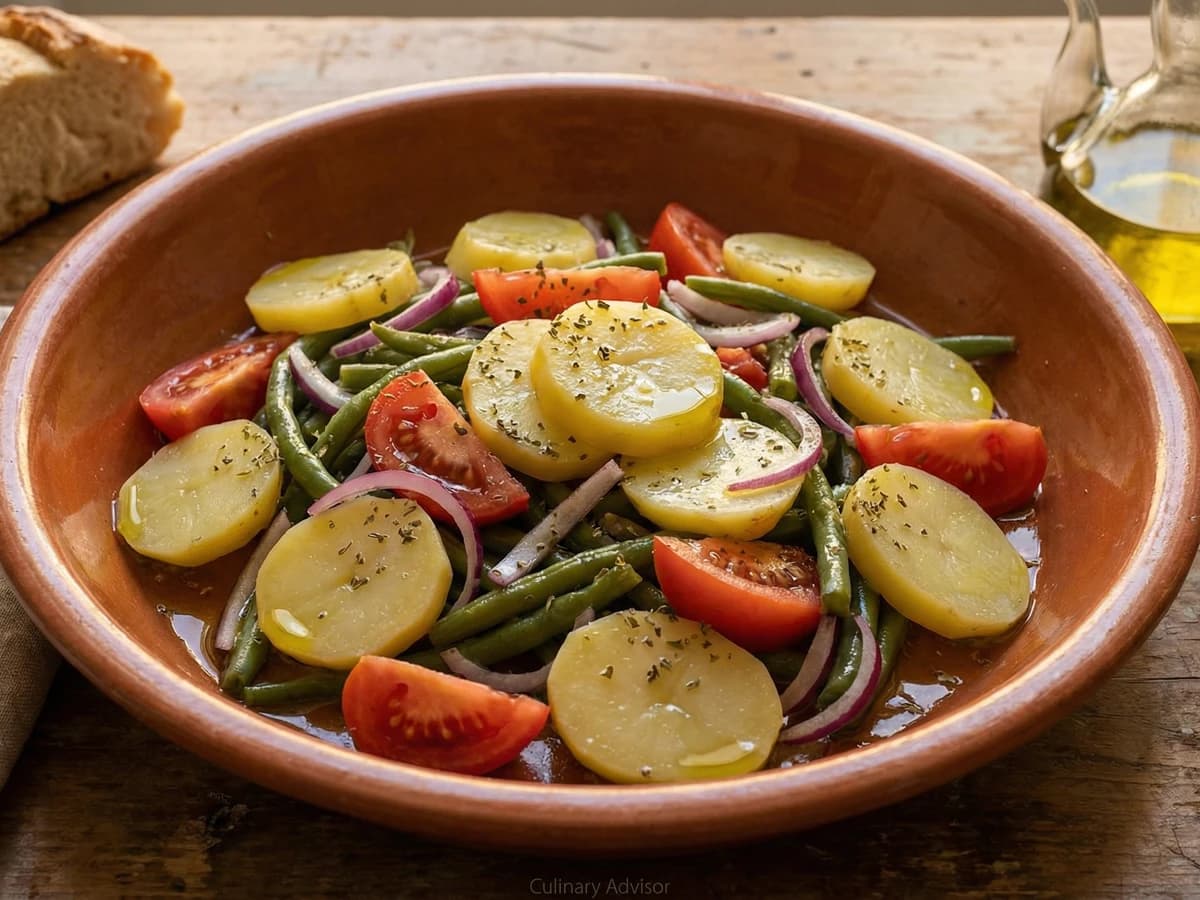
A Sicilian peasant salad of potatoes, green beans, tomatoes, and raw onion, dressed simply with olive oil and vinegar. Food for working people who knew that humble ingredients, treated with respect, feed both body and soul.
Chef Juliette
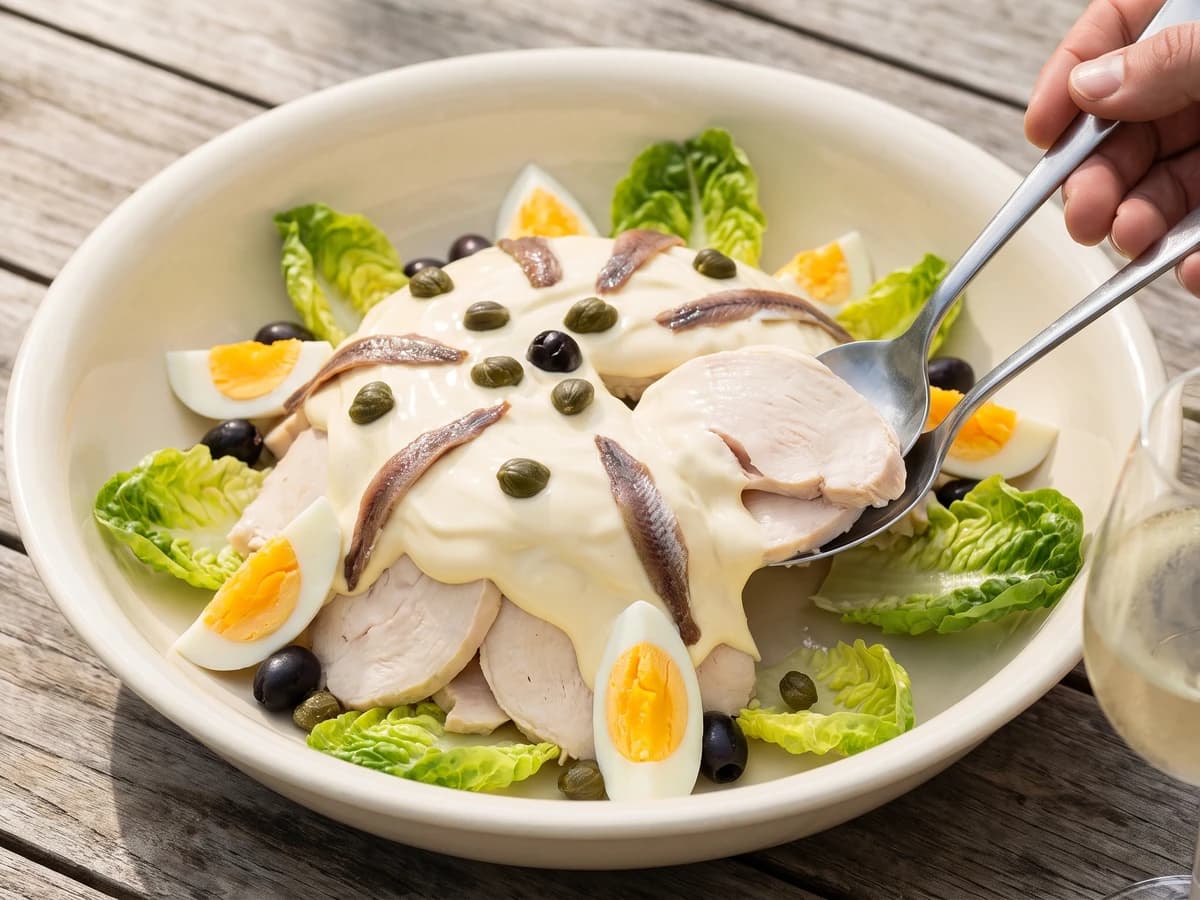
Cold roast chicken, ciseled lettuce, and a shining coat of homemade mayonnaise, arranged with capers, olives, anchovies, eggs, and lettuce hearts, then tossed at the table as the canon intends.