Culinary Explorer

A cooking platform built around craft, culture, and the stories behind what we eat.
Discover Culinary Explorer
Mingau de Crueira

Mingau de Crueira

Created by

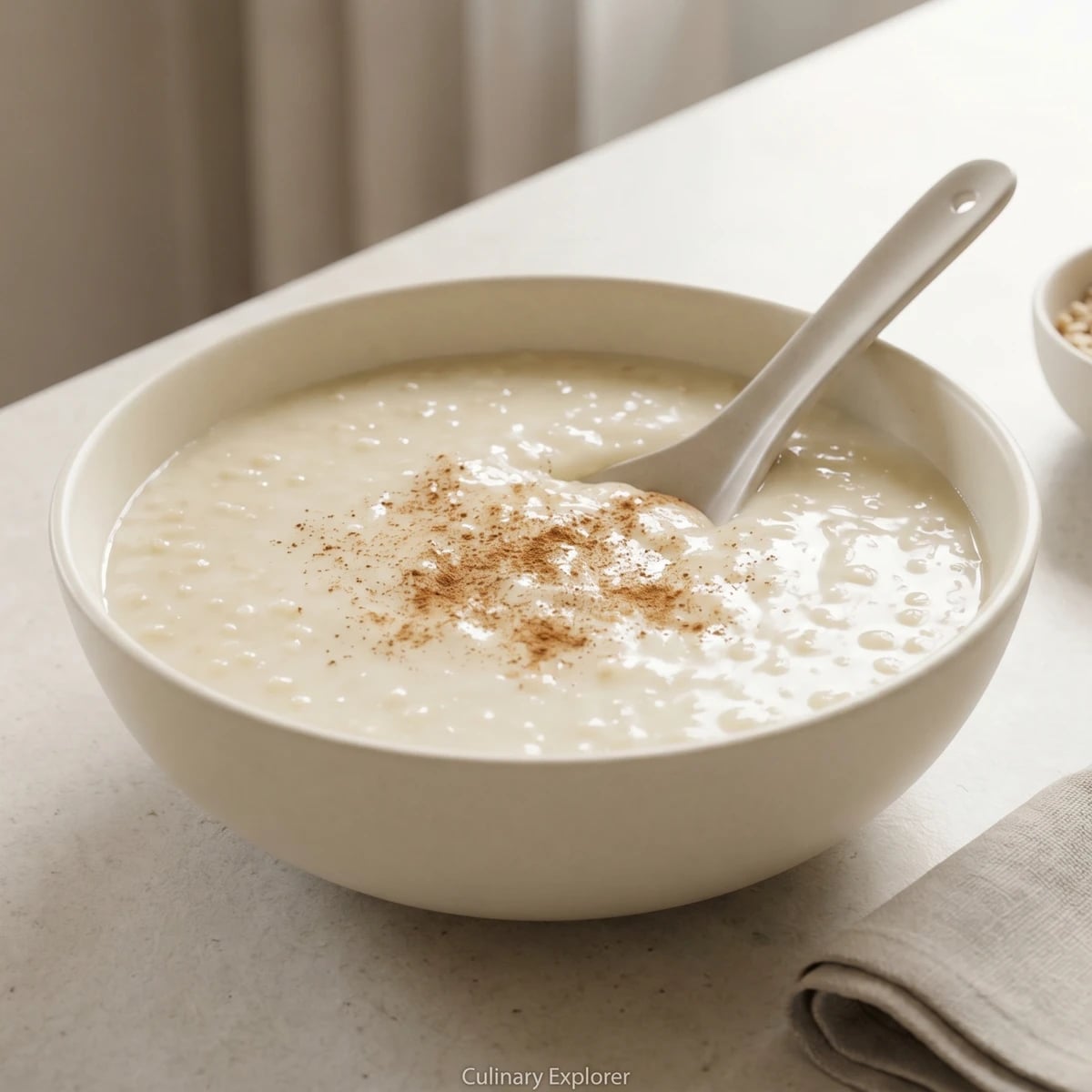
You don't need a secret hand for this. Crueira, milk, sugar, and patience make a creamy Pará porridge from what the casa de farinha refuses to waste.

Breakfast & Brunch
Brazilian
Comfort Food
Weeknight
Budget Friendly
10 min
Active Time
25 min cook35 min total
Yield4 servings

You look at a bag of crueira and think, isso não é pra mim. I know. It looks like something only someone raised beside a casa de farinha would know what to do with. But cooking isn't a gift, it's something you learn, and this one is beautifully honest: hydrate, simmer, stir, pegar ponto.

Crueira is what survives the sieve when mandioca is turned into farinha. That alone tells you the whole lesson. Comida de verdade doesn't throw away what still feeds a house. In Pará, a bag like this can become breakfast, supper, or the sweet bowl that keeps everyone quiet for five minutes, which is no small miracle.

This mingau belongs beside the everyday Brazilian plate because it comes from the same intelligence: rice and beans, a piece of fish or meat or an egg, something green, and the starches that make dinner possible without drama. A gente doesn't need powder pretending to be food. We need to read the bag, understand the ingredient, and cook it until it tells us it's ready.

The method is simple, but don't rush it. Soak the crueira so the grains soften evenly. Simmer gently so the milk thickens instead of scorching. Stir until the spoon leaves a soft trail and the porridge looks glossy. Anota aí: that's the point. Not mystery. Method.

Crueira comes from the Amazonian casa de farinha, where mandioca is peeled, grated, pressed, sieved, and toasted into farinha; the coarse pieces held back by the sieve are kept and cooked instead of wasted. In Pará, home cooks turn crueira into mingau with milk, sugar, and cinnamon, while local farinha traditions vary from places such as Bragança, Mosqueiro, and Santarém Novo to Indigenous communities that carry their own cassava knowledge. This version is a home-kitchen porridge using food-grade dried crueira, not an attempt to replace the cooks and farinha makers who own those specifics.

The technique, the tradition, and the story behind every dish.

Discover Culinary Explorer

Ingredients

food-grade dried crueira

Quantity

1 cup

water

Quantity

2 cups

for soaking

whole milk

Quantity

3 cups

coconut milk (optional)

Quantity

1/2 cup

sugar

Quantity

1/3 cup, plus more to taste

cinnamon stick

Quantity

1

salt

Quantity

1 pinch

unsalted butter (optional)

Quantity

1 tablespoon

ground cinnamon

Quantity

to finish

Equipment Needed

  • Heavy 2-liter pot
  • Medium bowl for soaking
  • Wooden spoon or silicone spatula
  • Measuring cups and spoons

Instructions

  1. 1

    Read the bag

    Check that your crueira is food-grade, dried, and meant for cooking. It should smell clean and lightly toasted, never sour, moldy, or damp. Crueira is not farinha d'água, not farinha seca, not polvilho, and not goma de mandioca. It is the coarse manioc bits that stayed in the sieve, and that texture is exactly why the mingau has body.

  2. 2

    Soak the crueira

    Put the crueira in a bowl, cover with the water, and let it sit for 10 minutes. Drain off any loose water. This short soak softens the grains so they cook evenly in the milk instead of staying hard in the middle while the outside turns pasty.

  3. 3

    Start the milk

    In a heavy pot, combine the milk, coconut milk if using, sugar, cinnamon stick, and salt. Warm over medium heat until the milk is hot around the edges and the sugar has dissolved. Don't boil it hard. Milk scorches when you bully it, and then the whole pot tastes like the bottom of the pan.

  4. 4

    Cook the grains

    Stir in the drained crueira and lower the heat to medium-low. Cook, stirring often, for 18 to 22 minutes, scraping the bottom and corners of the pot each time. The grains should swell, the milk should thicken, and the spoon should leave a soft trail before the porridge closes back over it. That's the ponto.

  5. 5

    Finish glossy

    Turn off the heat and stir in the butter if you want a rounder finish. Taste and adjust the sugar only now, because the sweetness concentrates as the mingau thickens. Let it rest for 5 minutes. It will settle into a creamy, spoonable porridge instead of running all over the bowl.

  6. 6

    Serve warm

    Spoon into bowls and dust with ground cinnamon. Serve warm, when the surface is glossy and the grains still have a gentle chew. If it thickens too much, stir in a splash of milk over low heat. No drama. Porridge forgives the cook who pays attention.

Chef Tips

  • Buy crueira from a trusted market stall, farinha maker, or Brazilian grocery that labels it for food use. Raw, unprocessed manioc is not something to improvise with at home. Let the casa de farinha do that work properly.
  • Read the mandioca shelf. Farinha d'água is fermented and granular, farinha seca is drier and more neutral, polvilho doce and polvilho azedo are starches, goma de mandioca is hydrated starch for tapioca crepes, and crueira is what survives the sieve. Same root, different jobs.
  • The honest Tuesday shortcut is a shorter soak in hot water, 5 minutes instead of 10. It works, but the grains cook a little less evenly. The shortcut I won't hand you is instant powdered porridge. That's not saving time, that's being sold the idea that you can't stir milk in a pot.
  • If you have good coconut milk, use half a cup. If you don't, leave it out. Bad coconut milk tastes like a can trying to be a coconut, and crueira deserves better than that.
  • Leftovers thicken in the fridge. Reheat with a splash of milk over low heat, stirring until creamy again. Don't microwave it into a rubbery lump and then blame Pará.

Advance Preparation

  • Measure the crueira and check the bag the day you buy it. Store it dry and sealed, away from humidity.
  • The finished mingau keeps for up to 3 days in the fridge. Reheat gently with extra milk until spoonable again.

Frequently Asked Questions

Nutrition Information

1 serving (about 260g)

Calories
365 calories
Total Fat
15 g
Saturated Fat
11 g
Trans Fat
0 g
Unsaturated Fat
4 g
Cholesterol
25 mg
Sodium
125 mg
Total Carbohydrates
51 g
Dietary Fiber
2 g
Sugars
27 g
Protein
7 g

Note: Chef personas and recipes are created with AI assistance. Cook with care: follow safe food-handling practices, check doneness with a thermometer when needed, and adapt for allergies and your kitchen.

Where cooking meets culture.

Culinary guides, cultural storytelling, and the editorial depth that makes cooking meaningful.

Discover Culinary Explorer

More from Manioc & Tucupi: Farinha, Goma, Beiju & Tapioca Amazônica

Browse the full collection