
Chef Juliana
Beiju de Mandioca
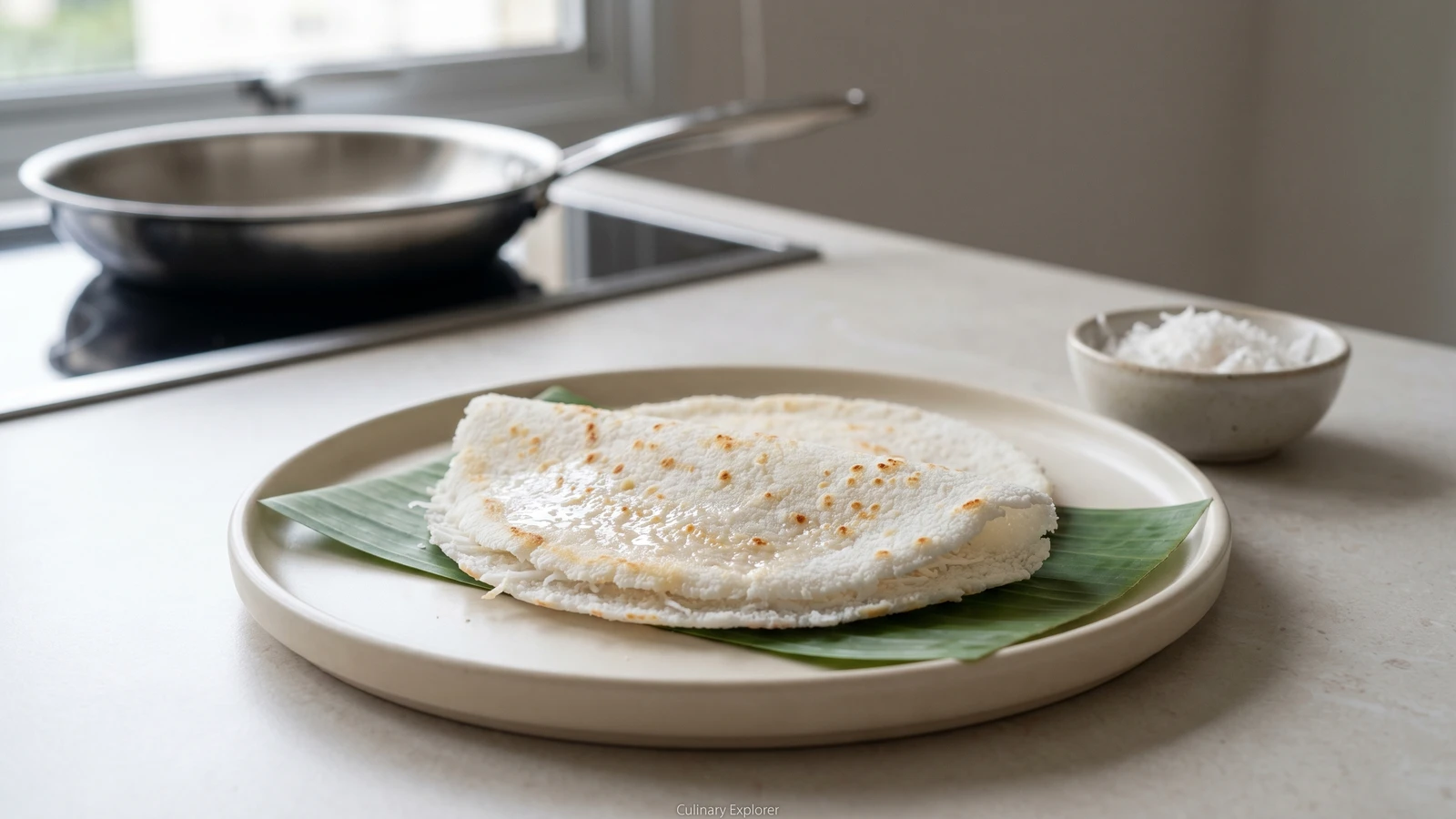
You don't need yeast, wheat, or courage. Grate sweet cassava, press it dry, sieve the crumbs, and toast them into a flatbread that belongs beside beans, greens, and whatever solves dinner.
A cooking platform built around craft, culture, and the stories behind what we eat.
Created by
You don't need a bakery, a special hand, or courage. You need real goma de mandioca, fresh coconut, a hot pan, and the sense to let the beiju firm before turning.
You know that little voice saying "isso não é pra mim" before you've even opened the bag? I know her. I had the same voice in my kitchen, standing there with my cheap caderno, pretending cassava had personally offended me. Anota aí: cozinhar não é dom, é um aprendizado. Beiju looks mysterious until you see what it really is, hydrated cassava starch pressed by heat into a thin flatbread.
This is comida de verdade at its most direct. Goma de mandioca, fresh coco, a pinch of salt, and a hot pan. No packet pretending to be breakfast, no powdered imitation of dinner. The method matters because the starch only holds together when it has the right moisture and enough heat. Too dry and it cracks. Too wet and it gums up. Hot pan, even layer, patience for the first side. That's the recipe doing its job.
On a Brazilian table, beiju doesn't replace the pê-efe, rice, beans, meat or egg or fish, and something green. It lives beside that logic: cassava as another everyday starch, the kind that feeds people without making a speech about itself. Make it for breakfast, fold it around cheese, eat it with coffee, or put it next to a simple plate when rice isn't the starch today.
And read the bag. Goma de mandioca is hydrated tapioca starch for making beiju, not tapioca pearls for pudding. Polvilho doce and polvilho azedo are dry starches, useful for other things, but they won't behave the same here unless you hydrate and sieve them properly. Farinha d'água is toasted cassava meal from a different process, farinha seca is another meal again, and crueira is what survives the sieve. Cassava is generous, but it is not one bag wearing ten names for fun.
Beiju is an Indigenous cassava flatbread made across Brazil long before wheat bread became common, with strong living traditions in the Amazon and the Nordeste. In places such as Pará and Amazonas, cooks still distinguish the many cassava products by process and texture, from goma to farinha d'água to crueira. This home version uses market-bought hydrated goma and fresh coconut, while the finer specifics of Mosqueiro, Santarém Novo, Bragança, and Baniwa practice belong to the cooks who carry them.
Quantity
3 cups
at room temperature
Quantity
1 cup
Quantity
1/2 teaspoon
Quantity
1 tablespoon
Quantity
1 tablespoon
only if the goma feels dry
Quantity
1 small
wiped clean and cut into pan-sized pieces
| Ingredient | Quantity |
|---|---|
| hydrated goma de mandioca for tapiocaat room temperature | 3 cups |
| fresh grated coconut | 1 cup |
| fine salt | 1/2 teaspoon |
| sugar (optional) | 1 tablespoon |
| water (optional)only if the goma feels dry | 1 tablespoon |
| banana leaf (optional)wiped clean and cut into pan-sized pieces | 1 small |
Check that the bag says hydrated goma de mandioca or goma para tapioca. It should feel like damp sand that clumps when you squeeze it, then breaks apart when you rub it. If you bought tapioca pearls, farinha d'água, farinha seca, polvilho doce, or polvilho azedo, stop here and use them for the right recipe. The pan can't fix the wrong cassava product.
Set a sieve over a bowl and push the goma through with your fingers. Break every lump. The texture should fall like fine damp crumbs, not pebbles. This matters because lumps cook into hard spots, while sieved goma melts together into an even flatbread.
Stir in the grated coconut, salt, and sugar if using. Squeeze a handful. It should hold together lightly, then crumble when rubbed. If it falls apart like dry sand, sprinkle in 1 tablespoon water and mix again. Don't flood it. Wet goma turns gummy before it turns tender, and then you'll blame yourself instead of the spoon.
Warm a dry nonstick or well-seasoned skillet over medium heat for 3 minutes. Hold your hand a safe distance above it and feel steady heat, not a weak little warmth. The starch needs immediate heat to bind. A cool pan dries the beiju out before it sets.
Scatter about 1/2 cup of the coconut goma into the pan in an even circle, 15 to 18 cm wide. Pat the surface gently with the back of a spoon, just enough to level it, not enough to pack it hard. Thin edges turn crisp, the center stays tender, and the whole thing holds because the grains touch each other.
Cook for 2 to 3 minutes, until the edges look dry and lift easily with a spatula. Don't poke every ten seconds. The first side is where the beiju becomes one piece instead of a bowl of damp starch. Move it too early and it breaks, which is annoying but not tragic. Press it back together and keep going.
Flip the beiju and cook the second side for 1 to 2 minutes, until it has pale golden freckles and smells nutty from the coconut. If using banana leaf, lay a piece in the pan for the last minute and set the beiju on top of it to pick up a soft green aroma. The leaf is perfume, not a costume.
Serve the beiju warm, folded or flat. For make-ahead, stack cooked beijus between clean kitchen towels so they stay flexible while cooling. Reheat in a dry pan for 30 to 45 seconds per side. Microwave makes them rubbery, and a gente is not doing all this to eat a tire.
1 serving (about 80g)
Culinary guides, cultural storytelling, and the editorial depth that makes cooking meaningful.
Discover Culinary ExplorerChef Juliana
You don't need yeast, wheat, or courage. Grate sweet cassava, press it dry, sieve the crumbs, and toast them into a flatbread that belongs beside beans, greens, and whatever solves dinner.

Chef Juliana
You don't knead it, roll it, or fear it. Hydrate the goma, sieve it fine, and let the hot pan teach cassava to hold together.

Chef Juliana
You don't need a bakery arm or a family secret. Mix rye with wheat, let time do its quiet work, and bake a dark, close-crumb loaf that feeds the week.
Chef Juliana
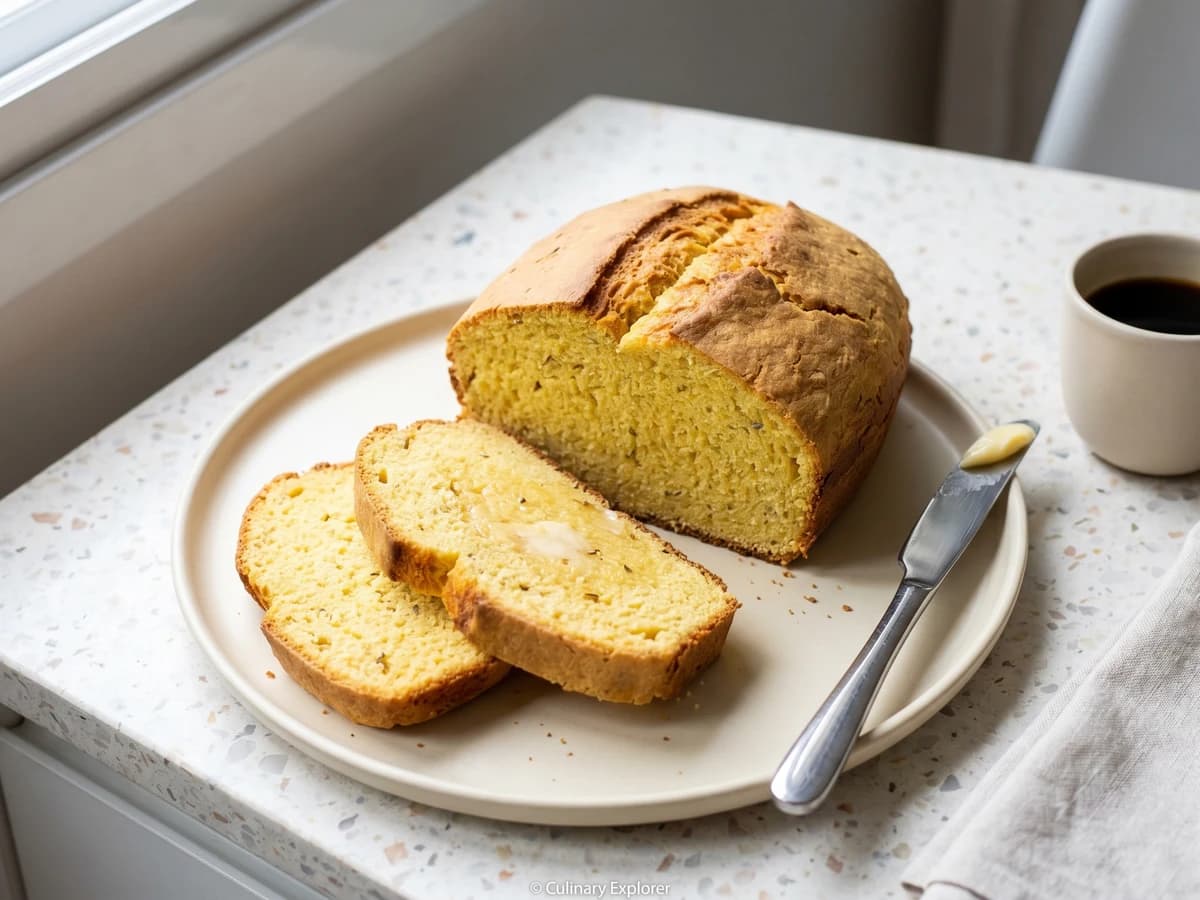
You don't need bakery hands for this. Fubá, a little wheat, eggs, milk, and erva-doce make the kind of broa that slices clean, freezes well, and smells like afternoon coffee.