
Chef Lupita
Acitrón de Cidra Conventual
Puebla's convent-style acitrón, made from cidra peel instead of endangered biznaga, built through repeated syrup soakings until the cubes turn firm, translucent, and ready for rosca or chiles en nogada.
A cooking platform built around craft, culture, and the stories behind what we eat.
Created by
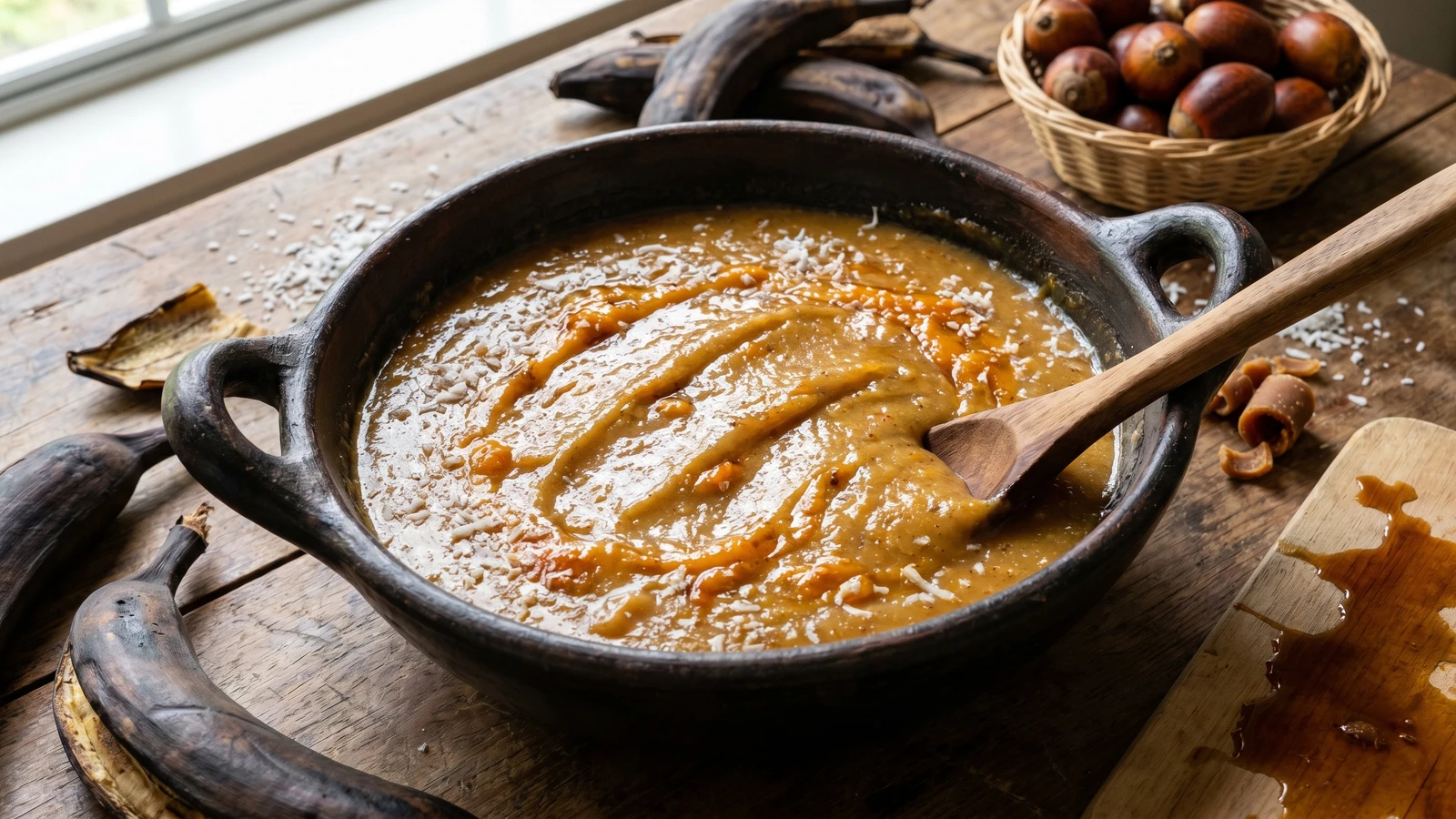
Guerrero's Costa Chica migado, claimed in Copala's Afromestizo kitchens, thickens ripe plantain, corozo palm fruit, milk, piloncillo, canela, and fresh coconut into a spoon dessert with coastal memory.
Guerrero, Costa Chica, Copala. That is where this migado lives, in the Afromestizo sweet pantry of the Pacific coast, where platano macho, corozo palm fruit, piloncillo, coconut, milk, and canela do the work. This is not a dessert from a pastry case. It is a spoon sweet from a home kitchen, served in clay, made to wait for people coming in from the heat.
The corozo is the ingredient that marks the territory. It is a palm fruit, small and stubborn, with orange flesh that takes work to coax away from the seed. In Copala, the women who know it do not treat that labor as decoration. They simmer, scrape, mash, and stir until the fruit gives its perfume to the milk. La cocina no es decoracion, es trabajo.
The plantain must be ripe. Not yellow with one black spot. Blackened, soft, sweet, almost collapsing. That is what thickens the migado and gives it the weight of comfort food. Use piloncillo, not white sugar. Use fresh grated coconut, not desiccated. Cada estado, su propia cocina, and the Black community of Guerrero's coast has earned the right to have its ingredients named correctly.
Copala sits in Guerrero's Costa Chica, a coastal region shared with Oaxaca and known as one of Mexico's strongest Afro-Mexican cultural centers since enslaved and free African-descended communities formed there during the colonial period. Corozo palm fruit appears across Afro-diasporic foodways in the Caribbean, Central America, and Mexico's coasts, where its oily pulp and hard seed made it useful for sweets, drinks, and household cooking. The 2020 Mexican census was the first to count Afro-Mexicans as a national population category, but dishes like this migado kept community identity visible long before the state decided to name it.
Quantity
12
rinsed well
Quantity
4
skins blackened in spots
Quantity
4 cups
Quantity
1 cup, plus more for simmering the corozo
Quantity
6 ounces
chopped
Quantity
1
Quantity
1/4 teaspoon
Quantity
1 cup
loosely packed
Quantity
1 teaspoon
| Ingredient | Quantity |
|---|---|
| fresh corozo palm fruitsrinsed well | 12 |
| very ripe platanos machosskins blackened in spots | 4 |
| whole milk | 4 cups |
| water | 1 cup, plus more for simmering the corozo |
| piloncillochopped | 6 ounces |
| Mexican cinnamon stick | 1 |
| fine sea salt | 1/4 teaspoon |
| freshly grated coconutloosely packed | 1 cup |
| vanilla extract (optional) | 1 teaspoon |
Put the rinsed corozo fruits in a small pot and cover with water by one inch. Simmer over medium heat for 20 to 25 minutes, until the skins soften and the kitchen smells lightly fruity and nutty. Drain, cool just enough to handle, then rub and scrape the orange flesh from the hard seeds. Keep the pulp. Discard the seeds unless you have the patience to crack them later for the kernel.
Cut the ends from the platanos machos and score the skins lengthwise. Place them in a pot, cover with water, and simmer for 15 to 18 minutes, until a knife slides through without resistance. Drain, peel, and mash while warm with a wooden spoon. Do not puree them smooth. Migado should have body, little soft pieces that tell you it was worked by hand.
In a heavy clay cazuela or thick-bottomed pot, combine the milk, 1 cup water, chopped piloncillo, Mexican cinnamon stick, and salt. Cook over medium-low heat, stirring often, until the piloncillo dissolves completely and the milk turns the color of wet brown sugar. Keep the heat respectful. Scorched milk ruins a sweet faster than a careless cook admits.
Stir the mashed plantain into the piloncillo milk. Add the corozo pulp and cook over low heat for 15 to 20 minutes, stirring from the bottom so it does not catch. The mixture should thicken like a loose pudding, glossy from the plantain starch and speckled with corozo. If it gets too stiff, add a splash of milk. If it is thin, keep stirring. No me vengas con atajos.
Fold in the freshly grated coconut and cook 5 minutes more. Fresh coconut matters here. Desiccated coconut tastes like a bag, not like the Costa Chica pantry. Add the vanilla only if your corozo is mild; if the fruit is fragrant, leave the vanilla out and let the palm fruit speak.
Remove the cinnamon stick. Spoon the migado into a shallow clay serving dish and let it rest at least 30 minutes. Serve warm or at room temperature. It firms as it sits, which is why Copala cooks make it ahead for the table. Saber cocinar es saber vivir.
1 serving (about 260g)
Culinary guides, cultural storytelling, and the editorial depth that makes cooking meaningful.
Discover Culinary ExplorerChef Lupita
Puebla's convent-style acitrón, made from cidra peel instead of endangered biznaga, built through repeated syrup soakings until the cubes turn firm, translucent, and ready for rosca or chiles en nogada.

Chef Lupita
Ciudad de México's Tulyehualco alegría is popped huautli folded into piloncillo honey, pressed with peanuts, pepitas, and raisins, then cut into the rectangular bars that built a pueblo's identity.

Chef Lupita
Oaxaca's pre-Columbian amaranth bar, popped on a hot comal and bound with piloncillo, honey, and the sacred Zapotec grain that the Spanish tried, and failed, to outlaw.

Chef Lupita
Querétaro's mercado candy of popped amaranto pressed with dark piloncillo syrup, pepitas, pecans, and cacahuate, a Bajío sweet that respects the seed before it decorates the table.