
Chef Juliana
Açaí com Camarão do Pará
You think açaí belongs with banana and granola because that's the version that traveled. In Pará, thick unsweetened açaí sits beside shrimp, rice, and farinha. Anota aí: same fruit, different meal.
A cooking platform built around craft, culture, and the stories behind what we eat.
Created by
You think leftovers are the sad corner of the fridge. Wrong. Rice, beans, egg, linguiça, and couve in a hot pan can resolver o jantar in twenty minutes.
You open the fridge, see yesterday's rice and beans, and hear that quiet little voice: isso não é pra mim. Dinner has already gone wrong, you think. No. Dinner is sitting right there, waiting for a pan and someone with enough sense not to order imitation food in a box.
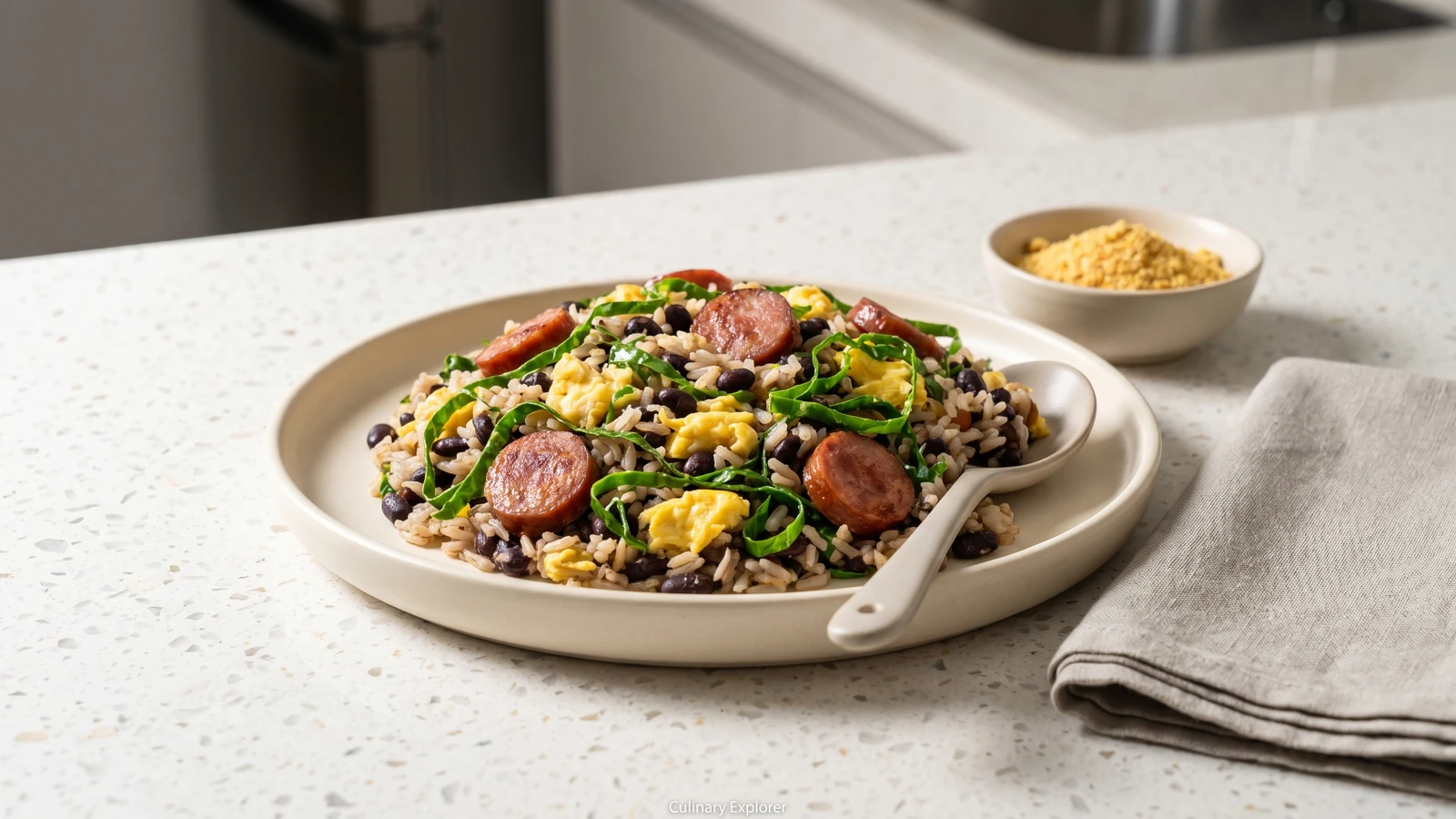
Mexidão is the pê-efe after it loosens its belt: rice, beans, a little meat or egg, something green, all together in one skillet. It's not a lesser plate. It's the everyday Brazilian formula refusing to waste food. A gente takes what was already good yesterday and teaches it to become tonight's meal.
The method is simple, but don't confuse simple with careless. Brown the linguiça so it gives fat and flavor to the pan. Refogar the onion until it goes soft and sweet. Add the rice cold so the grains separate instead of turning to paste. Fold in beans with just enough caldo to coat everything, then finish with couve while it's still bright. That's the whole lesson: heat, order, and attention.
Cozinhar não é dom, é um aprendizado. I learned late, with a cheap caderno and plenty of ruined onions, so anota aí: if you can stir, taste, and stop before the couve dies, you can make this.
Mexido and mexidão are part of the leftover-cooking tradition in Minas Gerais, where rice, beans, pork, eggs, couve, and farinha often met again on the stove instead of going to waste. The dish sits near virado and feijão tropeiro in the same practical family, shaped by farm kitchens, travel food, and the old logic of the fogão a lenha: cook once, eat well more than once. There is no single official version, which is the point; the Mineiro habit is to use what the house has and make it taste intentional.
Quantity
2 tablespoons
Quantity
1 cup
sliced into half-moons
Quantity
1/2 medium
finely chopped
Quantity
2 cloves
minced
Quantity
3 cups
preferably leftover arroz soltinho
Quantity
1 1/2 cups beans with 1/2 cup caldo
Quantity
3 large
beaten with a pinch of salt
Quantity
2 cups
thinly sliced
Quantity
1/3 cup
Quantity
1/2 teaspoon, plus more to taste
Quantity
1/4 teaspoon
Quantity
1 tablespoon
chopped
| Ingredient | Quantity |
|---|---|
| oil or rendered bacon fat | 2 tablespoons |
| linguiça calabresasliced into half-moons | 1 cup |
| onionfinely chopped | 1/2 medium |
| garlicminced | 2 cloves |
| cooked cold white ricepreferably leftover arroz soltinho | 3 cups |
| cooked beans | 1 1/2 cups beans with 1/2 cup caldo |
| eggsbeaten with a pinch of salt | 3 large |
| couvethinly sliced | 2 cups |
| cassava flour or ready farofa (optional) | 1/3 cup |
| salt | 1/2 teaspoon, plus more to taste |
| black pepper | 1/4 teaspoon |
| parsley or green onion (optional)chopped | 1 tablespoon |
Heat a wide skillet over medium-high heat and add the oil or bacon fat. Add the linguiça in one layer and cook until the edges are browned and the pan smells smoky and savory, about 4 minutes. Don't pile it up. Crowding makes the sausage release moisture and steam instead of dourar, and then you get pale slices sitting in grease instead of flavor stuck to the pan.
Lower the heat to medium, add the onion to the same pan, and stir until it goes soft, shiny, and see-through, about 3 minutes. Add the garlic and cook for 30 to 60 seconds, just until you smell it. This is the refogado, the base that makes leftovers taste cooked on purpose. Burn the garlic and it turns bitter, bossy, and impossible to hide.
Add the cold rice and break up any clumps with the spoon. Stir until the grains are hot, loose, and lightly coated in the fat from the pan, about 3 minutes. Cold leftover arroz soltinho is perfect here because the grains have dried a little in the fridge. Fresh wet rice can turn pasty, and then the mexidão becomes wall filler. Nobody asked for that.
Stir in the cooked beans with about 1/2 cup of their caldo. Fold gently until the rice is stained and glossy, not drowned, about 2 minutes. If your beans are creamy because you mashed a ladle into the refogado when you cooked them, good. That mashed bean thickens the caldo naturally, so it coats the rice instead of running to the bottom like brown water.
Push the rice and beans to one side of the skillet. Pour the beaten eggs into the open space and stir them until they form soft, moist curds, about 1 minute, then fold them through the rice. Let the eggs pegar ponto before mixing everything, because raw egg smeared through rice turns heavy and dull. Soft curds give you little bites of comfort.
Add the sliced couve, salt, and black pepper. Toss until the couve murchar, just softened but still bright green, about 1 to 2 minutes. Stop there. Overcook it and you lose the fresh, green bite that keeps the plate from tasting like only salt and sausage.
Taste the mexidão and adjust the salt. If you want it drier and more Mineiro in spirit, sprinkle in the cassava flour or farofa and stir for 30 seconds, just until it disappears into the glossy grains. Finish with parsley or green onion if using. Serve hot, in real home portions, with hot sauce on the side if your table likes a little trouble.
1 serving (about 320g)
Culinary guides, cultural storytelling, and the editorial depth that makes cooking meaningful.
Discover Culinary ExplorerChef Juliana
You think açaí belongs with banana and granola because that's the version that traveled. In Pará, thick unsweetened açaí sits beside shrimp, rice, and farinha. Anota aí: same fruit, different meal.

Chef Juliana
You think savory açaí is not for you. I understand. Then you taste the cold, dark bowl beside hot fried fish, rice, greens, and farinha, and dinner gets very quiet.

Chef Juliana
You think salted beef and rice sound like trouble. Anota aí: soak the charque, brown it properly, build the refogado, and this one pot resolves dinner.

Chef Juliana
You think a Maranhão green rice belongs to somebody else's clever hands. It doesn't. Wilt the vinagreira, build the refogado, fold it through arroz soltinho, and dinner gets bright, coastal, and yours.