Chef Jeong-sun
Amjuk (Dried-Grain Weaning Porridge)
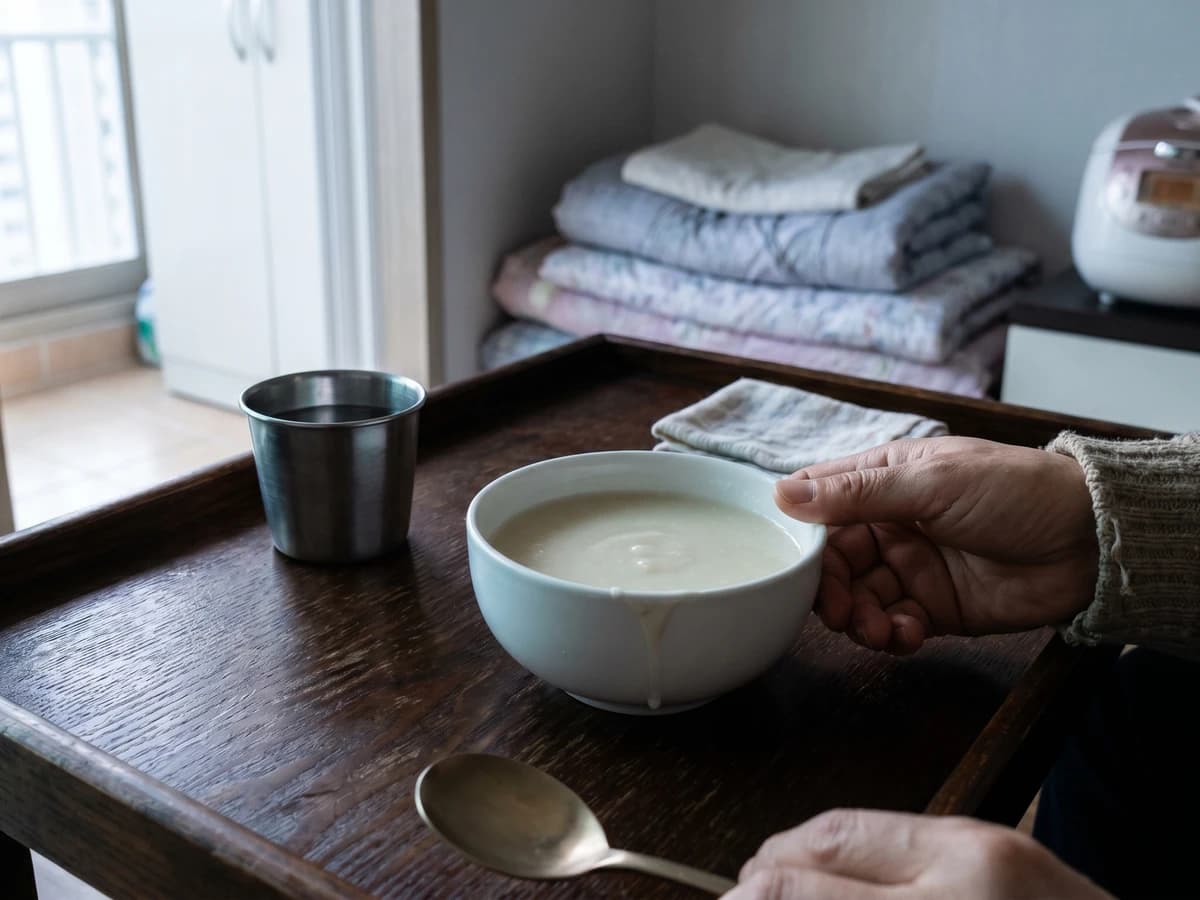
Powdered rice or dried baekseolgi cooked thin in cloudy rice water, an old Korean first-spoon porridge that asks for patience at the sieve and gentleness at the stove.
A cooking platform built around craft, culture, and the stories behind what we eat.
Created by
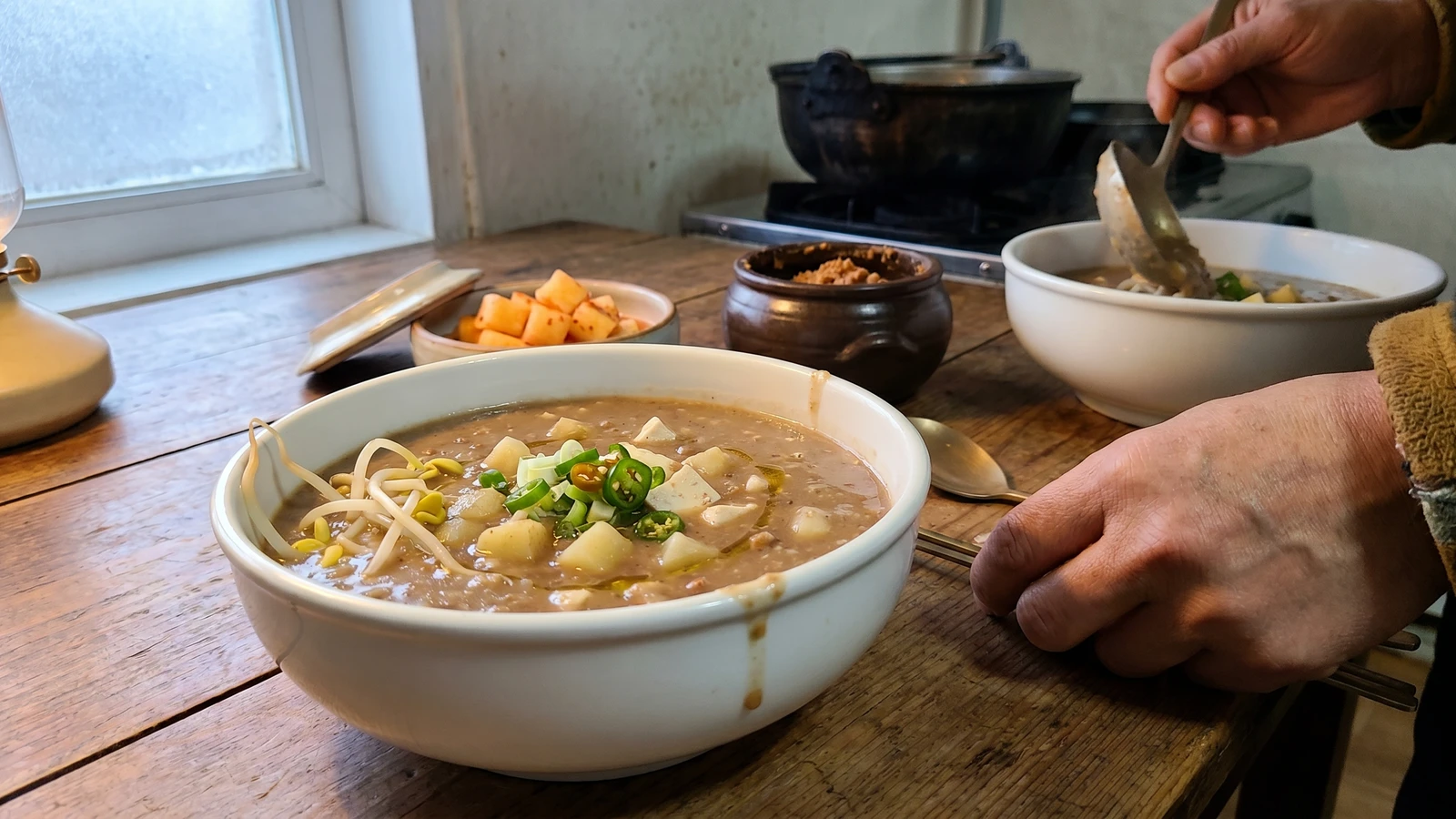
A Gangwon mountain porridge-soup built from buckwheat flour, potato, tofu, and soybean sprouts, thickened carefully in doenjang broth for the kind of plain, filling breakfast that kept rice-scarce homes fed.
In Gangwon winter markets, the honest foods sit in plain sacks and plastic tubs: buckwheat flour, potatoes with soil in the eyes, tofu under water, soybean sprouts snapping in the cold. Rice was not always the grain people could afford in the mountains, so the table learned to be full without pretending. Memilguk-juk is that lesson in a bowl, a porridge-soup thickened with buckwheat and steadied by doenjang (fermented soybean paste).
Do not treat it like thin oatmeal. It lives or dies when the buckwheat goes in. Dump the flour dry and it balls into hard little knots; whisk it first with cold water, pour it into a moving pot, and scrape the bottom until the broth turns glossy and spoon-coating, still loose enough to ladle. Potato gives body, tofu gives softness, and soybean sprouts give a clean crunch if you keep the pot uncovered and don't punish them.
Notebook 31, from a Gangwon elder who cooked for field workers near Chuncheon, says: Do not make it rich. Make it enough. I kept that line. This is breakfast, sick-day food, cold-night food, the meal that asks you for ten honest minutes at the stove at the end. 손맛 is real; I measure it anyway, so the bowl can be cooked again by someone who never met the woman who taught it.
Memilguk-juk belongs to Gangwon-do's mountain foodways, where cool upland fields favored buckwheat, potatoes, corn, and hardy greens while wet rice farming was limited. Potatoes spread into Korea in the early nineteenth century and became especially important in Gangwon's highland agriculture; together with buckwheat they filled bowls when rice was scarce. This is not a palace dish with a borrowed grand story, but a regional home food built from field crops, doenjang, and the habit of making enough from little.
Quantity
6 cups, plus up to 3/4 cup hot water to loosen if needed
Quantity
1 piece, about 4 inches square
Quantity
10 large
heads and guts removed
Quantity
2 1/2 tablespoons, plus 1 teaspoon more if needed
Quantity
3/4 cup (90g)
Quantity
1 cup
Quantity
1 medium (about 220g)
peeled and cut into 1/2-inch cubes
Quantity
150g
rinsed, loose skins removed
Quantity
200g
cut into 1/2-inch cubes
Quantity
2 cloves
minced
Quantity
2
thinly sliced
Quantity
1
thinly sliced
Quantity
1 teaspoon
Quantity
up to 1/4 teaspoon
| Ingredient | Quantity |
|---|---|
| water | 6 cups, plus up to 3/4 cup hot water to loosen if needed |
| dried kelp (dasima) | 1 piece, about 4 inches square |
| dried anchovies (myeolchi)heads and guts removed | 10 large |
| doenjang (fermented soybean paste) | 2 1/2 tablespoons, plus 1 teaspoon more if needed |
| buckwheat flour (memil-garu) | 3/4 cup (90g) |
| cold water for slurry | 1 cup |
| starchy potatopeeled and cut into 1/2-inch cubes | 1 medium (about 220g) |
| soybean sprouts (kongnamul)rinsed, loose skins removed | 150g |
| firm tofucut into 1/2-inch cubes | 200g |
| garlicminced | 2 cloves |
| scallionsthinly sliced | 2 |
| green chili (optional)thinly sliced | 1 |
| toasted perilla oil (deulgireum) (optional) | 1 teaspoon |
| fine sea salt (optional) | up to 1/4 teaspoon |
Put 6 cups water, the kelp, and the cleaned anchovies in a 3-quart heavy pot over medium heat. When small bubbles gather at the edge, after about 6 to 7 minutes, pull out the kelp. Leave it longer and the broth turns slick and bitter. Simmer the anchovies 8 minutes more, then lift them out. You should have about 5 to 5 1/2 cups broth; add hot water if the pot has reduced below that.
Whisk the buckwheat flour with 1 cup cold water until no dry pockets remain. Let it stand while you cut the potato and tofu. Cold water keeps the flour from swelling too fast; hot broth would seize it into lumps before you could stir.
Whisk 2 1/2 tablespoons doenjang into the broth until no large lumps remain. Add the potato and minced garlic and simmer 8 to 9 minutes, until a potato cube can be pierced halfway but is not falling apart. The potato starts early because the buckwheat will thicken the pot later and slow everything down.
Add the soybean sprouts and tofu. Keep the lid off from here; half-covered sprouts develop the smell that makes people distrust them. Simmer 5 minutes, nudging gently so the tofu does not break. The sprouts should bend but still have a clean bite.
Stir the buckwheat slurry again, lower the heat to medium-low, and pour it into the moving pot in a thin stream while stirring with your other hand. Scrape the bottom and corners for 6 to 8 minutes. The porridge should coat the spoon and slide off in soft sheets, not stand like paste. If it tightens too much, add hot water 1/4 cup at a time, up to 3/4 cup.
Taste the porridge. If it needs more depth, dissolve the extra 1 teaspoon doenjang in 2 tablespoons hot porridge liquid and stir it back in. If the flavor is right but dull, add fine sea salt 1/8 teaspoon at a time, up to 1/4 teaspoon. Fold in the scallions, green chili, and perilla oil if using. Rest 3 minutes off the heat so the buckwheat finishes swelling, then serve with kimchi.
1 serving (about 520g)
Culinary guides, cultural storytelling, and the editorial depth that makes cooking meaningful.
Discover Culinary ExplorerChef Jeong-sun
Powdered rice or dried baekseolgi cooked thin in cloudy rice water, an old Korean first-spoon porridge that asks for patience at the sieve and gentleness at the stove.

Chef Jeong-sun
A soft summer rice porridge of kneaded mallow greens, dried shrimp, and careful doenjang broth, plain enough for breakfast and exact enough to keep the grit and bitterness out.
Chef Jeong-sun
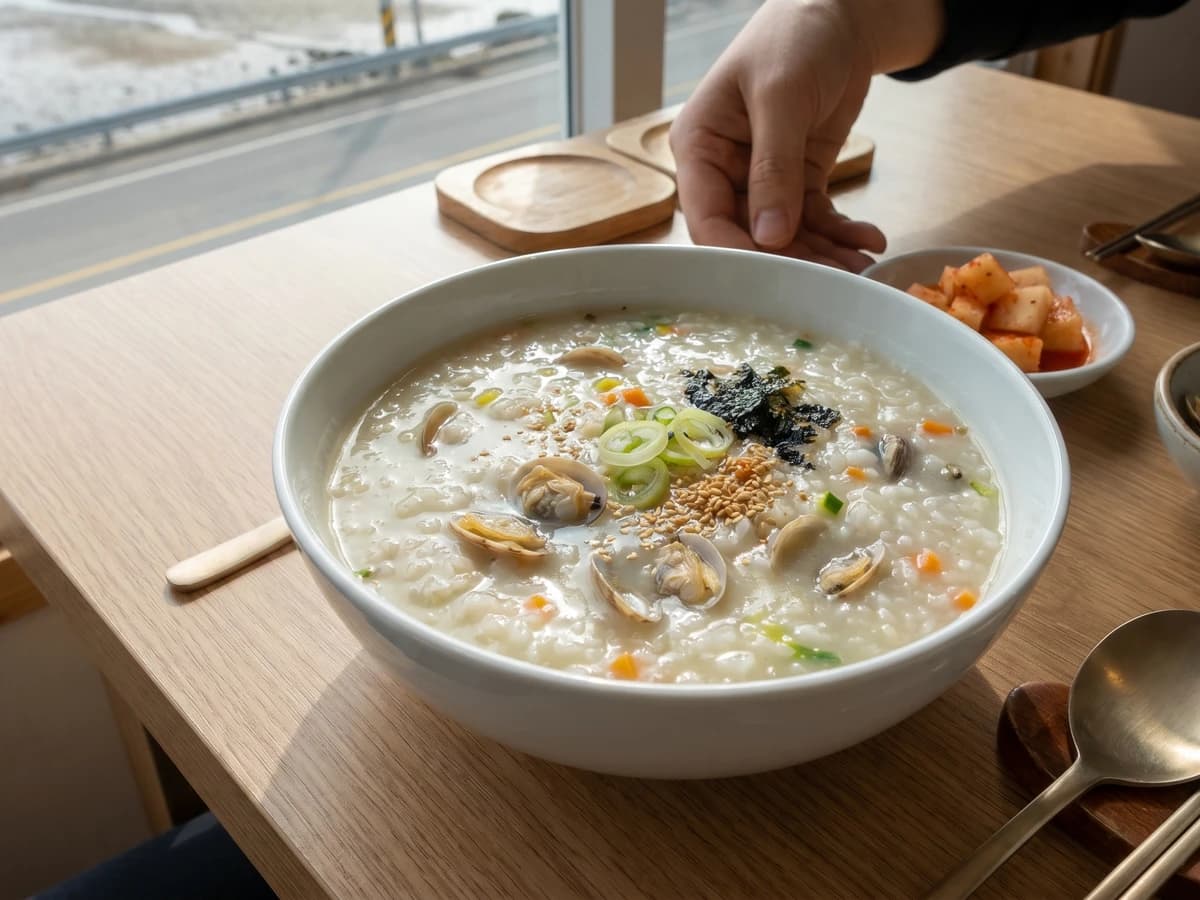
A west-coast clam porridge from Buan's tidal flats: live bajirak opened for their liquor, sesame-slicked rice toasted in the pot, and vegetables cut small enough to comfort without hiding the clams.

Chef Jeong-sun
An autumn juk of boiled chestnuts and soaked short-grain rice, simmered low until smooth and softly sweet, the kind of bowl you set before an elder, a child, or yourself.