
Chef Lupita
Aporreadillo Michoacano con Huevo
Michoacán's Tierra Caliente almuerzo, where salted beef is softened, pounded, fried in lard, folded with egg and chile perón salsa, then served beside morisqueta like a proper working table.
A cooking platform built around craft, culture, and the stories behind what we eat.
Created by
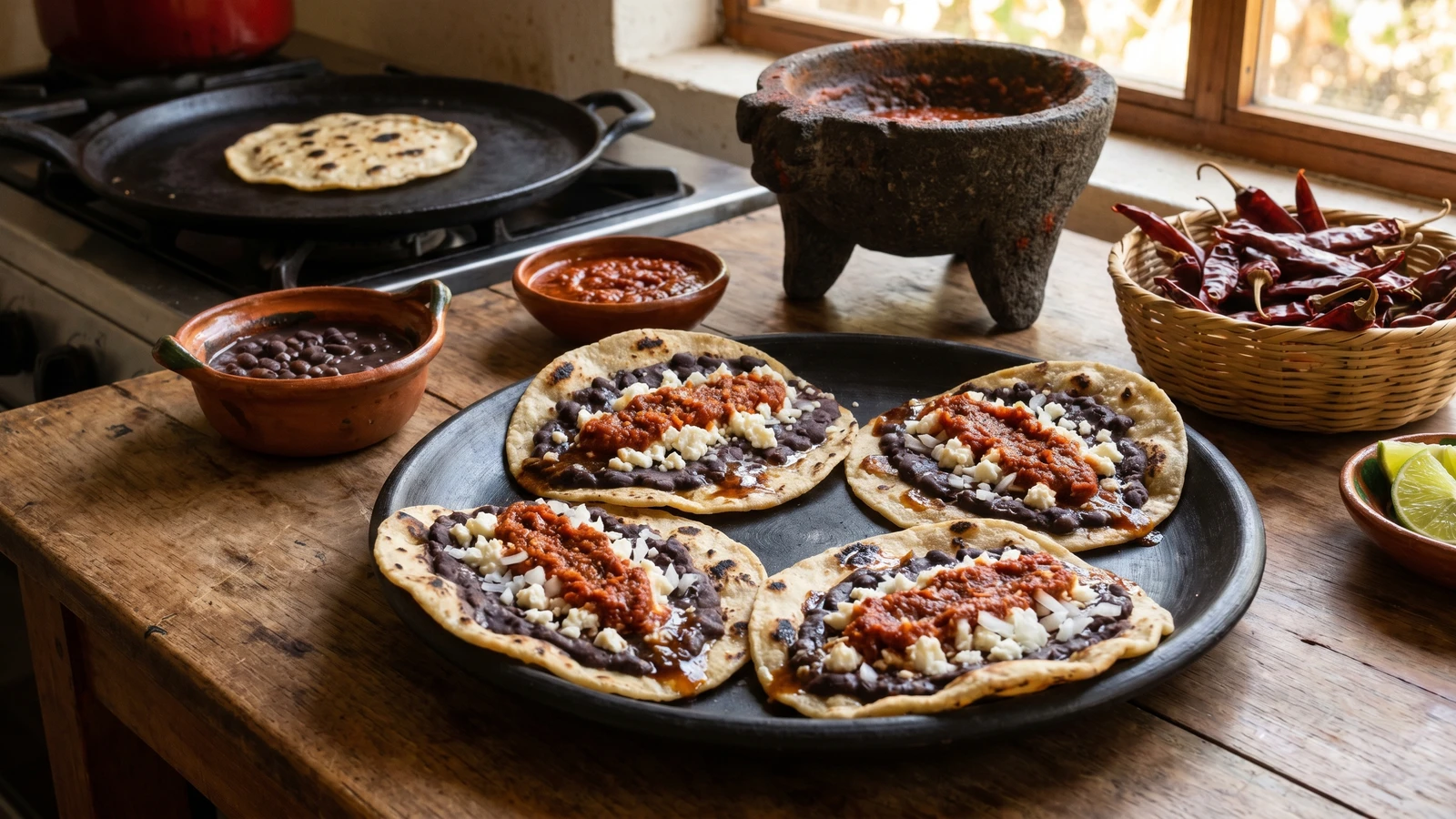
Los Altos de Chiapas make memelas as oval masa cakes pinched at the edge, brushed with manteca and asiento, then covered with black beans, chirmol, and fresh cheese.
Chiapas, Los Altos first. These memelas belong to the highland morning, around San Cristobal de las Casas and Comitan, where the comal is already dark before the sun clears the fog and the beans are black, not pinto, not bayos, not whatever was on sale in a supermarket far away.
The shape matters. You press the masa into an oval, cook it on the comal, then pinch the edge while it is still hot enough to obey your fingers. That rim is not decoration. It holds the manteca, the asiento, the frijol negro refrito, and the chirmol made with chile simojovel. This is the Maya south, not generic Mexican food with cheese thrown on top.
I learned this kind of breakfast from women who worked fast because the family was hungry and the market day did not wait. Their hands moved without drama: masa, comal, pinch, beans, salsa, cheese. La cocina no es decoración, es trabajo. Use queso fresco if that is what you can get. Use queso crema de Chiapas if your market has it. Pregúntale a las señoras del mercado. They know before the internet knows.
My mother was from Jalisco, so this was not her daily food, but in her notebook she wrote one line after a trip south: 'la orilla se pellizca caliente.' The edge is pinched hot. That is the whole lesson. Cada estado, su propia cocina.
Memelas are part of the broad Mesoamerican family of comal-cooked masa antojitos, older than the modern border between Chiapas and Guatemala and rooted in the daily nixtamal work of Indigenous Maya households. In Chiapas, black beans, queso fresco or queso crema de Chiapas, and cooked salsas such as chirmol mark the regional version, while Oaxaca's memelas are more closely associated with asiento and salsa de chile pasilla mixe or chile de agua. Chile simojovel, named for Simojovel in northern Chiapas, is one of the state's defining dried chiles and gives highland salsas a sharper local identity than generic chile de arbol.
Quantity
2 cups
Quantity
1/2 teaspoon, plus more to taste
Quantity
1 1/4 cups
only if using masa harina
Quantity
3 tablespoons
divided
Quantity
2 tablespoons
warmed until spreadable
Quantity
2 cups
with 1/2 cup cooking liquid reserved
Quantity
1/4 small
finely chopped
Quantity
1 sprig
Quantity
1 small
peeled
Quantity
4
Quantity
4
stemmed
Quantity
1
stemmed
Quantity
1/4 cup
Quantity
1/2 teaspoon, plus more to taste
Quantity
1 cup
crumbled
Quantity
1/4 cup
for serving
Quantity
for serving
| Ingredient | Quantity |
|---|---|
| fresh nixtamal masa or masa harina for tortillas | 2 cups |
| fine sea salt | 1/2 teaspoon, plus more to taste |
| warm wateronly if using masa harina | 1 1/4 cups |
| manteca de cerdodivided | 3 tablespoons |
| asiento de puercowarmed until spreadable | 2 tablespoons |
| cooked frijol negro de Chiapaswith 1/2 cup cooking liquid reserved | 2 cups |
| white onionfinely chopped | 1/4 small |
| epazote | 1 sprig |
| garlic clovepeeled | 1 small |
| ripe Roma tomatoes | 4 |
| dried chile simojovelstemmed | 4 |
| fresh chile serranostemmed | 1 |
| chopped cilantro | 1/4 cup |
| salt | 1/2 teaspoon, plus more to taste |
| queso fresco or queso crema de Chiapascrumbled | 1 cup |
| finely chopped white onion (optional)for serving | 1/4 cup |
| lime wedges (optional) | for serving |
If you have fresh nixtamal masa, mix it with the salt and knead for two minutes until smooth. If you are using masa harina, stir it with the salt and warm water, then knead until it feels like soft clay. Cover with a damp cloth and rest 15 minutes. The masa should not crack when you press it. If it cracks, add water one tablespoon at a time.
Melt 1 tablespoon of manteca in a small clay cazuela or heavy skillet over medium heat. Add the onion and cook until soft, not browned. Add the garlic, cooked black beans, epazote, and a splash of bean liquid. Mash until thick and spreadable, adding more liquid only if the beans seize up. Taste for salt. Frijol negro carries Chiapas on its back, so do not make it watery.
Heat a dry comal over medium. Roast the tomatoes, chile simojovel, and serrano until the tomato skins blacken in spots and the chiles smell sharp and toasted. The dried chile simojovel only needs a few seconds per side. Burn it and the salsa goes bitter. Pound everything in a molcajete with the salt, then stir in the cilantro. This is chirmol: a cooked salsa, not a raw pico de gallo with a borrowed name.
Divide the masa into 8 balls. Pat each one into an oval about 5 inches long and 1/4 inch thick. Press the center slightly thinner than the edges. Keep your hands damp so the masa does not tear. A memela is not a tortilla with toppings. It has a body of its own.
Lay the ovals on the hot comal and cook for about 2 minutes per side, until dry spots appear and the edges set. Pull each one off briefly and pinch up the rim with your fingers while it is still flexible. That little wall holds the beans and fat. Put them back on the comal for another minute per side, until lightly freckled and firm.
Mix the remaining 2 tablespoons manteca with the warmed asiento. Brush the hot memelas generously, especially inside the pinched edge. No me vengas con atajos. Oil will make the masa greasy on top and dry underneath. Manteca and asiento sink into the corn and give it the flavor women in the mercados of San Cristobal expect.
Spread each memela with refried black beans, spoon chirmol over the beans, and finish with crumbled queso fresco or queso crema de Chiapas. Add a little chopped white onion and lime if you want it at the table. Serve immediately, while the masa is still tender in the center and crisp at the edges. Recetas probadas y garantizadas.
1 serving (about 330g)
Culinary guides, cultural storytelling, and the editorial depth that makes cooking meaningful.
Discover Culinary ExplorerChef Lupita
Michoacán's Tierra Caliente almuerzo, where salted beef is softened, pounded, fried in lard, folded with egg and chile perón salsa, then served beside morisqueta like a proper working table.

Chef Lupita
Guerrero's Costa Grande aporreado is salted cecina pounded soft, scrambled with egg, and finished in a red guajillo and chile de árbol salsa loud with garlic and cilantro.

Chef Lupita
Los Altos de Chiapas turns two-night fermented white corn into a tart-sweet atole, cooked with canela and piloncillo, then poured hot into jícaras for desayuno.

Chef Lupita
Oaxaca's Mixteca region ferments nixtamalized masa for days until it turns tart and alive, then simmers it with piloncillo and canela into a thick, warm atole served at first light in clay.