Culinary Explorer

A cooking platform built around craft, culture, and the stories behind what we eat.
Discover Culinary Explorer
Marmorkuchen

Marmorkuchen

Created by

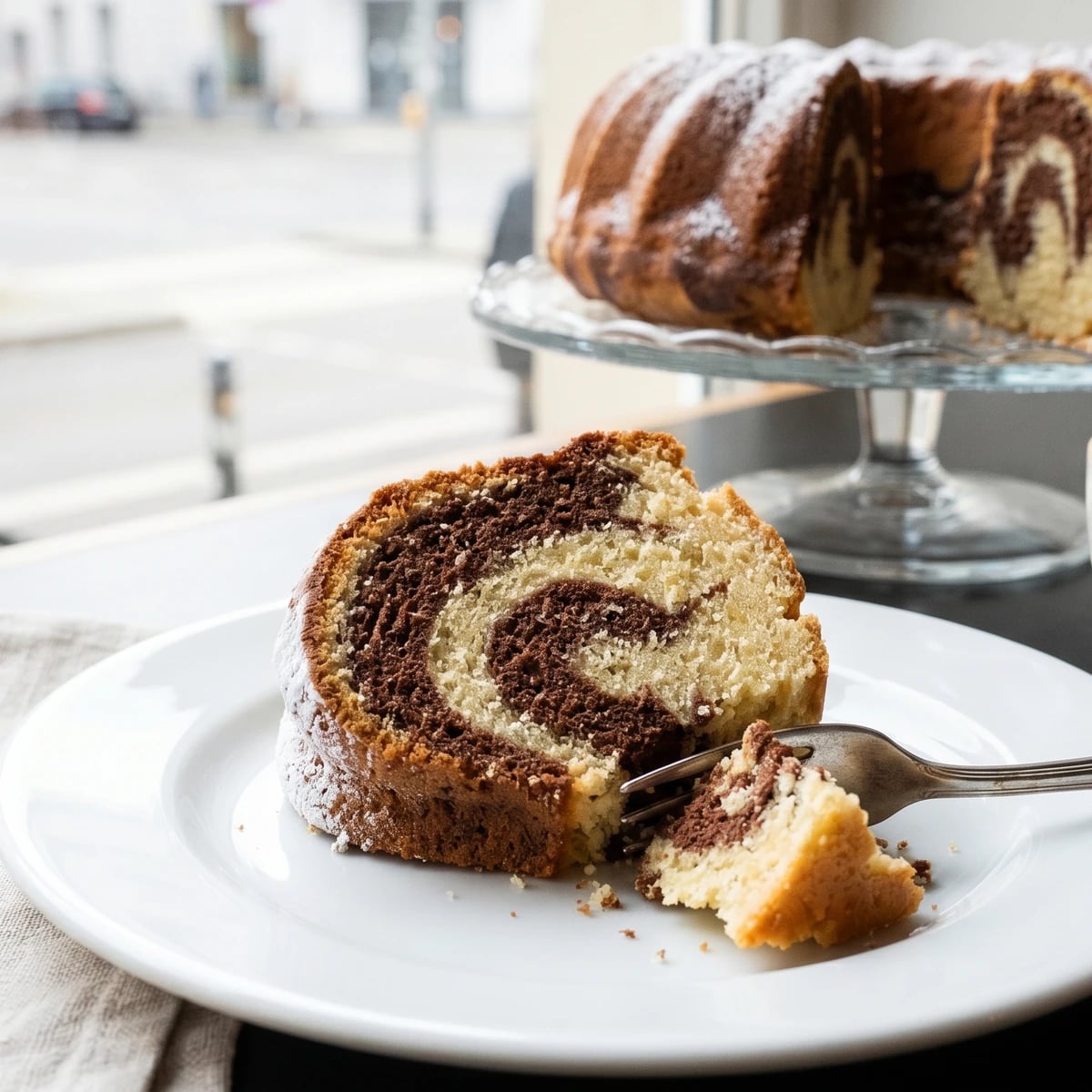
The plain ring-tin cake of the German coffee table: butter batter, cocoa batter, one fork pulled through once, and no stirring the marble back into mud.

Desserts
German
Comfort Food
Weeknight
Budget Friendly
25 min
Active Time
55 min cook1 hr 20 min total
Yield12 slices

Marmorkuchen sits on the German table where the coffee pot is: weekday afternoon, Sunday Kaffee und Kuchen, a school bake sale, a birthday where nobody needs a cream tower. It belongs to the whole country more than to one region, which means everyone thinks their tin is the right one. In the north you see it plain from a loaf tin, in the south often as a Gugelhupf, the ring cake, dusted with sugar or covered with a dark glaze. Im Norden anders, im Süden anders.

This is Rührkuchen, stirred cake, and the method is the cake. I beat the butter and sugar until pale because that air is the lift before the baking powder helps. Then the eggs go in one at a time, because a split batter bakes tight and greasy instead of fine-crumbed. The cocoa half gets a little milk because cocoa drinks moisture like flour with an opinion.

The one rule that decides it: drag the fork once through the two batters, deep and slow, then stop. Stir again and you don't get marble, you get beige cake. Das ist kein Bierzelt, no noise needed. Just butter, eggs, flour, cocoa, and a steady hand.

Use what the larder has. The last spoon of cocoa, the heel of vanilla sugar, the butter that softened on the counter, all of it earns its place. Weggeworfen wird nichts, even the crumbs go under apples or into a trifle tomorrow. Schön ist, was schmeckt.

Marmorkuchen grew out of the 19th-century German and Austrian Rührkuchen tradition, when domestic ovens, metal ring tins, baking powder, and imported cocoa made fine household cakes easier to bake outside professional Konditoreien. German-language cookbooks of the late 1800s spread marble cakes through Central Europe, and German immigrants carried versions to America, where early recipes sometimes marbled dark spice or molasses batter before cocoa became the usual choice. The regional argument is mostly about form and finish: loaf or ring tin, powdered sugar or chocolate glaze, a splash of rum in the south or plain milk-and-cocoa batter further north.

The technique, the tradition, and the story behind every dish.

Discover Culinary Explorer

Ingredients

unsalted butter

Quantity

250g

softened, plus more for the tin

sugar

Quantity

220g

vanilla sugar or vanilla extract

Quantity

1 tablespoon vanilla sugar or 2 teaspoons extract

fine salt

Quantity

1 pinch

large eggs

Quantity

4

at room temperature

plain flour

Quantity

350g

baking powder

Quantity

12g

whole milk

Quantity

120ml

divided

unsweetened cocoa powder

Quantity

30g

rum (optional)

Quantity

2 tablespoons

fine breadcrumbs or flour

Quantity

2 tablespoons

for the tin

powdered sugar or dark chocolate glaze (optional)

Quantity

to finish

Equipment Needed

  • 24cm Gugelhupf or ring tin
  • Electric hand mixer or stand mixer
  • Rubber spatula
  • Cooling rack

Instructions

  1. 1

    Prepare the tin

    Heat the oven to 175C. Butter a 24cm Gugelhupf or ring tin thoroughly, then coat it with fine breadcrumbs or flour, tapping out the excess. The coating gives the soft cake something dry to grip while it rises, then lets it release cleanly instead of tearing at the ridges.

    A loaf tin works too, about 25cm long. The ring tin bakes more evenly because heat reaches the middle; a loaf needs the full time and a careful skewer test.
  2. 2

    Cream butter and sugar

    Beat the soft butter, sugar, vanilla sugar, and salt for 4 to 5 minutes, until pale and lighter. Don't rush this. The butter traps tiny air pockets as it beats, and those pockets help the cake rise before the baking powder starts working.

  3. 3

    Add the eggs

    Beat in the eggs one at a time, mixing well after each. Room-temperature eggs join the butter instead of shocking it cold; cold eggs split the batter, and a split batter bakes with a tight crumb and greasy streaks. If it starts to curdle, add one spoon of the flour and keep going.

  4. 4

    Mix the batter

    Whisk the flour with the baking powder, then fold it into the butter mixture in two additions with about 80ml of the milk. Mix only until no dry flour shows. Overwork it and you wake the gluten, which gives you bread's chew in a cake where it doesn't belong.

  5. 5

    Make cocoa batter

    Spoon about one third of the batter into a second bowl. Stir the cocoa with the remaining 40ml milk and the rum if using, then mix that paste into the smaller bowl of batter. Cocoa needs the extra liquid because it dries the crumb; dry cocoa batter bakes chalky and breaks the marble line.

  6. 6

    Layer and marble

    Spoon half the pale batter into the tin, add the cocoa batter in uneven dollops, then cover with the remaining pale batter. Drag a fork once around the tin, dipping to the bottom and lifting as you go. Once. Stir more and the two batters stop being marble and become a dull compromise.

  7. 7

    Bake and test

    Bake for 50 to 60 minutes, until the cake is risen, lightly cracked, and a skewer pushed into the thickest part comes out clean or with a few dry crumbs. If wet batter clings to it, give the cake another 5 minutes; taking it out early leaves a damp belt near the base.

  8. 8

    Cool and finish

    Let the cake sit in the tin for 10 minutes, then turn it out onto a rack. That short rest lets the crumb firm enough to hold the shape, but leaving it trapped too long makes the crust sweat. Dust with powdered sugar when cool, or coat with dark chocolate glaze if this is a Sunday table.

Chef Tips

  • Use proper unsweetened cocoa, not drinking chocolate. Drinking chocolate is mostly sugar and milk powder, and it makes the dark batter sweet without giving it depth.
  • Soft butter means bendable, not oily. If it shines and slumps, it's too warm; chill it briefly or the batter won't hold air.
  • Drag the fork once. The prettiest marble comes from restraint, which annoys people who want to fix things.
  • Keep the cake covered at room temperature for 3 days. It slices better the next day because the butter settles back into the crumb.
  • Stale slices are not waste. Toast them lightly and serve with sour cherry compote, or crumble them under stewed apples. Weggeworfen wird nichts.

Advance Preparation

  • Bake the cake the day before serving; the crumb settles overnight and slices cleanly for Kaffee und Kuchen.
  • Butter and crumb the tin up to a few hours ahead, then keep it cool so the butter stays firm on the sides.
  • The finished cake freezes well, whole or sliced, for up to 2 months. Wrap tightly once fully cooled, then thaw at room temperature.

Frequently Asked Questions

Nutrition Information

1 serving (about 100g)

Calories
420 calories
Total Fat
22 g
Saturated Fat
14 g
Trans Fat
1 g
Unsaturated Fat
7 g
Cholesterol
110 mg
Sodium
150 mg
Total Carbohydrates
50 g
Dietary Fiber
2 g
Sugars
24 g
Protein
7 g

Note: Chef personas and recipes are created with AI assistance. Cook with care: follow safe food-handling practices, check doneness with a thermometer when needed, and adapt for allergies and your kitchen.

Where cooking meets culture.

Culinary guides, cultural storytelling, and the editorial depth that makes cooking meaningful.

Discover Culinary Explorer

More from Torten & Kuchen (Kaffee und Kuchen)

Browse the full collection