Culinary Explorer

A cooking platform built around craft, culture, and the stories behind what we eat.
Discover Culinary Explorer
Marillenröster (Stewed Apricot Compote)

Marillenröster (Stewed Apricot Compote)

Created by

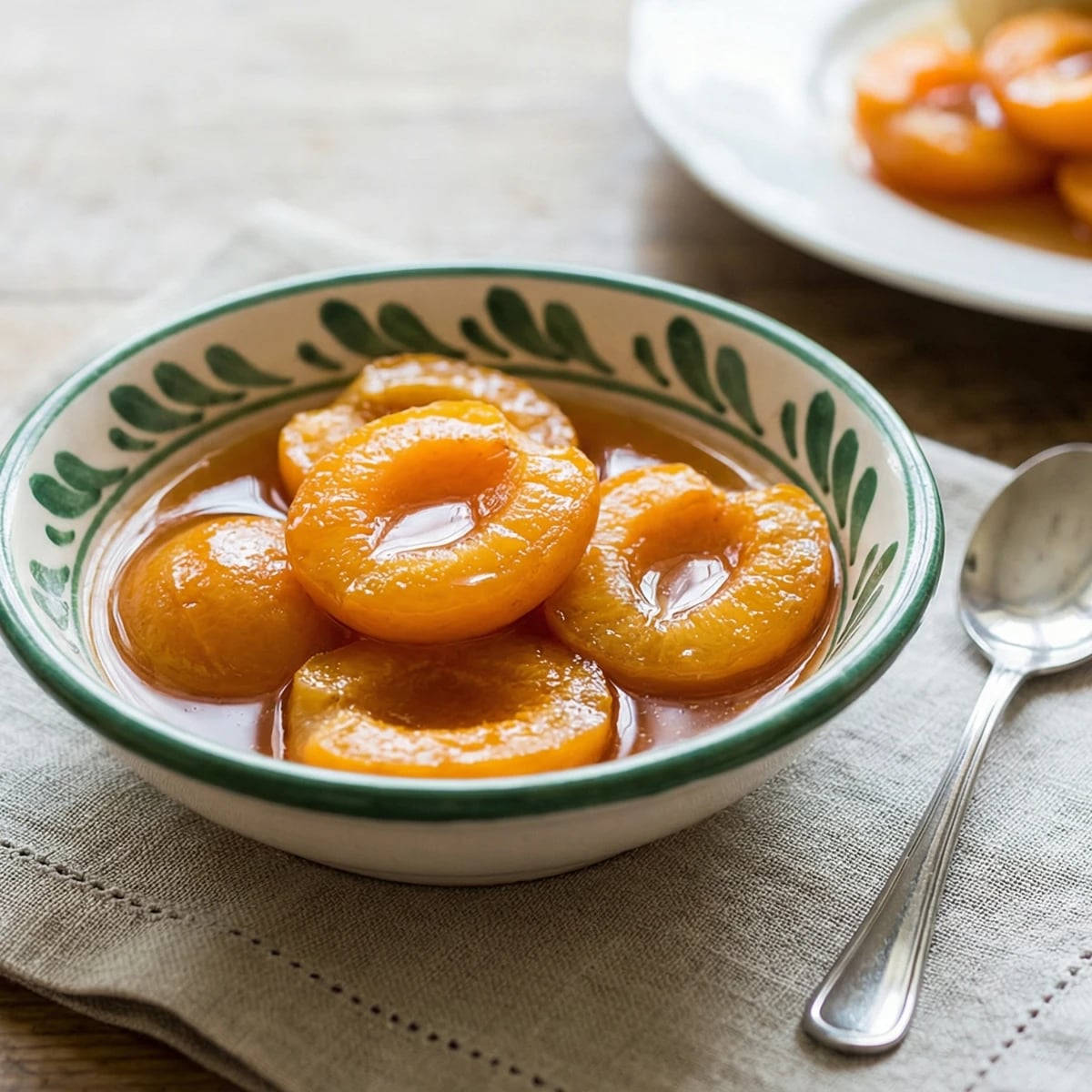
Ripe Austrian apricots simmered gently with Vanillezucker and lemon until they collapse into a warm, golden compote that belongs beside every Mehlspeise on the table.

Sauces & Condiments
Austrian
Weeknight
Comfort Food
10 min
Active Time
15 min cook25 min total
Yield4 servings (approximately 500ml)

In my grandmother Eva's kitchen in Kent, Gretel kept a small jar of apricot jam on the counter at all times. Not for toast. For finishing. A spoonful into a Torte glaze, a thin layer under chocolate icing, a dab on a warm Palatschinke before rolling it shut. Apricots were never an afterthought in that kitchen. They were the thread running through half of everything we baked.

Marillenröster is the simplest expression of that idea. You take ripe apricots, halve them, and simmer them with sugar, a strip of lemon peel, and Vanillezucker until they soften into something between a compote and a sauce. The fruit holds its shape if you don't stir too much, but the juices thicken into a glossy, fragrant syrup that pools around whatever you serve it with. It takes fifteen minutes. It transforms everything it touches.

Gretel always said Austrian cooking lives and dies by the quality of the fruit. This is the dish that proves her right. If your apricots are ripe and perfumed and heavy in the hand, you barely need to do anything. A little sugar to coax the juices out, a little heat to concentrate the flavor, and a squeeze of lemon at the end to keep the whole thing bright. If your apricots are pale and hard and smell like nothing, no amount of sugar will save them. Wait for better fruit, or make something else entirely.

I serve Marillenröster at my restaurant in Salzburg from late June through August, when the Wachau apricots come in. It goes beside Topfenknödel, under Kaiserschmarrn, inside Palatschinken, next to Griesnockerln. It's the golden companion to half the Mehlspeisen tradition, and once you have a batch in the fridge, you'll find reasons to put it on everything.

The Wachau valley along the Danube has been Austria's apricot heartland for over a thousand years, with Marillenbrand (apricot schnapps) and Marillenknödel earning the region protected cultural status. Marillenröster belongs to the broader Austrian tradition of Röster, fruit compotes simmered from seasonal stone fruits, which became essential accompaniments as the Mehlspeisen tradition expanded in the 18th and 19th centuries. The Viennese Küche developed specific Röster pairings for specific dishes: Zwetschkenröster for Kaiserschmarrn, Marillenröster for Topfenknödel, Preiselbeerröster for savoury meats. Getting the pairing wrong in a proper Gasthaus would earn you a look from the Kellner.

The technique, the tradition, and the story behind every dish.

Discover Culinary Explorer

Ingredients

ripe apricots (Marillen)

Quantity

500g

granulated sugar

Quantity

80g

Vanillezucker (vanilla sugar)

Quantity

1 packet (8g)

lemon peel

Quantity

1 strip (5cm)

pith removed

fresh lemon juice

Quantity

1 tablespoon

water

Quantity

100ml

apricot schnapps (Marillenbrand) (optional)

Quantity

1 tablespoon

Equipment Needed

  • Wide saucepan or sauté pan (24-26cm)
  • Paring knife
  • Glass jar with lid for storage

Instructions

  1. 1

    Prepare the apricots

    Wash the apricots and halve them along the natural seam. Remove the stones. If the fruit is large, quarter it. If it's small and perfectly ripe, halves are fine. You want pieces big enough to hold their shape in the pan but small enough to soften through in a few minutes. Don't peel them. The skins add color and a slight tang that keeps the compote from tasting like baby food.

    Choose apricots that give slightly when you press them and smell like apricots from across the room. If you have to hold them to your nose and concentrate, they're not ripe enough. Wachau apricots are the gold standard, but any fragrant, ripe apricot will do the job beautifully.
  2. 2

    Dissolve the sugar

    Combine the sugar, Vanillezucker, water, and lemon peel in a wide saucepan over medium heat. Stir until the sugar dissolves completely. You should have a thin, clear syrup. The lemon peel is there for its oils, not its juice. One strip is enough. It perfumes the syrup without making it taste like lemon.

  3. 3

    Simmer the apricots

    Lay the apricot halves cut-side down in the syrup in a single layer. If your pan isn't wide enough, work in batches. Reduce the heat to low and let them simmer gently for eight to twelve minutes. The time depends entirely on ripeness. Very ripe fruit will collapse in six or seven minutes. Firmer fruit needs the full twelve. Watch the edges: when they turn translucent and the flesh starts to soften and slump, you're close.

    Don't stir. This is the single most important instruction. If you stir, you'll break the fruit into mush. Let the apricots sit in the syrup and do their work. You can gently shake the pan once or twice to keep things from sticking, but your spoon stays out of the pot.
  4. 4

    Finish and season

    When the apricots are tender but still holding their shape, remove the pan from the heat. Fish out the lemon peel. Add the lemon juice and the Marillenbrand if using. The lemon juice brightens everything. The schnapps deepens the apricot flavor in a way that's hard to explain until you taste it. Give the pan one gentle swirl to combine. The residual heat will thicken the syrup slightly as it cools.

    Taste the syrup before adding the lemon juice. If your fruit was very sweet, you may want the full tablespoon. If it had good natural acidity, half a tablespoon will do. You're looking for brightness, not tartness.
  5. 5

    Serve or store

    Serve warm alongside Topfenknödel, Kaiserschmarrn, Palatschinken, or Griesnockerl. Marillenröster is also beautiful at room temperature spooned over vanilla ice cream or stirred into yogurt. It keeps in a sealed jar in the fridge for up to five days, and it actually improves overnight as the flavors settle and deepen. Mahlzeit!

Chef Tips

  • Buy your apricots two days before you plan to make this. Apricots ripen beautifully on a sunny windowsill, and the difference between a firm apricot and one that's had two days of warmth is the difference between a decent compote and a stunning one.
  • Vanillezucker is not the same as adding vanilla extract. Austrian baking depends on vanilla sugar for its soft, rounded sweetness. You can make your own: split a vanilla pod, bury it in a jar of caster sugar, and forget about it for a week. One jar lasts months and it changes everything.
  • If apricots aren't in season, don't force it. Make Zwetschkenröster with plums in autumn, or Preiselbeerröster with lingonberries. Austrian cooking is seasonal. That's part of what makes it honest. I'll take a perfect plum compote in October over a disappointing apricot one any day.
  • A tablespoon of Marillenbrand sounds optional, and technically it is, but it concentrates the apricot flavor in a way sugar alone can't. If you can find a bottle, it's worth having in your cupboard. The Austrians put it in everything from compotes to cake glazes.

Advance Preparation

  • Marillenröster can be made up to five days ahead and refrigerated in a sealed glass jar. The flavor deepens and the syrup thickens as it sits.
  • Reheat gently in a small saucepan over low heat, or serve at room temperature. It doesn't need to be hot, just not fridge-cold, so the fragrance can reach you.

Frequently Asked Questions

Nutrition Information

1 serving (about 125g)

Calories
155 calories
Total Fat
0 g
Saturated Fat
0 g
Trans Fat
0 g
Unsaturated Fat
0 g
Cholesterol
0 mg
Sodium
1 mg
Total Carbohydrates
36 g
Dietary Fiber
2 g
Sugars
34 g
Protein
1 g

Note: Chef personas and recipes are created with AI assistance. Cook with care: follow safe food-handling practices, check doneness with a thermometer when needed, and adapt for allergies and your kitchen.

Where cooking meets culture.

Culinary guides, cultural storytelling, and the editorial depth that makes cooking meaningful.

Discover Culinary Explorer

More from Austrian Sauces & Condiments

Browse the full collection