
Chef Lupita
Aceite de Chiltepin Bajacaliforniano
Baja California's wild chiltepin steeped in olive oil with garlic, orejon, and lime peel, until the oil turns ruby-amber and carries the slow, sneaky burn of the desert coast.
A cooking platform built around craft, culture, and the stories behind what we eat.

Created by
Yucatan's ruby-red rendered lard, slowly infused with achiote seeds, Mexican cinnamon, and the citrusy perfume of oregano yucateco. The brick-colored fat that bastes pibil pork and signals Peninsula cooking from across the room.
This is Yucatan. Not the rest of Mexico, Yucatan. The Peninsula has its own kitchen, its own chiles, its own oregano, its own sour orange, and its own cooking fat. Manteca de achiote is that fat: pork lard slowly steeped with achiote seeds until it turns the color of a clay roof tile in Valladolid.
The seed is annatto, not paprika. It comes from the bixa orellana tree, which grew on this peninsula long before the Spanish arrived. The Maya ground it into pastes, dyed cloth with it, mixed it into ceremonial drinks. When the Spanish brought pigs and lard, the cooks of the Peninsula did what good cooks always do: they put the two together. The result is a fat that carries both color and flavor into everything it touches, recado-marinated pork before it goes underground in the pib, fish before the grill, onions and tomato before the sauce, black beans before the bowl.
The recipe is simple. The ingredients are not negotiable. Fresh achiote seeds, not the dusty ones at the back of a spice rack. Real pork lard, not vegetable shortening dyed orange. Yucatecan oregano, which is a different plant from Mediterranean oregano and tastes nothing like it. Canela mexicana, the soft brittle cinnamon, not the hard cassia bark sold as cinnamon in the United States. Get these right and you have manteca de achiote. Substitute and you have red oil.
My mother did not cook Yucatecan food. She was jalisciense and her kitchen smelled of guajillo and tequila reduction. But on the road, in Merida, in Izamal, in Tizimin, I watched senoras keep a small clay jarro of this manteca next to the stove the way other cooks keep olive oil. They reached for it without thinking. That is when you know an ingredient belongs to a place. Cada estado, su propia cocina.
Achiote (bixa orellana) is native to the Yucatan Peninsula and Central America, and the Maya cultivated it for at least two millennia before European contact, using it as a body paint, a textile dye, a ceremonial ingredient, and a colorant for cacao beverages described in colonial chronicles. The Spanish friar Diego de Landa, writing in the 16th century in his Relacion de las Cosas de Yucatan, noted the Maya practice of mixing achiote with maize and chile in cooking. The combination with pork lard is a post-conquest hybrid: pigs and the practice of rendering manteca were Spanish introductions, but the technique of infusing fat with achiote to carry both color and flavor into a dish is a continuation of the older Maya logic of using achiote as a culinary pigment. Today manteca de achiote remains a foundational fat in the Peninsula's recados-based cooking, with no true equivalent elsewhere in Mexico.
Quantity
2 cups
preferably home-rendered
Quantity
1/3 cup
Quantity
4
peeled and lightly smashed
Quantity
1 tablespoon
lightly toasted
Quantity
1 small
Quantity
1 piece, about 2 inches
Quantity
1/2 teaspoon
Quantity
1/4 teaspoon
| Ingredient | Quantity |
|---|---|
| pork lard (manteca de cerdo)preferably home-rendered | 2 cups |
| achiote seeds (semillas de achiote / annatto) | 1/3 cup |
| garlic clovespeeled and lightly smashed | 4 |
| Yucatecan oregano (oregano yucateco)lightly toasted | 1 tablespoon |
| bay leaf | 1 small |
| canela mexicana (Mexican cinnamon stick) | 1 piece, about 2 inches |
| whole allspice berries (pimienta gorda) | 1/2 teaspoon |
| kosher salt | 1/4 teaspoon |
Pour the achiote seeds onto a light-colored plate and pick through them. You want hard, brick-red seeds that smell faintly earthy when you crush one between your fingernails. Dusty, brown, odorless seeds are old and will give you a muddy, weak color. Achiote loses potency the longer it sits. If the seeds in your jar were bought two years ago, throw them out and find new ones. The whole purpose of this manteca is color and aroma. Tired seeds cannot deliver either.
Place the lard in a small heavy saucepan over the lowest heat your stove will give. Let it melt slowly until it is completely liquid and clear. You do not want it to smoke, sizzle, or even shimmer hard. La manteca es el sabor and burned manteca tastes like burned manteca. If you see the first wisp of haze come off the surface, pull the pan off the heat for a minute to cool.
While the lard melts, heat a dry comal over medium. Drop the Yucatecan oregano in for about ten seconds, shaking the pan, until you smell it. Oregano yucateco is not Mediterranean oregano. It is a different plant with a sharper, almost citrus-resin perfume that defines Peninsula cooking. Pull it off the comal the moment you smell it. Burned oregano turns bitter and there is no recovery.
Slide the garlic cloves, toasted oregano, bay leaf, canela, allspice, and salt into the melted lard. The lard should be warm enough that the garlic whispers, not loud enough that it browns. Let everything steep for five minutes over the lowest heat. The fat will start to take on the perfume of the spices before the achiote ever goes in. This staged infusion is what separates a real manteca de achiote from a bottle of red oil at the supermarket.
Add the achiote seeds to the warm lard. Almost immediately the fat will begin to take on color, first amber, then orange, then a deep ruby red that stains everything it touches. Keep the heat at its lowest setting. Let the seeds steep in the warm fat for 25 to 30 minutes, swirling the pan every five minutes. Do not let the lard bubble. You are infusing, not frying. If you push the heat, the achiote color turns brown and dull instead of brick red.
Pull the pan off the heat and let the manteca sit, undisturbed, for another 15 minutes. The seeds will continue to release color as the fat cools. This residual infusion is where the depth lives. Rush it and you have a pretty color with no character behind it.
Set a fine-mesh strainer over a glass jar or small clay jarro. Pour the warm lard through, pressing very lightly on the seeds and aromatics with the back of a spoon. Do not crush. Crushing the achiote seeds releases gritty pigment that will cloud your finished manteca. Discard the spent solids. You should have about two cups of brilliant ruby-red lard, fragrant with garlic, oregano, canela, and allspice.
Let the manteca cool to room temperature on the counter. It will turn from liquid ruby to a solid brick-red salve as it sets, the same texture as soft butter. Cover and refrigerate. Use it to enrich recado-marinated pork before it goes in the pib, to brush onto fish before grilling, to fry onions and tomato for sauces from Tizimin to Campeche. A spoonful turns a pot of black beans into something a senora from Merida would nod at. Asi se hace y punto.
1 serving (about 13g)
Culinary guides, cultural storytelling, and the editorial depth that makes cooking meaningful.
Discover Culinary ExplorerChef Lupita
Baja California's wild chiltepin steeped in olive oil with garlic, orejon, and lime peel, until the oil turns ruby-amber and carries the slow, sneaky burn of the desert coast.

Chef Lupita
Puebla's Lenten convent adobo, a brick-red vinegar chile paste of ancho, guajillo, garlic, oregano, and comino made to dress fish for the meatless calendar.
Chef Lupita
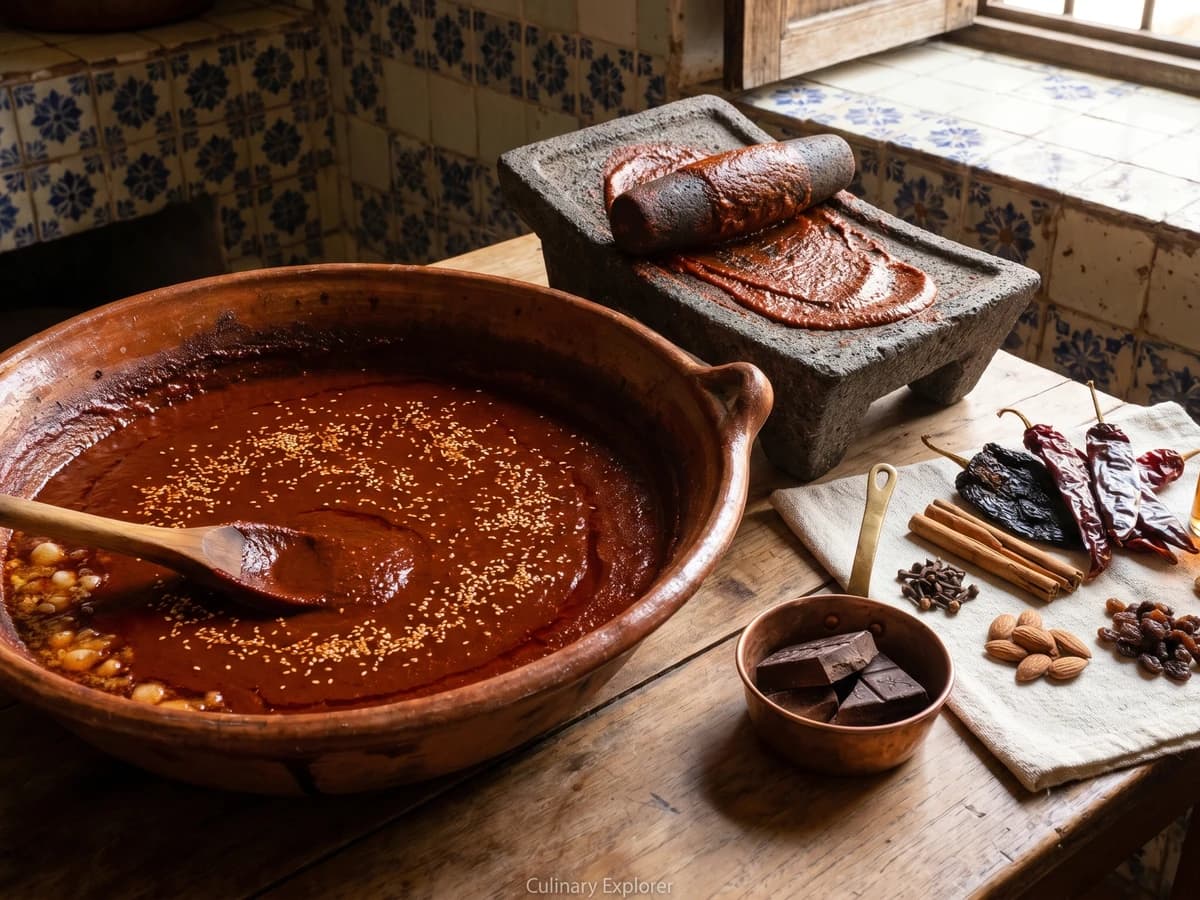
Zacatecas' wedding-table adobo, built from toasted guajillo and ancho, piloncillo, sour orange, chocolate, canela, clavo, almonds, sesame, and lard.

Chef Lupita
Puebla's convent kitchens built this adobo with ancho, guajillo, jerez, almonds, raisins, clove, and lard, a baroque marinade that stains pork loin and finishes as the sauce.