
Chef Lupita
Acitrón de Cidra Conventual
Puebla's convent-style acitrón, made from cidra peel instead of endangered biznaga, built through repeated syrup soakings until the cubes turn firm, translucent, and ready for rosca or chiles en nogada.
A cooking platform built around craft, culture, and the stories behind what we eat.
Created by
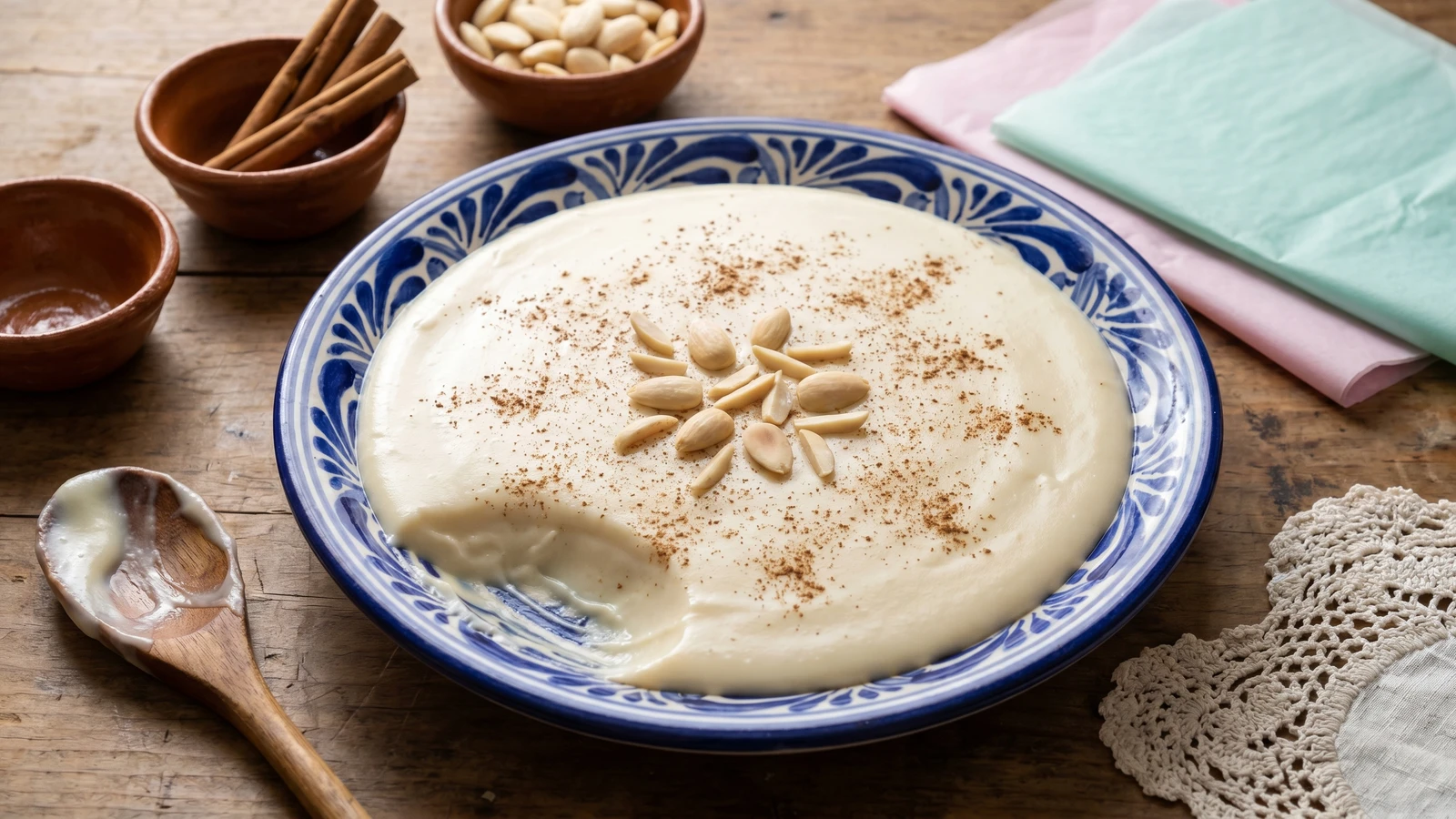
Puebla's convent pudding of reduced milk, almendra pelada, harina de arroz, yemas de huevo, and canela, stirred slowly until the spoon leaves a clean path and the white sweet holds its shape.
Puebla de los Angeles, in the central highlands of Puebla, is where I put this manjar blanco on the map. Oaxaca has its conventual versions too, and I respect them, but this bowl is poblano: white milk, almendra pelada, harina de arroz, canela, and yemas de huevo set in talavera for a feast table. Cada estado, su propia cocina.
The ingredient that defines it is not chile. Listen. Not every Mexican dish needs chile. The discipline here is milk reduced slowly until it tastes deeper but stays pale, then thickened with rice flour and almond paste, with yemas de huevo for body. The women who perfected this work, the Clarisas of Santa Clara and the convent cooks of Puebla and Oaxaca, did not have condensed milk or shortcuts. They had a cazo, a spoon, and rules.
My mother's notebook had one line for manjar blanco: "no dejar de mover." Do not stop stirring. She was from Jalisco, not Puebla, but she understood the warning. Brown the milk and you made something else. Use condensed milk and you made something else. The pudding should set softly, clean and white, with canela on the breath. Saber cocinar es saber vivir.
Manjar blanco entered New Spain through Iberian blancmange traditions shaped by medieval Arab-Andalusian cooking, where almond, rice starch, sugar, and milk belonged to the white sweet pantry before the conquest of Mexico. In the 17th and 18th centuries, convent kitchens in Puebla de los Angeles and Oaxaca, including houses of Clarisas and Concepcionistas, adapted the formula to New Spanish dairy, cane sugar, and imported canela; the cookbook associated with Sor Juana Ines de la Cruz's Convent of San Jeronimo preserves a manjar blanco in that same manuscript world. Unlike Peruvian manjar blanco, which became a caramelized milk preserve, the poblano-oaxaqueno conventual version stays pale and set, closer to blanc-manger than to cajeta.
Quantity
6 cups
divided, preferably not ultra-pasteurized
Quantity
1 cup, plus 2 tablespoons
extra almonds reserved for finishing
Quantity
1/2 cup
sifted
Quantity
5
at room temperature
Quantity
1 cup
Quantity
1
Quantity
1 thin strip
white pith removed
Quantity
1/4 teaspoon
Quantity
1 teaspoon
Quantity
for finishing
| Ingredient | Quantity |
|---|---|
| whole cow's milkdivided, preferably not ultra-pasteurized | 6 cups |
| almendra peladaextra almonds reserved for finishing | 1 cup, plus 2 tablespoons |
| harina de arrozsifted | 1/2 cup |
| yemas de huevoat room temperature | 5 |
| Mexican white cane sugar | 1 cup |
| cinnamon stick (canela) | 1 |
| lime peelwhite pith removed | 1 thin strip |
| fine sea salt | 1/4 teaspoon |
| agua de azahar (optional) | 1 teaspoon |
| ground canela (optional) | for finishing |
Check the almendra pelada. If any skins remain, cover the almonds with very hot water for 5 minutes, rub the skins off, and pat them dry. The skins leave brown flecks and a bitter edge. A pudding called manjar blanco cannot be careless about color.
Put 1 cup almendra pelada in a blender with 1 cup of the milk. Blend for 2 to 3 minutes, scraping once, until you have a smooth almond paste. Rub a little between your fingers. If it feels sandy, blend again. A metate does this beautifully, but a blender is allowed when you make it work.
Whisk the harina de arroz with 1 cup cold milk until smooth. Let it stand for 10 minutes, then whisk again. Cold milk matters. Hot milk grabs the rice flour and makes lumps, and then you spend the rest of the afternoon correcting your laziness.
Pour the remaining 4 cups milk into a heavy cazo or thick-bottomed pot. Add the sugar, canela stick, lime peel, and salt. Cook over medium-low heat, stirring until the sugar dissolves, then keep the milk at a slow tremble for 40 to 50 minutes. Scrape the bottom and corners with a wooden spoon. The milk should reduce by about one quarter and taste deeper while staying pale.
Remove the canela stick and lime peel. Whisk in the almond paste and cook for 10 minutes over low heat. Whisk the rice slurry again, then pour it into the pot in a thin stream while stirring constantly. Cook 20 to 25 minutes more, until the spoon leaves a clean path across the bottom and the pudding closes slowly behind it.
Whisk the yemas de huevo in a bowl. Ladle in 1 cup of the hot pudding base, little by little, whisking the whole time. Pour the warmed yemas back into the pot and cook over low heat for 6 to 8 minutes, stirring constantly, until the pudding looks glossy and thick. If you use a thermometer, it should read 180F to 185F. Do not boil it. The yolks bind, the almonds thicken, the canela holds the aroma. Asi se hace y punto.
Take the pot off the heat and stir in the agua de azahar if using. Pass the pudding through a fine-mesh strainer into a shallow talavera serving dish or 8 small molds. Cover the surface directly with parchment or plastic if you want no skin. Cool for 30 minutes, then refrigerate at least 4 hours, until softly set.
Dust the top with ground canela and scatter the reserved almendra pelada over it. Serve cold, family-style, from the talavera dish. The spoon should lift a soft mound, not a rubber slice. This is Puebla's white sweet pantry, not gelatin from a box. Recetas probadas y garantizadas.
1 serving (about 200g)
Culinary guides, cultural storytelling, and the editorial depth that makes cooking meaningful.
Discover Culinary ExplorerChef Lupita
Puebla's convent-style acitrón, made from cidra peel instead of endangered biznaga, built through repeated syrup soakings until the cubes turn firm, translucent, and ready for rosca or chiles en nogada.

Chef Lupita
Ciudad de México's Tulyehualco alegría is popped huautli folded into piloncillo honey, pressed with peanuts, pepitas, and raisins, then cut into the rectangular bars that built a pueblo's identity.

Chef Lupita
Oaxaca's pre-Columbian amaranth bar, popped on a hot comal and bound with piloncillo, honey, and the sacred Zapotec grain that the Spanish tried, and failed, to outlaw.

Chef Lupita
Querétaro's mercado candy of popped amaranto pressed with dark piloncillo syrup, pepitas, pecans, and cacahuate, a Bajío sweet that respects the seed before it decorates the table.