
Chef Lupita
Acitrón de Cidra Conventual
Puebla's convent-style acitrón, made from cidra peel instead of endangered biznaga, built through repeated syrup soakings until the cubes turn firm, translucent, and ready for rosca or chiles en nogada.
A cooking platform built around craft, culture, and the stories behind what we eat.
Created by
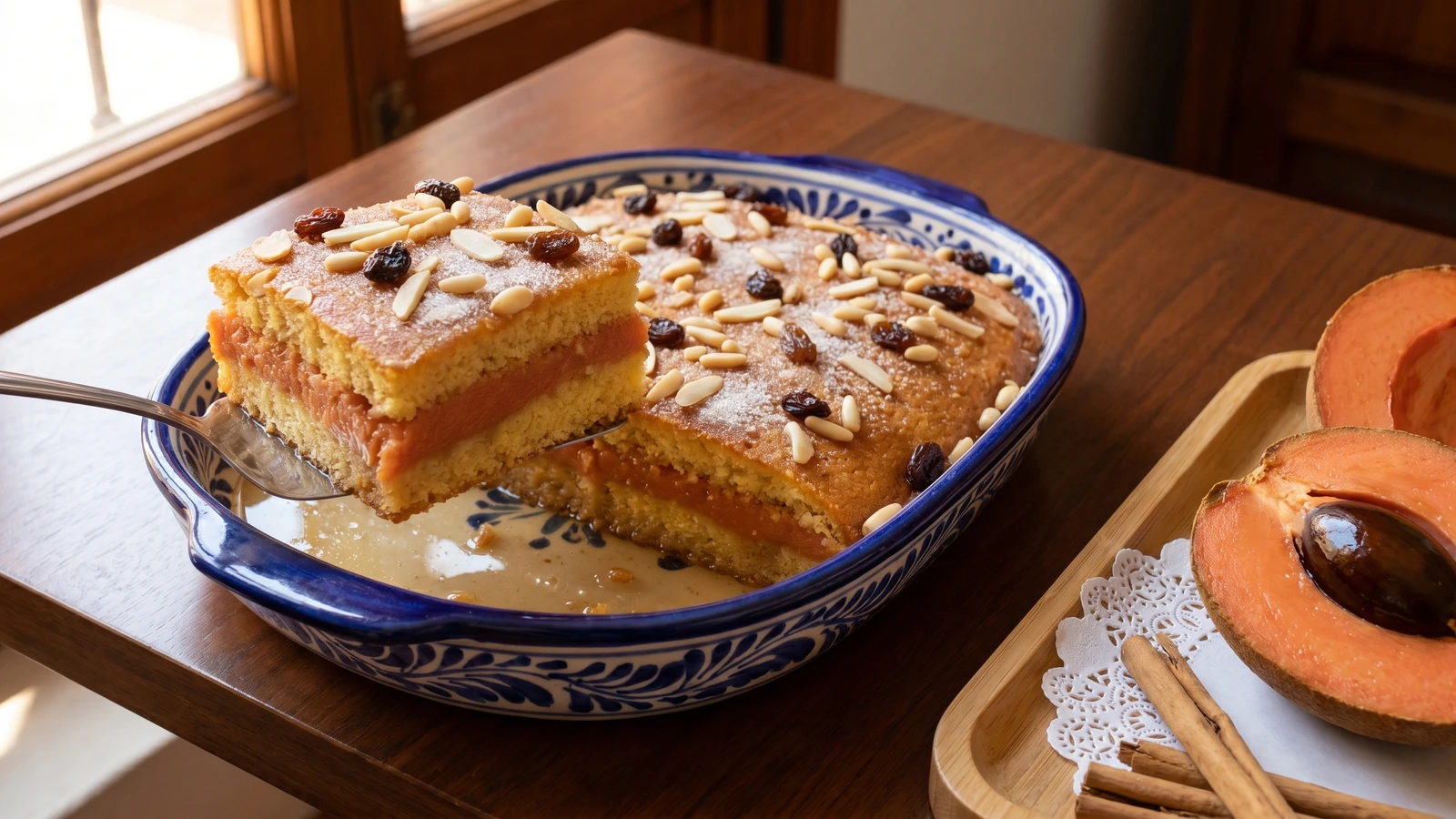
Ciudad de Mexico's conventual ante, tied to Sor Juana's San Jeronimo kitchen, layers syrup-soaked sponge cake with ripe mamey, almendra pelada, raisins, and cinnamon-scented almibar.
Ciudad de Mexico, Centro Historico, the conventual kitchen of San Jeronimo. That is where this ante belongs before it belongs to any dessert table. Sor Juana Ines de la Cruz lived behind those walls, and the recipes associated with that house show a city where tropical fruit, Spanish almonds, sugar, bread, and convent discipline met in one ordered kitchen.
Mamey is the ingredient that marks the dish. It did not grow in the cold stone patios of the convent. It arrived through trade, from warmer lands, through markets that fed the capital: Veracruz, Morelos, Puebla's tropical edge, the routes that made Mexico City hungry for the rest of the country. Si no conoces el mercado, no conoces la cocina. A ripe mamey is salmon-orange, creamy, and sweet enough to perfume the knife.
Ante is not a modern custard. It is a layered postre criollo-conventual: sponge cake or mamon soaked with cinnamon almibar, stacked with fruit paste, thickened with almendra pelada, finished with raisins and pine nuts. The technique belongs to women who measured by eye because they cooked every day, not because they were vague. The cake must drink the syrup and still stand. That is the work.
My mother kept few convent sweets in her notebook, but beside one syrup recipe she wrote, 'no apures el azucar' (do not rush the sugar). She was right. Rush the almibar and it tastes raw. Use corn syrup and you have lost the thread. Cada estado, su propia cocina, and this one is the baroque sweet kitchen of the capital.
Ante de mamey appears in the cooking manuscript associated with the Convent of San Jeronimo in Mexico City, the convent where Sor Juana Ines de la Cruz lived from 1669 until her death in 1695. Ante was a New Spanish category of layered sweet made with bread or sponge cake soaked in almibar and filled with fruit pastes, nuts, yemas de huevo, or milk sweets, showing the colonial convent habit of turning preservation, sugar work, and leftovers into formal desserts. The mamey sapote is native to Mesoamerica, while almonds, raisins, cinnamon, cloves, and Jerez arrived through Spanish trade, which is exactly why this dish tastes like the capital of New Spain and not like one single village.
Quantity
1 pound
mashed smooth
Quantity
1 day-old cake, about 10 inches wide
sliced into 3 thin layers
Quantity
1 1/2 cups
Quantity
1 cup
Quantity
1
Quantity
2
Quantity
1/4 cup
Quantity
1/2 cup
finely ground
Quantity
1/3 cup
sliced or chopped
Quantity
1/2 cup
Quantity
2 tablespoons
Quantity
1 tablespoon
softened, for the dish
Quantity
1 tablespoon
for finishing
| Ingredient | Quantity |
|---|---|
| ripe mamey sapote pulpmashed smooth | 1 pound |
| plain sponge cake or mamonsliced into 3 thin layers | 1 day-old cake, about 10 inches wide |
| granulated sugar | 1 1/2 cups |
| water | 1 cup |
| Mexican cinnamon stick | 1 |
| whole cloves | 2 |
| dry sherry or sweet Jerez | 1/4 cup |
| almendra peladafinely ground | 1/2 cup |
| almendra peladasliced or chopped | 1/3 cup |
| raisins | 1/2 cup |
| pine nuts | 2 tablespoons |
| unsalted buttersoftened, for the dish | 1 tablespoon |
| granulated sugarfor finishing | 1 tablespoon |
Use a ripe mamey sapote that yields gently when pressed and smells sweet at the stem. Cut it open, remove the glossy seed, and scrape out the salmon-orange flesh. Mash it smooth with a fork or pass it through a sieve if it has fibers. If the mamey is pale, hard, or dry, wait. The fruit is the body of the dish.
Combine the sugar, water, Mexican cinnamon, and cloves in a small saucepan. Bring to a steady simmer and cook 12 to 15 minutes, until the syrup lightly coats a spoon. Turn off the heat and stir in the Jerez. Do not use corn syrup. Almibar is sugar, water, spice, and patience. Así se hace y punto.
Stir the ground almendra pelada into the mashed mamey until the mixture thickens slightly. The almond gives the fruit body, the way convent sweets often use nuts to hold a filling together without making it coarse. Fold in half of the raisins. Taste it. It should be sweet, perfumed, and dense enough to spread.
Trim the crust from the sponge cake if it is tough, then slice the cake horizontally into three even layers. Day-old cake is better because it drinks the syrup without collapsing. Fresh cake turns to paste. The women who wrote these convent recipes knew the value of yesterday's bread.
Butter a shallow talavera or glazed ceramic dish. Lay down the first cake layer and spoon warm almibar over it, enough to moisten it fully but not drown it. Spread half of the mamey mixture over the cake. Add the second cake layer, soak again, and spread the remaining mamey. Finish with the third layer and the last of the syrup.
Scatter the chopped almendra pelada, remaining raisins, pine nuts, and a tablespoon of sugar over the top. Let the ante rest at room temperature for 30 minutes so the syrup settles and the layers hold together. This is not pudding from a box. This is architecture made from fruit, cake, and syrup.
Cut into generous squares or wedges and lift each piece with a wide spatula. Serve at room temperature, not cold from the refrigerator. The mamey should taste round and fragrant, the almond should thicken the bite, and the cinnamon should stay in the background holding the aroma together. Recetas probadas y garantizadas.
1 serving (about 180g)
Culinary guides, cultural storytelling, and the editorial depth that makes cooking meaningful.
Discover Culinary ExplorerChef Lupita
Puebla's convent-style acitrón, made from cidra peel instead of endangered biznaga, built through repeated syrup soakings until the cubes turn firm, translucent, and ready for rosca or chiles en nogada.

Chef Lupita
Ciudad de México's Tulyehualco alegría is popped huautli folded into piloncillo honey, pressed with peanuts, pepitas, and raisins, then cut into the rectangular bars that built a pueblo's identity.

Chef Lupita
Oaxaca's pre-Columbian amaranth bar, popped on a hot comal and bound with piloncillo, honey, and the sacred Zapotec grain that the Spanish tried, and failed, to outlaw.

Chef Lupita
Querétaro's mercado candy of popped amaranto pressed with dark piloncillo syrup, pepitas, pecans, and cacahuate, a Bajío sweet that respects the seed before it decorates the table.