Chef Lupita
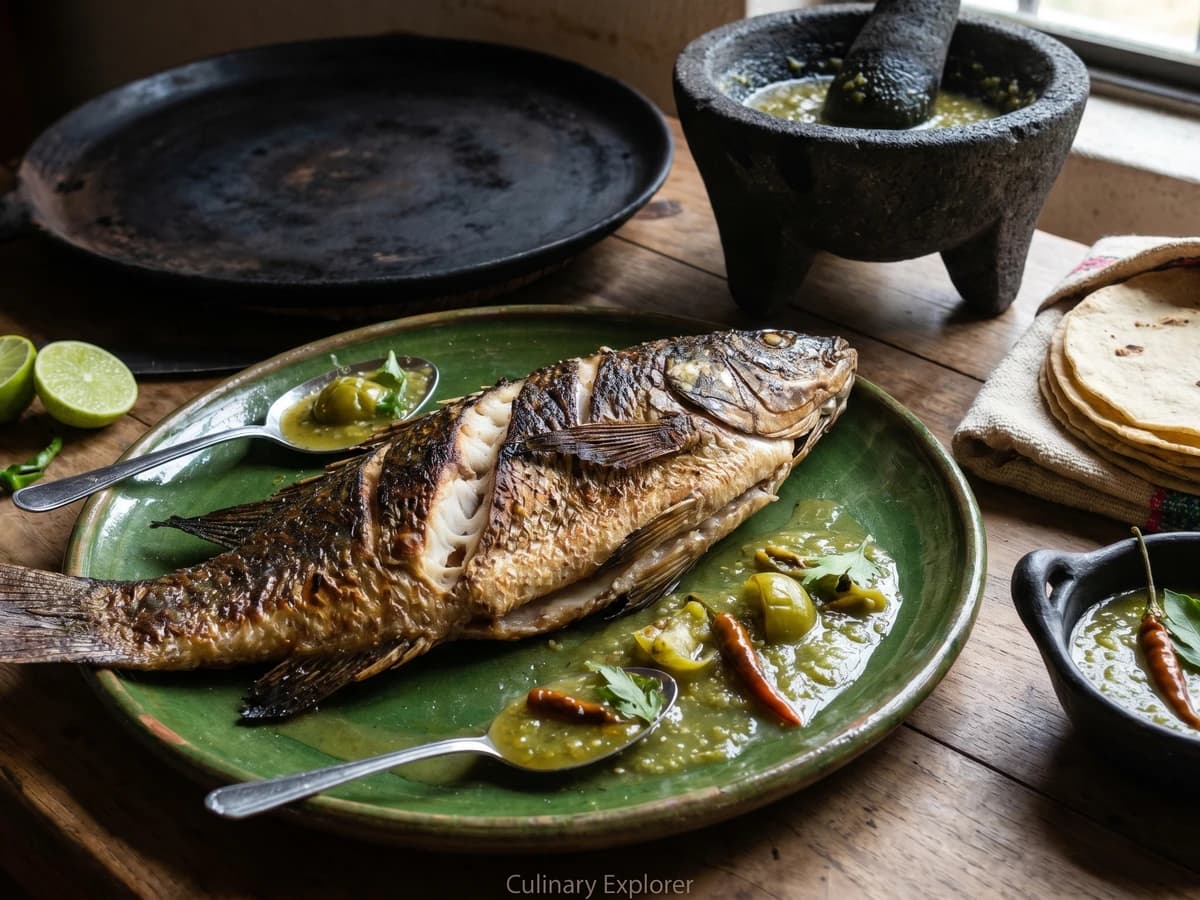
Acúmara Tatemada al Comal
Michoacán's Lake Pátzcuaro acúmara, a whole kurucha from the lago tatemada on a comal de leña and served with chile perón atápakua, corn tortillas, and P'urhépecha discipline.
A cooking platform built around craft, culture, and the stories behind what we eat.

Created by
Campeche's Gulf stone crab claws warmed in a garlic butter spiked with chile xcatic and charred habanero, finished with sour orange and lime. A coastal weekend dish from the Laguna de Términos.
This is from Campeche. From the Gulf side of the Yucatán peninsula, where the Laguna de Términos pushes its brackish water into the sea and the stone crab fishermen come back with claws the size of a child's fist. The meat inside is sweet, dense, almost the texture of lobster, and the cooks of Ciudad del Carmen and San Francisco de Campeche have spent generations learning that the less you do to it, the more it gives back.
Manitas de cangrejo a la campechana is a weekend dish. A Sunday dish. The kind of food that comes out when family is at the table and there is time to crack a claw, dip the meat in butter, and argue about which neighborhood has the best marisquería. The butter is built on garlic, chile xcatic (the pale yellow peninsular chile, not a jalapeño, not a serrano), and a charred habanero that perfumes the fat without burning anybody's mouth. The acid is lime and sour orange, the same combination that defines the recados of the peninsula. The herbs are parsley and cilantro because Campeche cooking, unlike interior Mexico, draws from Mediterranean and Caribbean influences and the parsley is not a mistake.
I spent two weeks in Ciudad del Carmen collecting recipes from señoras whose husbands fish the laguna. The first thing every one of them said was the same: do not overcook the claws. The stone crab is already cooked when it comes off the boat. You are warming it through, not boiling it again. If you treat this like a shrimp boil you have wasted the catch. Saber cocinar es saber vivir, and in Campeche that means knowing when to step back from the stove.
Cada estado, su propia cocina. This one belongs to the Gulf coast and to nobody else.
Stone crab (Menippe mercenaria and its regional Gulf cousin Menippe adina) has been harvested from the waters off Campeche since pre-Columbian times by the Maya, who used the laguna and coastal shallows as a primary protein source long before Spanish contact. Campeche's culinary identity diverges sharply from interior Yucatán cooking precisely because of this Gulf access, the city was Mexico's principal Caribbean port from the 16th to the 18th centuries, and its cuisine absorbed Spanish, Cuban, Lebanese, and Mediterranean influences alongside the Maya substrate, which is why parsley, capers, and olives appear in dishes from this state but not from Mérida. The chile xcatic, sometimes called güero del sureste, is an heirloom yellow chile cultivated almost exclusively on the peninsula and is the defining mild chile of Campechano seafood cooking.
Quantity
2 pounds
about 12 to 16 claws depending on size
Quantity
6 tablespoons
Quantity
2 tablespoons
Quantity
8
finely minced
Quantity
2
stemmed and thinly sliced into rings (or 1 chile guero if xcatic is unavailable)
Quantity
1
lightly charred on the comal, left whole
Quantity
1/4 cup (about 3 to 4 Mexican limes)
Quantity
2 tablespoons
or substitute 1 tablespoon lime plus 1 tablespoon regular orange juice
Quantity
1/2 teaspoon, plus more to taste
Quantity
1/4 teaspoon
Quantity
3 tablespoons
finely chopped
Quantity
1 tablespoon
finely chopped
Quantity
for serving
Quantity
for serving
warmed
Quantity
for serving
| Ingredient | Quantity |
|---|---|
| fresh stone crab claws (pre-cooked)about 12 to 16 claws depending on size | 2 pounds |
| unsalted butter | 6 tablespoons |
| manteca de cerdo (pork lard) | 2 tablespoons |
| garlic clovesfinely minced | 8 |
| chile xcaticstemmed and thinly sliced into rings (or 1 chile guero if xcatic is unavailable) | 2 |
| chile habanerolightly charred on the comal, left whole | 1 |
| fresh lime juice | 1/4 cup (about 3 to 4 Mexican limes) |
| fresh sour orange juiceor substitute 1 tablespoon lime plus 1 tablespoon regular orange juice | 2 tablespoons |
| kosher salt | 1/2 teaspoon, plus more to taste |
| freshly cracked black pepper | 1/4 teaspoon |
| fresh flat-leaf parsleyfinely chopped | 3 tablespoons |
| fresh cilantrofinely chopped | 1 tablespoon |
| lime halves (optional) | for serving |
| hand-pressed corn tortillas (optional)warmed | for serving |
| pickled red onion with habanero (optional) | for serving |
Lay each claw flat on a sturdy cutting board. With the dull back of a heavy knife or a small wooden mallet, give one firm tap to the broadest section of the shell. You want a clean crack that splits the shell along one side without shattering the meat inside. Do the same to the knuckle joint. Leave the claws whole, the diner finishes the work at the table. In Campeche this is how it is done, you are not picking the meat for them.
Heat a dry comal or cast iron skillet over medium-high. Lay the whole habanero on the hot surface and turn it with tongs every minute or so, until the skin blisters and shows dark spots on all sides, about 4 minutes. You are not blackening it to ash, you are scorching the skin to release the perfume of the chile without committing the whole fruit to the dish. This is a peninsular trick. The habanero will infuse the butter and come out before serving.
In a wide heavy skillet, melt the butter with the manteca over medium-low heat. La manteca es el sabor, even here where the butter does most of the work, the lard rounds out the body of the sauce and keeps the butter from burning. When the fat is shimmering but not browning, add the minced garlic. Cook for 2 to 3 minutes, stirring constantly, until the garlic turns pale gold and the kitchen smells like a Campeche kitchen at noon. Do not let it brown. Brown garlic is bitter garlic.
Scatter the chile xcatic rings into the garlic butter. They will sizzle and soften within 30 seconds. Drop in the charred whole habanero. Cook for 1 more minute. The xcatic is the pale yellow chile of the peninsula, it carries gentle heat and a vegetal sweetness that is not the same as a jalapeno. If your market does not carry xcatic, a chile guero will get you close. A jalapeno will not.
Add the cracked claws to the skillet. Spoon the garlic butter over them, turning the claws gently so the butter works into the cracks you opened. Cover the pan and warm them through over low heat for 4 to 5 minutes. The stone crab is already cooked, you are not cooking it again, you are warming the meat and letting it drink the butter through the cracks. Overcook stone crab and the meat turns rubbery. Treat it like the gift from the Laguna that it is.
Lift out the habanero and discard it, or move it to the side for the diner who knows what they are doing. Pour the lime juice and sour orange juice over the claws. Add the salt and pepper. Tumble the parsley and cilantro on top. Toss the claws once in the pan to coat everything. Taste the butter. It should be bright with citrus, soft with garlic, warm with chile. Adjust salt now, never at the table.
Bring the skillet or transfer the claws to a wide clay cazuela and set it in the center of the table. Pour all of the garlic butter from the pan over the top so it pools around the claws. Serve with lime halves, warm tortillas, and a small bowl of pickled red onion. Each diner cracks their own claws, dips the meat in the butter, and builds a small taco if they want. Recetas probadas y garantizadas, but only if your crab came out of the water this week.
1 serving (about 290g)
Culinary guides, cultural storytelling, and the editorial depth that makes cooking meaningful.
Discover Culinary ExplorerChef Lupita
Michoacán's Lake Pátzcuaro acúmara, a whole kurucha from the lago tatemada on a comal de leña and served with chile perón atápakua, corn tortillas, and P'urhépecha discipline.

Chef Lupita
Puebla's weekday adobo of pork shoulder braised in a thick guajillo and ancho sauce sharpened with vinegar, cumin, and clove. The deep red of a market spice stall, the dish a poblana cooks without thinking.

Chef Lupita
Loreto's pit-roasted clams, planted hinge-up in beach sand and tatemadas under a fast fire of dried romerillo brush, the resinous Baja desert shrub that gives this dish its smoke.

Chef Lupita
Oaxaca's eighth mole, the silky, almond-and-cinnamon almendrado, served over poached chicken. Mild, sweet, restrained, and a quiet rebuttal to anyone who thinks Mexican food has to be hot to be Mexican.